
Introduction: A City Where Northern Light Dances
Located in the northern part of Denmark’s Jutland Peninsula, Aalborg is the country’s fourth-largest city with a population of approximately 120,000. Facing the Limfjord, this city holds a long history dating back to Viking times while also serving as a modern center of culture and academia. It’s a place of unique charm where the youthful energy of Aalborg University harmonizes with medieval cobblestone streets.
The city’s iconic landmarks—Aalborg Castle and the Cathedral of Saint Budolfi—stand as important monuments to Danish history, still integrated into the daily lives of its residents. Cultural institutions abound, including the Kunsten Museum of Modern Art, one of Northern Europe’s largest contemporary art museums, and the North Sea Oceanarium.
What strikes me most is the gentle, warm temperament of the people who call this city home. The Danish concept of “hygge”—cherishing cozy, comfortable moments—permeates the street corners, cafés, and the expressions of Aalborg’s residents. Perhaps it’s the long Nordic winters that have cultivated this appreciation for light and warmth, a quality that naturally embraces all who visit.
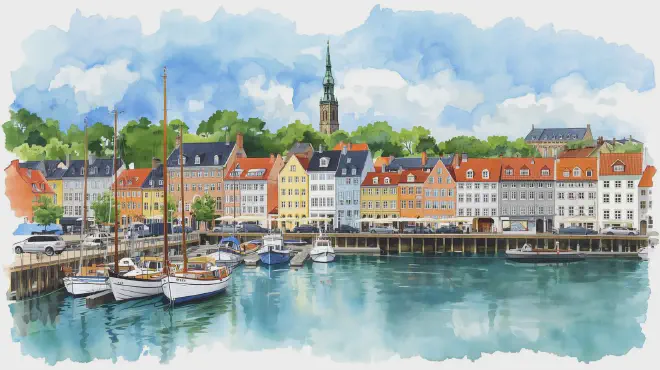
Day 1: Cobblestone Echoes and Opening Notes
I arrived at Aalborg Central Station around 2 PM after a four-hour train journey from Copenhagen. Late September in Northern Europe already carries a distinct autumn chill. Stepping out of the station building, the crisp air caresses my cheeks. Though clouds cover the sky, soft sunlight occasionally breaks through the gaps, gently illuminating the city’s red-brick buildings.
The old town is about a fifteen-minute walk from the station. I make my way slowly toward the city center, listening to the small sound my rolling suitcase makes against the cobblestones. Local residents pass by briskly on bicycles—a quintessentially Danish scene. Their expressions are uniformly serene, and the occasional glances they direct my way feel warm.
My accommodation is a small boutique hotel in the old town called “Hotel Chagall.” Converted from a 19th-century building, it has a charming presence. The receptionist greets me in fluent English. My room is on the third floor, with a window overlooking the cobblestone street and the old building across the way. White-painted walls and furniture that radiates the warmth of wood create a simple yet beautiful space—truly Nordic in its functional elegance.
After settling in and catching my breath, I head out to explore the city. My first destination is the Cathedral of Saint Budolfi, built in the 12th century and a symbolic presence in Aalborg. Awed by the imposing stone exterior, I step inside to find light streaming through the high ceiling and dancing in rainbow colors through the stained glass. There are few tourists; in the silence, a handful of locals pray quietly.
A five-minute walk from the cathedral brings me to Aalborg Castle. The current building dates from the 16th century and boasts beautiful Danish Renaissance architecture. Though the castle now houses administrative offices and cannot be toured inside, its dignity is palpable even from outside. Standing before it, I can’t help but imagine the lives of the lords who once ruled here.
As evening approaches and hunger sets in, I visit a small restaurant called “Café Aana,” recommended by a local. Tucked away in an old town alley, it’s a cozy, welcoming place. The interior features wooden tables and chairs, with local artists’ paintings adorning the walls. The menu is written in both Danish and English, and the owner, Aana, carefully explains each dish.
I order “frikadeller,” a traditional Danish dish of meatballs in cream sauce, served with boiled potatoes and pickles. The first bite fills my mouth with gentle flavors—not flashy, but comforting in its home-cooked warmth. I savor it slowly with a Carlsberg beer.
When I step outside after dinner, the city has grown dim. Street lamps begin to glow, creating warm pools of light on the cobblestone streets. Nighttime Aalborg shows a different face from its daytime self. Silence envelops the city, and the occasional footsteps or distant laughter only accentuate the quiet.
Before returning to the hotel, I extend my walk to the Limfjord waterfront. This inlet spreading north of the city is a place of respite for Aalborg’s residents. City lights reflect on the dark water surface, looking like stars fallen into the water. Small lights dot the opposite shore, and knowing the waterway continues toward the North Sea beyond gives me an odd sensation of being at the world’s edge.
I sit on a waterside bench for a while, gazing at the night view. The wind is cold, but accompanied by a pleasant fatigue, I feel the reality of this journey’s beginning. Will I come to know this city more deeply tomorrow? With such expectations in my heart, I slowly walk back to the hotel.
Day 2: Morning Art, Afternoon Nature, and Evening Stories
At 8 AM, I have a simple Nordic breakfast in the hotel’s breakfast room. Rye bread with cheese and ham, garnished with strawberry jam. The coffee is dark-roasted and aromatic, and together with the morning light streaming through the large windows, it energizes me for the new day. I exchange a few words with a German tourist couple at the same table. They too were drawn by Aalborg’s quiet charm.
In the morning, I visit the city’s pride, the Kunsten Museum of Modern Art. A twenty-minute walk from the old town, passing through residential areas, brings the modern building into view. Made of white concrete and glass, it contrasts with the traditional streetscape yet somehow harmonizes.
Entering the museum, I’m first overwhelmed by the spacious atrium. The first floor displays a collection of modern Danish art, while the second floor features international contemporary works. Particularly memorable is the collection by Danish painter Christen Købke. The works of the Skagen Painters from the late 19th century delicately depict Nordic light and nature. I stand transfixed before a seascape composed in blues and whites.
Taking a break in the museum café, I gaze at the view outside the window. A lush park and, beyond it, the red roofs of the residential area. Aalborg shows yet another face from here. While drinking coffee and basking in the afterglow of the paintings I saw this morning, an elderly local woman seated next to me strikes up a conversation. She volunteers as a guide at this museum. In fluent English, she teaches me about Aalborg’s artistic culture.
“The people of this city cherish art deeply,” she tells me. “Not just in museums, but in street corner galleries and workshops throughout the city, many local artists are active. That enriches our lives.” From her words, I sense the depth of this city’s love for culture.
In the afternoon, to experience Aalborg’s nature, I visit Skovbakken hill park in the southeastern part of the city—a small journey of about twenty minutes by bus. The park sits atop a hill and offers an excellent viewpoint overlooking Aalborg’s cityscape and the Limfjord.
Walking through the forest on my way up the hill, I feel the deepening of autumn. Beech and oak leaves are beginning to turn yellow and red, and fallen leaves pile softly underfoot. Danish forests differ from their Japanese counterparts, giving a more open and bright impression. Along the way, I spot squirrels leaping from tree to tree and hear birdsong breaking the silence, reminding me of the joy of being in nature.
Reaching the observation deck at the summit, the city of Aalborg spreads below. Red-roofed houses, church spires, and the blue-gleaming Limfjord. The entire city seems to fit in the palm of my hand, giving me the strange feeling of becoming part of this beautiful landscape. I sit on a bench eating the sandwich I brought, enjoying this view for a while.
Returning to the city in the evening, it’s time for dinner. For a change from last night, I choose “Restaurant Vaskeriet” along the Limfjord. This establishment, converted from an old laundry, enjoys an excellent location facing the water. I’m seated by the window and can enjoy the beautiful sight of sunset reflecting on the water’s surface while dining.
From the menu, I select “plaice” meunière, a local specialty. The fresh fish glistens with butter sauce, perfectly complementing the seasonal vegetables served alongside. Particularly impressive is the simple yet profound flavor of locally grown potatoes—I can fully taste the bounty nurtured by Denmark’s rich soil.
The Danish white wine I order with the meal has a clean acidity and fruity aroma that pairs perfectly with the fish. The young waiter is a local and enthusiastically explains the dishes. “This fish was caught this morning at a nearby fishing port,” he says, giving me a glimpse into Denmark’s food culture that values local production and consumption.
At night, I enjoy mingling with locals at “Den Gamle By,” a pub in the old town. The interior is dimly lit, with old wooden tables and chairs creating a warm atmosphere. At the counter, local men chat over Danish beers. Though we don’t share a language, the occasional smiles they direct my way feel friendly, and I sense a human connection that transcends borders.
The local beer I drink here, “Aalborg Herre,” is a masterpiece made at a local brewery. The balance of bitterness and sweetness is exquisite, soothing the fatigue of a long day. The elderly man seated next to me speaks English and shares interesting stories about Aalborg’s history and culture.
“This city is small, but its heart is big,” he tells me. “We know how to spend time slowly. There’s no need to rush. What matters in life is good friends, good beer, and peaceful time.” His philosophical words seem to embody the Danish outlook on life.
Late at night, I walk back to the hotel under the starry sky. The city is wrapped in silence, with only street lamps gently illuminating the cobblestone streets. Tomorrow is my last day. Regretting my impending farewell to this beautiful city, I walk slowly onward.
Day 3: Farewell Melodies and Lingering Warmth
On the final morning, I wake earlier than usual. Looking out the window, a thin mist envelops everything, giving the entire city a dreamlike atmosphere. I decide to take a light walk before breakfast. The old town in the fog is filled with a silence as if time has stopped. As my footsteps alone echo on the cobblestone streets, I feel I’m experiencing a special moment different from the previous days.
After breakfast, I use the time before checkout to visit the Aalborg Zoo, which I haven’t yet seen. Located a short walk south of the city center, it’s a small zoo, but the animals are kept in environments close to nature, characteristic of Nordic facilities. Particularly impressive is watching the native Danish red squirrels run freely. Amid children’s cheerful voices, seeing the animals spend their time leisurely gives me a sense of this country’s peaceful daily life.
I enjoy a final coffee break at a small café inside the zoo. The coffee here is dark-roasted and aromatic, served with a Danish open-faced sandwich, “smørrebrød.” A simple but delicious combination of rye bread topped with shrimp, mayonnaise, and dill. Through the café window, I can see the zoo’s lush greenery, allowing me to spend a relaxed moment.
Around noon, I return to the hotel and pick up my luggage. The receptionist asks with a friendly smile, “How was Aalborg?” “It was a wonderful city. I’ll definitely come back,” I reply, and she smiles happily. Such small exchanges enrich travel memories.
With some time before departure, I decide to visit the Cathedral of Saint Budolfi one last time. Unlike my first day viewing, this time I explore the interior slowly. Gazing at the beautiful altar decorations and the detailed religious paintings on the walls, I once again realize this building has been a spiritual anchor for people across centuries.
Leaving the cathedral, I set out for one last walk. Strolling the cobblestone streets, I recall the faces of people I’ve met these past three days. The volunteer guide at the museum, the young waiter at the restaurant, the elderly man at the pub. People who, beyond differences in language and culture, showed me human warmth.
I stop in the central square of the old town and look around. Perhaps because it’s a weekday afternoon, foot traffic is sparse, but this only emphasizes the city’s everyday quietness. A few locals sit leisurely drinking coffee on a café terrace, and watching their peaceful expressions, I feel I understand the essence of “hygge,” the Danish life philosophy.
On my way to the station, I buy a single flower from a small florist—a white gerbera. The elderly shopkeeper doesn’t speak English, but recognizing me as a traveler, she says something warm in Danish. Though I don’t understand the words, I receive a heartfelt message from her kind smile.
At Aalborg Central Station’s platform, I wait for the Copenhagen-bound train. Unlike when I arrived three days ago, this is now a time of parting. Sitting on the platform bench gazing at the white gerbera, I mentally organize the various experiences gained during this short journey.
When the train arrives, a sense of reluctance wells up inexplicably. I want to stay in this city longer, spend more time with Aalborg’s people. This feeling arises because I’ve certainly been captivated by this city’s special charm.
As the scenery visible from the train window gradually recedes, I feel the three days in Aalborg crystallizing into beautiful memories in my heart. The blue water surface of the Limfjord, footsteps echoing on cobblestone streets, people’s warm smiles, and the church bell’s sound ringing through the silence. All of these have become part of who I am now.
An Imaginary Journey, Yet Vividly Real
I’m writing this on the train toward Copenhagen. Outside the window, the pastoral landscape of the Jutland Peninsula continues. Cows grazing in pastures, wind turbines visible in the distance, and small villages appearing occasionally. Everything is a quintessentially peaceful Danish scene.
The two nights and three days in Aalborg weren’t a long journey. Yet in this brief time, I deeply felt this city’s unique charm. It lies in the streetscape where history and modernity naturally harmonize, a culture that loves and cherishes art, and above all, the way of life of people who value the slow flow of time.
Particularly profound was the warmth and gentleness of Aalborg’s people. Not being a famous tourist destination, there were natural interactions with locals that enriched the journey. I was reminded again that even when language barriers exist, smiles and kindness transcend borders.
This journey is a record of an imaginary experience never actually lived. However, by researching Aalborg and letting my imagination roam, I gained sensations as if I had truly visited the place. Perhaps this suggests that the essence of travel lies not necessarily in physical movement but in the yearning for and imagination of encountering new cultures and people.
Though imaginary, the emotions and discoveries felt during this journey remain vivid in my heart. The texture of Aalborg’s cobblestones, the sunset reflected on the Limfjord’s surface, the taste of local cuisine, and people’s warm smiles—all vividly resurface in my imagination.
Travel is not only about visiting new places but also about sharpening one’s sensibilities and viewing the world from perspectives different from daily life. Through this imaginary journey, I not only learned about the beautiful city of Aalborg but also had an opportunity to reconsider the meaning of travel itself.
Perhaps one day I’ll truly visit Aalborg. How will these imaginary memories overlap with reality then, or will I receive completely different impressions? Including such expectations for the future, this fictional journey has become a truly valuable experience for me.