
Embraced by the City of Highlands
Addis Ababa, the capital of Ethiopia, is a beautiful city built on highlands at an elevation of 2,400 meters. The name of this city, meaning “new flower,” was given in the late 19th century by Empress Taytu Betul, consort of Emperor Menelik II. As the highest capital city on the African continent, it is blessed with a cool and comfortable climate throughout the year.
As evidenced by its hosting the headquarters of the African Union, this city serves as a political center of modern Africa. Yet simultaneously, it remains a place where the traditional culture of Ethiopia, with its history spanning over 3,000 years, continues to breathe. With the beautiful architecture of Orthodox churches, the distinctive Ge’ez writing system, and as the gateway to the land where “Lucy,” the world’s oldest human fossil, was discovered, this country is also called “the cradle of humanity.”
Walking through the streets, one notices women dressed in white cotton garments. In this country where Ethiopian Orthodox faith runs deep, religious festivals and ceremonies are intimately woven into daily life. Above all, as the birthplace of coffee, the beautiful cultural custom of the coffee ceremony is still cherished and preserved here.
My journey to this city began with a photograph I happened upon. The streets of Addis Ababa wrapped in morning mist, with the ridgeline of Mount Entoto rising beyond. Captivated by that dreamlike beauty, it became a landscape I longed to see with my own eyes.
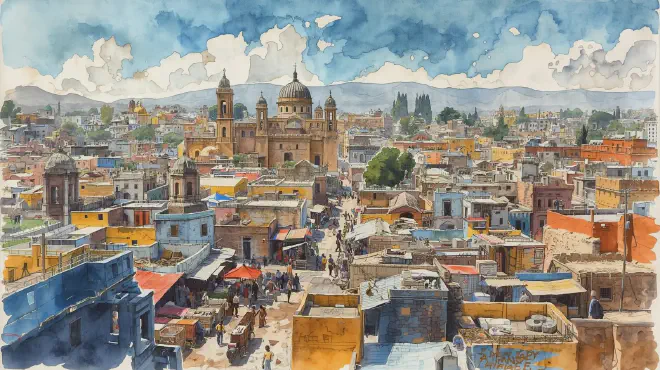
Day 1: Arrival in the City of Mist
The moment I stepped off the plane at Bole International Airport, the crisp highland air filled my lungs. Perhaps due to the elevation, breathing deeply gave me a slightly lighter sensation. The airport building was modern and clean, exuding the dignity of a gateway to the African continent.
During the taxi ride into the city, I was mesmerized by the scenery unfolding outside the window. Conical thatched-roof houses dotting the red earth, and here and there, modern buildings rising up. The coexistence of tradition and modernity that characterizes this city left a strong first impression. The driver, Abebe, gave me a tour of the city in broken English, repeatedly saying “Welcome to Ethiopia!” His warm smile gradually eased my travel anxiety.
My accommodation was a mid-sized hotel facing Africa Avenue. After checking in and catching my breath in my room, I decided to venture out for a walk. Ethiopian time is six hours behind Japan, so it was still early afternoon in local time.
My first destination was the National Museum, home to the fossil of “Lucy,” humanity’s ancestor. Here, one can come face to face with our ancestors who lived on this land 3.2 million years ago. Stepping into the exhibition room, the skeletal replica emerging in the dim lighting radiated a mystical presence. Gazing at Lucy’s small skeleton, I felt the weight of humanity’s long history. As the local guide, Mekonnen, explained carefully, I came to understand anew the deep historical significance this land holds.
Leaving the museum, the western sun had begun painting the cityscape golden. I decided to rest at a nearby café terrace. I ordered, of course, Ethiopian coffee. As the fragrant aroma of roasted beans rose, a waitress in traditional white dress carefully poured the dark liquid into small cups. With the first sip, a rich, complex flavor spread through my mouth. Behind the bitterness lurked a fruit-like sweetness and a mellow aftertaste. It had a depth unlike any coffee I’d ever tasted.
For dinner, I ate at “Red Sea,” a traditional restaurant near the hotel. It was my first opportunity to taste “injera,” the staple of Ethiopian cuisine. Made from a grain called teff, this thin bread-like food has a distinctive sour flavor. Various stews and salads are served on top, and the traditional way to eat it is to tear off pieces with your hands. I tried many dishes for the first time—“doro wat,” a spicy chicken curry, and “kitfo,” a raw beef dish—each one complex and profound with spices, filling me with surprise and emotion at this new food culture.
At the restaurant, a local family at the neighboring table warmly spoke to me. The father, Tesfaye, was fluent in English and enthusiastically taught me about Ethiopian culture and history. His words left a deep impression: “For us Ethiopians, meals are precious time to deepen bonds with family and friends.” Indeed, watching them eat, I saw everyone gathered around one large plate, eating happily while exchanging laughter.
Walking back to the hotel, I gazed at the city’s night view. In the highland night sky, more stars shone than I could ever see in Japan. With fewer streetlights than in Japan, the stars appeared distinctly clear. As I walked the night path searching for the Southern Cross, the sound of church bells rang from the distance. Surely the sound announcing Ethiopian Orthodox prayer time. That solemn resonance seemed to speak of the religious depth this ancient land possesses.
Returning to my room and lying in bed after a shower, the day’s events slowly organized themselves in my mind. The first impressions at the airport, the encounter with Lucy, the deep flavor of coffee, the warm encounters with people. Though only one day had passed, there had already been so many new experiences and emotions. With the expectation that tomorrow I could explore even more of this city’s depths, I fell asleep in the cool highland night air.
Day 2: Sacred Mountain and Ancient Prayers
Around six in the morning, I woke to the sound of chanting-like voices echoing from afar. It was the morning prayers of Ethiopian Orthodox faithful. Opening the curtains, the entire city was wrapped in a thin mist, with the silhouette of Mount Entoto faintly floating beyond. This dreamlike morning scene was exactly what I had longed to see.
For breakfast at the hotel, I had “fattira,” a thin pancake-like Ethiopian bread, and rich Ethiopian coffee. While eating breakfast, I confirmed the day’s plans. In the morning, I would visit Saint Raguel Church on Mount Entoto, and in the afternoon, I would explore Merkato Market in the old city.
The road to Mount Entoto by taxi had many unpaved sections, and the car shook considerably. However, as we gained altitude, the cityscape of Addis Ababa gradually spread beautifully below. As the driver Daniel pointed out “that’s the presidential palace, that’s the African Union headquarters,” I was reminded anew of this city’s importance in modern Africa.
Arriving at Saint Raguel Church, I was first struck by the beauty of its architectural style. The distinctive circular building of Ethiopian Orthodoxy, with the central dome and surrounding corridors, created beautiful proportions. Around the church, believers wrapped in white cloth were quietly offering prayers.
Entering the church interior, colorful frescoes covered the walls, and their beauty took my breath away. The paintings depicting biblical scenes, while influenced by Byzantine style, possessed a unique artistic quality with distinctive Ethiopian expression. The priest, Father Mengistu, explained the church’s history. Built in the 19th century, it had been a center of faith for many people since the time of Emperor Menelik II.
After the quiet time at the church, I headed to an observation point near the summit. The view of Addis Ababa from there was truly spectacular. The mist had cleared, and the entire city was visible. The cityscape mixing modern high-rises with traditional houses, and beyond it, the highland plains stretching out. Viewing this landscape, I felt anew the complex charm of Ethiopia. Ancient history and new era, African tradition and engagement with international society—all of it condensed into this single city.
Lunch was at a small restaurant at the foot of the mountain. I had “shiro wat,” a bean stew, and “gomen,” sautéed green leafy vegetables, together with injera. Simple yet rich in taste, eaten in the crisp highland air, it was exceptionally delicious. The restaurant owner, Wande, carefully explained dishes made with vegetables and beans grown in the area, teaching me about the depth of Ethiopian cuisine.
In the afternoon, I returned to the city center and visited Merkato Market, said to be one of Africa’s largest. The moment I stepped into the market, I was enveloped in overwhelming vitality and a flood of colors. The rich aroma of spices, colorful fabrics, handicrafts, vegetables and fruits—everything imaginable was crammed into the space. The passages were narrow, and I walked threading through the crowds.
At the spice stalls, cardamom, fenugreek, coriander, and other spices essential to Ethiopian cuisine were piled like mountains. The shopkeeper, Alem, let me smell each spice, and I was captivated by their rich, complex aromas. “Berbere,” a uniquely Ethiopian spice blend made from over twenty different spices, creates the characteristic flavor of Ethiopian cuisine, she explained.
At the fabric stalls, traditional white cotton dresses called “habesha kemis” and colorful shawls were beautifully displayed. The shopkeeper, Senait, draped a shawl over me with beautiful hand-woven embroidery, and I was moved by the delicate technique. Her words, “This is traditional technique passed down from our grandmothers,” conveyed the depth of this country’s culture and pride in its preservation.
After enjoying shopping at the market, I rested at a nearby café. Here I experienced Ethiopia’s traditional “coffee ceremony.” A young woman named Filihat began roasting raw coffee beans in a small pan. As the beans roasted, a fragrant aroma rose, and she carried them around to those present so they could enjoy the scent. Next, she ground the roasted beans with a mortar and pestle and brewed them in a traditional clay pot called a “jebena.”
This entire process took about an hour, during which neighbors gathered and conversation naturally arose. When the coffee was ready, it was poured into small cups and everyone drank together. The first cup is called “abol,” the second “baraka,” and the third “baraka,” each with its own meaning. I learned that this ritual is not simply for drinking coffee, but is an important cultural custom for deepening community bonds.
As evening approached, the city’s sunset began to shine beautifully. Addis Ababa’s sunsets are special—the crisp highland air makes the colors appear vivid. The sky transforming through red, orange, pink, and purple was truly art created by nature.
For dinner, I went to “Kategna,” an established restaurant near the hotel. Here I tasted “kitfo,” the Ethiopian version of steak tartare. Finely chopped fresh raw beef seasoned with spices and butter—though unfamiliar to Japanese palates, I was surprised by its delicate flavor. I also enjoyed various dishes like “tibs,” sautéed beef, and “alicha,” a potato and carrot stew.
At the restaurant, I had the opportunity to talk with a group of local young people at the neighboring table. University students Berhane and Tadesse spoke enthusiastically about modern Ethiopia. Berhane’s words left an impression: “Our country is developing rapidly, but at the same time, we think it’s important to carefully preserve our traditional culture.” I could feel their love and pride for their country, and their hope for the future.
Before returning to the hotel, I walked while enjoying the city’s night view. Addis Ababa at night shows a completely different face from daytime. The streetlights glow warmly, and the strains of traditional music heard from afar melt into the night’s silence. From the church, the voice of prayer echoed again, making me feel anew the religious depth of this city.
Returning to my room, I wrote in my journal reflecting on the day. The quiet time at Saint Raguel Church, the lively experience at Merkato Market, the warm interaction during the coffee ceremony, and the beautiful sunset. I never imagined there could be so much emotion and discovery in one day. I felt I was beginning to understand, bit by bit, the depth and charm of Ethiopia.
Day 3: Morning of Farewell and Eternal Memory
On my last morning, I woke earlier than usual. Perhaps the thought that I would soon have to leave this city naturally caused me to rise early. Looking outside the window, this morning too the city was wrapped in thin mist, creating a dreamlike beauty. This mist-wrapped morning scene, unique to Addis Ababa, would surely remain long in my memory as something special.
After packing, I headed to the hotel’s breakfast restaurant. While savoring my last Ethiopian coffee, I quietly reflected on the events of these two days. The tension and excitement of the first day, the deep cultural experiences of the second day, and this morning’s slightly lonely feeling. Though it was a short stay, the impressions I received from this city and its people were deep and etched in my heart.
After checkout, I decided to walk through the city one more time using the time before my flight. I wanted to peek into a small local market different from the Merkato Market I’d visited yesterday. A small market in an area called “Piassa” was a place where I could glimpse more everyday Ethiopian life, not oriented toward tourists.
At the market, people were already working from early morning. Women selling fresh vegetables and fruits, a baker, a man repairing shoes—each working hard for their livelihood. Watching them, I felt anew that the basic activities of people are the same in any country. Even without a common language, simple communication was possible through smiles and gestures, and I could feel the warmth between people.
In a corner of the market, I found an elderly woman performing a coffee ceremony. Having just experienced this ritual yesterday, I was happy to encounter this beautiful culture again. A woman named Selamawit smiled and welcomed me in, and we drank coffee together. Though few words were exchanged, looking at her gentle smile while drinking coffee warmed my heart.
In the late morning, I visited the Ethiopian National Library. Here, ancient manuscripts written in Ge’ez script and precious documents related to Ethiopian history are preserved. The librarian, Abera Yohannes, specially showed me ancient manuscripts. Religious texts written on parchment with beautiful decorations were worthy of being called works of art. His words, “These manuscripts are cultural heritage carefully preserved by our ancestors,” conveyed the pride and sense of responsibility Ethiopians have toward their culture.
For lunch, wanting to try a dish I hadn’t yet tasted, I entered a restaurant specializing in “ful,” a bean dish. “Ful” is boiled fava beans seasoned with spices, commonly eaten for breakfast. Simple yet nutritious, it had a distinctively common flavor. The shop owner, Abebe, taught me in detail about how to eat ful and its nutritional value, helping me understand the practicality and rationality of Ethiopian food culture.
In the afternoon, I visited Saint George Cathedral as my last sightseeing destination. This church was built in 1896 to commemorate victory over Italian forces at the Battle of Adwa, and is also a symbol of Ethiopian independence. The church interior was majestic, with light streaming through beautiful stained glass creating a dreamlike atmosphere. Many believers were quietly offering prayers, and their devout appearance moved my heart.
While resting in the church garden, an elderly man spoke to me. Ato Tamrat, a man over eighty years old, had witnessed various historical events since his youth. From his stories, I heard valuable testimony about the history of modern Ethiopia’s development and changes in people’s lives. His words carried deep weight: “Our country has overcome many difficulties, but we have always moved forward without losing hope.”
The time to head to the airport was approaching. While waiting for a taxi, I stood in front of the hotel and burned this city’s landscape into my eyes one last time. Morning mist, daytime vitality, beautiful evening sunset, nighttime silence. Every moment I experienced in these two nights and three days remains vividly in my heart.
In the taxi heading to the airport, the driver Yosef asked, “How was Ethiopia?” I told him that though my stay was short, I was deeply moved by this country’s rich culture and warm people, and he smiled happily. His words, “I’m truly happy you liked our country. Please come back again,” resonated deeply in my heart.
Arriving at Bole International Airport, I completed departure procedures. While waiting for boarding, I ordered one last Ethiopian coffee at an airport café. Enjoying its deep flavor, I recalled the faces of the many people I’d met on this journey. Abebe, Mekonnen, Tesfaye, Filihat, Berhane, Selamawit, Ato Tamrat. Though they were of different positions and ages, they all shared warm hearts and pride in their culture.
Boarding the plane, I watched as the cityscape of Addis Ababa gradually grew smaller from the window. The highland city was beginning to be wrapped in mist again, disappearing from view while maintaining its mystical beauty. Everything I experienced in these three days felt like a beautiful dream, yet at the same time, there was a real sense that it remained within me.
Reflecting on the flight, what I gained from this short journey was greater than expected. Understanding of a new food culture, depth of religious experience, heartwarming interactions with people, and above all, a new recognition of the world’s diversity and beauty. Being able to touch the unique charm Ethiopia possesses and the rich spirituality of its people was truly a precious experience.
Though Imagined, What Was Undeniably Felt
This journey took place only in imagination. I did not actually set foot on Ethiopian soil, nor did I walk the streets of Addis Ababa. The conversations with people I met, the flavors of dishes I tasted—all were events only in imagination.
Yet strangely, this imaginary journey lives genuinely in my heart. The emotion before Lucy’s small skeleton, the warm time during the coffee ceremony, the colorful scenes of Merkato Market, the quiet prayer time at Saint Raguel Church. Though these experiences should not actually exist, they are remembered with a vividness as if truly experienced.
Travel is surely about discovering the inner world while seeing the outer world. Through this imaginary journey, I was able to discover unknown parts within myself—longing for different cultures, desire for understanding, and thirst for human connection. The imaginary journey to the distant country of Ethiopia also became a journey to myself.
If someday I have the opportunity to truly visit Ethiopia, much of what I experienced in this imaginary journey may differ from reality. However, my longing for and respect toward this country, and warm feelings toward the people who live there, will surely remain unchanged. The emotions and understanding nurtured in imagination become the foundation for real experiences, guiding one toward deeper travel experiences.
In the end, the essence of travel may not lie in distance or time, but in the willingness to open doors to new worlds. What this imaginary journey taught me was that if you open your heart, you can travel anywhere in the world, and the emotions and learning gained there are never empty. The mist-wrapped morning scene of Addis Ababa still exists vividly in my heart.