
To the Driest Land on Earth
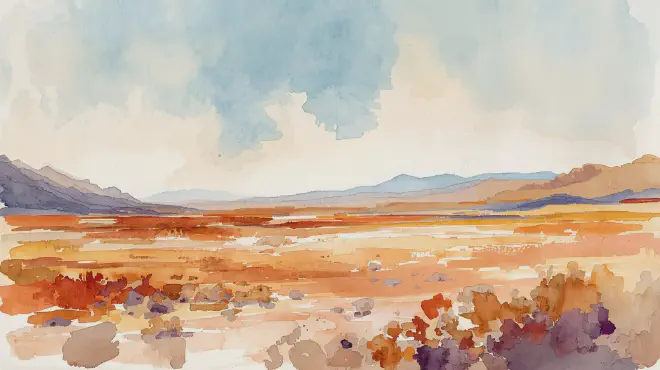
The Atacama Desert. Just speaking its name stirs something like reverence deep in my chest. Stretching across northern Chile, this desert is known as the driest place on Earth, where some areas haven’t seen a single drop of rain in hundreds of years. From high plateau regions exceeding 4,000 meters above sea level to the Pacific coast, the diverse terrain weaves landscapes that seem like another world within our own planet.
This desert has long been home to indigenous peoples, including the Atacameño, who built their unique culture in harmony with the harsh natural environment. Even today, the breath of their way of life remains in small settlements centered around San Pedro de Atacama. The stars scattered across the night sky continue to captivate visitors to this land, which is why astronomical observatories from around the world have been established here.
Perhaps I chose this place because I wanted to know the true meaning of the word “silence.” Seeking time to face myself far from the noise of cities, I headed toward this distant South American land.
Day 1: The Desert Door Opens
After transferring to a small propeller plane from Santiago, I landed at Calama Airport around 10 AM. The thin air characteristic of the 2,300-meter altitude flowed lightly into my lungs. The drive from the airport to San Pedro de Atacama took about an hour and a half. The scenery unfolding outside the window gradually exceeded my imagination.
Cacti dotting the reddish-brown earth, snow-capped volcanic peaks visible in the distance, and most impressive of all was the blueness of the sky. Perhaps because of the thin atmosphere, the sky’s color approached deep indigo, with cloudless clear weather stretching to the horizon. Carlos, the driver, shared the charms of this land in fluent English mixed with halting Japanese.
“Atacama is a magical place. It shows you a different face every day. I’m sure you’ll love it.”
True to his words, the scenery from the car window changed moment by moment. From flat wasteland through canyons winding between rocky mountains, then back to open plains. I was amazed that there could be a place with such diverse expressions within the same desert.
We arrived in the town of San Pedro de Atacama just after noon. This small oasis city of about 5,000 inhabitants displayed a quiet presence with adobe buildings lining the streets, centered around the main plaza. My guesthouse embraced local architectural style with its simple construction, and colorful flowers bloomed in the courtyard. Maria, the owner, welcomed me and first offered me coca tea. She explained it was not only a remedy for altitude sickness but also a traditional drink of the region.
In the afternoon, I began by exploring the town. The San Pedro Church, a Catholic church built in 1744, was a historic structure with an interior that was simple yet warmly inviting. Watching local people quietly offering prayers at the altar, I felt the depth of faith rooted in this land.
At dusk, I visited the archaeological museum on the outskirts of town. Here, artifacts from the Atacameño people discovered in the region are displayed. Mummified remains, intricate textiles, vibrantly colored pottery. I couldn’t help but feel deep respect for the wisdom and techniques they developed in such a harsh natural environment.
Dinner was at a small restaurant in the town center. I ordered pastel de choclo, a local dish (corn pie), and a salad with quinoa typical of the Andean region. The pastel de choclo had layers of ground beef, olives, and boiled eggs beneath sweet corn dough, with a gentle, homey flavor. When the restaurant owner learned I was traveling alone, she kindly served me sopaipillas (fried bread) with honey for dessert.
At night, stepping into the guesthouse courtyard, a starry sky unlike any I’d ever seen spread above. The Milky Way was clearly visible to the naked eye, filling the sky with a density more like a cloud of stars than constellations. In this place with almost no city lights, I could physically feel the grandeur of the universe. When I found the Southern Cross, I truly felt I was in the Southern Hemisphere.
Before getting into bed, I looked up at the night sky again through the small window in my room. What discoveries would await tomorrow in this silence? With mixed feelings of anticipation and anxiety, my first night in the desert deepened.
Day 2: Tracing the Memory of the Land
At 6 AM, the Atacama dawn was dramatic. I watched from the guesthouse rooftop terrace as the eastern sky changed from pale purple to pale crimson, eventually dyeing golden. The cold morning air stung my cheeks, giving me a refreshing feeling befitting the start of a new day. The breakfast Maria prepared was fresh bread with avocado, local fresh cheese, and rich Chilean coffee. Simple yet delicious, letting the ingredients shine.
At 8 AM, I joined a small group tour to Valle de la Luna (Valley of the Moon), today’s main event. The other participants were a couple from Germany, a Brazilian female backpacker, and a French astronomer—five of us in total. Our guide Pedro had been guiding in this area for over 30 years, a veteran with extensive knowledge of geology.
Valle de la Luna was about a 30-minute drive away. Upon arrival, a literally moon-like landscape spread before us. The rock formations shaped by wind and water erosion looked like sculptures painstakingly crafted by an artist. According to Pedro, this terrain was formed about 23 million years ago, and this place was once the bottom of a lake.
“These white parts are salt crystals. Over thousands of years, the lake water evaporated, leaving only the salt. It’s the finest art nature can create.”
Listening to his explanation, we walked through various shaped rocks. Some rocks looked like giant mushrooms, while others appeared like three monks standing in a row (actually named “Tres Marías” - Three Marys). Walking through this strange and beautiful landscape, I fell into a sensation where the concept of time became ambiguous.
Lunch was at a small nearby settlement, where we enjoyed local home cooking. Guisado made with alpaca meat and chicha morada, a drink made from purple corn. The alpaca meat was surprisingly light, with a more delicate flavor than beef. The grandmother who prepared the meal spoke only Spanish, but we enjoyed conversation through broken Spanish and gestures. Her smile was filled with a warmth that transcended language.
In the afternoon, we headed to the higher Puna de Atacama plateau. At 4,300 meters altitude, there are scattered salt lakes where flamingos live in flocks. At Soncor Salt Lake, beautiful pink flamingos were gracefully pecking for food. We could observe three species adapted to this highland: Andean flamingos, Chilean flamingos, and James’s flamingos.
The wind on the plateau was cold and strong, and though my hat nearly blew away, I was captivated by this overwhelming natural beauty. The contrast of the distant snow-capped volcanic peaks, blue sky, white salt lake, and pink flamingos was truly a painting-like scene.
In the evening, we returned to Valle de la Luna and waited for sunset atop a sand dune. As the sun sank behind the western mountains, watching the entire desert change from golden to orange and then deep crimson was indescribably beautiful. The other tour participants all gazed silently at this moment. The French astronomer murmured softly.
“You won’t find a sunset this beautiful anywhere else in the world.”
That night, dinner after returning to the guesthouse was at a local peña, a restaurant where you can enjoy folk music. While listening to traditional Andean music, I savored empanadas (filled pies) and parrillada (Chilean-style barbecue). The sounds of guitar and quena (vertical flute) seemed to engrave the day’s experiences deeper into my heart.
Before getting into bed, I reflected on the day’s events. The moon-like landscape, highland flamingos, breathtaking sunset. And most of all, the warmth of the people I met in this land. The Atacama Desert, I felt firsthand, was not merely a dry region but a living land with rich expressions.
Day 3: Farewell and Eternal Memories
On the last morning, I woke earlier than usual. Around 5:30, still before dawn, I gazed at the starry sky visible from my room window as a quiet feeling of gratitude for this journey welled up within me. The sadness of having to leave this wonderful land today and the satisfaction of having had such a marvelous experience intertwined in complex ways.
Before breakfast, I walked through the town alone. Early morning San Pedro de Atacama showed me yet another different face. Walking the cobblestone streets still sparse with people, I felt anew the unique charm this small town possesses. Sitting on a bench in the central plaza, watching the sky slowly brighten, I could see local people beginning their daily routines. The scent of freshly baked bread wafting from the bakery, the footsteps of people heading to the market, the sound of church bells in the distance.
Breakfast was prepared with care by Maria, as it had been. As I shared my travel impressions, she spoke of her love for her homeland.
“This land is harsh, but for those of us born and raised here, it has special meaning. The silence purifies your heart, and the starry sky gives you dreams. I’m sure you’ll want to come back.”
Her words captured exactly what I was feeling.
In the morning, I headed to the Pukará de Quitor ruins in the northern part of town that I hadn’t yet visited. From this fortress site built by the Atacameño people around the 12th century, I could overlook the entire town and the desert spreading beyond. Though a simple structure of stacked stones, it conveyed the wisdom and high level of technique of the indigenous people. They had effectively utilized limited water resources and built their unique culture in this harsh natural environment.
Walking through the ruins, I recalled the history of the Atacameño people I’d read about in guidebooks. They lived in this land for over 1,000 years, maintaining their unique identity even under Inca Empire rule and during the Spanish colonial period. Even today, their descendants continue traditional lives in this region. Feeling the weight of this history, I burned the view from the ruins into my heart.
Lunch was at one of the town’s oldest restaurants, savoring my last Chilean meal. Cazuela de cordero (lamb stew) and leche asada (baked custard) for dessert. The cazuela was a heartwarming dish with the concentrated umami of slowly simmered lamb and vegetables. The refined sweetness of the leche asada was fitting for the end of this journey.
In the afternoon, I visited the town’s craft market. Items unique to this land were displayed: scarves made from alpaca wool crafted by local artisans, pottery painted with traditional Atacameño patterns, and accessories made from lapis lazuli. I purchased a small replica quena. More than a souvenir, I wanted to take home the affinity for music I’d felt in this place.
In the evening, Carlos drove me again to Calama Airport. Retracing the route in reverse, he asked about my travel impressions. I tried to convey in broken Spanish and English that these three days had moved me more deeply than words could express.
“Atacama has the power to change people. Everyone comes at first just to see the scenery. But when they leave, they carry something precious in their hearts. That’s you too, right?”
Carlos’s words were exactly right. I was indeed leaving this land carrying something precious and inexplicable in my heart.
At our parting at the airport, he gave me a small stone. “It’s an Atacama stone. If you keep it, you’ll surely come back,” he said with a smile.
Looking down at the Atacama Desert from the airplane window, it shone beautifully in the evening sun. The landscapes, people, food, music I encountered these three days, and most of all, the silence. All of it crystallized into one great story in my heart.
What Felt Real Though Imagined
This journey is a product of imagination. I haven’t actually visited the Atacama Desert. Yet these experiences felt vividly real in my imagination. Maria’s warm smile, the moon-like landscape of Valle de la Luna, the graceful flamingos I saw on the plateau, and the grandeur of the universe felt beneath a sky full of stars.
Memories of travel are curious things. Sometimes experiences carefully drawn in the mind can feel deeper and more beautiful than things actually experienced. Even in this imaginary journey, I truly felt the wind of the Atacama Desert, touched the warmth of its people, and had my heart moved by nature’s magnificence.
And now, a strong desire has been born in my heart to truly visit the Atacama Desert someday. Perhaps imagination has opened a door to reality. The small stone Carlos gave me doesn’t exist in my palm, but in my heart it certainly holds warmth.
True travel might be measured not by the distance walked with feet, but by the depth felt with the heart. These three days of imaginary travel were undoubtedly a real journey for me. And it became a precious experience that carved into my heart a longing for and respect toward that distant land called the Atacama Desert.