
The Garden City on the Deccan Plateau
Bengaluru. Once known as Bangalore, this city rests as the capital of Karnataka in southern India, perched on the cool heights of the Deccan Plateau at an elevation of 900 meters. While renowned worldwide as “India’s Silicon Valley” and a hub of the IT industry, the city also carries another, more poetic name: the Garden City.
Blessed with a mild, comfortable climate throughout the year, Bengaluru has been cherished as a hill station retreat since British colonial times, and even today, verdant parks and gardens are scattered throughout the city. In this land where Kannada-speaking people make their homes, the 16th-century palace of Tipu Sultan and temples built in the distinctive Dravidian architectural style of South India quietly tell their stories of history.
In this city where old India and cutting-edge technology coexist in fascinating harmony, I was to spend a brief two nights and three days.
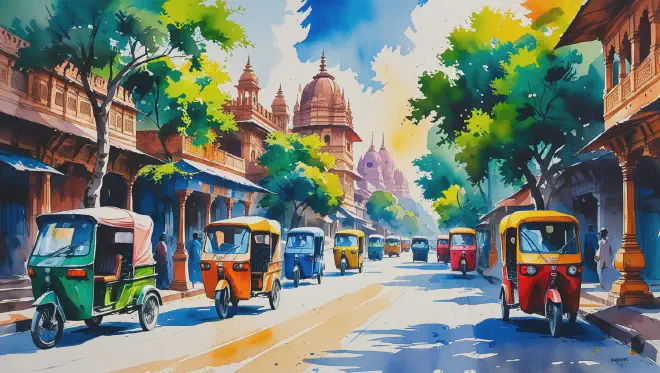
Day 1: Feeling the City’s Breath
The moment I stepped off the plane at Bengaluru International Airport late in the morning, dry air brushed against my cheeks. It was a cool breeze characteristic of the Deccan Plateau, one that carried an almost nostalgic quality. The view from the taxi window on the way into the city was unlike anything I had seen in other Indian cities—a distinctive landscape where modern buildings and palm trees stood intermingled.
After checking into my hotel, I made my way to the M.G. Road area. Walking through this heart of the city, I could hear conversations where Kannada, Hindi, and English blended naturally together. An elderly flower seller by the roadside held out a garland of jasmine, heavy with fragrance, and called out to me with a gentle smile. When I took the garland in my hands, its sweet scent lingered on my fingertips and stayed with me throughout the day.
For lunch, I found a small eatery recommended by a local and ordered meals, a classic South Indian offering. An array of colorful curries was arranged on a banana leaf, alongside crisp papad and sweet-sour rasam. With each bite, a complex harmony of spices danced across my palate, and a thin sheen of sweat began to form on my brow. Watching a local man beside me eat with practiced ease using only his right hand, I tried to follow suit—clumsily, but with genuine curiosity.
In the afternoon, I made my way to Vidhana Soudha, one of the city’s most iconic landmarks. This grand government building, designed in Neo-Dravidian style, commands awe with its imposing presence. In the plaza before it, families relaxed on the lawn while children flew kites. As the setting sun struck the building’s red stone, it seemed to glow like a jewel.
As night deepened, the city’s bustle gradually settled into calm. At a small café near my hotel, I ordered filter coffee, the rich, distinctively South Indian brew. Served in a small stainless steel tumbler and saucer, the coffee was sweetened generously with milk and sugar—its comforting sweetness warming my heart. On the café walls hung landscape paintings, seemingly by a local artist, and something in their simple brushstrokes seemed to reflect the gentleness of Bengaluru’s people.
Day 2: Embraced by Green and History
In the clear morning air, I set out for Lalbagh Botanical Garden. Established in 1760, this historic garden spans 240 acres and is home to plants collected from around the world. Passing through the entrance, the first thing to catch my eye was the immaculately maintained lawn stretching toward a riot of colorful flowers in the distance.
As I walked through the grounds, I came upon an elderly man meditating beneath a massive banyan tree. Its aerial roots descended to the earth, creating what felt like a natural temple—a sacred space formed by nature itself. I passed by locals enjoying their morning walks and made my way to the glasshouse, where orchids native to South India and vibrant hibiscus bloomed in profusion. The humid air was thick with the sweet fragrance of flowers.
Toward the end of the morning, I stopped at a small tea stall within the garden for a cup of masala chai—Indian-style tea made by boiling milk with spices. The scent of cinnamon, cardamom, and ginger tickled my nose, and I felt warmth spreading through my core. An elderly woman seated nearby began speaking to me in fluent English. She told me she comes to this garden every morning for her walk. “The beauty of this city,” she said, “lies in the harmony between nature and people.” Her words resonated deeply within me.
In the afternoon, I visited Tipu Sultan’s Summer Palace. Built by Tipu Sultan, ruler of the Mysore Kingdom in the late 18th century, as a retreat from the summer heat, the palace features wooden pillars adorned with delicate carvings that speak to the extraordinary craftsmanship of the era. The interior was surprisingly cool—a testament to the ingenuity of its design, which made clever use of natural ventilation. As I gazed at the weapons and ornaments on display, I found myself contemplating the complex history this land has witnessed.
In the palace gardens, peacocks strolled with regal elegance. From time to time, a male would spread his magnificent tail feathers, and a soft murmur of wonder would ripple through the tourists gathered nearby. The blue and green plumage, glittering in the afternoon sunlight, seemed studded with jewels—a beauty I could have watched forever.
In the evening, I wandered through K.R. Market, a local bazaar. Famous as a flower market, it was heaped with mountains of marigolds, jasmine, and roses. I could have spent hours simply watching the women vendors skillfully weaving flower garlands. Deeper in the market, spices were sold by weight, and powders of turmeric, coriander, and red chili formed beautiful gradations of color.
For dinner, I followed a local’s recommendation to a small restaurant tucked away in a back alley, where I sampled traditional South Indian cuisine. The dosa—a thin crepe made from rice flour—was wonderfully crisp, and its filling of spicy potatoes was perfectly balanced. Eaten with coconut chutney, the dish revealed layer upon layer of flavor: heat tempered by sweetness and a hint of tang. The restaurant owner spoke to me in Kannada, and though I couldn’t understand the words, the warmth of his smile conveyed his welcome clearly enough.
Day 3: What I Felt on the Morning of Farewell
On my final morning, I woke early to visit the Bull Temple. Built in the 16th century, this temple houses a statue of Nandi—the sacred bull—carved from a single enormous rock. Illuminated by the morning light, the black stone figure radiated a solid, commanding presence. Within the temple grounds, locals offered their morning prayers, and the sound of chanting echoed through the still air.
After my visit, I had breakfast at a small stall near the temple. The idli—steamed rice cakes—were soft and pillowy, and when eaten with sambar and coconut chutney, they offered a gentle, comforting flavor. The stall owner asked about my trip in halting English. When I answered his question—“How do you like Bengaluru?"—with “It’s a very beautiful city,” his face lit up with joy.
I spent the remaining morning hours in Cubbon Park. Despite being in the city center, this park felt like a forest, lush and green. Sitting on a bench in the shade, watching squirrels leap from tree to tree, I felt my heart grow naturally calm. In a small lake at the park’s center, white egrets waded gracefully across the water’s surface.
As noon approached, checkout time drew near. On my way back to the hotel, I stopped at a flower shop on a street corner and bought a small bunch of jasmine. Holding its fragrance close, I thought of all the people I had met over the past two days—the woman in the botanical garden, the flower sellers in the market, the restaurant owner, the man who made my breakfast at the stall. Each of them had been warm in their own way, and together they had shown me the richness of heart that defines this city’s people.
In the taxi heading to the airport, I gazed steadily at the scenery passing by the window. Ancient temples standing between modern buildings; traditional markets beside IT company offices. The landscape of Bengaluru flowed past like scenes from a film.
While waiting at the boarding gate, the scent of the jasmine in my hand called forth memories of this journey. The taste of spice-laden dishes, the sweet aroma of filter coffee, the lively voices in the market, the silence of the temple, the green shade of the park. Though my stay had been brief, I had felt the multifaceted charm of Bengaluru with my own senses.
As the plane lifted off, I could see the cityscape of Bengaluru growing smaller below. The green of the scattered parks sparkled like jewels set into the urban fabric. Pressing my cheek to the window, I etched the memories of these two nights and three days deep into my heart.
What Felt Real, Though It Was Imaginary
This journey was an imagined story, painted by AI. I never actually set foot on Bengaluru’s soil, never breathed in the fragrance of flowers in the botanical garden, never stood amid the bustle of the markets, never was enveloped by the silence of the temples.
And yet, what I felt through this fictional journey does not seem entirely illusory. The pulse of a city called Bengaluru that surely exists somewhere in this world; the warmth of its people; the weight of buildings marked by long history; the rich cultural backdrop of South India—all of these are rooted in reality. The landscapes and experiences I depicted in imagination are likely not so different from what those who have actually visited this land have felt.
Even in a travel journal woven with the help of technology, the respect for the place and the curiosity embedded within it, the understanding and empathy for a different culture—these are genuine. A journey that, though imaginary, felt as if it truly happened. Perhaps this is another kind of reality, born from human imagination and love for the world.