
Introduction
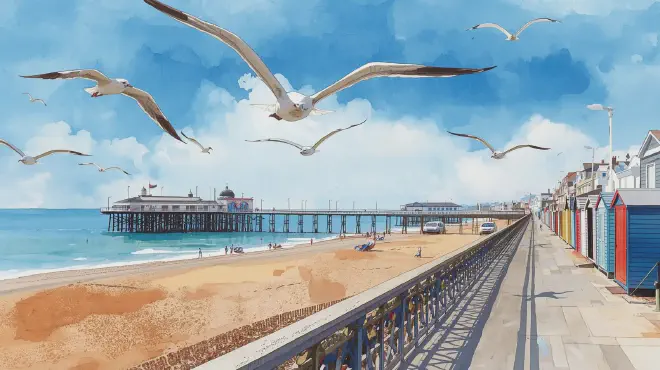
Brighton lies about an hour south of London by train, a seaside town spreading along England’s southern coast. In the 19th century, it flourished as a resort beloved by George IV, and still retains that glamour and free-spirited air. Facing the English Channel where white chalk cliffs continue, the stone pier called Palace Pier stretching into the sea is the town’s symbol.
A curious place where Victorian elegance mingles with countercultural freedom. Along streets where rainbow flags fly, old bookshops and vintage stores line up, and on weekends, music overflows. The exotic domes of the Royal Pavilion float in the sky, and young people’s laughter echoes through the cobblestones of the North Laine.
The pebbled beach along the coast, the diverse attire of passersby, and the changeable weather of the sea. Brighton was a place with the kind of depth that gently welcomes those who have somehow escaped London’s bustle.
Day 1: Pebbled Shores and Exotic Dreams
The train departing Victoria Station eventually passed through green rolling hills, and suddenly the view opened. The English Channel. A grayish-blue sea spread beyond the window.
I arrived at Brighton Station around 11 AM. The station building was surprisingly modest, with a welcoming familiarity befitting a provincial gateway. Walking down the slope extending from the station plaza, the smell of the sea soon tickled my nose. Salt-laden wind hit my cheeks, and that alone made me feel I had truly arrived on a journey.
First, to the accommodation. I had booked a small B&B along Queens Road. A converted Victorian building with white exterior walls and pastel blue window frames—charming. The elderly owner welcomed me with “Welcome” in a soft accent. My room was on the third floor, with a view of neighboring rooftops and, beyond them, a glimpse of the sea. I dropped my bags and immediately headed out into town.
Lunch was at a café in the North Laine area. This neighborhood is delightful just to walk through, with unique shops densely packed along narrow lanes. I chose a vegetarian café and ordered chickpea curry with flatbread. Well-spiced and surprisingly authentic. From my window seat, I watched people come and go. A young person with bright pink hair, an elderly man walking his dog, a couple pushing a stroller. Everyone enjoying the town in their own way.
In the afternoon, I went to the seaside. Brighton Beach is covered not with sand but with round pebbles. Walking produces a rattling sound underfoot, somewhat difficult at first. But I quickly got used to it. I took off my shoes and walked barefoot over the stones. The cool sensation was pleasant. I sat by the water’s edge and gazed blankly at the sea. The sky was covered with thin clouds, and the sun dropped pale light through the gaps.
The pier, Brighton Palace Pier, was bustling with tourists. Admission was free. Walking on the wooden floor, you could see the sea through gaps underfoot. It had an amusement park atmosphere, with a carousel and game arcades, and the smell of fish and chips drifting about. I walked to the pier’s end and savored the sensation of being surrounded by sea. Looking back, I could see the whole town spreading along the coastline. White buildings lined up, with green hills continuing behind them. A beautiful view.
Coming down from the pier, I walked west along the seaside promenade. As dusk approached, the light gradually changed to orange. Joggers, dog walkers, couples gazing at the sea from benches. Each person’s time flowing leisurely.
Dinner was at a pub in the Lanes district. “The Cricketers,” an old establishment founded in 1547. Low ceilings with dark wood interiors, old photographs and paintings decorating the walls. I ordered fish and chips and a local pale ale at the counter. The freshly fried cod had crispy batter with fluffy interior. I doused it liberally with malt vinegar and squeezed lemon. The chips were thick and fluffy. The beer was refreshing, pairing well with the fried food. An elderly local man sitting next to me amiably asked, “Traveling?” When I answered “From Japan,” he smiled and said, “Welcome from so far away. Brighton’s a good town.”
I returned to the accommodation past 9 PM. Opening the room window, I could faintly hear waves in the distance. After showering, I lay on the bed. The sensation of pebbled beach, the smell of the sea, the murmur of the pub. They mixed together pleasantly, and I fell into deep sleep.
Day 2: Over the Hills to White Chalk Cliffs
Breakfast was in the accommodation’s dining room. The staples of an English breakfast were laid out. Bacon, sausages, baked beans, mushrooms, tomato, and scrambled eggs. The toast was thick-cut, which I spread generously with butter and marmalade. While drinking strong tea, I exchanged a few words with the elderly owner. When she asked, “Where are you going today?” and I answered, “To the Seven Sisters,” she smiled and said, “Wonderful. The weather looks good too, you’ll see the best views.”
In the morning, I first went to the Royal Pavilion. A villa built by George IV, with an exterior in Indian Mughal style and Chinese-style interiors—a strange combination. Like a palace from a fairy tale. Onion-shaped domes and minaret-like towers standing out under the English sky.
The interior was more luxurious than I’d imagined. A huge chandelier hung from the Banqueting Room ceiling, decorated with dragons. The Music Room murals, the gorgeous bedroom decorations. Everything excessively splendid, a space where the king’s dreams seemed materialized. I tried to imagine how people of that time felt. Probably surprised, bewildered, and then captivated.
Leaving the Pavilion, I strolled through the adjacent gardens. Manicured lawns, colorful flower beds. I sat on a bench and rested for a while. Tourists and locals enjoying the gardens in their own ways.
Before noon, I headed to the bus stop to go to the Seven Sisters. About 30 minutes east from Brighton, I took a bus toward Eastbourne. The bus ran along the coast, eventually entering inland rolling hills. Typical English countryside with sheep dotting pastures.
I changed buses at a small town called Seaford and headed to Seven Sisters Country Park. At the visitor center, I got a simple map and started walking. My destination was the coastline where white chalk cliffs continue.
I climbed gentle hills. Underfoot was grassland, with small flowers blooming here and there. The wind was strong, disheveling my hair. After walking about 20 minutes, the view opened. There were the Seven Sisters.
White chalk cliffs undulating like waves. Seven rises literally lined up like “seven sisters,” with the blue sea of the English Channel washing their feet. The sky was clear, and the white cliffs reflected sunlight so dazzlingly. Breathtakingly beautiful.
I walked along the cliff edge. No fences, just grassland ending at the precipice. Over 70 meters high. A misstep would certainly not end well. But more than fear, I felt liberation. Wind enveloped my whole body, pulling my hair, flapping my clothes. Seabirds glided on the wind, occasionally crying out.
I sat on the cliff top and ate the sandwich I’d brought. Something I bought at the visitor center café—simple cheese and pickle. Slowly chewing while gazing at the sea. A cargo ship visible in the distance. Time flowing slowly.
The return bus was after 4 PM. I got back to Brighton around 5:30. A bit tired, but a pleasant fatigue. After resting briefly at the accommodation, I went out for dinner.
Tonight I was in the mood for seafood. I went to an oyster bar called “Riddle and Finns” near Brighton Pier. Sitting at the counter, I ordered six raw oysters. Tasting them with lemon and Tabasco. The taste of the sea filled my mouth. Fresh, creamy, even slightly sweet. White wine paired well. For the main, mussels steamed in white wine. The aroma of garlic and parsley was appetizing. I scooped up the broth with baguette.
Leaving the restaurant, the nighttime seaside spread before me. The pier’s lights reflected on the sea surface, creating a dreamlike atmosphere. Walking the promenade, I listened to the sound of waves. A quiet, calm sea, different from daytime.
On the way back to the accommodation, I looked up at the sky. Clouds had broken, revealing some stars. Stars rarely visible in London. I felt again this town’s closeness between sea, sky, and people.
Day 3: Morning Market and Time to Say Goodbye
On the final morning, I woke slowly. The soft light streaming through the window made me realize it was already the day to leave. After breakfast, I packed my bags and checked out. The elderly owner saw me off, saying, “Please come again.”
I stored my luggage in a coin locker at the station and went out for a final stroll. On Saturday morning, an open market was being held, so I headed to the market along Upper Gardner Street.
Tents lined the street in rows. Vegetables, fruits, cheese, bread, flowers, antiques, clothing. Everything imaginable being sold. Bustling with locals, full of energy. A vegetable seller calling out loudly. “Today’s strawberries are the best! Three packs for five pounds!”
At a bakery tent, I bought a sausage roll. Freshly baked and still warm. Taking a bite right there, the buttery pastry was flaky, and the sausage inside well-spiced. Delicious.
At a cheese shop, I sampled Sussex cheddar. Rich with a nutty flavor. “How about as a souvenir?” they suggested, but unfortunately I couldn’t take it back. I smiled and said, “I’ll buy some next time I come.”
Leaving the market, I went to the North Laine once more. I walked lanes different from yesterday. I stopped in front of an antiquarian bookshop. The interior was packed with books up to the ceiling. In the back, an elderly man who seemed to be the owner was reading. Victorian travelogues, old maps, poetry collections. A place where I could stay for hours if I had time.
I also stopped at a record shop. Vintage rock and punk records lined up. Music played inside, and a young clerk sat languidly at the counter. Brighton is also a music town, the guidebook had said. Indeed, music somehow suits this town.
Looking at my watch, it was 11:30. Time to head to the station. But first, I wanted to see the sea one more time, so I went down to the beach.
Standing on the pebbled shore, I listened to the sound of waves. Nothing had changed from when I came here two days ago. The same sea, the same stones, the same waves. But something inside me had changed, I felt. It’s always like this when I travel. Places don’t change, but I change a little.
I took a deep breath and waved small toward the sea. “Thank you, Brighton,” I murmured in my heart.
I returned to the station and boarded the London-bound train. The sea visible from the car window gradually receded. Eventually it disappeared from view, replaced by green rolling hills. I sank deep into my seat and closed my eyes.
In my ears, the sound of waves still remained. The smell of the sea, the sensation of stones, the sound of wind. They slowly settled into my heart. As travel memories.
What Was Felt Clearly, Though Imaginary
Brighton was a place where sea, sky, and people mingle. Glamour and freedom, history and modernity, quietness and liveliness. A town with the depth to allow everything to coexist, to permit everything.
The time sitting on the pebbled beach gazing at the sea, the sensation of being blown by wind atop white chalk cliffs, the casual conversation exchanged with a neighbor at the pub, the market’s vitality, the quiet morning walk. These are now certainly within my heart. Even if it was an imaginary journey, what I felt was real.
Travel is not just about going places. It’s about feeling the air of that land, touching people’s lives, and bringing something back within yourself. Perhaps this is the same whether you actually set foot there or journey in your heart.
Will I ever truly visit Brighton someday? If I do visit, how different will it be from what I felt in this imaginary journey—or how similar? I want to find out.
But for now, I’ll keep this journey in my heart. The light and shadow of the seaside town, the sound of wind, the smell of waves. Everything.