
An Invitation to Seoul’s Lungs
Bukhansan National Park, located at the northern edge of Seoul, is both the smallest national park in South Korea and known as the most visited national park in the world. Within its modest 76.9 square kilometers, granite peaks rise with Baegundae (837m) as the main summit, and the mountain has long been affectionately known as “Samgaksan” (Three-Peaked Mountain).
This mountain is more than a mere nature reserve. During the Joseon Dynasty, it served as a royal hunting ground, then endured the Japanese colonial period, and later became a fierce battleground during the Korean War. Within the mountain, Jingwansa Temple, founded during the Silla period, and the fortress walls of Bukhansanseong from the Goryeo Dynasty still remain, creating a unique landscape where nature and history interweave.
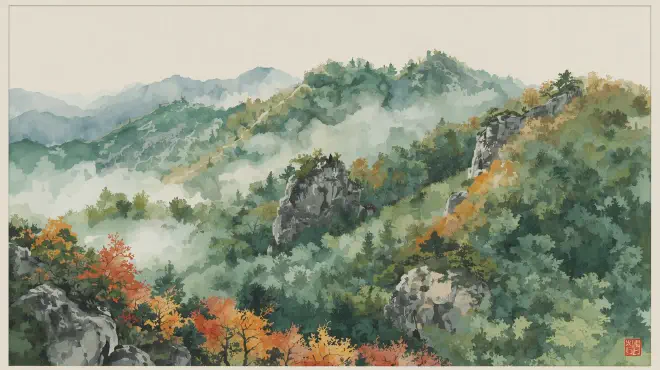
White granite rock faces, deep green pine forests, and wildflowers blooming through the four seasons. This mountain, reachable in less than thirty minutes from the city, exists as a spiritual home for Seoul’s residents. The autumn foliage is particularly breathtaking, while spring cherry blossoms, summer’s lush green shade, and winter’s snow-draped scenery offer completely different expressions with each season.
This journey is a record of three days and two nights, embraced by Bukhansan’s breast, touching the depths of Korea’s nature and culture.
Day 1: Wrapped in the Warmth of the Mountain’s Foot
After transferring between subway and bus from Incheon International Airport, I finally arrived at a small guesthouse at the foot of Bukhansan around 2 PM. Mid-October in Korea carries a pleasant coolness similar to late autumn in Japan, with crisp, clear air. The proprietress, a refined woman in her sixties, welcomed me with warm, if not entirely fluent, Japanese.
“You’ve come from Japan? Bukhansan is very beautiful. The fall colors are at their best right now.”
After leaving my luggage in my room, I set out to find something to eat. About five minutes’ walk from the guesthouse, I found a small restaurant bustling with locals. A sign advertising “Wild Vegetable Bibimbap” caught my eye, and I didn’t hesitate to duck under the noren curtain.
Inside, old wooden tables and chairs were arranged, and photographs of Bukhansan through the four seasons decorated the walls. When the elderly proprietor came to take my order, I pointed to request the wild vegetable bibimbap. Soon, a bowl arrived beautifully arranged with colorful mountain vegetables—fernbrake, bellflower root, bracken, bean sprouts, and carrots—topped with a soft-boiled egg in the center. When I mixed in the gochujang and took a bite, the mountain’s bounty filled my mouth. The gentle earthy aroma and the distinct textures of each vegetable harmonized exquisitely.
When I stepped outside after the meal, the western sun was painting the mountain ridgeline gold. To prepare for tomorrow’s hike, I stopped at a nearby outdoor equipment shop. The shopkeeper kindly gave me a map in Japanese and recommended a route.
“If you’re going to Baegundae, the Ui-dong course is the best. The scenery is truly beautiful.”
Around 6 PM, when I returned to the guesthouse, the proprietress was preparing dinner. Tonight’s menu was kimchi jjigae, bossam, and various side dishes. The deep sourness and spiciness of the kimchi stew warmed my body, while the bossam—boiled pork wrapped in cabbage—melted tenderly in my mouth.
“Are you going to the mountain tomorrow? Please be careful.”
As I chatted with the proprietress in halting Korean and Japanese, a Korean man in his sixties at the neighboring table spoke to me. A former teacher, he told me about Bukhansan’s history in fluent Japanese.
“This mountain, you see, saw very fierce fighting during the Korean War. It’s so peaceful and beautiful now, but fewer and fewer people remember those days. Yet the mountain remembers—it remembers everything.”
His words were heavy, yet filled with deep affection. Having overcome the scars of war, the mountain now offers peace to many who enjoy it. I felt an inexpressible emotion at this fact.
Around 9 PM, I returned to my room and prepared for tomorrow’s hike. Outside the window, the black silhouette of Bukhansan stood illuminated by streetlights. Its majestic presence heightened my anticipation for tomorrow. Wrapped in the warmth of the ondol floor heating, my first night in Korea’s mountains deepened.
Day 2: The Path to Baegundae and a Dialogue with the Heart
At 6 AM, I received a packed lunch prepared by the guesthouse proprietress and set out. Inside were kimbap, boiled eggs, and barley tea in a small thermos. Sent off by her encouraging “Do your best!”, I headed toward the Ui-dong course trailhead.
At 7 AM, I arrived at the trailhead to find many hikers already doing warm-up exercises. Elderly couples, young couples, people hiking alone—each with their own purpose for climbing the mountain. After registering at the trail station, my journey toward Baegundae truly began.
The first thirty minutes took me along relatively gentle mountain paths. The morning air was cold and refreshing, penetrating deep into my lungs. Maples and oak trees in autumn colors lined both sides of the path, while fallen leaves created a soft carpet underfoot. Occasionally, squirrels leapt from tree to tree—a rich natural display that belied the mountain’s proximity to the city, making my heart dance.
After walking for about an hour, I reached the fork dividing toward the main peak and Jingwansa Temple. Today I was aiming for Baegundae, so I continued toward the main peak. From here, the gradient gradually steepened, and exposed granite rock faces began to appear.
Around 10 AM, I sat down on a roadside rock for a short rest. Looking back, Seoul’s cityscape appeared hazy in the distance. Beyond the high-rise buildings, the Han River flowed leisurely, with the small silhouette of Namsan Tower visible beyond. Separated from the city’s bustle, viewing it from this height made human endeavors feel both very small and deeply precious.
After climbing another hour, I finally reached the summit of Baegundae. The view from 837 meters was magnificent. Below, undulating mountains stretched out, with valleys winding between them glinting silver. To the north spread the cityscape of Uijeongbu, while to the south, Seoul’s vast metropolitan area could be seen at a glance.
Many hikers occupied the summit, each enjoying the scenery in their own way. A Korean woman in her seventies sitting beside me spoke in beautiful Japanese.
“Are you from Japan? This mountain is truly beautiful, isn’t it? I’ve been climbing this mountain for forty years.”
She had loved Bukhansan since her youth and was intimately familiar with the mountain’s changing expressions through the seasons. The fall foliage at this time of year was especially spectacular, she told me poetically, “like the mountain is on fire.”
When I opened the proprietress’s lunch at the summit, the scent of kimbap seaweed mingled with the mountain air, enveloping me in an indescribable happiness. The simple ingredients—egg, pickled radish, carrot, and seasoned beef—harmonized perfectly, and eating it on the mountain made it taste exceptionally delicious.
Around 1 PM, I began my descent. For the way down, I chose the route via Jingwansa Temple. After about thirty minutes, an ancient temple surrounded by deep green came into view. Jingwansa was an old temple founded during the Silla period (7th century), destroyed once during the Korean War but later rebuilt.
The temple grounds were wrapped in stillness. When I put my hands together before the main hall, the faint sound of sutra chanting calmed my heart. In the courtyard stood an ancient ginkgo tree, its golden leaves shining in the sunlight. I sat beneath it and spent some time in meditation.
Around 3 PM, I left Jingwansa and continued my descent. Along the way, I passed the fortress wall ruins of Bukhansanseong. The stone walls, said to have been built during the Goguryeo period, stood firm despite the long passage of time. Feeling the weight of history, I slowly descended the mountain path.
At 5 PM, I arrived back at the trailhead. My legs were tired, but my heart was filled with satisfaction. While waiting at the bus stop, I encountered the elderly couple I’d exchanged greetings with that morning. “How was your mountain walk today?” they asked, and in halting Korean I answered, “It was truly beautiful.”
When I returned to the guesthouse, the proprietress made me perilla tea. The warm tea permeated my tired body. Tonight’s dinner was samgyetang. The chicken was so tender it fell apart, and the refined bitterness of the ginseng was effective for recovery from fatigue.
Around 8 PM, I washed away my sweat at a small public bath nearby. Soaking in the hot water, I reflected on the day’s mountain walk. Nature’s grandeur, the warmth of the people I met, and the inner peace felt in the stillness—Korea’s mountain had given me emotions far deeper than I’d imagined.
Returning to the guesthouse, I wrote in my journal as the day came to a close. Outside the window, Bukhansan melted into the darkness of night. Tomorrow would be my last day. Regretting my parting with this mountain, the second night quietly deepened.
Day 3: A Morning of Farewell and Landscapes Etched in the Heart
On the final morning, I woke earlier than usual. At 5:30 AM, I rose in the dim light and stood by the window to see Bukhansan’s ridgeline beginning to glow with the sunrise. The sky’s colors transitioning from purple to pale pink to gold were so beautiful, as if the mountain itself regretted our parting.
The guesthouse proprietress was also an early riser and was already preparing breakfast. This morning’s menu was doenjang jjigae, grilled mackerel, and various side dishes. Korean doenjang jjigae is slightly spicier than its Japanese counterpart, and the deep flavor of fermented soybeans warmed me from within.
“You’re going home today. I’ll miss you.”
At those words from the proprietress, I felt the same. Though it had been only two nights and three days, this guesthouse already felt like a second home.
Around 8 AM, I went out for one last walk. Around the guesthouse were small village roads dotted with traditional hanok houses and small vegetable gardens. Walking in the fresh morning air, I noticed a man in his seventies harvesting autumn cabbage.
When I greeted him with “Good morning,” he responded with a friendly smile. Though we didn’t share a language, he tried to give me a freshly harvested cabbage. I politely declined with thanks, but his kindness touched me deeply.
After circling the village, I returned to the guesthouse—it was time to pack. The mementos I’d collected over these two days—the hiking map, an amulet from Jingwansa, photos taken at the summit—I carefully stored in my suitcase.
At 10 AM, I bid farewell to the proprietress and left the guesthouse. Along the short walk to the bus stop, I kept turning back. Bukhansan’s green ridgeline seemed to wave goodbye.
“Please come again. Bukhansan will always be here.”
The proprietress’s final words were carved deep in my heart.
On the bus toward downtown Seoul, Bukhansan visible through the window gradually grew smaller. Yet its majesty felt more vivid, more immense in my memory. The faces of the people I met on the mountain, the stillness of Jingwansa, the magnificent view from Baegundae, and the warm hospitality of the proprietress—all of it radiated a warm light deep in my heart.
At noon, I arrived at Incheon International Airport. While waiting for departure procedures, clutching my boarding pass, I felt anew the magnitude of what I’d gained from this journey. It was not merely a tourist experience, but a dialogue with nature, an encounter with a different culture, and above all, a deep meeting with myself.
As the plane took off and the Korean Peninsula spread below the window, I put my hands together in my heart, offering gratitude toward Bukhansan. I vowed I would surely return someday.
What Was Clearly Felt, Though Imaginary
These three days and two nights at Bukhansan became an unforgettable experience for me. I was able to feel the grandeur of Korea’s nature, the warmth of its people, and the weight of its history on my skin. What particularly impressed me was the deep love and respect Koreans have for mountains and nature. I realized that for them, Bukhansan is not merely a tourist destination but a spiritual home and pillar.
Even with language barriers, hearts connect through smiles and gestures. The warm hospitality of the guesthouse proprietress, interactions with fellow hikers on the mountain, the kindness of the elderly man I met in the village—all of these richly colored my travel memories.
Food was also a great pleasure of the journey. The natural flavors of wild vegetable bibimbap, the nourishing depth of samgyetang, and each morning’s warm doenjang jjigae—all were simple yet deeply flavorful dishes making use of the land’s bounty.
Bukhansan’s nature, despite its proximity to the city, was surprisingly rich and diverse. The magnificent scenery of towering granite peaks, clear streams flowing through deep valleys, colorful autumn foliage. And above all, the peace of mind I felt in the stillness of Jingwansa was a precious experience that let me forget daily bustle.
What I realized on this journey is that the true value of travel lies not in the fame or luxury of the places visited, but in genuine encounters with the people and nature of that land. Bukhansan may have taught me the meaning of simple happiness.