
A Treasure Trove of Life Floating in the Pacific
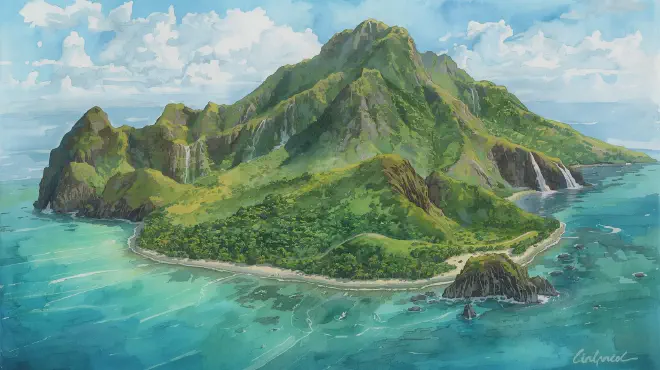
About 550 kilometers southwest of mainland Costa Rica, floating in the blue Pacific Ocean, lies Cocos Island (Isla del Coco)—a place truly worthy of being called an earthly paradise. This small island, covering just 24 square kilometers, was designated a UNESCO World Natural Heritage Site in 1997 and remains one of the most pristine places on Earth.
Born from volcanic activity, this island is enveloped in a tropical rainforest climate that receives 7,000 millimeters of rainfall annually. Despite its proximity to the equator, the oceanic climate keeps temperatures comfortable year-round at around 26 degrees Celsius. Yet it is precisely this abundant rainfall that sustains the island’s astonishing biodiversity.
On land, 235 plant species have been documented, 70 of which are endemic. Ninety-seven bird species inhabit the island, including the beautiful Cocos Island finch and Cocos Island cuckoo—species that have evolved nowhere else on Earth. But the true allure of Cocos Island lies beneath the waves. The surrounding waters are home to the world’s largest schools of hammerhead sharks, along with whale sharks, manta rays, and countless tropical fish.
Since its discovery by Spanish explorers in the 16th century, Cocos Island has served as a hideaway for pirates, and legends of buried treasure persist to this day. Now uninhabited, the island is under strict government protection, with landing permits granted only to researchers and a limited number of tourists.
A journey to this mysterious island is no ordinary vacation. It is a pilgrimage of the soul—a chance to face pristine nature completely detached from modern society and feel the very life force of our planet.
Day 1: The Door to the Lonely Island Opens
When I boarded at Puntarenas port at 6 a.m., the Pacific was still shrouded in morning mist. A 36-hour sea voyage was beginning. The “Sea Hunter,” a Costa Rican government-certified dive vessel, is the only means of access to Cocos Island. Aboard were twelve divers including myself, along with six experienced crew members.
As the boat pulled away from port, the Costa Rican coastline slowly receded into the distance. Standing on deck with the sea breeze against my face, anticipation for the coming adventure mingled with anxiety about being completely cut off from civilization. Wolfgang, a veteran diver from Germany and one of my fellow passengers, stood beside me and quietly remarked, “Cocos Island is a place that changes your life.” For him, this was his fifth visit to the island.
Lunch was served aboard: gallo pinto (rice and beans), fried plantains, and fresh fish ceviche—simple Costa Rican home cooking that served as a bridge to the extraordinary experience ahead. I spent the afternoon reading in my cabin and chatting with other passengers on deck. Maria, an American marine biologist, spoke enthusiastically about her research experience at Cocos Island.
By evening, the boat had entered open ocean. Looking in all directions, no land was visible—only blue sea and sky melding at the horizon. This overwhelming sense of solitude, I realized, was the overture to the Cocos Island experience. As I ate dinner in the ship’s dining room, the thought that we would reach that legendary island tomorrow evening made something deep in my chest begin to burn quietly.
At night, I surrendered to the boat’s rocking and gazed at the star-filled sky. Completely free from urban light pollution, the Milky Way flowed across the heavens like a white ribbon. In the silence broken only by the sound of waves, I fell asleep with anticipation for tomorrow. That night, I dreamed I was walking through Cocos Island’s deep green forest.
Day 2: In the Ocean Sanctuary Teeming with Life
At 5 a.m., I woke to the sound of the boat’s engines stopping. When I climbed to the deck, a green cliff-covered island towered before my eyes. It was Cocos Island. The island in the morning sun was magnificent—truly worthy of being called the Pacific’s jewel. The entire island was covered in primeval forest, with dozens of waterfalls cascading from heights of several dozen meters into the sea.
In the morning, we immediately began our first dive around the island. We descended at a site called “Alcyone.” At thirty meters depth, it was another world. Visibility exceeded forty meters, and in the blue light, countless shadows of hammerhead sharks danced. A school of over three hundred hammerheads swimming gracefully like birds in flight—the beauty was beyond words.
Our guide Carlos was a veteran who had been diving in these waters for over twenty years. Looking where he pointed, an enormous whale shark slowly appeared. Easily ten meters long, its overwhelming presence took my breath away. And as if welcoming us, it swam alongside us for a while.
After returning to the boat for lunch, we received permission to land on Cocos Island in the afternoon. When we came ashore at the small beach in Chatham Bay, completely untouched nature spread before us. Countless hermit crabs crawled across the sand, and various bird calls echoed from the forest.
Walking the island’s trails, we entered a tropical rainforest jungle. Giant ferns and plants with flowers of shapes I’d never seen before grew in profusion. The air was humid, filled with the breath of life. Our guide Ana Lucía explained the island’s endemic plants in detail. “This island, along with the Galápagos, is an extremely important place for studying biological evolution,” she told us.
In the evening, we did a second dive at “Genovesa” point. This time we encountered manta rays. A giant manta with a wingspan of at least four meters danced through the water as if performing ballet. Its graceful movements truly deserved the name “angel of the sea.” Nearby, colorful tropical fish wove through the coral reefs.
That night we dined on deck. Grilled fresh fish, gallo pinto, and plantain chips. Simple fare, but after a full day of diving, it tasted better than anything. After dinner, we shared the day’s experiences with our fellow passengers and built anticipation for tomorrow.
The night under the stars was extraordinary. A sky full of stars that could never be seen in the city felt close enough to touch. In the silence broken only by wave sounds, as I reflected on the marine creatures I’d met today, I deeply realized that I too am part of life on this planet called Earth.
Day 3: A Morning of Farewell and Eternal Memory
On the final morning, I woke especially early to watch the sunrise. At 5:30 a.m., I climbed to the deck to find the eastern sky beginning to blush faintly red. Cocos Island’s silhouette emerged from the morning mist, and soon the sun peeked above the horizon. Golden light illuminated the sea surface, and the entire island seemed to shine with divine radiance. The beauty of this moment is something I will surely never forget.
In the morning came our final dive. “Dirty Rock,” the site with the densest fish population at Cocos Island. Entering the water, it was truly an underwater palace. Countless creole fish formed silver clouds, through which large jacks schooled. In the rock crevices, brilliantly colored angelfish and butterflyfish danced, while rays glided along the bottom, stirring up sand.
The most memorable encounter in this dive was with whitetip reef sharks. A beautiful shark about two meters long approached as if to observe me, and for a moment our eyes met. In that instant, I felt there was some kind of communication beyond words between human and wild animal.
When I surfaced and looked up at Cocos Island for the last time, something welled up in my chest. What I had experienced over these two days transcended mere tourism or adventure. It was an encounter with the very life force of planet Earth itself—a profound spiritual experience that made me question the meaning of my own existence.
In the afternoon, we landed on the island for our final time together. Sitting on the beach, listening to the sound of waves lapping the shore, I reflected on these two days. The school of hammerhead sharks, swimming alongside the whale shark, the graceful dance of the manta rays, and the mysterious silence of the primeval forest. Everything seemed dreamlike, yet was certainly etched in my heart.
Wolfgang sat beside me and spoke again: “Cocos Island changes people. Before coming here and after, the way you see the ocean, nature, and yourself is different.” His words perfectly expressed what I was feeling.
At 4 p.m., the boat departed Cocos Island. From the deck, the island appeared as magnificent and beautiful as when we arrived, but this time farewell’s loneliness gripped my chest. I stood on deck until the island gradually shrank and finally disappeared beyond the horizon.
That night we enjoyed our final dinner aboard. Grilled lobster specially prepared by the crew, traditional Costa Rican gallo pinto, and tropical fruit dessert. We spent time that would become lifelong memories, sharing these three days’ experiences with our fellow passengers.
Late at night, alone on deck, I turned my gaze toward where Cocos Island lay. The island’s form was no longer visible, but it certainly exists there—that island teeming with life. And I had an unforgettable experience there. Tomorrow night we would arrive at Puntarenas port and return to the everyday world. But what I gained at Cocos Island will remain with me forever.
What Was Felt Though Imaginary
This journey is fictional. Yet the time spent swimming through Cocos Island’s blue waters, walking through primeval forests, and gazing up at star-filled skies—following these words—truly exists within me. Though imaginary, it is carved into my heart as real emotion and memory.
The power of a place called Cocos Island reaches even the hearts of those who have never actually visited. This is because deep in the human heart lie dormant yearnings for untouched nature and reverence for the mystery of life. In reading this story, perhaps you too became an inhabitant of Cocos Island, witnessing the radiance of life in the blue Pacific.
In the real world, a journey to Cocos Island is not easy. Strict permit systems, high costs, long boat journeys—many constraints exist. But if we spread the wings of imagination, we can land on that island right now. And the emotions and insights gained there are never inferior to reality.
If this “imaginary journey” plants a small seed of adventure in readers’ hearts and becomes a catalyst for nurturing love of nature and interest in the global environment, I would be grateful. We are all inhabitants of this beautiful planet called Earth, and perhaps we should more deeply appreciate the miracle that places like Cocos Island exist.
The three days on that small island floating in the Pacific have ended. But those memories will live forever in my heart. And sometimes, when tired by the clamor of daily life, I will return to Cocos Island in my mind—beneath those transparent waters, that forest teeming with life, and that star-filled sky.