
Introduction
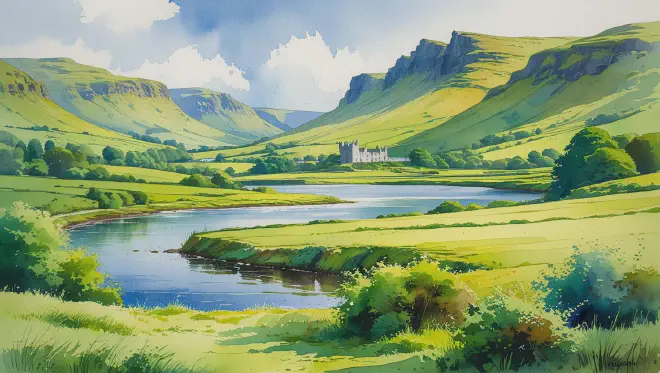
In the western reaches of Ireland, tucked away in County Mayo, lies the small village of Cong. Home to roughly 150 souls, this village is known to the world as the setting for the film The Quiet Man. Nestled in verdant land surrounded by the Cong River and its tributaries, the ruins of Cong Abbey, built in the 12th century, still stand in silent repose.
This is a place where time seems to have stopped. Stone cottages lean against moss-covered walls, and sheep graze leisurely in the pastures. True to its name—derived from the Irish word meaning “narrow neck”—the village sits on a slender strip of land between two lakes. This land connecting Lough Corrib and Lough Mask has long been a crossroads for travelers and a place of prayer for monks.
Traditional Irish music drifts on the wind, and warm light and laughter spill from the pubs. Here, nature and human life exist in harmony, wrapping visitors in a gentle flow of time. I would like to record my quiet, solitary walk through Cong over two nights and three days.
Day 1: Welcomed by Memories in Stone
I watched the landscape gradually change from the window of the bus heading west from Dublin. As the urban clamor faded and green hills began to spread before me, my heart grew lighter. The bus arrived in Cong around two in the afternoon. The moment I stepped off, cool, clear air brushed against my cheeks.
My first destination was the ruins of Cong Abbey. Built in the 12th century, this monastery was rebuilt by Ruaidrí Ua Conchobair, the last High King of Ireland. Stone arches reached toward the blue sky, and I could almost hear the footsteps of the monks who once offered prayers here.
Walking through the ruins, my eyes were drawn to intricately decorated stone pillars. Celtic patterns were delicately carved into the stone, their beauty preserved through eight hundred years. Sunlight streamed through gaps in the masonry, casting complex shadow patterns on the ground.
Adjacent to the abbey was a small museum where I learned about Cong’s history. Gazing at the crosses and ornaments on display, I couldn’t help but feel the depth of culture nurtured in this land. Particularly striking was a replica of the Cross of Cong—a bronze processional cross made in the 12th century, renowned as a masterpiece of Irish metalwork.
As evening approached, I checked into Ryan’s Hotel. This historic establishment, founded in 1865, was also used during the filming of The Quiet Man. Photographs from that era adorned the lobby, with the smiling faces of John Wayne and Maureen O’Hara welcoming guests.
My room was a corner suite on the second floor, with a window overlooking the Cong River. After setting down my luggage and catching my breath, I noticed I was hungry. I decided to dine at the hotel restaurant. The menu featured dishes made with local ingredients. I ordered an Irish steak and a pint of Guinness.
The steak that arrived had a deep, rich flavor characteristic of cattle raised on Irish pastures. The colcannon—a traditional dish of mashed potatoes and cabbage—was simply satisfying, enhanced by the richness of butter. The bitterness and creamy head of the Guinness perfectly complemented the savory meat.
After finishing my meal, I stepped outside to find dusk had already fallen. I decided to take a stroll through the village center. Walking along the cobblestone streets, I heard music drifting from Pat Cohan’s Bar. When I opened the door, I was enveloped in warm light and the sound of laughter. Locals had gathered, singing along to the strains of fiddle and bodhrán.
I ordered a Jameson whiskey at the counter and sat in a corner seat. The amber liquid warmed my throat, accompanied by the scent of peat. Listening to the music, I reflected on the day. The silence of the abbey, the patterns carved in stone, the sound of the river flowing—everything was peaceful, and I felt my heart settling.
An old man who appeared to be a regular murmured something in Irish. Though I couldn’t understand, there was something mystical in the sound. Feeling the power of language rooted in this land, I savored my whiskey slowly. As the night deepened, I returned to the hotel. Opening the window of my room, the night breeze caressed my face. In the distance, an owl was calling.
Day 2: Embraced by Nature and Story
I woke to the murmur of the river. Looking out the window, I saw thin mist rising from the water’s surface. Before breakfast, I decided to take a short walk. Leaving the hotel and strolling along the riverside path, I encountered a local man fishing.
“Good morning,” I called out, and he responded with a smile. “Trying for salmon,” he said. The Cong River is known for its salmon runs, and this time of year promised especially good fishing. Listening to him speak, I began to see how the people born and raised here relate to the natural world.
I returned to the hotel for breakfast. The Irish breakfast was an array of bacon, sausages, eggs, black pudding, white pudding, and boxty—a potato pancake. Boxty was new to me; its crispy exterior and chewy interior was a delightful discovery.
For the morning, I decided to venture to Ashford Castle. About a thirty-minute walk from Cong, the castle now operates as a luxury hotel, but its majestic presence is well worth seeing. Standing on the shores of Lough Corrib, construction of the castle began in the 13th century, with its current form taking shape in the 19th.
The journey there was beautiful. Green pastures stretched endlessly, sheep dotting the landscape. Fields divided by stone walls held hazelnut trees, and beyond them the lake shimmered blue. It was the very image of the Irish countryside.
When I arrived at the castle, I was overwhelmed by its grandeur. The grey stone structure overlooked the lake from its commanding position. Walking the grounds, I was captivated by the beauty of the manicured gardens. Flowers of every color bloomed in profusion, and ancient trees lent a stately atmosphere.
I sat on a bench by the lakeside and gazed at the view for a while. Lough Corrib, I learned, is the second-largest freshwater lake in Ireland. Cloud shadows drifted slowly across the water’s surface, and occasionally I heard the splash of a jumping fish. Thinking of all the nobles and notable figures who had spent time here, I felt the weight of history.
I had lunch at the castle’s restaurant. From a window seat overlooking the lake, I enjoyed grilled salmon caught locally. The fresh fish was delicately flavored with dill and lemon—an elegant dish. The accompanying vegetables, also locally sourced, had an earthy, natural sweetness.
In the afternoon, I returned to Cong and wandered slowly through the village, visiting locations from The Quiet Man. First, I went to the cottage that served as Sean Thornton’s home in the film. Now open as a museum, it displays period household items and props used during filming.
The interior recreated a 19th-century Irish farmhouse. A wicker chair sat before the hearth, and a painting of the Virgin Mary hung on the wall—evidence of devout Catholic faith. In the kitchen stood a large coal stove with a black iron pot resting on top.
Next, I visited the site where the church scenes were filmed. A small stone building, it is still used by locals as a place of worship. The interior was modest, but the light filtering through stained glass was beautiful, and the space was wrapped in silence.
As evening fell, I stopped at a local café to rest. I ordered coffee and apple tart, taking a seat by the window. The tart was clearly homemade—buttery, flaky pastry filled generously with sweet-tart apples. Cinnamon lingered on my palate, pairing perfectly with the warm coffee.
The café owner was one of the few remaining people who remembered the filming. “The whole village was in an uproar back then,” he said with a laugh. Hollywood stars had descended on the small village, and locals had participated in the production. Hearing his stories, I understood how precious a memory the film remained for the people here.
That night, I visited a different pub. Dunfoley’s was more deeply local; I saw hardly any tourists. I ordered a pint of Guinness at the counter and listened to the conversations around me. Though I couldn’t understand the mix of Irish and English, the warmth of the atmosphere came through clearly.
Midway through the evening, a traditional music session began. Fiddle, tin whistle, and bodhrán filled the room, and several patrons joined in song. Traditional Irish songs carry a certain melancholy, as if reflecting the history and hearts of this land.
Listening to the music, I reflected on the day. The majesty of the castle, the stillness of the lake, memories of the film, encounters with people—each was deeply imprinted in my heart. Gazing at the foam on my Guinness, I felt a touch of sadness knowing the journey would end tomorrow.
Day 3: A Morning Farewell and What Remains in the Heart
On my last morning, I woke especially early. While it was still dim outside, I decided to walk along the river once more. The sound of flowing water was the only thing breaking the silence in the rising mist. That sound, I thought, had echoed through this village unchanged for hundreds of years.
I stopped by the riverbank and took a deep breath. Cold, clear air filled my lungs, clearing my head. In the distance, birds began to sing, heralding the new day. When I turned around, I could see the silhouette of the abbey ruins against the lightening sky.
I returned to the hotel for my final breakfast. This morning I chose Irish oatmeal. Warm porridge sweetened with honey had a simple but nourishing taste. Knowing the long journey home lay ahead, I felt the warmth spreading through my body.
Before checking out, I decided to visit the abbey one more time. In the morning light, the ruins wore a different expression from the day before. Morning dew clung to the stone surfaces, and the moss glowed even greener. I quietly observed the natural beauty that shifts with the passage of time.
Inside the abbey, I met an elderly woman—a local historian, she said. She spoke passionately about this place. “This is not merely a ruin,” she told me. “It is still a place where people’s prayers and wishes dwell.” Her words stayed with me. Indeed, in the silence after the tourists had left, I sensed something sacred.
Finally, I walked through the village center once more. Most shops had yet to open, and the quiet morning air lingered. Every stone cottage was well-maintained, showing the love of its inhabitants. Potted flowers on windowsills glowed beautifully in the morning sun.
Passing the bakery, I caught the scent of fresh bread. I could see the owner preparing for the day. He waved in greeting. Though I had stayed only two days, I had felt the warmth of this village’s people.
The time for the bus drew near. I collected my luggage from the hotel and headed to the stop. The driver was the same man from yesterday. “Did you enjoy yourself?” he asked. “Very much,” I replied. I truly meant it.
As the bus began to move, the village of Cong receded through the window. The abbey ruins, the flowing river, the stone cottages—they grew smaller and smaller, until finally they disappeared beyond the hills.
The landscape outside the window was as beautiful as when I had arrived. Green hills stretched on, dotted with sheep. But now I watched with a sense of farewell. Even as I felt the parting from this land, I also felt the weight of what I was carrying home.
On the road back to Dublin, I reflected on my time in Cong. Prayers carved in abbey stone, cloud shadows on the lake, music heard in the pub, the warm smiles of the people. Each would continue to live within me. What impressed me most was how deeply the people of this land were connected to nature.
Time flows slowly here; people live in rhythm with nature. There was something the modern world has nearly lost. A way of living that treasures each moment, free from the chase of busyness. Perhaps what I learned in Cong was the richness of such a life.
Closing
This journey was experienced only in imagination, yet it has become a memory that truly exists within my heart. Two nights and three days in the small village of Cong—though I never physically set foot there—return to me vividly.
Abbey ruins wrapped in morning mist, the stillness of Lough Corrib, traditional music heard in a pub, the warm smiles of locals. These memories, nurtured in imagination, carry a nostalgic weight, as if I had truly experienced them.
Travel, after all, is not only about visiting new places. It is also time spent facing oneself. Through this imaginary journey to Cong, I stepped away from the rush of daily life and found a dialogue with my own heart in the silence. Listening to prayers carved in stone and the murmur of the river, I may have heard voices within myself that usually go unnoticed.
Cong, a small village in Ireland I have never actually visited, will exist forever as a beautiful place in my heart. From time to time, in the midst of a busy day, I will surely remember and entrust my heart to its stillness and warmth.
A journey that, though imaginary, felt as if it truly happened. It was an experience that reminded me of the mysterious power of imagination. Journeys of the heart, like journeys in the real world, offer us new perspectives and deep emotion.