
An Island of Colors Floating in the Caribbean Sea
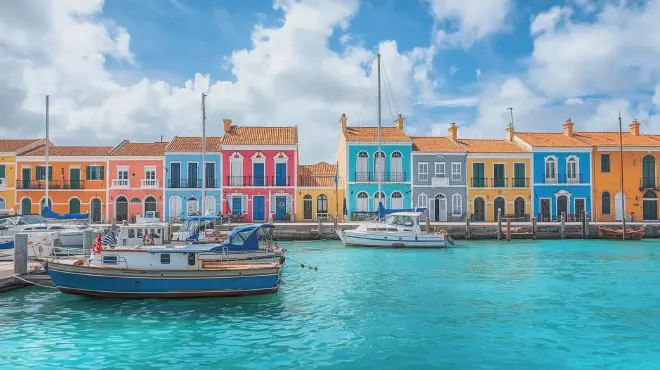
Curaçao is a small island floating in the southern Caribbean Sea, just 60 kilometers off the coast of Venezuela. Still preserving its unique culture as a Dutch territory, this island is known for the pastel-colored buildings lining the streets of Willemstad. It has a history of prosperity as a base for the Dutch East India Company, and remains a place where African, European, and Caribbean cultures intersect.
The island’s name is famous as the origin of the blue liqueur “Curaçao” made from orange peels, but upon actually visiting, you discover it’s a place filled with even more vivid colors than that. Under the strong Caribbean sunlight, buildings are painted in pastel blue, yellow, and pink, as if you’ve wandered into a picture book. While Dutch is the official language, Papiamento, a unique Creole language, is also widely spoken.
I wanted to visit this island not simply to see beautiful seas, but to witness with my own eyes this curious crossroads where Dutch and Caribbean cultures blend together.
Day 1: The Wind of St. Anna Bay and Punda’s Dusk
I touched down at Curaçao International Airport a little past 2 PM. Stepping out of the aircraft, the humid tropical heat characteristic of the Caribbean brushed against my cheeks. Yet strangely, it wasn’t unpleasant. On this island where trade winds constantly blow, even the heat mingles with a comfortable breeze.
From the taxi window heading toward the capital Willemstad, a landscape of dry land dotted with cacti spread before me. Curaçao lies south of the Caribbean’s hurricane belt, with low annual rainfall. Consequently, the vegetation is surprisingly barren—quite different from the tropical rainforest I had imagined.
Arriving in Punda district at the heart of Willemstad, the scenery transformed dramatically. A row of pastel-colored buildings facing the harbor. Most were built between the 18th and 19th centuries, fusing Dutch architecture with adaptations to the Caribbean climate. The buildings are all narrow and tall, with beautifully decorated facades. I learned that because taxes were once based on facade width, people built deep but narrow to minimize costs.
After checking into my hotel, with the sun still high, I immediately began exploring the city. I walked along the promenade by St. Anna Bay in Punda district. The Queen Emma Bridge connecting to the Otrobanda district across the bay is a pontoon bridge that swings open sideways whenever ships pass. Locals apparently call it the “Swinging Old Lady.” As I walked across the bridge, it began to open. The bridge slowly rotated sideways as a large cargo ship passed through. Meanwhile, people gathered on both sides, watching as if it were a show.
Around 4 PM, feeling thirsty, I entered a café along the harbor. “Café Gouverneur de Rouville,” housed in a renovated historic building. I ordered a local beer, “Amstel Bright,” and the classic snack “Keshi Yena”—Edam cheese hollowed out and stuffed with chicken and raisins, then baked. It was a dish where Dutch and Caribbean food cultures merged beautifully. The combination of rich cheese and spiced chicken was surprisingly light and paired well with the beer.
Sitting at an outdoor table, watching people pass by, I observed how naturally people of various skin colors mingled together. African, European, and mixed heritage. While Curaçao has a history as a slave trade transit point, today that diversity creates the island’s cultural richness.
As evening approached and the sunlight softened, the building colors appeared even more vivid. The contrast between the sky turning orange and the pastel blue buildings was beautiful. I began walking again, turning into back streets. Unlike the main tourist thoroughfare, here was local life. Laundry hung out to dry, children playing in the alleys. Every house painted in different colors, as if the entire city were a canvas.
For dinner, I headed to “Plasa Bieu,” a local food market recommended by a local. This is a renovated old market where multiple eateries line up. I chose “Carni Stoba,” a traditional stew, with “Funchi,” a cornmeal side dish. Carni Stoba is beef slowly simmered with tomatoes and spices, creating deep flavors. Funchi has a texture similar to polenta, absorbing the stew’s sauce beautifully.
The cheerful lady running the eatery approached me in broken English: “First time in Curaçao?” She recommended I try cactus soup tomorrow. On this island, cactus is actually used as an ingredient. Her smile and simple but heartfelt cooking warmed me on my first day of travel.
Before returning to the hotel that night, I walked along St. Anna Bay once more. The illuminated buildings reflected on the water’s surface, creating a fantastical scene different from daytime. From somewhere in the distance, salsa music drifted from a bar. My first night in Curaçao was a rich time filled with color, sound, and taste.
Day 2: Blue Caves and Memories of the Shallow Waters
In the morning, I sat down at the hotel breakfast buffet with a plate piled high with papaya and passion fruit. Tropical fruits have an intensity that seems to transform the strength of the sun directly into sweetness. Dutch-style cheese and ham were also available, again reflecting the cultural mix.
That day, I decided to head to the western beach area to experience the island’s nature. I rented a car and drove west along the coastline. Curaçao’s roads are relatively well-maintained and easy to navigate. Opening the window, the scent of the sea mixed with the occasional sweet fragrance of cactus flowers filled the air.
My first destination was “Playa Lagun,” a small cove. This is known as one of the island’s most beautiful snorkeling spots. A small beach surrounded by cliffs, with crystal-clear water spreading before me. I put on my snorkeling gear and slowly entered the sea.
The water temperature was pleasant, and visibility was astonishingly clear. Swimming a bit, colorful tropical fish immediately appeared. Yellow and blue striped fish, schools of silver-glinting fish, and a large moray eel lurking in the rocks. The coral reef wasn’t as massive as in other parts of the Caribbean, but appeared to be in healthy condition.
Floating weightlessly underwater, I understood why this island is called a “diving paradise.” The water clarity, abundant marine life, and most importantly, the natural state relatively untouched by human hands. After swimming for about 30 minutes, I returned to the beach to find a local family had arrived. The sounds of children joyfully jumping into the water echoed through the cove.
My other morning destination was “Shete Boka National Park.” A nature reserve on the island’s north coast where rough waves crash against cliffs. In contrast to the calm Caribbean Sea on the south side, the north receives waves directly from the Atlantic.
Walking through the park, I found several coves, each with its own name. Among them, “Boka Tabla” was spectacular. Waves rushed into a cave-like formation, creating thunderous sounds and sprays of water. It felt like hearing the Earth’s heartbeat. Looking down from the walkway, I was captivated by the sculptural beauty created by waves carving rock over time.
This location is also known as a sea turtle nesting site. From spring to fall, sea turtles choose this rough coast to lay their eggs. A sign read: “Night access is restricted during nesting season.” Protecting nature while sustaining tourism—the island clearly values this delicate balance.
Past noon, I arrived at “Westpunt,” a small village at the western tip. Here lies “Playa Forti,” a beach surrounded by cliffs. A restaurant sits atop the cliff, and the blue of the sea viewed from there is breathtaking.
Lunch was at “Jaanchie’s,” the clifftop restaurant. A place serving local fisherman cuisine, with a menu that changes based on the day’s catch. I chose grilled “Red Snapper.” Fresh fish similar to sea bream, simply seasoned with garlic and lime. The sides were “Funka,” fried sweet plantains, and rice with beans. Simple but showcasing the quality of the ingredients.
Eating by the window overlooking the sea, I watched young people jumping from the cliff into the ocean. Perhaps ten meters high? For local youth, it seemed like a test of courage. Their shouts mixed with the sound of waves.
In the afternoon, on the way back to the island’s center, I stopped at “Landhuis Chobolobo,” a liqueur factory. This is an established manufacturer of “Curaçao Liqueur,” continuing traditions from the 19th century. Joining a tour, I could see the production process using peels from local Laraha, a type of bitter orange.
Laraha is a variety of Valencia orange that grows in Curaçao’s dry climate. The flesh is bitter and inedible, but the peel has a unique fragrance. By drying the peel and steeping it in alcohol, that vivid blue liqueur is born. Of course, the blue color comes from food coloring—there are also orange and clear versions.
At the tasting counter, I tried several flavors. The classic Blue Curaçao harmonized orange fragrance with sweetness. There were also chocolate and coffee flavored versions, each with its own character. I bought a small bottle as a souvenir and left the factory.
In the evening, returning to Willemstad, I visited the “Kura Hulanda Museum.” This is a museum conveying the history of the slave trade, a place to confront Curaçao’s complex past. From the 16th to 19th centuries, this island was an important hub for the slave trade. People brought from Africa passed through this island to be sent to various parts of North and South America.
The museum displays chains used at the time and models of slave ships. A heavy history, but one that cannot be ignored. Curaçao’s current diversity stands upon this painful past. The final section highlighted the cultural contributions of Afro-Curaçaoan people, showcasing rich heritage in music, language, and cuisine.
For dinner, seeking a different atmosphere from last night, I went to “Gouverneur de Rouville” restaurant in Otrobanda district. A renovated historic mansion where you can dine in the courtyard. The menu offers both traditional and modern fusion dishes.
I ordered “Iguana Stew.” In Curaçao, iguana is also used as an ingredient. It took some courage, but I decided to try it. The taste resembles chicken but is slightly more fibrous with a distinctive flavor. The tomato-based sauce with local herbs made it more palatable than expected. For an appetizer, I also tried the previously recommended “Cactus Soup.” The sliminess of the cactus gave the soup body, with an exquisite balance of sourness and saltiness.
Leaving the restaurant, the Otrobanda district at night was quiet. In contrast to the tourist-heavy Punda district, this area has more of a residential atmosphere. Walking the cobblestone streets lit by streetlamps, I thought about the island’s multilayered nature. Behind the beautiful beaches and colorful townscape lies deep history. Knowing this seemed to change how I saw the landscape.
Day 3: A Morning at the Market and Farewell Winds
My final day of travel. With an evening flight, I still had the morning. Rising early, I headed to the “Floating Market” where locals gather. This is a waterborne market where merchants from Venezuela arrive by boat to sell fresh vegetables and fruits.
Arriving at the harbor, colorful small boats were lined up. On the boats, tomatoes, mangoes, papayas, bananas, and vegetables I’d never seen were piled high. Merchants negotiated with customers in Spanish and Papiamento. The sounds of price negotiations, laughter, and creaking boats mixed together in a vibrant morning scene.
I joined the local women and bought a mango. Venezuelan mangoes are especially sweet, I was told. The merchant on the boat cut the fruit with a knife for tasting. Sweetness so intense that juice dripped down. “Fresco, fresco (fresh),” the merchant laughed.
Near the market is also a fish market. Freshly caught tuna, snapper, and lobster lined up. Local chefs came one after another to make purchases, selecting fish with professional eyes. As a traveler, I felt I had briefly dissolved into this morning bustle.
Leaving the market, I walked through Punda district one last time. The buildings in the morning light looked different from previous days. In this quiet time before shops opened, cleaning staff washed the cobblestones, preparing for a new day.
I passed by “Mikve Israel-Emanuel Synagogue.” This is the oldest active synagogue in the Western Hemisphere, built in 1732. Curaçao has a Portuguese Jewish community with a history of coming to this island seeking religious freedom. Entering inside, sand covers the entire floor. This symbolizes the Jewish people’s desert journey after escaping Egypt. Here too, I could feel the island’s tolerance in accepting different cultures and religions.
Around 11 AM, I returned to my favorite café for a final coffee. Sitting at the same table, I ordered an iced coffee. St. Anna Bay spread before me as always, with the Queen Emma Bridge occasionally opening and closing. Tourists took photos, locals commuted. Though only two nights and three days, this scene would certainly remain within me.
Past noon, I checked out of the hotel and headed to the airport. The view from the taxi window remained dry with scattered cacti, the same as when I arrived. But now, I felt I understood the meaning of this landscape. This island’s strength, resilience, and beauty are proof of having survived harsh nature and complex history.
After checking in at the airport, with time before boarding, I ordered one last Curaçao liqueur at the airport bar. The vivid blue liquid reminded me of the Caribbean Sea’s color. Taking a sip, the bitter orange fragrance spread.
Outside the window, planes carrying new travelers were landing. Someone’s journey begins, someone’s ends. That’s what airports are. My two nights and three days in Curaçao were now quietly drawing to a close.
A Journey That Feels Real Despite Being Imaginary
As the plane took off and I watched Curaçao shrink through the window, I reflected on this journey. The pastel-colored townscape, transparent sea, rough waves, market bustle, and scenes of various cultures blending—these are remembered along with the texture of the air and people’s warmth, things you could never feel just from photos or videos.
Curaçao as an island possessed not only beauty but complexity. The history of the slave trade, the colonial past, and the ongoing multicultural coexistence. All of this exists in layers within this small island’s landscape.
Travel may not be merely about visiting places, but about touching the thickness of a place’s time. Even in a short two-night, three-day stay, by buying fruit at the morning market, eating stew at a local eatery, and looking down at the sea from clifftops, you can become part of that place.
And now, this journey has concluded in imagination. A place I haven’t actually visited, yet through writing, researching, and imagining, it has been carved into my memory as something certain. It is fictional, yet simultaneously a wish to truly visit someday.
The blue sea and colorful townscape of Curaçao still shine within my heart. That is the small treasure given to me by this imaginary journey.