
An Ancient Capital at the Foot of Mount Song
About 80 kilometers southwest from Zhengzhou, the provincial capital of Henan Province in central China, lies Dengfeng City, spreading at the foot of Mount Song (Songshan). This historic town is home to Mount Song, one of China’s Five Great Mountains and the Central Mountain among them. Above all, this place is known worldwide for the Shaolin Temple. This Zen Buddhist monastery, with its 1,500-year history, has nurtured a unique culture where martial arts and Buddhism merge.
But Dengfeng’s charm extends beyond the Shaolin Temple. The Guanxing Observatory, which chronicles the history of astronomical observation; the Songyang Academy, where Confucianism, Buddhism, and Taoism coexist; and the Songyue Temple Pagoda, said to be China’s oldest Buddhist pagoda. In 2010, the “Historic Monuments of Dengfeng in ‘The Centre of Heaven and Earth’” was inscribed as a UNESCO World Heritage Site. Mount Song, rising to 1,500 meters, displays different expressions through the four seasons, with autumn foliage being particularly spectacular.
What drew me to this place was not so much a longing for martial arts, but rather a vague thirst to immerse myself in the scent of ancient stone and mountain silence. To leave the clamor behind and find a place where time flows differently. Though only a short stay of two nights and three days, I wanted to quietly listen to what this town might tell me.
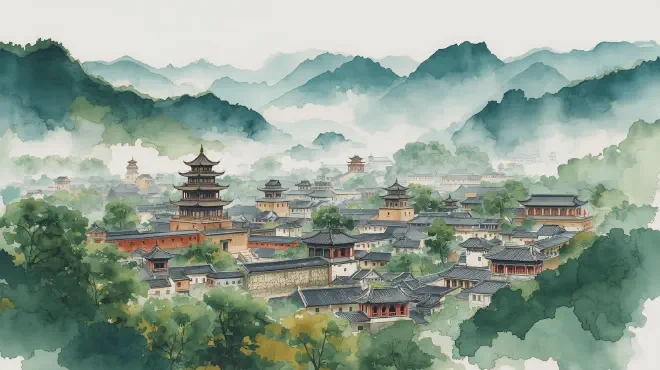
Day 1: Memories in Stone and the Sound of Evening Bells
I arrived at Zhengzhou Xinzheng International Airport just after 10 a.m. From the airport to Dengfeng City, it’s about a two-hour journey by express bus. The bus crossed the vast plains of the Central Plains region, and gradually the presence of mountains grew stronger. The ridgeline of Mount Song visible from the window was gentler than I had imagined, emanating a solid, steady presence.
Upon reaching the Dengfeng bus terminal, the first thing I noticed was the different quality of the air. Dry, with a faint scent of ancient earth. Taxis lined up in front of the terminal soliciting passengers, but I decided to walk to my pre-booked lodging—a small inn called “Chanyue Kezhan” (Zen Delight Inn) near the Shaolin Temple. My luggage was just one small backpack. This lightness felt just right for the beginning of a journey.
Walking toward the inn, I observed the town. Along the main road, souvenir shops and martial arts school signs were prominent, but one street back, traditional shops and eateries lined the way. Buildings facing the stone-paved alleys were old, their walls etched with the stains of time. The faces of passersby were gentle, and there was a daily life that made you forget this was a tourist destination.
The Chanyue Kezhan was more charming than I had expected. A two-story wooden building with a small pond in the courtyard where koi swam leisurely. A middle-aged woman who seemed to be the proprietress greeted me with a smile. Using fragmented English, my poor Chinese, and a smartphone translation app, I somehow managed to check in. My room was a corner room on the second floor, with a window offering a partial view of Mount Song. Simple but clean, with pleasant wooden floors.
After setting down my luggage and catching my breath, it was already past noon. When I asked the proprietress about a nearby restaurant, she recommended “Liu’s Noodle House on the Shaolin Temple approach.” Following a map, I reached the entrance to the approach in about ten minutes. Among the tourist-oriented shops, I found the noodle house.
Inside, the lunch hour was bustling. Many locals were there too, creating a lively atmosphere. Unable to decipher the menu, I pointed to the noodle dish being eaten by someone at the next table. What arrived was “huimian,” a Henan Province specialty—wide noodles in lamb broth, garnished with cilantro and chili peppers. With the first slurp, the deep richness of the broth and the chewy texture of the noodles filled my mouth. A subtle herbal fragrance warmed me from the core. As the first meal of my journey, it couldn’t have been more satisfying.
In the afternoon, I visited the Shaolin Temple. Past the approach, the towering mountain gate came into view. The plaque inscribed with “The First Famous Temple Under Heaven” spoke to the temple’s prestige. I bought an admission ticket and entered the grounds. Though it was a weekday, there were a fair number of tourists. But the spacious grounds absorbed the crowds and maintained their tranquility.
The Grand Hall, the Sutra Library, the Abbot’s Quarters. Each building held the weight of history. Particularly striking were the footprints left by training monks in the floor of the Standing Meditation Hall. Evidence of training repeated in the same spot for hundreds of years. The stone floor had worn down, and the accumulation of human endeavor remained in visible form. Standing before it, I couldn’t help but feel the strangeness of time.
Deep in the grounds lies the Pagoda Forest. An area where memorial pagodas of successive high monks stand, numbering more than 200. Stone pagodas of various shapes and sizes spread like a forest. The slanting afternoon light stretched the shadows of the pagodas, creating a dreamlike scene. Thinking that each individual life was condensed here, my heart quietly stirred.
After leaving the Shaolin Temple, I walked a bit along the foot of Mount Song. Away from the tourist areas, a peaceful landscape of fields and farmhouses spread out. Persimmon trees bore abundant fruit, and an elderly person worked slowly in a field. When I greeted a passing man, he looked surprised, then smiled and waved.
On my way back to the inn in the evening, I passed by a small temple. The door was open, and the sound of sutra chanting drifted out. Drawn in, I entered to find three monks performing their evening service in the main hall. I sat quietly in a corner so as not to disturb them and listened. The rhythmic cadence, the repeated scriptures. Though I didn’t understand the meaning, the succession of sounds seeped into my heart. Soon a bell rang, and the evening service ended. One of the monks nodded gently to me, and I bowed my head before leaving the temple.
Returning to the inn, the proprietress was preparing dinner. I ordered a simple set meal, and stir-fried dishes, vegetable soup, and white rice appeared. The seasoning was plain, but I could tell each dish was carefully prepared. After eating, I sat on a bench in the courtyard and felt the night breeze. From the direction of Mount Song, I could hear the chirping of insects. The first day quietly came to a close.
Day 2: Embraced by Mountains and Following the Shadow of Fists
I woke to birdsong in the morning. Looking at the clock, it was just before 6 a.m. Opening the window, cool air flowed in. The ridgeline of Mount Song was beginning to be dyed by the morning sun. After getting ready and going downstairs, the proprietress had already prepared breakfast. Rice porridge with pickles, steamed bread, and a boiled egg. I quietly enjoyed this body-friendly breakfast.
I had planned to climb Mount Song this day. A hiking trail extends from behind the Shaolin Temple, leading to the summit via the Sanhuangzhai Scenic Area. Leaving the inn and heading toward the Shaolin Temple, I saw students from the martial arts schools who had apparently already finished their morning training, walking the streets. Boys and girls who appeared to be in their early teens moved with crisp steps. Their figures held a unique tension and discipline.
I reached the trailhead around 7:30. There were still few tourists, and it was quiet. As I began climbing the stone steps, I immediately entered the forest. The morning light filtering through the trees was beautiful. Fallen leaves covered the ground, making soft sounds with each step.
The trail was steeper than I had imagined, and sweat began to bead. But when I stopped and looked back, the town of Dengfeng spread out below. Tiled roofs stretched out, and in the distance, the green of farmland extended. With each gain in elevation, the view opened up and the scenery changed. That was the joy of mountain climbing.
After about an hour of climbing, I reached the entrance to the Sanhuangzhai Scenic Area. From here, a unique landscape of strange rock formations begins. Massive rocks are piled upon each other, and the path winds between them. It was like a labyrinth created by nature. Characters such as “A Wonder of the World” were carved into the rock walls, showing that this place has been loved as a scenic spot since ancient times.
I crossed a suspension bridge and proceeded further in. Pine trees growing from crevices in the rocks swayed in the wind. When the view opened up, there was a small Taoist temple built on a cliff face. The Temple of the Three Sovereigns, a sacred Taoist site. How they built it in such a place—I marveled at human faith and technical skill. Inside the hall, the Three Sovereigns—Fuxi, Shennong, and the Yellow Emperor—were enshrined.
I didn’t have the stamina to climb all the way to the summit, so I decided to turn back around here. The descent was faster than the ascent, and I was back at the foot by just after 11 a.m. My legs were tired, but it was a pleasant fatigue.
I ate lunch at a different restaurant near the approach. This time I tried a dish called “steamed vegetables.” Vegetables and meat dusted with flour and steamed, the natural flavors of the ingredients alive. Eating it with sauce, it had a simple yet deeply nourishing taste. The shop owner asked in broken English, “Is it delicious?” and when I responded with a thumbs up, he smiled happily.
In the afternoon, I went to watch the Shaolin martial arts performance. A daily martial arts show held at fixed times where you can glimpse the essence of Shaolin kung fu. When I entered the venue, many spectators had already filled the seats. Soon drums sounded, and young warrior monks appeared.
Boxing, staff techniques, swordsmanship, and hard qigong. Each movement was precise and powerful, overwhelming the audience. Particularly impressive was the hard qigong demonstration of breaking stone slabs with the head. Incredible physical ability and mental strength. The skills produced by years of training left me simply breathless. It concluded with a group performance, and the venue filled with loud applause.
After the performance ended, I walked slowly through the grounds once more. This time there were fewer tourists, and it was quieter. As I sat resting in front of the Scripture Hall, an elderly monk passed by. When our eyes met, he smiled gently and nodded. Though we exchanged no words, that momentary connection warmed my heart.
On my way back to the inn in the evening, I stopped at a small teahouse in a back alley. I was drawn to the sign that read “Zen and Tea Are One.” Inside was a simple space with wooden tables and chairs. At the owner’s recommendation, I ordered local green tea. The tea brewed in a small teapot had a clear fragrance and gentle sweetness.
Drinking tea while gazing out the window. Evening light dyed the alley, and I could see people heading home. Time flowed slowly. I thought that in the midst of a journey, these moments of doing nothing might actually be the most luxurious.
For dinner, I had a simple meal at the inn and returned to my room early. After showering, I lay down on the bed. Opening the window, a cool breeze blew in from the mountains. In the distance, a dog barked. Streetlight glow. And the outline of mountains dissolving into darkness. Closing my eyes, memories from the day surfaced fragmentarily. The sensation of my hand touching rock faces. The sharp gaze of the warrior monks. The stillness of the teahouse. They mixed together and slipped into dreams.
Day 3: A Morning of Farewell, Until We Meet Again
On the final morning, I woke a bit later. Outside the window was clear and sunny, perfect weather for the end of a journey. While packing my luggage, I reflected on these past two days. It hadn’t been a long trip, but something had certainly remained in my heart.
After breakfast, I said goodbye to the inn’s proprietress. “Come back again,” she said, waving with a smile—a warm gesture. After checking out, I decided to visit the Shaolin Temple one last time.
The morning Shaolin Temple had a different quietness than the previous days. There were still few tourists, and the morning light softly illuminated the grounds. Standing before the Grand Hall, I took another deep breath of this place’s atmosphere. The thickness of 1,500 years. Countless people had prayed here, trained, and sought enlightenment. I felt I had touched, if only slightly, a part of that endeavor.
Leaving the grounds, I walked slowly along the approach. Browsing the souvenir shops, I looked for something as a memento. Small Buddha statues, martial arts equipment, tea—various items lined the shelves. What I finally chose was a small tea bowl inscribed with the characters for Shaolin Temple. I thought something practical would be good, something that would remind me of this journey in daily life.
Before noon, I visited the Songyang Academy in central Dengfeng. An ancient Confucian academy, also part of the World Heritage Site. In contrast to the bustle of the Shaolin Temple, this place was quiet. Old buildings stood in rows, and in the courtyard was an ancient tree said to be over a thousand years old. The trunk was thick, the branches reaching powerfully toward the sky.
The academy’s exhibition room displayed ancient books and inscriptions. Thinking about the history of students who studied here preparing for the imperial examinations, I imagined that within this quietness, there once was the fervor of young people. Times change, but the heart that seeks knowledge does not. It was a place that made me think so.
I had lunch at a small restaurant near the market, mixing with local people. I ordered a local dish called “jiaotuo”—millet paste fried with vegetables, simple yet somehow nostalgic in taste. The elderly person at the next table smiled and said, “You’re good!” seeing me use chopsticks. Though we could hardly communicate, that smile said everything.
At 2 p.m., I boarded the bus to Zhengzhou. The townscape of Dengfeng visible from the window. The ridgeline of Mount Song. The mountain gate of Shaolin Temple. As the bus started moving, the scenery slowly flowed backward. Though it was only a two-night, three-day stay, this town had certainly left something within me.
On the bus, I took out the newly bought tea bowl and held it in my palm. The cold, smooth texture of the ceramic. Each time I drink tea from this vessel, I will remember the stillness of that teahouse, the mountain breeze, and the proprietress’s smile. Perhaps travel is not about moving from place to place, but about engraving landscapes in one’s heart.
The bus entered the expressway and picked up speed. Dengfeng City was no longer visible. But in my heart, that town certainly lives on.
A Real Memory Within Imagination
This journey never actually took place. I never walked the stone pavements of Dengfeng, nor was I blown by the winds of Mount Song. I didn’t hear the bells of Shaolin Temple or drink tea in that teahouse.
Yet, while writing this travel account, the landscape of Dengfeng certainly floated in my mind. The taste of huimian, the movements of the warrior monks, the elderly monk’s smile, the stillness of the teahouse. Though products of imagination, they somehow carry a sense of reality.
What is travel? Is travel only about visiting places? Perhaps when the heart stirs, imagination expands, and we turn our thoughts to unknown worlds, we are already traveling. Even when we cannot physically go there, by turning our hearts toward a land’s history, culture, and people’s lives, we can travel.
Perhaps one day I will truly visit Dengfeng City. When that time comes, how different will the landscape I imagined in this fantasy journey be from reality? Or will there be parts that overlap somewhere?
Until then, this imaginary journey will remain in my heart. The quietness of Mount Song, the historical weight of Shaolin Temple, the warm people in the back alleys. Though fictional, they are certainly the memories of a journey living and breathing within me.