
A Tranquil Town Standing by the Firth of Clyde
Dunoon sits quietly at the southern tip of the Cowal Peninsula in western Scotland, nestled deep within the Firth of Clyde. This small town of just 8,000 inhabitants flourished in the 19th century as a coveted seaside resort for the people of Glasgow, and still retains traces of that elegant past.
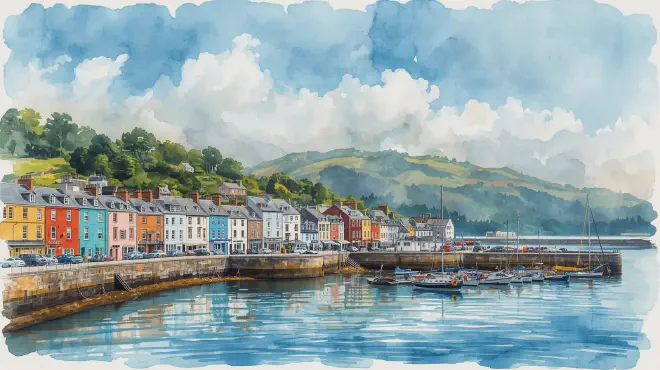
The town’s name derives from the Gaelic “Dùn Omhain,” meaning “Fort of Omhain.” Indeed, the ruins of an ancient castle remain atop the hill overlooking the town, bearing witness to its long and weighty history. The townscape facing the gentle waters of the Firth of Clyde presents a beautiful succession of Victorian-era buildings, wrapped in a stillness as if time itself had paused.
This is a place where one can escape the clamor of cities and savor a leisurely flow of time. The geographical characteristic of being accessible only by ferry lends the town a unique sense of isolation and specialness. A journey touching Scotland’s abundant nature, deep history, and warm-hearted people is about to begin.
Day 1: The Ferry Opens a Door to a New World
From Glasgow Central Station in the morning, I take the train to Gourock Station. The view of the River Clyde gradually expanding through the train window lifts my spirits. Arriving at the small harbor of Gourock, the ferry to Dunoon waits quietly.
Standing on the deck, I enjoy the roughly 20-minute voyage while gazing at the blue waters of the Firth of Clyde. The sea breeze caresses my cheeks, and the mountains of Argyll appear hazily in the distance. Watching the Glasgow skyline gradually shrink as verdant hills draw near is a moment that makes the journey to another world feel tangible.
Upon arriving at Dunoon harbor, the beautiful building of the Victorian Pier greets me. Constructed in 1896, this pier is a symbolic presence in the town, its elegant bearing evoking the prosperity of bygone days. Walking along the pier, I contemplate the history of countless people who have passed through here.
The Argyll Hotel, where I’m staying, is a white building along the seafront, its windows offering a sweeping view of the Firth of Clyde. After dropping off my luggage and catching my breath, I head out to explore the town.
In the afternoon, I first make my way to Dunoon Castle Hill. A gentle 15-minute walk uphill from the town center brings me to the ruins of Dunoon Castle, built in the 13th century. Only portions of the stone walls remain, but the view from here is magnificent—the entire Firth of Clyde spreads before my eyes.
Sitting on the ancient stones, buffeted by the wind, I imagine the lives of the lords who once ruled this land. Did they too gaze upon this same view? The contrast between what remains unchanged and what has transformed through the flow of time resonates deeply within me.
As evening approaches, I walk along Argyll Street, the town’s main thoroughfare. The street lined with stone buildings is filled with a somehow nostalgic atmosphere. Small cafes, general stores, and antique shops stand side by side, and my heart is warmed by the everyday scene of locals going about their business.
For dinner, I visit The Pier Tea Room near the harbor. The interior is simple, but the sea view from the window is beautiful. Here I try Cullen Skink, a famous smoked haddock soup. The creamy, deeply flavorful soup gently soothes the weariness of travel. For the main course, I order fish and chips made with fresh local catch. The fish is crispy outside and fluffy inside, perfectly complemented by homemade tartar sauce.
As night deepens, the lights from the opposite shore reflect beautifully on the waters of the Firth of Clyde, visible from my hotel room. Listening to the sound of waves in the stillness, I drift to sleep with anticipation for tomorrow. I realize I’m already captivated by the unique charm this small town possesses.
Day 2: Where Nature and History Weave Their Tale
In the morning, I enjoy a traditional Scottish breakfast in the hotel’s breakfast room. Black pudding, haggis, grilled tomatoes, scrambled eggs, and thick-cut bacon. The hearty breakfast makes me appreciate the richness of Scottish food culture. Pouring honey over warm porridge warms me from the core.
After breakfast, I head to Argyll Forest Park. Accessible on foot from Dunoon, this park is one of Scotland’s oldest forest parks, where rich nature remains untouched.
Walking the trail that continues from the forest entrance, the morning light filtering through ancient trees covered in ferns and moss creates a fantastical scene. In the silence broken only by birdsong and my footsteps, I feel a deep peace unavailable in city life. Along the way, I spot a squirrel scampering between trees and can’t help but smile.
After walking through the forest for about an hour, I visit Benmore Botanic Garden. This world-famous botanical garden is particularly known for its giant sequoia avenue. The sight of trees over 50 meters tall standing in orderly rows is overwhelming, and standing before them reminds me of my own smallness.
The garden displays rare plants collected from around the world, with the collection of Himalayan alpine plants particularly impressive. In the greenhouse, I can enjoy tropical orchids and cacti, feeling as if I’m traveling the world while in Scotland.
In the afternoon, I explore the area around Holy Loch. This small loch is known as the former site of a U.S. Navy submarine base, but now it’s cherished as a peaceful tourist destination. A promenade runs along the lochside, and I’m captivated by the beauty of the surrounding mountains reflected on the water.
Sitting on a bench by the loch, I try sketching the landscape in my notebook. Though I have no artistic talent, my desire to somehow record this beautiful scenery is strong. As I draw, an elderly local man strikes up a conversation.
“Beautiful day, isn’t it?”
He introduces himself as John, born and raised in Dunoon. From him, who has watched over this town’s transformation for many years, I hear fascinating stories. How the town once bustled with tourists in summer, with steamships frequently entering and leaving the harbor. The harsh wartime years. And the quiet, peaceful life of the town today.
“The greatest charm of this town,” he says, “is that time flows slowly here.” Those words seem to perfectly express something I’ve been feeling throughout this journey.
On my way back to town in the evening, I visit a small park called Coal Garden. This site, once a 19th-century coal-loading facility, has been beautifully transformed into a park where industrial heritage and nature harmoniously coexist. The setting sun illuminates the stone structures, creating a nostalgic atmosphere.
For dinner, I go to The Cosy Corner Cafe, popular with locals. At this warmly family-run establishment, I try their specialty Steak and Kidney Pie. Inside the flaky pastry crust, tender stewed beef, kidneys, and plenty of vegetables nestle together. The accompanying mashed potatoes and gravy sauce match perfectly—truly the pinnacle of comfort food.
For dessert, I have Tablet, a Scottish confection. The sweetness is intense, but its simple flavor warms the heart. The proprietress is friendly, asking “Where are you off to tomorrow?” with such warmth that I feel the happiness of being a traveler.
At night, in my hotel room, I reflect on the day’s events. The grandeur of nature, the weight of history, and encounters with people. Savoring the luxury of a day feeling this rich, I’m touched by a hint of sadness that tomorrow will be my last.
Day 3: A Morning of Farewell and Memories Etched in the Heart
On the final morning, I wake earlier than usual. Looking out the window, a thin mist hangs over the Firth of Clyde, creating a fantastical scene. I stand by the window for a while, trying to burn this beautiful sight into my memory.
Before breakfast, I take one last walk. I stroll along West Bay Walk, the coastal promenade that continues from the harbor. The shore in the morning’s stillness, with only the sound of waves, possesses a special beauty. Shells and seaweed lie scattered on the beach, and seabirds search for food in a peaceful scene.
I pause before the Memorial Statue along the promenade. This monument, honoring local people who lost their lives in the First and Second World Wars, reminds me that the shadow of war fell upon even this small town. The present peaceful visage of Dunoon feels all the more precious in this moment.
Returning to the hotel, I pack while reflecting on these three days. Though a short stay, I was able to deeply touch this town’s unique charm. The unhurried flow of time, beautiful nature, the weight of history, and above all, encounters with warm-hearted people.
During checkout, the hotel staff see me off with smiles, saying “Please come back again.” The sincerity in those words makes my chest feel warm.
Before departing, I take one last walk around Dunoon harbor. A morning market is open, with local farmers selling fresh vegetables and homemade jams. For souvenirs, I purchase Heather Honey, a specialty of this region. Made from purple heather flowers, this honey has a distinctive flavor that conveys the blessings of Scotland’s nature.
I also find a hand-knitted scarf made from local wool. Attracted by its warm colors and texture, I purchase it thinking that wearing it during Japan’s cold winters will revive memories of this journey.
For lunch, I eat lightly at The Munro’s Tea Room near the harbor. A simple combination of Scottish Shortbread and tea, but the butter-fragrant cookies and quality tea leaves possess an elegance befitting the end of this journey.
The time for the 2 PM ferry back to Glasgow approaches. While waiting at the harbor, John, whom I met yesterday, comes to see me off. When I promise “I’ll definitely come back,” he shakes my hand saying “I’ll show you around then.”
Watching the Dunoon townscape from the ferry deck evokes different emotions than when I arrived. This place that was unknown territory three days ago has now become a place with special meaning. As the harbor recedes, I whisper in my heart, “Thank you, Dunoon.”
On the train to Glasgow, I write my travel impressions in my notebook. “The luxury of time,” “Dialogue with nature,” “The warmth of people,” “The weight of history.” Brief words, but these were the treasures gained from this journey.
In the evening, I depart for Japan from Glasgow Airport. On the plane, gazing at the small jar of heather honey I purchased, it feels as if all three days in Dunoon are contained within this tiny vessel.
What Was Felt Even Though It Was Imaginary
Though this journey is a product of imagination, in my heart it feels like a real experience. The three days spent in the small town of Dunoon reminded me of important things easily forgotten in modern hectic life.
To savor the flow of time slowly. To open one’s heart to the beauty of nature. To feel the weight of history. To cherish warm exchanges with strangers. And to receive with honesty the new perspectives and emotions that travel offers.
Though it may be a place never visited in the real world, the time spent here in imagination has become a precious memory firmly etched in my heart. If I ever truly set foot in Dunoon, the warmth and beauty felt in this imaginary journey will surely fill my heart again as reality.
A journey that feels real even though it’s imaginary. Perhaps this is proof of the rich imagination the human heart possesses, and of our yearning for unknown places.