
Introduction
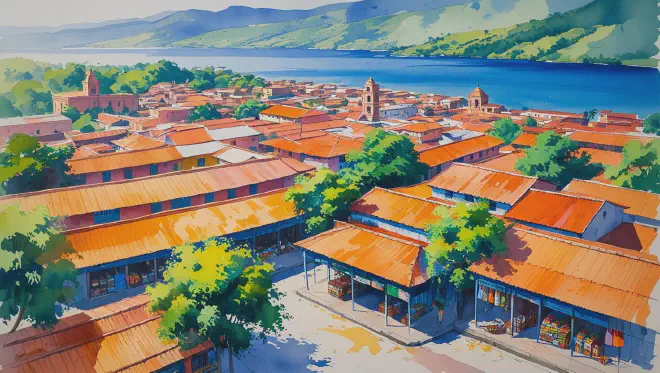
Flores is a small island floating on Lake Petén Itzá. This town in northern Guatemala was built upon the ruins of Tayasal, the last stronghold of ancient Maya civilization. Red rooftops and walls painted in every color imaginable reflect off the cobalt-blue waters, while footsteps echo through narrow cobblestone lanes. It is a place where time seems to stand still, yet the pulse of life stretching back through the ages continues to beat.
Travel 65 kilometers north from Flores, and the ancient Maya’s greatest city awaits deep within the jungle—Tikal National Park. The temple complexes, shrouded in tropical rainforest, have stood in quiet contemplation for over a thousand years, watched over by the guardian spirits of the dense forest. In these woods, where the howls of howler monkeys and the beautiful calls of quetzals resound, one can feel the grandeur of the civilization these ancient people built.
The people of this land carry Maya blood in their veins, yet they have also carefully nurtured the culture inherited from the Spanish colonial era. Conversations in Q’eqchi’ and Spanish exchanged at the morning market, the practiced hands of women shaping tortillas, fishermen casting nets upon the lake—everywhere, the weight of history flows through daily life. With only two nights and three days, I set out to touch the soul of this land.
Day 1: Arriving at the Little Paradise on the Water
The small propeller plane from Guatemala City flew low over the deep green jungle. Looking down from the window, I saw a sea of tropical rainforest stretching to the horizon. Here and there, red rooftops of small villages peeked through, and rivers wound like silver serpents through the green. When I stepped off the plane at Flores Airport, humid heat mingled with the sweet scent of jasmine brushed against my cheeks.
The drive from the airport to the town of Flores took about ten minutes. Tall cecropia trees lined both sides of the road, and through gaps in the foliage, glimpses of Lake Petén Itzá’s blue surface appeared. The driver, Carlos, shared the history of the lake in fluent Spanish. “This lake is a sacred place. The Maya believed the water god Itzamná lived here. Even now, when you go out on the lake early in the morning, you can almost hear the god breathing.”
As we entered Flores, the view suddenly opened up. Beyond a stone causeway, a beautiful island town floated like something from a storybook. The entire small island in the center of Lake Petén Itzá had become a town, with pastel-colored houses reflecting on the water’s surface, creating a scene so dreamlike it hardly seemed real. Walking across the causeway to the island, I felt the weight of history carved into the cobblestones beneath my feet.
After dropping my bags at the inn, I set out for an afternoon stroll in the sunlight. The island of Flores is small enough to walk around in about thirty minutes, but its maze of cobblestone alleys holds endless discoveries. The San Andrés Church in the central plaza was striking with its simple white walls and orange roof. Children kicked a soccer ball around in front of the church, their carefree laughter echoing off the stone walls.
I rested at a small café, gazing out at the lake. The water was remarkably clear, and in the shallows, I could see small fish swimming. The café owner, Doña María, brewed homemade coffee while telling me about the town. “Flores is a small town, but travelers come from all over the world. Everyone falls in love with the tranquility and beauty here before they leave. You too will surely discover this town’s charm.”
As evening approached, the lake’s surface began to turn golden. Watching the sunset from a small pier on the island’s west side, I saw local fishermen returning in their boats. Their nets held silver-glinting mojarra, a lake fish. “Tonight’s dinner is decided,” laughed Don Pedro, the fisherman, as he called out to me. Here exists a simple yet rich life where the lake’s bounty goes straight to the table.
When night fell, the entire town was wrapped in warm orange streetlight. I had dinner at a restaurant called “La Luna,” enjoying the lake’s nightscape spreading beyond the window. The menu featured dishes made with local ingredients. The mojarra ceviche was exquisite—the acidity of lime and the heat of chili perfectly complemented the sweetness of the fish raised in the lake’s pure waters. The main dish, pepián, was chicken simmered in a rich sauce of tomatoes and pumpkin seeds, and its complex, deep flavor, passed down from ancient Maya times, surprised my palate.
After dinner, I walked along the lakeshore. The starlit sky reflected on the water, creating the illusion of walking through the cosmos. A chorus of tree frogs echoed in the distance, and occasionally the sound of fish leaping broke the silence. This first night on the small island, completely freed from the noise of the city, was filled with profound peace.
Day 2: An Encounter with Ancient Civilization
At five in the morning, I woke while it was still dark to prepare for the trip to Tikal National Park. When my guide, Luis, came to pick me up, the sky was just beginning to shift from deep purple to pale pink. “Today we’ll watch the sunrise at Tikal. The ancient Maya kings saw this same sun.”
The journey from Flores to Tikal was an hour-and-a-half drive through the tropical rainforest. Giant mahogany and ceiba trees lined both sides of the road, and occasionally brilliantly colored quetzals and toucans flew between the branches. When I opened the window, the scent of damp earth and greenery flowed into the car.
When we arrived at the entrance to Tikal National Park, the forest was still wrapped in morning mist. Stepping inside the park, I felt as though I had slipped back through time to an ancient world. The path beneath my feet was the same stone pavement the Maya people walked more than a thousand years ago. Above, the deep rumble of howler monkeys resonated through the entire forest, sounding like the voices of ancient gods.
Our first destination was Temple IV, standing 65 meters tall. Climbing the steep wooden stairs, catching my breath, I encountered a family of spider monkeys along the way. They gazed at me with eyes full of curiosity. When I reached the summit, the view below left me speechless. From the green sea of tropical rainforest, the peaks of ancient Maya temple complexes rose like islands. Temples I and II gleamed gold in the morning sun, their majestic forms telling of the glory of 1,200 years ago.
Breakfast was at a picnic area in the forest—local tortillas with fresh avocado and sweet papaya. This simple meal, eaten to the soundtrack of birdsong, was more memorable than any lavish restaurant fare.
The morning was spent exploring the temple complexes centered on the Gran Plaza. Temple I, known as the Temple of the Jaguar, was built as the tomb of a great ruler. Climbing the stone steps, I marveled at the skill of the ancient stonemasons. The precisely cut stones were fitted together with a precision that would be difficult to replicate even with modern technology.
From the top of Temple II, I could survey the entire plaza. Once, coronations of kings and religious ceremonies must have taken place here. Sitting on the stone steps and contemplating the passage of time, I felt as if I could hear the breathing of the ancient Maya people who had stood in this same place over a thousand years ago.
Lunch was at a restaurant inside the park—jocón, chicken simmered in green sauce. Made with cilantro and tomatillos, the sauce was refreshing yet complex in flavor, perfect for eating in the forest.
The afternoon was spent visiting ancient Maya residential ruins deeper in the forest. At the royal residences, I caught glimpses of how people once lived. Stone sleeping platforms, pots for storing grain, cisterns for collecting rainwater—simple yet rational wisdom for living could be seen everywhere.
On the way back, we discovered wild jaguar tracks in the forest. Luis explained, “The jaguar was a sacred animal to the Maya. Even now, they live on as guardians of this forest.” Though we didn’t actually encounter a jaguar, I could feel the wild power that still lives in this forest.
We returned to Flores around six in the evening. The lake breeze gently embraced my exhausted body. For dinner at a lakeside restaurant, I ordered caldo de mariscos, a seafood soup. The rich broth, filled with mojarra, shrimp, and crab, had a nourishing flavor that soothed the day’s fatigue.
That night, I wrote in my journal on the terrace of my inn while gazing at the lake. Beneath the starlit sky, I reflected on a day spent touching the grandeur of ancient civilization and the mysteries of nature. The layered sense of time I felt at Tikal, the invisible thread connecting us in the modern age to the ancient Maya people—I contemplated these things while gazing at the moon reflected on the quiet lake surface.
Day 3: A Morning of Farewell and Lasting Memories
On the final day, I woke a little earlier than usual. Outside the window, morning mist was rising from the lake, creating a dreamlike scene. After finishing my packing, I decided to go for one last walk.
At the morning market in the central plaza, local women in their colorful traditional huipil garments were selling fresh vegetables and fruits. Red tomatoes, purple eggplants, yellow bell peppers were beautifully arranged, like a treasure box of nature. When I bought a ripe mango from an elderly woman, she wrapped it with a warm smile and said, “A memento of your journey.”
Sitting on a bench by the lake and eating the mango, I reflected on the past two days. As the sweet juice filled my mouth, I realized just how rich my experience on this small island called Flores had been. The grandeur of ancient Maya civilization, the mysteries of the tropical rainforest, and above all, the warmth of the local people—in this short stay, I had deeply touched the soul of this land.
I spent my last morning hours visiting a small museum on the north side of the island. Here, ancient Maya artifacts discovered around Tikal and Flores are displayed. Intricately carved stelae, beautifully decorated pottery, jade jewelry—from each piece, I could sense the high artistry and spirituality of the ancient people.
The museum curator, a woman who spoke fluent English, explained the exhibits. “These artifacts are precious treasures left to us by our ancestors. The ancient Maya knew the importance of living in harmony with nature. There is much we in the modern age can learn from them.”
For lunch, I savored my last Guatemalan meal at “Don Pablo,” the oldest restaurant on the island. Chiles rellenos, stuffed peppers that were fried, arroz con pollo, rice with chicken, and sweet plátano maduro, fried ripe plantains. Though simple, the dishes brought out the natural flavors of the ingredients, seeming to symbolize the richness of this land.
After the meal, I spent my remaining time by the lakeshore. Afternoon sunlight sparkled on the water, and the green hills on the opposite shore drew beautiful silhouettes. Small boats glided quietly across the lake, and the sight of fishermen casting their nets was like a painting.
The time to depart for the airport drew near. The innkeeper, Don Miguel, offered warm words: “Please come back again. Flores will always be waiting for you.” The faces of everyone I met during my short stay remained vivid in my heart.
On the way to the airport, Carlos asked, “How was Flores?” “It was wonderful,” I replied. “I will never forget the beauty of this land and the warmth of its people.” He smiled happily. “I’m glad to hear that. Flores is a small town, but it leaves a big impression on the hearts of those who visit.”
Looking down from the airplane window, Lake Petén Itzá sparkled like a jewel in the afternoon sunlight. The island town of Flores appeared small, and the two nights and three days I spent there felt like a dream. Yet something remained certain in my heart—the weight of time felt at the ancient Maya temples, the voices of wild animals heard in the rainforest, the gentle taste of the lake’s fish, and the smiles of the people I met.
Opening the last page of my journal on the plane, I felt anew the magnitude of what this journey had given me. Travel is not merely a movement between places, but a movement of the heart—this small island called Flores had taught me that.
In Closing
This journey was an imaginary experience created by AI. Yet the coolness of the lake breeze felt while reading these words, the coldness of the stones touched at the ancient ruins, the complex flavors of local cuisine, and the warm exchanges with people—all were inscribed in my heart as if truly experienced.
The beautiful town of Flores that really exists, the magnificent ruins of Tikal National Park, the pure waters of Lake Petén Itzá, and the rich culture and daily lives of the people of Guatemala—all of these exist in reality and continue to captivate travelers to this day. The path traced in imagination is also a path that may one day be walked in person.
A journey that feels real despite being imaginary. Perhaps this is a miracle woven from the mysterious power of human imagination and memory, and our longing for beautiful places. The affection for Flores born in my heart will surely never fade.