
A Bridge to the Caribbean
Florida Keys. Simply speaking the name conjures a longing for distant southern islands. Stretching roughly 160 kilometers southwest from Miami, this chain of coral islands nestled between the Caribbean Sea and Florida Bay lies like a string of pearls floating upon the water.
This archipelago consists of approximately 1,700 islands, though only about 30 are inhabited. It is a place where a distinctive culture thrives—American, yet somehow not quite American. The spirit of the Conch Republic, brought by Cuban immigrants from the late 19th to early 20th century, still runs deep in the hearts of the islanders. In 1982, in protest against drug enforcement checkpoints, the Keys symbolically declared independence—an anecdote that speaks to the freewheeling, rebellious character of this land.
The Overseas Highway (US-1), connecting the islands across approximately 180 kilometers of ocean road, is renowned as one of the world’s most spectacular driving routes. Forty-two bridges dot the route, and among them, the famous Seven Mile Bridge offers the sensation of driving directly over the sea.
Here you will find the literary fragrance of Key West that Hemingway loved, Bahamian-style architecture, the sweet-tart memory of fresh Key lime pie, and above all, the unique rhythm called “island time,” where the hours pass slowly and gently.
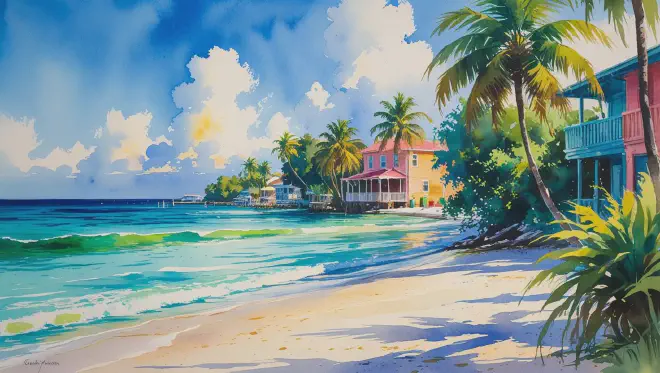
Day 1: Arrival Wrapped in Salt Air
After driving roughly three and a half hours from Miami International Airport, the moment I entered US-1 past Florida City, the view from my window transformed entirely. On both sides stretched an endless expanse of ocean. The blue of the sky and the blue of the sea seemed to melt into one another, making it impossible to tell where one ended and the other began.
My first destination was Islamorada. This island, whose name means “Purple Isle,” is said to be among the most beautiful in the Florida Keys. Arriving around 11 a.m., I headed straight for Robbie’s Marina, a place famous for feeding wild tarpon. Standing on the dock, I could see enormous fish swimming leisurely through the remarkably clear water. When I tossed in baitfish, the surface erupted violently as silver tarpon leaped into the air. Their power took my breath away.
For lunch, I ordered a local specialty—a mahi-mahi sandwich—at the marina’s restaurant. Fresh white fish with tartar sauce, lettuce, and tomato, a simple dish, but eating it while feeling the ocean breeze made it extraordinary. At the neighboring table, a sun-weathered man who appeared to be a local fisherman was teaching a tourist family some fishing tips. His English carried a distinctive accent, and through it, I could feel the warmth of the Keys people.
In the afternoon, I headed to Anne’s Beach, one of the few sandy beaches in the Florida Keys. I set up a beach chair in the shade of a palm tree and opened the paperback I had brought along. Yet I couldn’t concentrate on reading with such a magnificent view before me, and the pages refused to turn. The shallow water was unbelievably clear—I could even see small tropical fish swimming about. Occasionally, a pelican would dive sharply to catch a fish.
In the evening, I checked into my hotel. Cheeca Lodge & Spa in Islamorada is a historic resort that has been operating since the 1940s. Its white Bahamian-style buildings with blue roofs glowed beautifully in the sunset. From my room’s balcony, I could take in the entire evening view of Florida Bay.
Dinner was at Pierre’s Restaurant, a local favorite. This venerable French-Creole establishment takes pride in Keys-style seafood prepared with French techniques. I ordered lobster bisque and mahi-mahi with Key lime glaze. The rich depth of the bisque paired exquisitely with the delicate fish and the tartness of Key lime. I chose a Florida white wine, which proved surprisingly fruity and easy to drink.
Through the restaurant windows, a sky full of stars came into view—more than one could ever see in any city. I was overwhelmed by their number and felt anew just how special this place was. Walking back to the hotel, the only sounds coloring the night’s silence were palm fronds rustling in the wind and the distant murmur of waves.
Day 2: A Day Embraced by Sea and History
I awoke to morning sunlight streaming through the balcony, painting the room in gold. It was 6:30 a.m.—an unthinkably early hour for my usual life, but it would have been a shame to miss such a beautiful morning. After quickly getting ready, I took a walk along the hotel’s shoreline. The morning sea was calm, with gentle waves lapping softly at the sand. A single boat, returning from an early fishing trip, made its way slowly toward the marina.
Breakfast was at the hotel restaurant. In true Florida fashion, I enjoyed fresh orange juice, coconut pancakes, and locally made Key lime yogurt. The tartness of the Key lime was gentle on my morning stomach—a refreshingly perfect start to the day.
At 9 a.m., I headed to John Pennekamp Coral Reef State Park for the day’s main event: a glass-bottom boat tour. Beneath the waters of the Florida Keys lies North America’s only living coral reef. The seabed visible through the boat’s transparent windows was truly another world. Colorful corals, angelfish, parrotfish, blue tangs, and occasionally massive sea turtles appeared before my eyes. According to the guide, this reef was designated a National Marine Sanctuary in the 1960s and has been strictly protected ever since. Through its sheer beauty, I came to truly understand the importance of environmental conservation.
In the early afternoon, I moved on to Key Largo. Here, at the John Pennekamp park, you can also find the Christ of the Abyss—a 2.5-meter bronze statue created by an Italian sculptor, standing quietly on the seafloor. I donned snorkeling gear and swam out to see it. The underwater visibility exceeded 25 meters, making the ocean feel like a giant aquarium. The sight of that divine figure, arms raised toward the surface, moved me to press my palms together in reverence.
In the late afternoon, I stopped at Alabama Jack’s, a local bar along US-1. This establishment, operating since the 1950s, is said to be a hidden gem beloved by locals. On the outdoor terrace, I savored raw oysters and conch fritters with beer. Conch fritters—one of the Keys’ signature dishes—are made from conch meat seasoned with spices, battered, and fried. Crispy on the outside, springy on the inside, the texture was addictive.
Inside the bar, a local musician began a live performance. The music was distinctively Keys—a fusion of country and reggae. The audience naturally started clapping along, and a warm, homey atmosphere enveloped the space. What struck me most was an elderly couple at the neighboring table who rose to dance hand in hand, just as they must have done in their youth.
That night, back at the hotel, I sat on the balcony gazing at the sea, reflecting on the day. From the morning’s stillness to the underwater wonders, the cinematic history, and the warmth of the local people—I had thoroughly savored the many facets of the Florida Keys. Listening to seagulls calling in the distance, I felt a tinge of sadness knowing tomorrow would be my last day.
Day 3: Weaving Threads of Memory on the Island of Farewell
My final morning began with the most beautiful sunrise yet. An orange sun slowly emerged from the horizon, dyeing the sea surface gold. I wanted to capture the moment in a photograph, but instead of reaching for my camera, I chose to etch this beauty into my heart.
After breakfast and checkout, I headed for Key West. Known as the southernmost city in the continental United States, this island is one of the Florida Keys’ greatest attractions. It also marks the end of US-1, where a “Mile Marker 0” sign greets visitors.
Upon arriving, I first made my way to Duval Street. During the day, it has a relaxed tourist-town atmosphere, but I’m told it transforms into a vibrant nightlife hub after dark. Colorful Bahamian-style buildings line both sides of the street, with souvenir shops, restaurants, and bars standing shoulder to shoulder.
I stopped at Sloppy Joe’s Bar, the famous establishment said to have been Hemingway’s regular haunt. The interior was dim, its walls adorned with photographs and personal effects of the author. Even in the daytime, a man who appeared to be a local sat alone, quietly drinking beer. I ordered a Hemingway Daiquiri to taste what the great writer must have loved. A simple combination of rum, lime juice, and sugar—yet it carried the essence of Cuba, a sophisticated adult flavor.
Later in the morning, I visited the Hemingway Home & Museum. In this mansion built in 1851, the author spent ten years during the 1930s, writing masterpieces such as A Farewell to Arms and For Whom the Bell Tolls. To this day, about fifty polydactyl (six-toed) cats live here, descendants of Hemingway’s own, wandering freely about the grounds. Looking at the typewriter left in his study, I imagined those days when he immersed himself in his creative work.
Lunch was at El Meson de Pepe, a Cuban restaurant Hemingway reportedly frequented. I ordered ropa vieja—shredded beef stew—and plantains. The spicy, deeply flavored ropa vieja was authentically Cuban, fitting for Key West with its large Cuban-American population. At the next table, a family conversed animatedly in Spanish, a reminder of this city’s diversity.
In the afternoon, I strolled through Mallory Square. World-famous as a sunset viewing spot, it hosts the “Sunset Celebration” every evening, where street performers put on shows. Even during the day, it bustled with tourists and locals, and vendors sold handmade jewelry and artwork.
What particularly caught my eye were oil paintings by a local artist. Each work depicted Florida Keys landscapes with a unique touch, all radiating warmth and love for this land. I purchased a small painting as a memento of my journey.
With the time I had left, I also visited the Southernmost Point. The colorful buoy-shaped monument marking the southernmost point of the continental United States is a popular spot for commemorative photos. From here, Cuba lies just 90 miles (about 145 kilometers) away. On clear days, they say you can sometimes see the distant outline of Cuba’s shores.
As evening approached, the Sunset Celebration at Mallory Square finally began. Street performers started their acts, and spectators naturally formed circles. Juggling, magic, music—various performances unfolded as the sun gradually tilted toward the western sea.
Then, just after 7 p.m., the moment arrived when the sun sank below the horizon. The crowd erupted in cheers and applause. They say witnessing the “green flash” at this moment brings good luck, but the clouds were a bit too thick that day, and unfortunately, I couldn’t see it. Still, the Florida Keys sunset was beautiful enough to be etched deeply into my heart.
For my final dinner, befitting the last night, I chose Louie’s Backyard, an upscale seafood restaurant. On the terrace facing the sea, I savored stone crab and Key lime pie. Stone crab is famous as Florida’s winter delicacy—sweet and delicate, truly exquisite. And the Key lime pie to finish was the quintessential Florida Keys dessert. Rich yet refreshingly tart, the flavor spread through my mouth, symbolizing the sweet memories of this journey.
Leaving the restaurant, night had already deepened, and the town’s lights sparkled on the water’s surface. Tomorrow morning, I would have to return to Miami. These two nights and three days in the Florida Keys had passed like a dream.
What Felt Real Despite Being Imaginary
Even now, some time after returning from the Florida Keys, memories of those days on the islands remain vivid. The scent of salt air, the color of that transparent sea, the sweet-tartness of Key lime pie, the warm smiles of the locals, and above all, that distinctive rhythm where time flows slowly.
What impressed me most about this journey was how beautifully nature, culture, and history harmonized. The coral reef’s beauty taught me the importance of environmental protection. Hemingway’s footprints made me feel the deep connection between literature and place. And the food culture and music brought by Cuban immigrants spoke to this land’s diversity and richness.
By encountering the concept of “island time” that the people of the Florida Keys embrace, I was reminded of the value of living slowly—something easily forgotten in daily life. In a modern society that prioritizes efficiency and results, I learned the importance of sometimes pausing to appreciate the beauty around us.
The silence before the underwater Christ statue, the cheers of people bidding farewell to the sunset, casual conversations at the bar, the sound of waves during my early morning beach walk. All of these resonated somewhere deep within my heart.
Of course, this journey is a product of imagination. I did not actually set foot there. Yet by deeply contemplating the allure of the Florida Keys—its culture and natural beauty—I was able to feel as though I had truly experienced it.
If we spread the wings of imagination, we can travel anywhere. And perhaps such imaginary journeys hold value equal to, if not greater than, real ones. The blue sea and white sand of the Florida Keys, and the memory of its warm people, will continue to live on in my heart.
Someday, if I have the chance to actually visit the Florida Keys, I wonder how the memories of this imaginary journey will overlap with the real experience. That, too, is something to look forward to.