
Introduction
Gdańsk, a port city on Poland’s northern coast facing the Baltic Sea, feels like a place where layers of time exist simultaneously. Red brick buildings that speak of the medieval Hanseatic League’s prosperity, shipyards that bear the memory of the Second World War, and the vibrant energy of modern Poland all coexist here in a complex and beautiful urban tapestry.
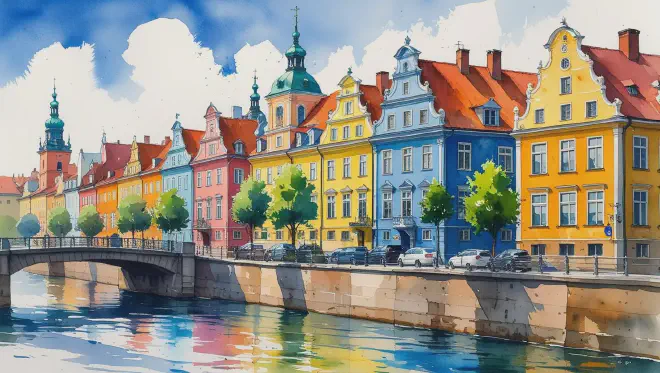
The Old Town of Gdańsk is a miracle of painstaking postwar reconstruction. Długa Street, lined with colorful façades in shades of green, blue, pink, and yellow, looks as though it has stepped out of the pages of a storybook. Meanwhile, the shipyard where Lech Wałęsa led the labor movement stands quietly as a monument to modern history’s pivotal moments.
The salt-tinged breeze rolling in from the Baltic mingles with the sweet resinous scent drifting from amber craftsmen’s workshops. Footsteps echo on cobblestone alleys, and the bells of St. Mary’s Church ring out across the rooftops. This is a city that promises to awaken all the senses. And so, my journey to this remarkable place was about to begin.
Day 1: Arriving in the Amber City
After a three-hour express train ride from Warsaw, I stepped onto the platform at Gdańsk Główny station and immediately noticed something different in the air. Unlike the inland regions, there was a distinct marine humidity carried on the wind that brushed softly against my cheeks. Emerging from the station building, I could see the red rooftops of the Old Town rising beyond the modern structures nearby.
My boutique hotel stood in the heart of the Old Town, housed in a converted 17th-century merchant’s residence. Stepping through the entrance, I found myself in a high-ceilinged lobby where firelight danced warmly. The woman at the front desk greeted me in fluent English, though the occasional soft Polish word that slipped into her speech left a lasting impression.
From my room’s window, I looked down at the cobblestone lanes where tourists and locals moved about their day. The gentle afternoon light bathed the building walls in a warm golden hue. Setting my luggage aside, I decided to venture out and explore.
The moment I left the hotel, Długa Street overwhelmed me with its vibrancy. Known as the “Royal Road,” this was the grand avenue that Polish kings once traveled when visiting Gdańsk. Buildings with brilliantly colored façades—green, blue, pink, yellow—lined both sides, each adorned with distinctive ornamental details. Looking up at them made my neck ache, but I could not tear my eyes away.
Walking along, I found myself stopping in front of an amber specialty shop. The display window showcased golden, translucent pieces of amber containing fossilized insects and plants from ancient times. A man who appeared to be the owner spoke to me in English, explaining that the Baltic coast is the world’s largest source of amber. “This amber is pine resin from forty million years ago,” he said, and I felt the weight of those eons settling upon me.
As evening approached, I made my way to Long Market Square. At its center stood the Neptune Fountain, built in the 17th century and radiating an air of dignity. Neptune, god of the sea, serves as Gdańsk’s guardian deity. Young locals gathered around the fountain chatting, while tourists snapped photographs.
For dinner, I chose a traditional Polish restaurant facing the square. Żurek, a sour rye soup, had a gentle tanginess that seemed to wash away the fatigue of travel. The main course was pierogi, Polish dumplings filled with potato and cheese. Their springy, chewy texture was deeply satisfying. I ordered a Baltic brand beer called Tyskie, whose refreshing aftertaste following the initial hop bitterness seemed perfectly suited to this seaside city.
When I emerged after dinner, the Old Town was illuminated. The buildings revealed a different expression than they had during the day, appearing even more dreamlike and beautiful. I walked back to the hotel, watching the streetlights reflected on the cobblestones, my heart full of anticipation for the following day. Opening the window in my room, I could almost imagine I heard the distant sound of Baltic waves.
Day 2: Embraced by Sea Wind and the Echoes of History
The next morning began with breakfast at the hotel. The variety of breads surprised me—dark rye, white, seeded—each with a satisfying heft. Spread with butter and honey, they offered a simple yet deeply flavorful start to the day. The coffee was somewhat mild but aromatic, a fitting companion for the morning ahead.
During the morning hours, I visited one of Gdańsk’s most impressive structures: St. Mary’s Church. Completed in the 15th century, it ranks among Europe’s largest brick churches. Despite its massive, weighty exterior, the interior opened into an expansive space with soaring ceilings. What struck me most was the astronomical clock, crafted in the 15th century. I was told that every day at noon, figures of Christ’s twelve apostles come to life and move.
Learning that visitors could climb the church tower, I ascended the narrow spiral staircase. Reaching the observation deck, breathless from the climb, I was rewarded with a view magnificent enough to make me forget my exhaustion. The Old Town’s red rooftops rippled like waves, the Motława River stretched beyond them, and in the distance, the Baltic Sea shimmered. From this vantage point overlooking the entire city, I lost track of time, simply gazing at the panorama before me.
For lunch, I stopped at a café along the Motława River and had a light meal. Zapiekanka, an open-faced baguette topped with mushrooms and cheese then baked in the oven, was simple but satisfying. Sitting on the riverside terrace, I watched tour boats and small yachts glide past on the water.
In the afternoon, I visited the European Solidarity Centre. This museum tells the story of Solidarity, the democratic movement of the 1980s. Here, I felt the profound weight of history—how the workers’ movement led by Lech Wałęsa ultimately contributed to the fall of the Berlin Wall. The exhibits were modern and accessible, making effective use of archival footage and audio recordings. They conveyed the reality of life under communist rule and the people’s deep yearning for freedom.
Leaving the museum, I was able to see part of the adjacent shipyard. The landscape of enormous cranes standing in rows spoke to the city’s industrial heritage. Knowing that the sweat and tears of workers here had laid the foundation for modern Poland stirred something deep within me.
In the late afternoon, I traveled to Westerplatte. This peninsula is known as the site where the Second World War began. On September 1, 1939, German forces attacked this position, igniting the conflict. Standing before the memorial, I felt the weight of history pressing down upon my shoulders. In this quiet place with the Baltic Sea as its backdrop, I was reminded anew of war’s tragedy and the preciousness of peace.
For dinner, I found a homey restaurant tucked away in a quiet alley of the Old Town. Bigos, a tangy cabbage stew, was a complex dish made with sauerkraut, sausage, and various meats. The sourness seemed strong at first, but as I continued eating, its depth revealed itself. I learned it developed as a preserved food to sustain people through Polish winters.
For dessert, I ordered sernik, a cheesecake. Unlike Japanese cheesecake, it was made with cottage cheese and had a lighter, less rich flavor—perfect for cleansing the palate after the meal. The berry sauce’s tartness highlighted the gentle sweetness.
Leaving the restaurant, I found the Old Town had transformed once again under the cover of night. Walking the cobblestone streets lit by lampposts, I sorted through the various emotions I had felt throughout the day. The weight of history and the vitality of the present, the warmth of the people I had encountered—I had experienced the many dimensions of Gdańsk in a single day.
Day 3: Reflections on a Morning of Farewell
On my final morning, I woke early and went for a walk. With few tourists about at that hour, the Old Town felt even more serene and beautiful. Only the sound of my own footsteps on the cobblestones broke the silence. The buildings, bathed in morning light, possessed a clarity quite different from their evening appearance.
After breakfast, I headed to a place I had wanted to visit before leaving: the Amber Museum. Housed in a renovated medieval prison tower, the museum displays a remarkable variety of Baltic amber. What impressed me most were the specimens containing perfectly preserved insects from a hundred million years ago. In the craftsman demonstration area, I watched a skilled artisan carve amber into decorative pieces. The fine powder that rose as he worked and the distinctive sweet fragrance that filled the air felt like an experience unique to this city.
At the museum shop, I purchased a small amber pendant. It contained a tiny fossilized plant, and there was something wonderfully strange about the idea of carrying ancient time with me as I departed. “Amber is said to bring good fortune,” the saleswoman told me with a smile.
For lunch, I joined the locals at a market along the Motława River. Flaki, a soup made from beef tripe, looked somewhat intimidating, but upon tasting it, I discovered a deeply spiced and satisfying flavor. The aroma of marjoram was memorable, and the dish warmed me from the core. An older man sitting nearby laughed and told me, “This is a cure for hangovers.”
In the afternoon, wanting to see the modern side of Gdańsk as well, I strolled through shopping malls and the newer parts of the city. In contrast to the traditional Old Town, modern buildings and brand-name shops lined the streets. Yet even here, amber specialty stores appeared, a reminder that the city’s distinctive character has been carried into the present day.
As evening approached and departure drew near, I returned one last time to Long Market Square. Standing before the Neptune Fountain, I reflected on the past three days. The warm tones of amber, the salt-laden Baltic breeze, the texture of cobblestones beneath my feet, the rich flavors of Polish cuisine, and the kindness of everyone I had met. Though my stay was brief, it had been remarkably full.
Sitting at a café in the square, I sipped a final cup of coffee while organizing my travel notes. Gdańsk had revealed itself as a place like a multifaceted gem, showing different expressions from every angle. A Hanseatic trading city, a stage for Second World War history, the birthplace of the democratic movement, and a vibrant modern Polish metropolis—all these facets existed in harmony, giving the city its peculiar and captivating charm.
From the taxi heading to the airport, I watched the cityscape of Gdańsk grow smaller in the distance. The view from the window looked different from when I had arrived. Perhaps three days had deepened my understanding and affection for this place. Clutching the amber pendant in my hand, I felt a strong desire to return someday.
What Felt Real Despite Being Imaginary
This journey was entirely imagined, yet I truly felt the allure of Gdańsk and the wonder of traveling. Cobblestone streets I never actually walked, Polish dishes I never actually tasted, people I never actually met. Even so, my longing for this city and my understanding of it have undoubtedly deepened.
Perhaps travel does not necessarily mean physical movement alone. To let one’s heart visit another place on the wings of imagination may also be a form of journey. The amber-hued streets of Gdańsk, the Baltic breeze, the rich history and culture—all of these exist at this very moment, waiting for the day I might actually visit.
A journey that felt real despite being imaginary. It was an experience that reminded me of the strength and beauty of human imagination.