
The Story of Ancient Rocks on the Great Plains
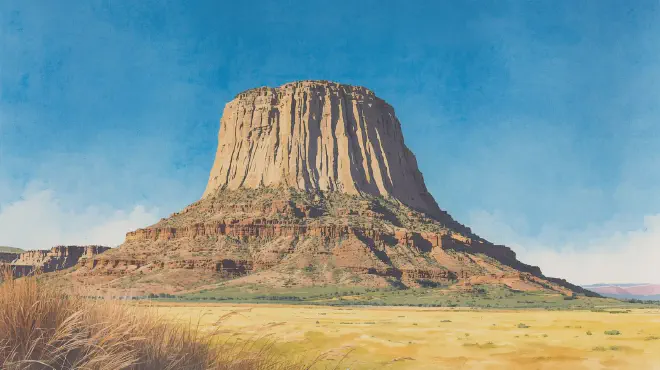
Scottsbluff, in western Nebraska, is a town that emerges suddenly from the endless Great Plains like a fortress of stone. The massive rock formations of Scotts Bluff National Monument, which nineteenth-century pioneers gazed upon as landmarks while traveling west along the Oregon Trail, still stand unchanged as the symbol of this land.
The plateau-like rock formation, rising over 1,400 meters in elevation, towers nearly 200 meters above the surrounding plains, as if the earth itself had thrust a fist toward the sky. This geological wonder is a work of natural art created by millions of years of wind and rain erosion, inscribed with the long memory of the earth beginning from the Cretaceous period.
The town has a population of around 15,000. Agriculture and tourism are the main industries, with sugar beet cultivation being particularly prominent. The influence of German immigrants remains strong, and the simple, warm character of the Midwest lives on here. Winters are harsh, summers pleasant—a continental climate. I visited in late May, when the fresh green was beautiful and the breeze was gentle.
Day 1: Opening the Gateway to the Great Plains
Three and a half hours northeast from Denver by car. Once I crossed the Colorado state line into Nebraska, the scenery transformed completely. The mountains receded into the distance, and the world of the Great Plains began, where the sky stretches endlessly. I headed east on Interstate 80, then turned north onto Highway 71. The road was straight, with grasslands and farmland stretching as far as the eye could see. Occasionally, small settlements appeared, reminding me that people do live in this vast land.
Around ten in the morning, I arrived in the town of Scottsbluff. The first thing that caught my eye was the massive rock formation in the distance. The mass of rock rising from the flat terrain was even more impressive than I had imagined, and I immediately understood why pioneers used it as a landmark.
My accommodation was a small motel called the Candlelight Inn, located in the center of town. A modest establishment that retained the atmosphere of the 1960s, it was clean and comfortable. The woman at the front desk was friendly, kindly telling me about recommended tourist spots and local restaurants. From my room window, I could see Scotts Bluff in the distance.
After dropping off my luggage, I first walked around the town. Main Street was quiet, lined with old buildings. The Mitchell Pass Museum, built in the early 1900s, a brick county courthouse from the 1920s, and a small shopping district. There was something nostalgic about the atmosphere.
I had lunch at the Oregon Trail Café, which a local had recommended. The interior was decorated with photographs and tools from the pioneer era, evoking a sense of history. I ordered the Pioneer Burger and locally grown potato fries. The meat was thick and juicy, the potatoes crispy on the outside and fluffy inside—simple but delicious. The owner told me, “Buffalo herds used to pass through this area long ago.”
In the afternoon, I headed straight to Scotts Bluff National Monument. It’s about a ten-minute drive from town. At the visitor center, I learned about the geological formation of the region and the history of the pioneers. Particularly impressive was the exhibit recreating the experiences of people who walked the Oregon Trail. From the 1840s to the 1860s, approximately 300,000 pioneers passed through here on their way to California and Oregon.
The trail to the top of the bluff is well-maintained, about two kilometers to the summit. The incline starts gentle but gradually becomes steeper. Along the way, I turned back to see a magnificent view of the Great Plains spread out before me. The farmland like a green carpet, scattered farmhouses, and the blue sky stretching to the horizon. Looking at this view, I could imagine how much courage the pioneers must have needed.
I reached the summit around four in the afternoon. A 360-degree panorama surrounded me. To the north, the mountains of Wyoming; to the south, the plains of Colorado; to the east and west, the endless Great Plains. The wind was strong, and standing on the rock, I felt as if I had drawn closer to the sky. I sat there for about thirty minutes, eating the sandwich I had brought while gazing at the scenery. Occasionally, a hawk rode the wind and soared through the air.
In the evening, after returning to town, I visited Heritage Village. This open-air museum features buildings relocated from the late nineteenth and early twentieth centuries, recreating life during the pioneer era. A schoolhouse, church, general store, blacksmith shop—buildings from that time are lined up here. A female staff member dressed in period costume explained the history of each building. The one-room schoolhouse was particularly memorable. I could almost picture children of various ages learning together in those days.
Dinner was at a local steakhouse called The Golden Spike. The name comes from the golden spike commemorating the completion of the transcontinental railroad. I ordered a ribeye steak of Nebraska beef. It was thick with just the right amount of marbling, cooked to perfection. The grilled corn on the side was sweet and delicious. The waitress proudly explained, “Our beef comes directly from local ranches.”
At night, back in my motel room, I looked out the window and saw the silhouette of the bluff floating against the starry sky. With few town lights, the stars were clearly visible. The night on the Great Plains was quiet, with only the occasional whistle of a passing freight train in the distance. Wrapped in the vastness and silence of this land, I fell asleep with anticipation for tomorrow.
Day 2: Tracing the Memory of the Land
I woke at six in the morning. Opening the curtains, I saw the morning sun illuminating Scotts Bluff, the rock face tinted orange. The air was clear, and the breeze was cool. After taking a walk near the motel, I had continental breakfast. A simple meal of coffee and a bagel with local honey and jam, but the anticipation for the day ahead made it taste wonderful.
In the morning, I visited the North Platte Valley Museum in the neighboring town of Gering. A small museum about fifteen minutes away by car, it was a valuable place to learn deeply about the region’s history and culture. The exhibitions centered on the history of the Oregon Trail, featuring replicas of covered wagons actually used by pioneers, along with household items, letters, and diaries from the time.
What particularly struck me was a passage from one female pioneer’s diary. “This is the third day since leaving Scotts Bluff. The children are tired, but we continue walking, holding onto hope for the West.” The museum curator explained, “For pioneers passing through this region, Scotts Bluff was both an important landmark and a resting place.”
Next to the museum was an exhibit recreating a nineteenth-century farm. I could see farming tools used at the time and log cabins built by pioneers. Inside the cabin, it was dim, with only sparse, crude furniture. Still, I could feel something of the warmth of families huddling together to survive harsh winters.
Lunch was at a small diner in Gering called Prairie Rose Café. It was a homey establishment bustling with locals. I ordered their specialty, the Rancher’s Special—a dish of thick-cut ham steak with fried eggs, hash browns, and toast, a hearty menu meant for people working on farms. The taste was simple but deeply satisfying.
In the afternoon, to experience the nature around Scottsbluff, I headed to Chimney Rock National Historic Site. About thirty minutes east by car, it’s another famous rock formation. True to its name, a chimney-shaped rock pillar rises from the plains. Like Scotts Bluff, it served as an important landmark for pioneers.
You cannot climb Chimney Rock, but you can walk close to it. As I walked the trail, I observed the surrounding vegetation. Yucca flowers, wild sunflowers, prairie grass—plants unique to the Great Plains grew here. Occasionally I heard prairie dogs calling, and in the distance I could see cattle grazing.
When I reached the rock up close, I was overwhelmed by its presence. The rock pillar, about 100 meters high, rose toward the blue sky. The surface was uneven from weathering, but this only enhanced its natural sculptural beauty. I spent about an hour here, taking photographs from various angles, imagining what the pioneers must have thought when they saw this sight.
On the way back to Scottsbluff in the evening, I stopped at a local farm. At a small farm stand amid spreading sugar beet fields, I could buy fresh vegetables. The elderly owner said, “This land has always been good for farming. It’s land that pioneers worked hard to cultivate.” I bought tomatoes, lettuce, and sweet corn. Everything smelled of the earth and was wonderfully fresh.
Before dinner, I took another walk through the town center. The setting sun illuminated the buildings, wrapping everything in a peaceful atmosphere. In a small park, local children were playing. I sat on a bench and watched the everyday life of this town. There’s no urban bustle here, but there is warm human connection and a tranquility rooted in long history.
Dinner was at a different restaurant than the day before. Country Kitchen, a family-style restaurant beloved by locals—a long-established favorite. I ordered pot roast, a slow-cooked beef dish. A large piece of meat stewed slowly with vegetables until the meat was tender enough to cut with a fork, the sweetness of the vegetables thoroughly absorbed. It came with mashed potatoes and gravy, a taste that carried the warmth of home.
At night, I stopped by a small bar near the motel. Called Trail’s End Saloon, it had an atmosphere straight out of a Western movie. Drinking local beer, I listened to the conversations of regular customers. Farming talk, weather talk, old stories about the town—time flowed slowly here. The bartender said, “Leaving tomorrow already? You should stay longer.” It was another moment when I felt the warmth of the people of this land.
Back in my room, I sat by the window gazing at the starry sky, reflecting on the day. The Great Plains nature, the pioneers’ history, the encounters with local people. Each experience was deeply etched in my heart. Tomorrow is already the last day. I wanted to carefully bring home everything I had felt on this journey. Wrapped in the quiet night, I drifted off to sleep.
Day 3: A Morning of Farewell and Lasting Memories
On my final morning, I woke earlier than usual. I wanted to see the moment when morning light illuminated the bluff one more time, so I went outside before sunrise. The town was still quiet, with only streetlights illuminating the roads. Looking toward the bluff from the motel parking lot, the sky was beginning to brighten gradually.
Around six o’clock, the sun emerged from the horizon. At first it was just a small orange point, but it grew larger, eventually dyeing the entire Great Plains gold. Scotts Bluff glowed reddish-brown in the morning light, radiating dignity like an ancient castle. I was so glad to have seen this moment. I will surely never forget this sight.
After breakfast, I checked out and set off for my final sightseeing. First, I headed to Wildcat Hills, a hilly area on the outskirts of town. This is a hidden gem known only to locals, a place the woman at the motel front desk had told me about. After about twenty minutes of driving and climbing a bit of unpaved road, I reached the top of a small hill.
The view from there was spectacular. I could see Scotts Bluff and the entire surrounding Great Plains. In the morning light, the farmland was beautiful like a green carpet, scattered farmhouses and roads forming patterns across the landscape. The wind brushed my cheeks, making me feel truly immersed in nature. I spent about thirty minutes here, quietly marking the end of my journey.
I returned to town and did some final shopping. At a small souvenir shop on Main Street, I bought a small vase made by a local potter and a photo book of Scottsbluff. The vase had the colors of a Great Plains sunset expressed in the glaze, as if I could carry the beauty of this land home with me.
For lunch, I stopped by the Oregon Trail Café once more. The restaurant where I had eaten on my first day—I wanted to enjoy that taste once more. This time I ordered the Frontier Omelet. It was packed with local eggs, ham, cheese, and vegetables, served with hash browns and toast. The owner called out, “Thanks for coming back. Stay longer next time.”
After finishing my meal, it was nearly time to depart. As I loaded my luggage into the car, I reflected on these two nights and three days. The majestic bluffs of Scottsbluff, the vast scenery of the Great Plains, the history of the pioneers, and the warmth of the local people. It was a short stay, but an incredibly rich time.
I stopped by Scotts Bluff National Monument one last time. This time I didn’t climb; I just looked up at the rock formation from its base. Unlike when I first saw it three days ago, I now felt a familiar affection, as if looking at an old friend. Thinking of how this bluff has watched over countless people for more than 150 years, I felt as though I had become part of that history.
At two in the afternoon, I left Scottsbluff. Driving back the way I came, I said farewell to each scene visible through the car window. The Great Plains, farms, small towns, and clouds in the sky. Everything was beautifully inscribed in my memory.
When I crossed the state line into Colorado, I looked back to see the Great Plains of Nebraska stretching to the horizon. I thought I could faintly see the bluff of Scottsbluff beyond. In reality, it was too far to see, but in my heart, I could see it clearly.
What Felt Real Despite Being Imaginary
This journey is a product of imagination, yet it remains in my heart as if it truly happened. The sensation of wind when I climbed Scotts Bluff, the beauty of dawn over the Great Plains, the warm smiles of local people, and the quiet starry nights. Everything is vividly inscribed in my memory.
The charm of travel is not merely about seeing beautiful scenery. By learning the history of a place, experiencing its culture, and meeting its people, our own world expands. The three days I spent in the small town of Scottsbluff taught me about the magnificent nature of the American Midwest and the courage and perseverance of the pioneers.
We in the modern world are accustomed to convenient lives. But 150 years ago, pioneers walked on through difficult journeys, relying only on hope for unknown lands. Their strength of spirit and courage teach us, who live in the present, something important still.
The vastness of the Great Plains makes you forget everyday worries. Looking at the sky and earth stretching to the horizon, you can feel both the smallness of your own existence and its preciousness. The sound of wind and birdsong heard in the silence reminds us of our connection to nature.
The warmth of the people I met on this journey also remains deeply in my heart. The slow flow of time impossible to experience in big cities, and the warm exchanges between people. These teach us a human richness we tend to forget in our busy modern lives.
Though it was an imaginary journey, the time I spent in Scottsbluff has surely become part of my heart. If someday I truly visit this land, this memory will layer upon reality, and I will surely experience an even deeper emotion. Perhaps the memory of travel transcends the boundary between reality and imagination, shining forever in our hearts.