
Introduction
Heraklion sits on the northern coast of Crete, a city where Mediterranean sunlight intersects with the memory of ancient civilizations. As the capital of this island known as the birthplace of Minoan civilization, it preserves the strong vestiges of Venetian rule while pulsing with the vitality of modern Greece.
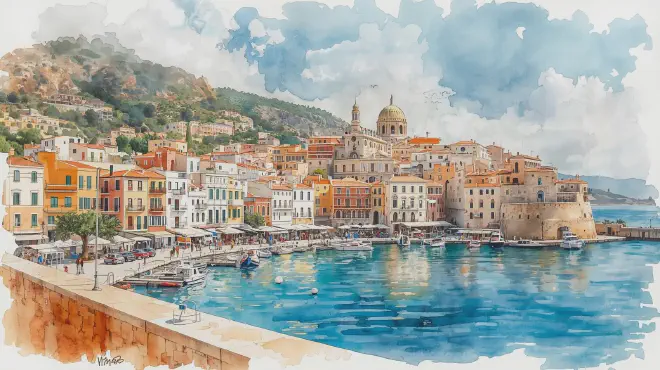
At the city’s heart stands the Venetian fortress, built in the 16th century, its stone walls marking the passage of centuries with dignified presence. Fishing boats and tourist vessels line the harbor, their white hulls mirrored in the blue Aegean waters. The scent of olive oil and herbs drifts from street corners, while cheerful laughter spills from the tavernas.
The Minoan civilization born on this island flourished from around 3000 BCE, known as Europe’s oldest civilization. The ruins of Knossos Palace remain as precious witnesses to that ancient glory. The people of modern Crete take pride in this rich history while welcoming travelers with their gentle, warm-hearted nature.
In a brief stay of two nights and three days, I cannot hope to know everything about this city. Yet wrapped in Mediterranean breezes, I want to touch the charm of Heraklion where ancient and modern weave together.
Day 1: Aegean Winds and Memories in Stone
The flight from Athens touched down at Heraklion airport as the afternoon sun began to soften its rays. Looking down from the window, Crete appeared as brown earth surrounded by the deep blue of the Aegean Sea, its contours so mysterious they seemed drawn from an ancient map.
On the bus from the airport to the city center, the driver called out “Yassas!” in broken English—a Greek greeting. Outside the window stretched typical Mediterranean architecture: white walls and terracotta roofs. The road wound through hills dotted with olive trees, and occasionally pastoral scenes emerged of sheep grazing in the fields.
After checking into a hotel in the city center, the afternoon still stretched ahead. From the room’s balcony, I could survey the entire panorama of the Venetian harbor. The fortress’s heavy stone walls gleamed golden in the evening light. Setting down my luggage, I headed out to explore the streets.
Walking the cobblestones of the old town, I felt as if time had stopped. Venetian-era buildings lined both sides of the narrow alleys, geraniums blooming in their window boxes. Pausing to look back, I glimpsed the blue of the sea beyond the alley, and in that moment realized I was truly on a Mediterranean island.
My first destination in the afternoon was the Venetian fortress. Officially called Koules Fortress, this structure was built by the Venetian Republic in the 16th century. Climbing the stone steps into the fortress interior, my footsteps echoed in the space enclosed by thick stone walls. From the top of the fortress, the city of Heraklion and the harbor spread out below: the densely packed white buildings of the old town, the new town beyond, and the blue sea stretching to the horizon. Wind brushed against my cheeks.
Leaving the fortress, I walked along the harbor promenade. The evening port bustled with fishermen finishing their day’s work. An old man mending nets on a boat deck, young men unloading fish. Their movements revealed a way of living with the sea passed down through generations.
I decided to have dinner at a small taverna in a corner of the harbor. The place was called “Taverna Minos,” and it was packed with locals. Not tourist-oriented—the unpretentious atmosphere felt comfortable. The menu was written in Greek, and the owner kindly explained it in English.
“What fish do you recommend today?” I asked. His eyes lit up as he showed me the fish arranged on ice. “This is fagri, sea bream. Caught this morning. Grilled is the best!” Following his suggestion, I ordered the grilled bream.
While waiting for the food, I sipped ouzo poured into a small glass. This quintessential Greek spirit has an anise aroma that tickles the nose. When water is added, the transparent liquid turns milky white—a transformation that’s part of the pleasure. At the next table, local elderly men played backgammon. The sound of pieces hitting the board, laughter, and occasional Greek conversation.
The grilled bream that arrived was simple yet exquisite. Seasoned only with olive oil, lemon, and oregano, the dish fully showcased the fish’s freshness and quality. The accompanying horiatiki salad (Greek salad) was also perfect—a harmony of tomatoes, cucumbers, onions, olives, and feta cheese.
When I stepped outside after the meal, the sun had already set and street lamps were beginning to glow. Light reflected on the harbor waters, swaying and rippling. Walking back to the hotel along the cobblestone alleys, I savored the city’s nighttime expression. It had a different atmosphere from daytime—quiet and mysterious.
Returning to my hotel room, I stepped onto the balcony to gaze at the sea. In the distance, a ship’s horn sounded, and the sound of waves echoed quietly. Tomorrow I would visit Knossos Palace. What discoveries awaited at the center of ancient Minoan civilization? Pondering such thoughts, the first night in Heraklion quietly deepened.
Day 2: Encounter with Ancient Civilization and the Island’s Bounty
Morning sunlight streaming through the curtain gap woke me. The clock showed just past 7 AM. Stepping onto the balcony, the harbor was already bustling with activity. Fishing boats prepared to depart while seagulls soared through the air, crying out.
The hotel breakfast was typically Mediterranean Greek: feta cheese, olives, tomatoes, cucumbers, and freshly baked bread. Greek yogurt drizzled with honey was rich yet refreshing. The locally produced orange juice tasted as fresh as if the fruit had been squeezed right there.
Around 9 AM, I boarded a bus to Knossos Palace. Located about five kilometers south of Heraklion’s city center, Knossos Palace is the largest palace site of Minoan civilization. A local woman sitting next to me on the bus said in broken English, “Knossos is a wonderful place. It was the palace of ancient kings.”
Arriving at the palace entrance, tourists from around the world had already gathered. Purchasing a ticket and entering, the first thing that caught my eye was the restored, vibrantly colored frescoes. The work known as the “Bull-Leaping Fresco” depicts young men and women performing acrobatics on a bull’s back, its dynamism overwhelming.
This palace, excavated and restored in the early 20th century by archaeologist Arthur Evans, was used from approximately 1900 BCE to 1100 BCE. Its labyrinthine complexity is said to have inspired the Greek myth of the Minotaur’s maze.
Standing in the Throne Room, I was enveloped by a strange sensation. Three and a half thousand years ago, the king of ancient Minoan civilization sat here. Elegant lily frescoes adorned the walls, testifying to the aesthetic sophistication of that era. According to the audio guide, Minoan civilization was a matriarchal society that worshipped women, with many goddess figurines discovered.
Walking through the palace’s central courtyard, Mediterranean sunlight reflected off the stone floor, creating beautiful patterns of shadow and light. Thinking that this had been the center of a highly advanced civilization 3,500 years ago, the grandeur of time’s passage stirred my heart.
After finishing the tour of Knossos Palace, I spent the afternoon at the Heraklion Archaeological Museum. Here, artifacts from Minoan civilization excavated from Knossos Palace and sites throughout Crete are displayed. Particularly impressive was the statue known as the “Snake Goddess,” a Bronze Age goddess figure. Her form holding snakes in both hands symbolizes vitality and fertility.
The most moving exhibit in the museum was the Phaistos Disc. This clay disc bears undeciphered characters inscribed in a spiral pattern, embodying the mysteries of ancient civilization. Standing before this disc made about 4,000 years ago, I imagined what thoughts the ancient people had as they carved these characters.
Leaving the museum, the afternoon sun bathed the city in golden light. To take a break, I stopped at a café on Market Street. At a small shop called “Café Hellas,” I ordered a frappé. This quintessential Greek iced coffee is made by frothing instant coffee. I was initially surprised by its appearance, but tasting it, I found it unexpectedly creamy and delicious.
Sitting at an outdoor table watching the city, I could see the daily life of Crete. Housewives with shopping baskets, children returning from school, merchants carrying goods on motorcycles. Everyone seemed relaxed, living without being chased by time.
In the evening, I had dinner at a traditional taverna near my hotel called “Cretan Mama.” The interior had a homey atmosphere with old photographs and traditional crafts decorating the walls. The owner, Maria, a woman in her sixties, welcomed me with maternal warmth.
“What’s tonight’s special?” I asked. Maria answered happily, “Today I made special moussaka. It’s my grandmother’s recipe.” Moussaka is a quintessential Greek home-cooked dish, like lasagna with layers of eggplant, ground meat, and béchamel sauce baked together.
The moussaka that arrived had a beautiful golden crust, the aromatic scent of cheese whetting my appetite. One bite revealed the sweetness of eggplant harmonizing with the umami of lamb and the creamy sauce. This was authentic home cooking, warming my heart.
The Cretan red wine I ordered with the meal was also exceptional. A local variety called “Kotsifali,” it was fruity yet not heavy—perfect for the meal. Maria proudly shared, “This wine is made by my son’s friend. It’s a small winery, but delicious, isn’t it?”
For dessert, I had baklava drizzled with local honey. This pastry of many layered phyllo sheets baked together perfectly balanced the nuttiness and honey’s sweetness. “This honey comes from the Cretan mountains. It’s from thyme flowers on the island,” Maria explained.
Stepping outside after the meal, nighttime Heraklion showed yet another face. The illuminated Venetian fortress rose mysteriously like an ancient citadel. Walking along the harbor, I reflected on the day’s encounters with ancient civilization.
Before returning to the hotel, I walked to the harbor breakwater. The sound of waves resonated quietly, and in the distance I could see someone night fishing. The city lights reflected on the water, glittering and sparkling. The people of ancient Minoan civilization must have gazed at this same sea. With such thoughts, the second night in Crete deepened.
Day 3: Morning of Farewell and Memories Etched in the Heart
On the final morning, I woke a bit early. It was still the quiet hour before the city fully awakened. Stepping onto the balcony, the eastern sky was beginning to tinge faintly orange. Deciding to watch the sunrise, I headed out for a walk to the harbor.
Walking the cobblestone alleys, I saw people preparing for the morning. The bakery’s ovens were already working, the scent of fresh bread drifting through the air. “Kalimera!” the shop owner called out. Responding with the Greek I’d learned yesterday—“Kalimera!"—he smiled warmly.
Reaching the harbor breakwater, the sun was just emerging from the horizon. The surface of the Aegean Sea glittered gold, its beauty taking my breath away. The quiet sounds of fishermen preparing for the morning echoed, while seagulls soared crying through the sky. Wanting to imprint this peaceful scene on my heart, I stood there for a while.
After returning to the hotel for breakfast and checking out, I used the remaining time for one last walk through the city. Walking Market Street, I caught glimpses of local daily life. The vegetable vendor loudly advertising his wares, housewives inspecting the produce.
At a small souvenir shop, I browsed Cretan specialties. Olive oil, herbs, honey, and handmade pottery. Everything evoked the island’s abundant nature and people’s craftsmanship. Following the shopkeeper’s recommendation, I purchased local olive oil and thyme honey. “Now you can enjoy Cretan flavors even in Japan,” she told me.
Around 11 AM, I checked out of the hotel and left my luggage, then visited the Venetian fortress one more time to spend my final hours. Unlike the first day, this time I walked slowly around the fortress. From the seawall facing the ocean, Crete’s coastline extended into the distance. White beaches, blue sea, and mountains inland. I felt anew the beauty of this island’s nature.
At a small café inside the fortress, I drank my last Greek coffee. Ellinikos kafes (Greek coffee) is traditional coffee made by boiling finely ground beans, creating a rich, aromatic drink. Fine grounds settle at the bottom of the cup, but this too is part of Greek coffee’s character.
Sipping the coffee, I reflected on these two nights and three days. The grand history of ancient Minoan civilization, the beautiful Mediterranean nature, and encounters with warm people. Though a brief stay, I’d fully experienced the charm of Heraklion and Crete.
Around 1 PM, I returned to the hotel for my luggage and boarded the bus to the airport. The Cretan landscape from the window felt familiar now. Olive groves, white houses, and distant mountains. The time on this island had already become a precious memory within me.
Arriving at the airport and completing check-in procedures, I purchased final souvenirs at the shop. A Crete photo book and a small bottle of local raki (distilled spirit). These items would be treasured mementos of this journey.
As boarding time approached, waiting at the departure gate, I could see the blue waters of the Aegean Sea through the window. Soon I would have to leave this beautiful island. Though a little sad, my heart was filled with fulfillment and satisfaction.
As the plane began moving on the runway, I could see the city of Heraklion growing small through the window. The Venetian fortress, the harbor, and the cobblestoned old town. The place where I’d spent three days looked like tiny dots from the air. Yet everything I’d experienced there was vividly etched in my heart.
The departing plane flew over Crete. Looking at the island’s panorama below the window, I felt anew how beautiful and history-laden this island was. From ancient Minoan civilization to the present, countless people have lived here, loved, and departed. I too felt as if, for a brief time, I’d become part of this island.
Conclusion
The plane leaves Cretan airspace, flying over the blue expanse of the Aegean Sea. The color of the sea below truly deserves to be called “Aegean Blue”—a deep, profound blue.
This two-night, three-day journey to Heraklion was experienced in imagination. Yet the weight of history felt at the ruins of ancient Minoan civilization, the taste of fresh fish at the harbor taverna, warm exchanges with local people, and the beautiful Mediterranean sunsets—all of these remain in my heart as if truly experienced.
The cobblestone alleys walked in imagination, the harbor view from the Venetian fortress, the awe felt for ancient civilization at Knossos Palace. These memories are etched in my heart with no less reality than an actual travel account.
Perhaps travel doesn’t necessarily mean physically visiting a place. Through imagination, pondering a land’s culture, history, and people’s lives might also be a form of journey.
These fictional three days in Heraklion, Crete taught me the richness of Mediterranean civilization and the infinite possibilities that travel holds. If I ever have the chance to actually visit this place, I could experience it more deeply, carrying the expectations and longing cultivated through this imagined journey.
A journey that feels real despite being imaginary—this is also proof of the wonderful power of human imagination. By traveling in the heart, the world becomes closer and more beautiful.