
A Capital Embraced by Blue Seas and Green Islands
Honiara, the capital of the Solomon Islands, is a quiet port town located on the northwest coast of Guadalcanal Island. This small capital of about 80,000 people, while etched in history as a fierce battleground of World War II, has now become a place where time flows gently, where the rich culture of Melanesia and pristine nature coexist peacefully.
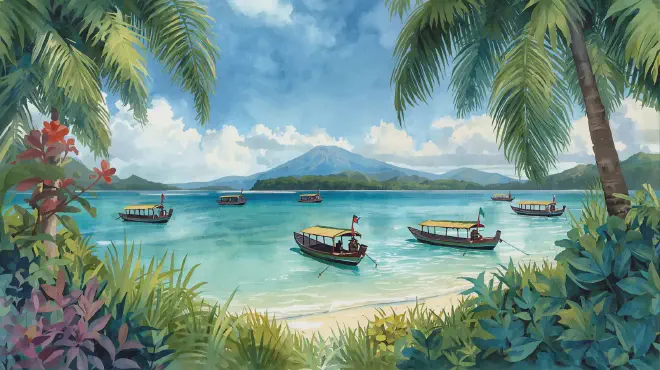
Behind the town spreads a dense tropical rainforest, with mountains shrouded in morning mist drawing mysterious silhouettes. Looking toward the sea, the highly transparent waters protected by coral reefs change their expression moment by moment from sunrise to sunset. Here there is no urban clamor; instead, the city is wrapped in the sound of waves, the chirping of birds, and the gentle laughter of people.
Most Solomon Islanders are Melanesian, speaking English, Pidgin English, and the traditional languages of each island. While Christianity is widely practiced, traditional beliefs such as ancestor worship and nature worship still breathe life into the culture. Wood carvings, shell crafts, traditional dances—cultures born from the bounty of sea and forest are still carefully passed down.
This 2-night, 3-day journey was meant to be an experience that would touch the quiet charm of Honiara and resonate deep within the soul.
Day 1: An Arrival Evening Wrapped in Silence
The moment I stepped off the plane at Henderson Airport, humid tropical air enveloped my skin. The air was much heavier than a Japanese summer, but strangely, it wasn’t unpleasant. Rather, mixed into this humidity were sweet floral fragrances and faint ocean scents that inflated my expectations for the journey ahead.
The road from the small airport to the city center was quieter than I had imagined. Coconut palms lined the roadside, and occasionally I could hear children’s laughter from the houses that came into view. John, the driver, was a quiet man who gently nodded at my halting English while briefly telling me about the town.
“Honiara is a small city. But the heart is big,” he said with a smile. The meaning of those words would gradually become clear during my stay.
After checking into the hotel around 3 PM, with the sun still high, I headed to the central market. Walking along Coconut Grove Road, I was struck by the contrast between the red dirt paths and the lush greenery. This place had the warmth of a large village rather than a city.
At the central market, colorful vegetables, fruits, and fish were on display. Taro, yams, giant breadfruit of shapes I’d never seen, and verdant leafy vegetables. At the fish stalls, rainbow-colored parrotfish and silver-gleaming mahi-mahi were beautifully arranged on ice.
The women at the market all turned friendly smiles toward me. One woman asked in fluent English, “Where are you from?” When I answered Japan, she took my hand and said, “Thank you for coming from so far away.” With that warmth, I felt the fatigue of travel melt away all at once.
As evening fell, I had dinner at a small restaurant near the market. The name was “Ocean View.” Indeed, you could see the ocean from the window, but more impressive was the gentle conversation of local families and the sound of a ukulele coming from somewhere.
I ordered coconut curry. Chicken and root vegetables were simmered in the gentle sweetness of coconut milk, with curry leaves and lemongrass tickling my nostrils. The spiciness was modest; instead, the natural sweetness of the vegetables and the richness of the coconut melted together on my tongue. The accompanying taro had a chewy texture completely different from Japanese potatoes, and paired perfectly with the curry.
While eating, an elderly man from the next table struck up a conversation. His name was Samuel, and in a slow cadence, he shared stories about wartime and old Honiara. In his eyes dwelt a deep kindness that only those who have lived many years possess.
“This island has seen much sadness. But now it is peaceful. I’m happy when young people like you come,” he said. Those words carried weight, quietly telling the story of this land’s history and present.
When I returned to my lodging at night, I could hear drums in the distance. When I asked the woman at the front desk, she told me, “There’s traditional dancing in the village tonight.” I went outside and followed the sound to find, in a small plaza surrounded by coconut palms, local people dancing in a circle.
I watched hesitantly from a distance, but a young man beckoned me over. Even without shared language, moving your body to music seemed to be a universal language. As I surrendered myself to the deep rhythm of the drums, I felt myself gradually assimilating into the flow of time on this island.
I returned to my lodging past 11 PM. As I showered, I thought about the smiling faces of all the people I’d met today. There is something here that makes you forget about hurrying. The starry sky visible from the window shone more brightly than any I’d seen in Japan.
Day 2: A Day When History and Nature Speak
I woke to birdsong in the morning. Looking at the clock, it was 6:30. Normally at this hour I’d be fighting drowsiness, but the morning air on this island seemed to have the power to awaken people naturally. When I opened the window, the wind blowing from the sea pleasantly caressed my cheek.
The hotel breakfast was simple but everything was fresh and delicious. Thinly sliced and baked breadfruit was slightly sweet with a flavor reminiscent of roasted chestnuts. The sweetness of papaya drizzled with local honey was incomparably richer than what I’d eaten in Japan.
After breakfast, guided by John from yesterday, I first visited the war museum. It’s a small museum displaying exhibits about the Battle of Guadalcanal during World War II. Rusted weapons and ammunition, everyday items used by soldiers from both sides are quietly displayed.
Particularly striking was the display of letters written by Japanese soldiers to their families. Looking at the characters “When cherry blossom season comes, let’s view the flowers together,” my chest tightened with the sadness of war and the depth of universal human affection. I was reminded again of the heavy reality that many young lives were lost here.
In the museum garden stood a peace bell, with an inscription saying it was a gift from Japan. When I rang the bell, its clear tone resonated through the quiet air. The sound seemed to sing of future hope while embodying sorrow.
At the end of the morning, I visited Red Beach. The historic coast where American forces landed in 1942, but now beloved by locals as a beautiful beach. The contrast between the fine white sand and the highly transparent water was beautiful, presenting a peaceful scene in stark contrast to the weight of history.
Walking along the beach, I encountered local children collecting shells. A young girl showed me a beautiful conch shell. She handed it to me saying “Present.” That shell, shining in a pale pink color, remains one of my treasured mementos.
For lunch, I ate at a small restaurant near the beach called “Sunset Café.” When I ordered their specialty coconut crab, they brought out a dish of crab meat—from crabs raised on coconuts—topped with sauce flavored with coconut milk and spices. The sweetness of the crab and the aroma of coconut matched exquisitely, a flavor I’d never experienced before.
In the afternoon, I ventured a bit outside the city to visit Tenaru Falls. The hiking course through the tropical rainforest took about 30 minutes, and with the high humidity, my sweat wouldn’t stop, but the colorful flowers encountered along the way and the beautiful birds flying overhead made me forget my fatigue.
Along the path, guide Peter taught me about medicinal herbs. “This one’s good for headaches,” “This one settles your stomach”—his explanations made it seem like the forest was a natural pharmacy. Feeling how knowledge passed down from ancestors still lives on in daily life, I was made to think about the true meaning of living in harmony with nature.
The emotion I felt upon reaching the falls is unforgettable. The sight of a waterfall about 20 meters high cascading down the green-rich rock face was spectacular. The water in the falls’ basin was surprisingly transparent, clearly visible to the bottom. At Peter’s encouragement, I dipped my feet in, and the cold mountain water gently healed my tired feet.
While eating the sandwich I’d brought near the falls, I could see fruit bats hanging from the trees overhead. Since it was daytime they were sleeping, but their occasional wing movements were mystical, making me realize that this forest is home to many creatures.
On the way back, we passed through a small village. There we met an old woman named Maria who suddenly invited us into her home. Her house was a traditional raised-floor structure with a roof made of bamboo and coconut palm leaves creating cool shade.
Maria served us homemade coconut cake. Made from grated coconut and taro flour, the cake had a gentle sweetness that filled my heart as well. Even without shared language, her warm hospitality came through clearly.
In the evening, returning to town, the western sky was dyed red by the setting sun. Walking along the harbor pier, I reflected on the day’s events. The weight of history and present peace, the beauty of nature and the warmth of people—this island had the mysterious charm of contradictory elements existing in harmony.
For dinner, at a different restaurant from yesterday, I ordered fish and chips. The freshly fried fish was crispy outside and fluffy inside, and when I squeezed lemon over it, the ocean’s fragrance rose up. The accompanying taro chips had a unique flavor different from potatoes, another fresh taste.
That night I walked near the harbor again. The moonlit sea surface sparkled, with distant island silhouettes floating in the darkness. Guitar sounds coming from somewhere matched perfectly with this quiet night.
Before returning to my lodging, I sat on a harbor bench gazing at the sea. Though I’d been here only two days, I felt like I’d been here for quite a long time. Was the flow of time different, or had the state of my heart changed? Either way, I was deeply drawn into the charm of this island.
Day 3: Eternal Bonds Felt on a Farewell Morning
On the final morning, I woke earlier than usual. Watching from the window as the still-dark 6 AM sky gradually changed from pale purple to orange, I was filled with reluctance at the thought of leaving this island today.
Before breakfast, I went alone for a walk to the harbor. The scene of fishermen returning to port with the dawn—while I’d watched it with a tourist’s eyes the previous days, this morning felt different. It was as if I’d been given a small share of their daily life, a kind of intimacy.
A young fisherman showed me his fresh catch. The beautiful blue-and-yellow gradient of a still-living mahi-mahi was the very radiance of life itself. “Delicious,” he said with a smile. In that smile appeared pride and joy in living with the sea.
Returning to the hotel for breakfast, I reflected on the people I’d met these two days. Samuel’s deep gaze, Maria’s warm hands, the children’s innocent smiles. Each person, in a short time, had left a deep impression on my heart.
Using the time before checkout, I visited the central market once more. This time not to buy souvenirs, but because I wanted to touch that lively atmosphere once again. The woman I’d met yesterday remembered me and asked with a sad face, “Leaving already?”
I bought a small handmade shell accessory from her. “Remember the Solomon Islands whenever you see this,” she said. That accessory wasn’t expensive, but as a heartfelt gift from her, I still treasure and wear it.
Leaving the market, several of the children I’d met yesterday came running up. Holding colorful flowers in their hands, they said “Farewell present” and made me a bouquet. Vibrant pink bougainvillea, white plumeria, and small yellow flowers whose names I didn’t know. That bouquet held their pure feelings.
For the last time in the morning, I revisited the Japanese memorial near the war museum. Yesterday I’d visited as part of sightseeing, but today I wanted to offer my hands with personal feelings. I quietly pressed my palms together with prayers for the many young soldiers who lost their lives on this island and gratitude for the current peace.
An elderly local man I met at the memorial spoke to me in fluent Japanese. Having learned Japanese sometime after the war, he said, “The war was a sad thing, but now we are friends” and offered his hand for a shake. From that warm palm, I sensed the deep meaning of forgiveness and friendship.
For lunch, before heading to the airport, I had my final meal at “Ocean View” where I’d eaten on the first day. This time I ordered a loco moco-style dish. Rice topped with a hamburger patty and fried egg, but the patty used local fish paste, giving it a unique flavor.
While eating, Samuel from the first day came by. He looked disappointed that I was leaving, but quickly smiled and said, “Come again. This island will always welcome you.” His final gift to me was a small hand-carved wooden fish. “A lucky charm,” he said, handing me that fish, which was a beautifully carved work.
In the car to the airport, John said, “Stay longer next time.” “Two nights three days is too short. You need more time to know the true goodness of this island.” He was certainly right. The island’s charm had a depth that couldn’t possibly be grasped in a short period.
The farewell at the airport was more moving than I’d expected. Not just John, but the people I’d met at the market, the children, even the restaurant staff had come to see me off. It was wrapped in a warm atmosphere, like seeing off family or friends.
In the final moment before boarding, I went outside the airport to burn the sight of Honiara into my eyes once more. The blue sea, green mountains, and leisurely flow of time. Each of the scenes I’d seen, people I’d met, and dishes I’d tasted in these 2 nights and 3 days were vividly etched in my heart.
As the plane took off, I could see the small town of Honiara below. Three days ago, I couldn’t have imagined that so many memories and emotions could be packed into that small town. The blue sea and green islands visible from the window seemed to wave, saying “Come back again.”
Reflecting aboard the aircraft, I realized this short journey had held meaning beyond mere tourism. It was an encounter with a different culture, time spent confronting history, and above all, a precious experience touching human warmth. The kindness and tolerance shown by the Solomon Islands people gave my heart deep emotion.
What I Felt as Real Though Imaginary
Though this journey was fictional, it has become a vivid memory in my heart as if truly experienced. The smiles of people I would have met in the small capital of Honiara, the taste of dishes I would have savored, the coolness of the sea breeze I would have felt, and the weight of history and the preciousness of present peace.
Even in an imaginary journey, by turning one’s thoughts to a land’s culture, nature, and people’s lives, perhaps one can gain the same kind of emotion and learning as from actual travel. Particularly with a place like the Solomon Islands, far from Japan, I felt that universal values—human connections, respect for nature, wishes for peace—are shared.
Through this fictional 2-night, 3-day journey, I was made to think anew about the essence of travel. It’s not just about visiting new places, but seeing the world from new perspectives, trying to understand different cultures, and above all, meeting people with an open heart.
If someday I truly visit Honiara, I want to actually experience the warmth and beauty I felt in this imaginary journey. And when that time comes, I’ll surely be welcomed with warm smiles like those of the people I met in this imaginary journey.
Travel is not only about physically going somewhere, but also about feeling with the heart and experiencing through imagination. I hope this fictional journey to Honiara might serve as an opening to a new world for readers as well.