
A Gem of the Far North: Inari
Inari lies in Finnish Lapland, the northernmost region of Finland—a small town of only around 6,000 people. Situated 250 kilometers north of the Arctic Circle, it is known as sacred land where Sámi culture still breathes. The town takes its name from Lake Inari, Finland’s largest lake, which cradles over 3,000 islands scattered across its surface like scattered jewels catching the light.
The charm of Inari lies in the harmony between untouched nature and ancient culture. Reindeer herds cross the roads at will, and the midnight sun and polar night paint the seasons in their own colors. The traditional Sámi handicraft known as duodji continues to be passed down, and the ancient singing tradition called joik can be heard carried on the wind. Above all, standing in this place, one feels the weight of a long history of humans living alongside nature. Far from the noise of cities, I decided to spend time here facing myself.
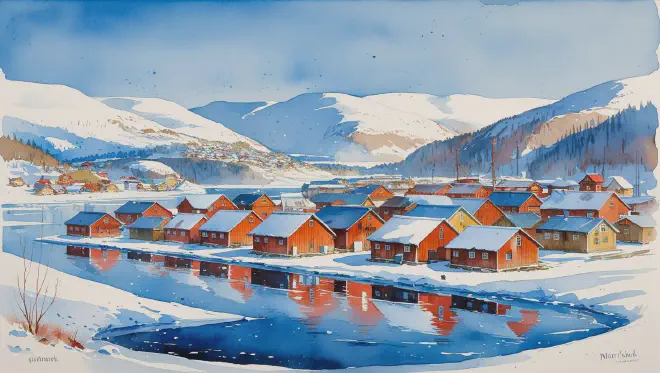
Day 1: Arriving into Silence
After driving north from Rovaniemi for about four hours, I arrived in Inari around two in the afternoon. In late June, during the season of the midnight sun, the sun remained high in the sky, blurring my sense of time. Rolling down the rental car window, the fresh scent of conifers and a cool breeze from the lake brushed against my cheeks.
My accommodation, Hotel Inari, was a wooden building standing quietly by the lakeside. When I received my key at the front desk, the receptionist smiled and said, “You’re lucky today. The lake is very calm and beautiful.” Her English carried the melody particular to Finnish, and that alone put me at ease.
My room was a corner unit on the second floor, with a large window overlooking part of Lake Inari. I set down my bags and stood by the window for a while, gazing at the view. The lake surface was still as a mirror, the distant islands reflected upside down upon it. Occasionally, a fish would leap, and the sound of its splash, the small ripples spreading outward, only deepened the silence.
After three o’clock, I went out to explore the town. The center of Inari is small enough to walk, with souvenir shops, restaurants, and facilities introducing Sámi culture dotting the main street. Passing by the Sámi Museum Siida, I glimpsed colorful traditional garments called gákti on display. I resolved to visit the next day.
For dinner, I chose the dining room at Lapland Hotel Inari—one of the few restaurants in town. The menu featured reindeer steak, grilled salmon, and desserts made with locally picked berries. I ordered sautéed reindeer. The meat that arrived was far more tender than I had imagined, with a juniper berry sauce adding a distinctive flavor. A feeling of gratitude toward the animals living in this land arose naturally within me.
After the meal, I walked along the lakeshore. Even past eight in the evening, the sun remained high in the sky, dyeing the lake surface gold. I came across a local man fishing and tried to speak with him in broken English. He looked to be over seventy, but his back was straight and his eyes were clear. “I was born and raised on this lake,” he said. “I’ve been fishing for over fifty years, but it shows me a different face every day.” In his words, I heard a deep love for this land.
At ten o’clock, I returned to the hotel under a sky still holding twilight. The lake visible from my room window wore a different expression from the afternoon. A faint mist hung over the water’s surface, and I was captivated by its dreamlike beauty. Even after showering and lying down, I couldn’t easily fall asleep because of the light outside the window. Yet it wasn’t unpleasant—rather, it felt like a kind of joy, surrendering myself to this extraordinary environment.
Day 2: A Day Touching the Sámi Soul
At seven in the morning, I woke to birdsong outside my window. Even amid the midnight sun, the birds announced the morning with precision. I showered and had breakfast at the hotel. In true Finnish fashion, there was rye bread, salmon, various cheeses, and local berry jam that was particularly delicious. The coffee was dark roasted and aromatic—a fitting start to the day.
At nine, I visited the Sámi Museum Siida. The building’s exterior was modern, but inside, exhibits spoke of timeless history. A traditional Sámi dwelling called a lávvu had been reconstructed, and life tools made from reindeer hide and antler, as well as colorful gákti garments, were on display. What struck me most was a video work expressing the spiritual world of the Sámi. The sound of a noaidi shaman’s drum resonated, depicting the deep connection between nature and humanity.
My guide at the museum was a young woman named Anna, who had Sámi heritage. “For us Sámi, nature is not something to conquer, but something to live with,” she said. “The sound of the wind, the voices of birds, the footsteps of reindeer—everything has meaning, and our ancestors lived by listening to those voices.” Her words were a fresh surprise for someone like me, living in a city.
Around eleven, I visited the Duodji Centre, a Sámi handicraft shop near the museum. An elderly craftswoman was carving reindeer antler to make a knife handle. Her hands were deeply wrinkled, but her movements were youthful and sure. “This is a technique I inherited from my grandmother,” she said, etching beautiful patterns into the antler. In her focused expression, I felt I saw the skill and spirit passed down through generations.
For lunch, I ate at a small café in town called Café Sámi. The menu was simple, and I ordered a reindeer meat sandwich and cloudberry soup. Cloudberries are locally called “lakka,” and their sweet-tart taste is unforgettable once you’ve tried them. The owner was friendly and explained the old photographs decorating the café walls. They showed Inari in the 1950s, conveying the simple lives of the people back then.
At two in the afternoon, I joined a boat tour on Lake Inari. Boarding a small motorboat, the skipper Pekka began telling the lake’s history. “This lake has 3,318 islands. Each one has a name and a story.” As the boat moved forward, I could feel the lake’s grandeur. The endless water surface, the scattered islands, the deep forests surrounding them. The wind brushed my cheeks, and only the sound of the engine broke the silence.
Partway through, we landed on a small island called Ukko. This island is a sacred place for the Sámi, where prayers have been offered to the gods since ancient times. A small altar of piled stones stood on the island, and people still come to make wishes. I picked up a small stone and placed it on the altar. I had no particular wish in mind, but in this sacred place, I couldn’t help but wish for something.
Around four o’clock, returning from the boat tour, I visited a reindeer farm north of town. The farm owner, Juhani, kept 300 reindeer. “The reindeer are raised in a near-wild state,” he explained. “In summer, they roam the meadows freely, and only in winter do they receive human help.” Seeing reindeer up close, they were larger than I had imagined, with gentle eyes. When I was allowed to touch their antlers, they were surprisingly soft and warm.
At six in the evening, I returned to the hotel for a short rest. Sitting on the balcony, I gazed at the lake while drinking a Finnish beer I’d bought at the hotel. Lapin Kulta, a local brew, had a crisp taste that seeped into my tired body. The evening sun reflected on the lake surface, creating a golden path of light. Occasionally, shadows of birds flying over the lake crossed that path of light.
For dinner, I returned to the restaurant at Lapland Hotel. Tonight I chose grilled local salmon. The flesh was firm and rich with fat. The side of boiled new potatoes was generously topped with dill—simple and delicious, in true Nordic fashion. For dessert, I ordered a pie made with local blueberries. It was lightly sweetened, with the natural tartness of the berries leaving a lasting impression.
At nine in the evening, I walked along the lakeshore again. At the same spot as yesterday, I met the local fisherman again. Today he had had a good catch and showed me a beautiful trout. “This is breakfast tomorrow,” he said happily. His face was filled with a satisfaction that one could never see in a city—the contentment of a person living alongside nature.
Day 3: A Morning of Farewell and What Remains in the Heart
On my last morning, I woke earlier than usual, at six o’clock. Perhaps an unconscious anxiety that this special time would end had roused me. Looking out the window, a thin mist hung over the lake surface, spreading into a dreamlike scene. I quickly dressed, grabbed my camera, and headed to the shore.
The lake in the morning was more beautiful than any moment I had seen before. Islands slowly emerged from the mist, and birds whose names I did not know made ripples on the water’s surface. The silence and beauty were so complete that I forgot to breathe, standing transfixed. I pressed the shutter, but I thought there was no way a camera could capture the beauty of this scene.
At eight, I had a leisurely breakfast at the hotel. Today I specially ordered Finnish-style porridge, puuro. A simple dish of oatmeal cooked in milk, it filled my mouth with gentle sweetness when topped with berry jam. I remembered Anna from the day before saying, “Sámi children grow up eating this porridge.”
At half past nine, I checked out and loaded my luggage into the car. Before leaving, I decided to walk through town one more time. At the Duodji Centre I had visited the day before, I bought a small reindeer antler pendant. The elderly craftswoman smiled and said, “If you wear this, you can always remember Lapland.”
At half past ten, I visited the Sámi Museum Siida once more. I spent time carefully viewing the exhibits I hadn’t fully seen the day before. I lingered especially long in front of the diorama expressing the changing seasons. Spring snowmelt, summer’s midnight sun, autumn’s northern lights, winter’s polar night. The people living in this land face all these seasons as they live their lives.
For lunch, I had my last meal at Café Sámi. Today I ordered reindeer meat soup. The reindeer meat stewed with vegetables had initially felt unfamiliar, but now it had become a taste I knew well. The owner remembered me and called out, “Please come back again.”
At one in the afternoon, the time came to leave Inari. I started the engine and stopped the car one last time on a hill overlooking the lake. Lake Inari spread out below, quiet and beautiful as when I had arrived, looking as though it would never change. Yet something had certainly remained within my heart. It was difficult to put into words, but it was a feeling that I had learned something important about the relationship between nature and humans, about the essence of living.
Driving toward Rovaniemi, I watched the landscape of Inari grow smaller in the rearview mirror. But strangely, more than loneliness, I felt a sense of fulfillment and gratitude. It had been only a two-night, three-day stay, but the people I met in this land, the culture I touched, the power of nature I felt—all had certainly become a part of me.
What Felt Real Despite Being Imaginary
This journey is a product of imagination. I have never actually set foot on Inari’s soil, nor have I directly touched Sámi culture. The fisherman I met by the lake, Anna the museum guide, the café owner—all are people who exist only in imagination.
Yet, as I wrote these words, I truly felt the wind of Inari, experienced the silence of the lake, and seem to remember the taste of reindeer meat. Perhaps this is because knowledge I held as information was transformed into living experience through imagination. Or perhaps it is because my longing for travel and my respect for unknown cultures created certain memories within my heart.
A true journey may not necessarily involve physical movement. When the heart is moved, when imagination takes flight, when one encounters a new world—perhaps that, too, is a form of travel.
Lake Inari still lies within the silence of the Arctic, together with its more than 3,000 islands. Sámi culture continues to be passed down, and reindeer still run across the land. And I believe that when the day comes to truly visit that place, this imaginary journey will make the real one all the richer.