
The Blue City’s Invitation
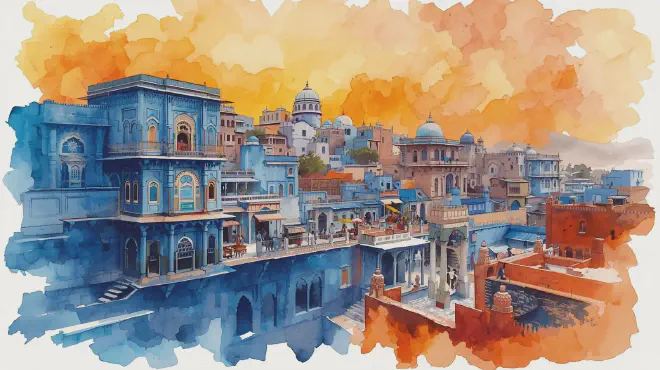
Jodhpur stands at the gateway to the Thar Desert. The reason this city is called the “Blue City” becomes clear when you gaze upon the old town sprawling at the feet of Mehrangarh Fort—houses painted in shades of blue, as if sky-colored paint had been poured down from above. Founded in the 15th century by Rao Jodha, this city prospered as a vital point along the Silk Road and still retains the proud cultural heritage of Rajasthan.
The lives of people rooted in this arid land harmonize beautifully with the harsh natural environment. The blue houses are not merely decorative; they represent practical wisdom—softening the intense sunlight and keeping insects at bay. In this city where the magnificent palaces built by maharajas coexist with neighborhoods where ordinary people live their daily lives, I decided to spend three days, listening to the stories carried on the desert wind.
Day 1: Memories Dwelling in the Fort’s Shadow
After a 12-hour overnight train journey from Delhi, I stepped onto the platform at Jodhpur station just after 6 AM. The dry air immediately enveloped my skin. Even in the cool morning air, the scent of spices and dust already mingled. Amid the calls of rickshaw drivers at the station entrance, I headed toward my reserved hotel—a converted haveli in the old city.
The journey to the old town was like traveling through time itself. Paved roads gradually gave way to narrow stone-paved alleys, and the buildings on either side shifted in color from brown to blue in a gradient. As the rickshaw progressed, the presence of Mehrangarh Fort looming overhead grew more imposing. Built atop a 120-meter rocky hill, it resembled a massive stone flower growing from the earth.
After dropping my luggage at the hotel, I first needed sustenance. At a small nearby eatery, I ordered kachori, a famous Rajasthani breakfast dish. This fried bread stuffed with spicy dal, enjoyed with sweet chai, was perfect. The elderly shop owner asked in broken English, “First time in Jodhpur?” When I nodded, he smiled warmly. Watching his wrinkled hands skillfully pour the chai, I felt the weight of lives rooted in this city.
I spent the morning walking through the old town. The area around Sardar Market was already bustling with activity, spice vendors’ stalls piled high with colorful mountains of spices. The brilliant yellow of turmeric, the fiery red of chili peppers, the warm brown of coriander seeds. Shopkeepers mixed spices with practiced hands according to customers’ requests, wrapping them in paper bags. I found myself mesmerized by their efficiency and the perfect blends honed through years of experience.
Walking through the maze-like alleys surrounded by blue walls, I occasionally emerged into open spaces. From there, looking up at Mehrangarh Fort created the illusion that it was floating in the sky. Illuminated by the morning sun, the fort’s red sandstone walls radiated warm light, creating a beautiful contrast with the blue cityscape below.
After midday, I finally headed to Mehrangarh Fort. Climbing the steep path, I turned back to see the blue city spread out below. Each house had its own unique shade of blue, and together they wove a single enormous blue tapestry.
At the fort entrance, I rented an audio guide. I was surprised to find a Japanese version, and even more so to learn that the current owner—a descendant of the maharajas—personally provided the commentary. Passing through the thick gates, I entered another world. The palace walls surrounding the courtyard were covered in intricate carvings, overwhelming evidence of the craftsmen’s skills from centuries past.
Particularly impressive was the Sheesh Mahal—the Mirror Palace. Countless small mirrors embedded in the ceiling and walls created a magical illumination with even the slightest light. Imagining the splendor of the evening parties held here by maharajas of old, I couldn’t help but feel the strange passage of time.
The armory displayed rifles decorated with elephant trunk motifs and swords studded with jewels. These were not mere weapons but symbols of power and wealth. Contemplating the souls of craftsmen embedded in each weapon and the ambitions of the maharajas who owned them, I sensed the layered depths of history.
Late in the afternoon, watching the sunset from the fort’s highest level was extraordinary. As the western sky began to tinge with crimson, the blue cityscape below gradually shifted to purplish hues. Wind from the Thar Desert caressed my cheeks, and from afar came the beautiful melody of the azaan—the Muslim call to evening prayer. In that moment, I felt I had truly become part of Jodhpur.
For dinner, I ate at a small restaurant in the old town. I ordered traditional Rajasthani dishes: laal maas (mutton curry) and baati churma (wheat flour dumplings with sweet treats). The laal maas wasn’t as spicy as its red appearance suggested; rather, it had an impressive depth of flavor. The simple sweetness of churma was perfect for cleansing the palate after spicy food, revealing the culinary wisdom of this land’s people.
While eating, I conversed in broken English and Hindi with an elderly local man at the next table. He had worked as a musical instrument maker in this city for many years, continuing to craft sitars and tablas. “Music is the language of the soul,” he said, then brought out a small sitar he’d carried with him and treated us to an impromptu performance. The restaurant’s other customers naturally fell silent to listen, and the space became wrapped in a warm circle of music. That night, I realized the wonder of having a common language in music, even when words don’t connect.
Day 2: Desert Winds and Artisan Craft
I greeted the second morning on the hotel’s rooftop terrace. Beyond the blue cityscape, the sun slowly rose. Mehrangarh Fort glowed golden in the morning light, its dignified form never tiring no matter how many times I viewed it. The morning air was clear, allowing visibility far into the distance. From this elevated vantage point, the blue city looked like a fantastical painting rendered by a poet.
After breakfast, I headed to the artisan district in the old city. The elderly instrument maker I’d met the previous night had invited me: “Come to my workshop tomorrow morning.” Walking through narrow alleys, I heard the sounds of metal being hammered, looms weaving, and wood being carved—creating the rhythm of the entire city.
The old man’s workshop was in a traditional house with a small courtyard surrounded by blue walls. Inside, sitars and tablas in various stages of completion were crowded together. He had been doing this work for over 60 years, having inherited the technique from his father and now passing it to his son. Three generations of artisan lineage continued to pulse through this small workshop.
“We use gourds for the sitar body,” he explained, picking up a dried gourd. “The dry climate of this land produces the best acoustic effects.” Watching the actual production process, I learned it takes over six months to make a single instrument. The delicate work of stringing, the painstaking carving of decorations—all done by hand. Even in this age of mass production, a culture of taking time to craft things carefully still breathes here.
I spent the entire morning at that workshop, even learning to play the sitar. The complex string arrangement and unique playing technique initially bewildered me, but thanks to the old man’s patient instruction, I could play a simple raga (melody). Through music, I had a precious experience of touching the deep layers of this city’s culture.
I shared lunch with the workshop family. The dal baati churma made by the old man’s wife had a different warmth from the restaurant version—the warmth of home cooking. Despite simple ingredients, the exquisite seasoning based on years of experience moved me. During the meal, the whole family listened with interest to my stories about Japan, and in turn taught me about their daily lives. Beyond the language barrier, I felt anew the wonder of heart-to-heart human connection.
In the afternoon, I ventured out to Osian, on the outskirts of Jodhpur. This place, dotted with Hindu and Jain temple complexes built between the 8th and 12th centuries, was truly like an oasis in the desert. The exquisite carvings of Sachiya Mata Temple have maintained their beauty for over a thousand years. Particularly the sculptures of dancers, full of dynamism, possessed a vitality as if life had been breathed into stone.
In the temple grounds, local pilgrims offered fervent prayers. An elderly woman leading her small grandchild through the temples, a young man earnestly clasping his hands before a deity—I witnessed how deeply faith is rooted in people’s daily lives. I too removed my shoes, entered the temple, and took time to calm my heart in the silence.
On the return journey from Osian, we passed through part of the Thar Desert. Endless sand dunes with acacia trees scattered between them. Though a harsh environment, there exists a unique beauty here. The dunes in the late afternoon’s oblique light drew shadows like massive sculptural works. I gazed out the window, pondering how this desert environment has influenced the character and culture of this region’s people.
Returning to Jodhpur in the early evening, the sunset was dyeing Mehrangarh Fort golden. The market around the Clock Tower (Ghanta Ghar) beneath the fort was at its liveliest time of day. Vegetable sellers, fruit vendors, clothing shops, souvenir stores. The voices of merchants and customers negotiating prices echoed from each shop, creating a liveliness like an orchestra’s performance.
Dinner was at a rooftop restaurant with a good reputation in the city. Dining while viewing Mehrangarh Fort was the height of luxury. Kerala chicken (coconut curry) with naan, and lassi. Beyond the food’s flavor, I was captivated by the beauty of the illuminated fort. The night breeze was pleasant, and together with the distant sounds of the city, everything harmonized in a perfect evening.
Day 3: A Morning of Farewell and Blue Etched in Memory
On the final morning, I woke early to walk through the old town once more. Just after 5 AM, the city was still wrapped in silence. As if yesterday’s bustle had been a lie, the blue houses quietly welcomed the morning. The only sounds from deep in the alleys were prayers from someone’s home and distant birdsong.
In this silence, the blue walls appeared even more vivid. In alleys where morning light slanted in, the contrast of shadows cast on blue walls created beautiful geometric patterns. I realized anew that the same blue shows completely different expressions depending on the time of day and angle of light. This must be one reason this city continues to captivate people.
For breakfast, I returned to the same eatery from my first day. The elderly shop owner remembered me and looked disappointed: “Leaving already?” Though it had been only three days, perhaps I had become more than just another tourist to him. Savoring my final chai, I reflected on each encounter in this city.
In the morning, I headed to Umaid Bhawan Palace, which I hadn’t yet visited. Built in the 20th century, this palace stood in contrast to Mehrangarh Fort with its modern Art Deco architecture. Now used as a hotel and museum, it offered glimpses into the maharajas’ luxurious lifestyle.
Most impressive within the palace was the clock collection. Exquisite timepieces gathered from around the world held value as art beyond their timekeeping function. Seeing these clocks continue to precisely mark time, I felt both the universal concept of time and the creativity of humans who gave it form.
The palace gardens were vast and meticulously maintained, and I was surprised to find such green space in a desert city. Peacocks walked gracefully, occasionally spreading their beautiful tail feathers. Seeing peacocks—India’s national bird—so close for the first time, I was entranced by their mystical beauty.
In the afternoon, the time finally came to pack and head to the station. As I checked out, the young man at reception asked, “How was Jodhpur?” When I answered “Wonderful,” he smiled with pride. It was a moment of feeling the pride and affection local people have for their city.
In the rickshaw heading to the station, I took a final look at the blue cityscape. Over these three days, I had seen this city’s various faces—morning silence, midday bustle, evening beauty, night’s magical atmosphere. And above all, the warmth and pride of the people living in this city. Though a brief stay, I felt that Jodhpur had firmly taken root in my heart.
Waiting for the train on the station platform, I reflected on the events of these three days. Meeting the elderly instrument maker, dining with his family, quiet time at the temples, the desert sunset, the night view from the rooftop restaurant. Each was a special experience, but what made them special, I think, was the heart-to-heart connections with the people I met.
The overnight train pulled into the platform. The lights of Jodhpur visible from the window gradually receded. The illuminated Mehrangarh Fort grew smaller, then disappeared. Yet in my heart, that blue cityscape still vividly resurfaces.
In Closing
This journey is imaginary; I did not actually visit Jodhpur. Yet while writing this piece, I truly walked through that blue city, smelled the spices, touched the craftsman’s warm hands, and felt the desert wind.
Travel need not mean only physical movement. When the heart moves, when imagination takes flight, when we turn our thoughts to unknown worlds—this too is a form of travel. Through this imaginary journey, I explored the charm of Jodhpur, contemplated the lives of people living there, and felt the profound depths of Indian culture.
Though imaginary, that it can be felt as such a vivid and certain experience speaks to the wonder of human imagination. And simultaneously, to the power of words as tools. A succession of letters can create new worlds in readers’ hearts and generate emotion-like real experiences there.
I close this travel narrative hoping that one day this imaginary journey will become real, and I will actually walk through Jodhpur’s blue city. When that time comes, surely reality will be richer, more complex, and filled with surprises I never anticipated. Until then, in this Blue City within my heart, I will continue to spread the wings of imagination.