
Introduction
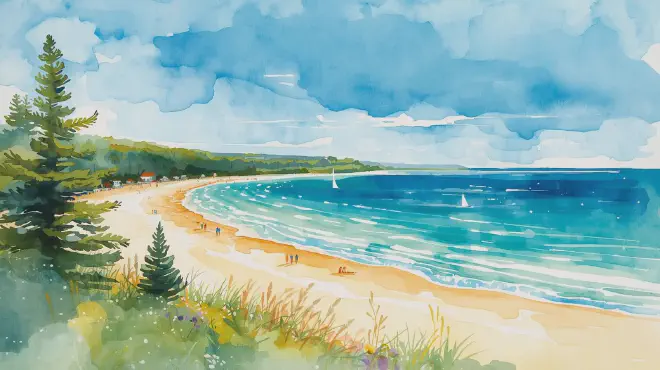
Jūrmala, a small town facing the Baltic Sea. True to its name, which means “seaside” in Latvian, this premier resort of the Baltic states boasts 36 kilometers of white sandy beaches. From the late 19th century through the Soviet era to the present day, this land has been cherished by many, and a unique charm continues to breathe through it.
Though only about 30 minutes by train from Riga, Jūrmala is enveloped in a silence that feels like another world. Wooden villas surrounded by pine forests, beautiful Art Nouveau architecture, and above all, the endless sandy beaches and the gentle melody of the Baltic Sea. Even in summer, a cool sea breeze caresses your cheeks, and in winter, snow-dusted dunes create a fantastical landscape.
The appeal of this town transcends that of a mere seaside resort. Its history as a health resort dating back to the 19th century, the intellectual atmosphere beloved by cultural figures during the Soviet era, and the traditional way of life that modern Latvians carefully preserve — all of these layers overlap to create Jūrmala’s distinctive flow of time.
I decided to visit this place in late February, when the cold still lingered. Precisely because it was far from the tourist season, I wanted to touch the true face of this town that would reveal itself.
Day 1: Wrapped in the Melody of Melting Snow
The moment I stepped onto the platform at Jūrmala station after about 30 minutes on the train from Riga Central Station, I was greeted by air so cold it stung my cheeks and the somehow nostalgic scent of pine. Late February in Jūrmala had few tourists, and even the small shops in front of the station were quiet. Yet I intuited that this very silence would teach me the town’s true expression.
The walk to my guesthouse took about 15 minutes on foot. As I walked, treading on snow-covered sidewalks, the wooden houses lining both sides of the road caught my eye. Each house was unique, charming as if they had stepped out of a picture book. Potted plants covered with snow lined the verandas, and warm light glowed in the windows. I could feel the breath of residents’ lives, and my heart softened.
After checking into the guesthouse around 11 AM, I decided to fill my stomach first and visited a small nearby café called “Mājas kafija.” The interior was filled with the warmth of wood, and a local-looking elderly man sat reading a newspaper while drinking coffee. I ordered “rupjmaizes kārtojums,” a traditional Latvian breakfast dessert made with rye bread, and a strong coffee.
The rye bread dessert was a taste I’d never experienced before. Sweet yet slightly bitter, with cream and berry acidity harmonizing exquisitely. In its rustic yet deep flavor, I sensed the carefulness of Latvian people toward their daily lives. The female owner told me in broken English, “This is my grandmother’s recipe.” Wrapped in the strange sensation of tasting a land’s memories in a foreign place.
In the afternoon, I strolled along Jomas Street, Jūrmala’s main street. The Art Nouveau buildings lining both sides were beautiful even in the snowy landscape, standing as if time had stopped. Particularly impressive was the “Dzintari Concert Hall,” built in the 1920s. Though currently under renovation and inaccessible inside, its elegant exterior told the story of how this town was once beloved by many artists and intellectuals.
While walking along the street, a small antique shop caught my eye. The owner, a man in his 60s, spoke fluent English and told me about the shop’s items. Old photographs from the Soviet era, handmade wooden goods, amber accessories — all items that bore the history of Jūrmala. Particularly intriguing were photographs taken here in the 1960s. The expressions of people enjoying the summer beach were filled with happiness that transcends time.
“Jūrmala has always been a place that heals people’s hearts,” the shopkeeper said. “Even when political systems change, the essence of this place doesn’t. As long as there’s the sea, the pine forests, and people’s kindness.” Those words resonated deeply in my chest.
As evening approached, I headed to the beach. The Baltic Sea in late February was rough, with white spray crashing onto the sand. Unlike the tourist season, there was no one on the beach. Only the sound of wind and waves echoed. Though it was freezing cold, I was captivated by that overwhelming power of nature.
Walking along the coastline, the sun set beyond the snow-covered dunes. Orange light reflected off the snow surface, creating a fantastical scene. In that moment, I felt the concept of time growing thin. I realized that this was truly a special place.
For dinner, I went to a restaurant called “36. līnija,” recommended by a local. The name means “36th line,” representing the length of Jūrmala’s coastline. Served in the warm interior were “zivju zupa,” a soup made with local fish, and “pīrāgi,” Latvia’s national dish. The fish soup had a gentle flavor that warmed my body, chilled from the cold, from the core. Pīrāgi were shaped like small pies, filled with bacon and onions. Simple yet rich in flavor, truly a home-cooked taste.
While eating, I exchanged a few words with a local family at the next table. The father spoke to me in English: “Jūrmala is beautiful this season, isn’t it?” “It has a different charm from summer. It’s quiet, a very good time for thinking.” Indeed, that was exactly right. Perhaps it was precisely this season, away from the hustle and bustle, that allowed me to touch the town’s true appeal.
Walking back to the guesthouse, treading the snow-covered path lit by streetlights, I reflected on the day. New encounters in an unfamiliar land, tasting food for the first time, and overwhelming natural beauty. Everything was fresh, and I felt a sense of fulfillment in my heart. When I returned to my room, I surrendered myself to the warm bed and fell asleep with anticipation for tomorrow swelling in my chest.
Day 2: Cultural Exploration Embraced by Forest and Sea
In the morning, when I opened the window, the world had been dyed pure white by fresh snow that fell overnight. Feeling anew the beauty of Jūrmala’s winter, I decided to explore its cultural aspects today.
Breakfast was in the guesthouse’s dining room. As a traditional Latvian breakfast, I had “maizes zupiņa” (bread soup), black bread, and locally produced honey and butter. The bread soup had a sweet seasoning, a mysterious dish almost like dessert. According to the landlady, this has long been a beloved breakfast in Latvian homes, especially warming the body on cold winter mornings.
In the morning, I visited the Jūrmala Museum. Though a small museum, the history and culture of this land were carefully displayed. There were many fascinating materials about how Jūrmala developed as a summer resort for Russian Empire nobility from the late 19th to early 20th century, and photographs of cultural figures from the Soviet era.
Particularly memorable was the collection of works by artists active here from the 1920s to 1930s. The way painters, musicians, and writers were inspired by this beautiful seaside town and devoted themselves to creation came through clearly. The cultural vitality of early Latvian independence and the creative atmosphere of this land overlapped beautifully.
The museum curator, speaking fluent English, explained, “Jūrmala has always been not just a resort, but also a place of cultural exchange.” “Germans, Russians, and Latvians coexisted, and their cultures influenced each other to create a unique atmosphere.” Perhaps this multicultural background is the source of the town’s tolerant and open atmosphere.
In the afternoon, I went for a walk through the dunes and pine forests, the core of Jūrmala’s nature. This area, also part of Ķemeri National Park, is a precious nature reserve with a unique ecosystem. Looking at the sea from atop the snow-covered dunes, I caught my breath at its magnificence. The panorama woven by sea, forest, and dunes was truly a landscape characteristic of the Baltic coast.
Walking along the forest trail, I could see animals spending the winter — squirrels, woodpeckers. Even in the snow, I felt nature’s strength in the forest’s vitality brimming with life. Midway, I rested in a small wooden gazebo while drinking warm tea. The tea I’d brought in a thermos soaked into my chilled body.
The silence in the forest was extraordinary. A world where only bird songs and the sound of wind echoed, far removed from urban clamor. Being in this quietness, I had the sensation that everyday scattered thoughts naturally organized themselves. Occasionally, the distant sound of waves blurred the boundary between forest and sea.
Returning to the town center near evening, I glimpsed a part of local people’s daily lives. School children throwing snowballs at each other, housewives with shopping bags chatting — somehow nostalgic everyday scenes were there.
For dinner, I went to “Lauku māja,” a restaurant famous for home cooking. The name means “country house,” and true to its name, it was filled with a warm, homey atmosphere. I ordered “kotletes ar biezpiena mērci” (cutlets with cottage cheese sauce) and “biešu salāti” (beet salad).
The cutlets were tender and juicy, with excellent compatibility with the rich cottage cheese sauce. The beet salad had a beautiful vivid pink color, with an exquisite balance of subtle sweetness and acidity. Both were traditional dishes beloved in Latvian homes, and their rustic deliciousness warmed my heart.
While eating, I had the opportunity to talk with an elderly local couple at the next table. The husband was a former teacher, the wife a former nurse. “We’ve lived in Jūrmala since we were young. Knowing the beauty of this town’s four seasons, we can’t imagine leaving,” they told me. The wife’s words about particularly loving the winter silence were memorable. “Winter, when there are no tourists, is when you truly understand this town’s beauty.”
Leaving the restaurant and heading to my lodging, walking through the snowy night road, I ruminated on the day’s experiences. The history learned at the museum, nature’s power felt in the forest, and warm exchanges with local people. I felt I was beginning to understand, little by little, the multifaceted appeal of this land called Jūrmala. It wasn’t merely the appeal as a tourist destination, but a deeper appeal woven by the lives and culture of people rooted here.
That night, alone in my room, organizing the photos I’d taken that day, I realized my affection for this land was deepening. By the second day, Jūrmala was already becoming a special place.
Day 3: A Morning of Farewell and Eternal Memory
The final morning began with the most beautiful sunrise yet. From my room’s window, I quietly watched the eastern sky dye pale pink, then gradually turn golden, from the warmth of my bed. To see such a beautiful scene on my last morning in Jūrmala felt like a gift from the land itself.
After breakfast, I decided to use the time before checkout to walk the beach one more time. Unlike previous days, the sky was cloudless and clear, and the blueness of the Baltic Sea stood out. The air on the late February morning beach was crisp, and I could see clearly all the way to the distant horizon.
Walking along the beach, I thought back on the people I’d met over these two days. The café owner, the antique shop keeper, the museum curator, the local families and couples I’d met at restaurants. Each was warm, filled with love for this land called Jūrmala. Without meeting them, this journey wouldn’t have been so rich.
Returning to town after my beach walk, I passed by the antique shop I’d visited yesterday. I saw the owner shoveling snow in front of the shop, so I stopped to greet him. “Leaving already?” he called out, and I conveyed my gratitude for the past two days.
When I promised, “I’ll definitely come back,” he smiled and said, “That makes me happy. But next time, come in summer. It’ll show you a completely different face.” Then he handed me a small amber pendant. “A souvenir of Jūrmala.” My chest grew warm at this thoughtful gesture.
My last lunch was at “Mājas kafija,” the café I’d visited on the first day. I ordered the same rye bread dessert and coffee. Unlike the first day, this time I could thoroughly savor the taste. The complex flavors within the sweetness, the richness of the cream, the acidity of the berries. Everything was being carved into memory.
The female owner remembered my face too and asked, “How was it? Did you like Jūrmala?” When I answered, “It’s a very beautiful town. The people are kind too,” she smiled happily. “Thank you for loving our town. Come back anytime.”
As train time approached, I shouldered my heavy luggage and headed to the station. Even the road to the station had become a familiar landscape. That wooden house, that corner grocery store, that streetlight. Despite being only two nights and three days, everything felt familiar.
Waiting for the train on Jūrmala station’s platform, I looked back on this short journey. The beautiful snow-covered coast, the silent pine forest, the warm smiles of people, simple and delicious food, and above all, the unique flow of time this land possessed. There certainly existed an unhurried time, far removed from urban haste.
The train slid into the platform. Jūrmala’s snowy landscape visible through the window gradually grew smaller. While pledging in my heart “I’ll definitely come back,” I rode the train toward Riga.
When I arrived at Riga Central Station and began moving for my international flight, I suddenly realized. The time I spent in Jūrmala was certainly short, but it was dense and deeply carved into my heart. It wasn’t merely a tourist experience, but a true encounter with a land and its culture, and the people living there.
On the return flight, I organized my travel records while taking notes in the in-flight magazine. The names of dishes I ate, words of people I met, the smell of wind I felt, the color of sunsets I saw. All were precious memories I wanted to preserve deep in my heart.
In Closing
Several days after returning home, I sometimes think that my experience in Jūrmala might have been a dream. However, the amber pendant in my hand, the photos saved on my smartphone, and above all, the vivid memories remaining in my heart prove that the journey certainly existed.
Though an imaginary journey, the two nights and three days spent in Jūrmala remain in my heart with the vividness of something actually experienced. The sound of footsteps walking on snow, the sound of Baltic Sea waves, the silence within the pine forest, the taste of warm meals, and above all, the kindness of people I met. All of these still revive in my five senses.
Perhaps traveling isn’t simply about moving from place to place, but about the heart being moved. Thinking this way, this fictional Jūrmala journey was unmistakably a true journey. The people I met and the experiences I had in a land visited on the wings of imagination held weight and meaning no different from reality.
The beautiful seaside town called Jūrmala still breathes quietly within my heart. Someday, I will surely visit that land for real. When that time comes, I’ll be able to have a deeper experience, carrying the affection and understanding cultivated through this imaginary journey.
A journey that feels certain despite being imaginary. Perhaps that is the most beautiful power that imagination possesses.