
The Jewel of the Baltic: Discovering Kalmar
Kalmar is a beautiful port town situated in the Småland region of southeastern Sweden, facing the Baltic Sea. With a population of approximately 60,000, this city retains vivid traces of the medieval era while breathing with the modern living culture of Scandinavia.
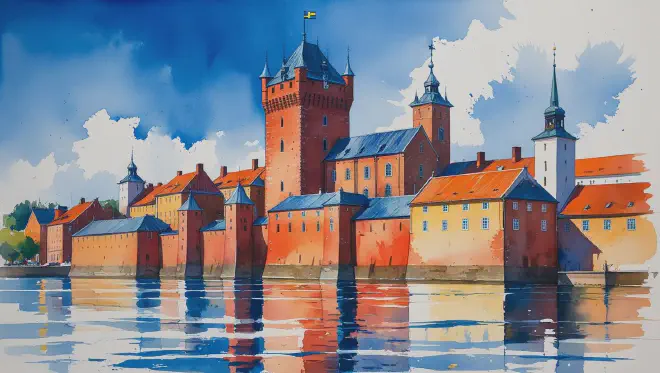
What strikes visitors most immediately is the Öland Bridge, a 6-kilometer span connecting the mainland to the island of Öland floating in the Baltic Sea. Completed in 1972, this bridge has become an iconic symbol that put Kalmar on the map. Kalmar Castle, meanwhile, is renowned as one of the best-preserved castles in Northern Europe and stands as the historic stage where the Kalmar Union was formed in 1397.
The town center features beautifully maintained cobblestone streets lined with 17th-century architecture. Cafés and small craft shops stand side by side, and locals pass their time in peaceful contentment. During the summer season of white nights, the sky remains faintly bright past ten in the evening, offering visitors the chance to witness the Baltic Sea’s surface shimmering in golden light.
The distinctly Nordic streets—clean and functional—the gentle seascape of the Baltic, and the warmth of the people here together shape the character of this town.
Day 1: The Sound of Bells Echoing Through Cobblestone Streets
I arrived at Kalmar Central Station around two in the afternoon, after a three-and-a-half-hour train journey from Stockholm. The station building is a stately red-brick structure that preserves the atmosphere of the 19th century. The moment I stepped through the ticket gates, the scent of the sea touched my nose. It was the instant I felt the proximity of the Baltic Sea on my skin.
My accommodation, Hotel Kalmar View, was about a ten-minute walk from the station. From my room’s window, I could take in a full view of the Kalmar Strait, with the green of Öland Island hazy in the distance. After checking in and catching my breath, I set out immediately to explore the town.
Under the afternoon sun illuminating the cobblestone streets, I first made my way to Kalmar Cathedral. Built in the 17th century, this church is a beautiful Baroque structure with its high spire reaching toward the blue sky. Inside, colorful stained glass windows caught the afternoon light, creating an ethereal play of light and shadow. Sitting on one of the wooden pews, listening to the sound of wind echoing in the silence, time seemed to slow its pace.
Leaving the cathedral, I walked toward Stortorget, the main square in the town center. The colorful buildings surrounding the square display different architectural styles from different eras—17th-century merchants’ houses, an 18th-century town hall, and modern cafés standing in harmonious arrangement. In the center of the square, a small fountain burbled while local children played in the water.
As evening approached, hunger began to make itself known. I entered a place called Restaurant Saltan, recommended by a local. This is a long-established fish restaurant that has served Kalmar for over forty years, famous for dishes made with fresh fish from the Baltic Sea.
I ordered the local specialty “Kalmar-style pickled herring” and “pike-perch with dill.” The pickled herring, marinated in vinegar and spices, was served with dill, onions, and potatoes. With the first bite, the saltiness of the Baltic and the distinctive fragrance of Nordic dill filled my mouth. The pike-perch, a delicate white fish, was simply prepared with butter and dill. The sweetness of the fish and the refreshing aroma of dill matched perfectly—one of the most memorable fish dishes I have ever tasted.
With my meal, I ordered a beer from Kalmar Brewery, a local brew. Light and refreshing, it complemented the fish dishes wonderfully. Through the restaurant window, I could see the Baltic Sea tinged with sunset colors, the silhouette of the Öland Bridge rising beautifully against the sky.
Past eight in the evening, the sky was still faintly bright. This is one of the charms of Nordic summer. On my way back to the hotel, I walked along the seaside promenade. The setting sun created a golden path on the water’s surface, and seagulls glided quietly across the sea. From the distance came the sound of church bells, announcing the end of the day.
Back in my hotel room, gazing at the sea view from the window, I surrendered myself to the gentle flow of time in this town. Away from the noise of the city, spending time in this place where nature and history harmonize—I felt anew the luxury of such moments.
Day 2: Nordic History Carved in Castle Walls
I woke at seven to find the world outside the window already bright, the Baltic Sea sparkling in the morning sun. The hotel breakfast was a typical Nordic buffet: rye bread, smoked salmon, cheese, yogurt, and various jams. Particularly memorable was the jam made from locally grown lingonberries—its sweet-and-sour flavor perfect for waking the senses.
At nine in the morning, I set out for the main event of the day: a visit to Kalmar Castle. The castle stands about a fifteen-minute walk from the town center, built on a small hill facing the sea. When the heavy stone walls came into view, I felt as though I had slipped back in time to the medieval era.
Construction of Kalmar Castle began in the 12th century, with major Renaissance renovations carried out in the 16th century. Its current form retains strong traces of that period. After purchasing my entrance ticket at the castle gate, I was first led to the King’s Hall, and stepping inside, I was overwhelmed by its magnificence. The ceiling is adorned with beautiful 16th-century frescoes, and portraits of successive kings line the walls.
What left the deepest impression was the “Union Hall,” where the Kalmar Union was formed in 1397. In this room, Denmark, Norway, and Sweden agreed to form a unified kingdom. In the center of the room stands a large wooden table said to have been used at that time, and on the walls hang reproductions of old parchments recording the union’s terms. To think that such a pivotal moment in history was born in this very place filled me with profound emotion.
From the castle’s top floor, I could take in a sweeping view of Kalmar’s townscape and the Baltic Sea. The Öland Bridge traced an elegant arc across the water, with the verdant expanse of Öland Island stretching beyond. In the castle gardens, a medieval herb garden has been recreated, planted with lavender, rosemary, thyme, and other herbs. The guide, Astrid, explained the castle’s history in fluent English. “This castle was a battlefield,” she said, “but it was also a center of culture and diplomacy.” Her words stayed with me.
After completing the castle tour, I spent the afternoon visiting the Kalmar County Museum on the eastern side of town. Here, artifacts recovered from the 17th-century shipwreck Kronan, raised from the bottom of the Baltic Sea, are on display. The Kronan was a Swedish naval warship that sank in the Baltic in 1676; discovered in the 1980s, it has since drawn attention as a significant find in maritime archaeology.
The museum displays cannons, coins, pottery, and sailors’ personal belongings recovered from the ship. What fascinated me most were the wooden tableware used by the crew and reproductions of the ship’s logs from the time. The lives of seafaring men from over three hundred years ago felt startlingly immediate.
After finishing at the museum, I strolled through Kalmar City Park on the western side of town. This park, an English-style garden created in the 19th century, is situated on a hill overlooking the Baltic Sea. Within the park lies a small pond where swans and ducks swim. An elderly couple sat on a bench reading books; families played on the lawn; young people jogged past. The sight of everyone passing time in their own way spoke to the richness of life in this town.
For dinner, I visited a small restaurant called Café Linné, which a local had told me about. The building is a converted 18th-century private home, its low ceilings and wooden beams creating a warm atmosphere.
I ordered “roasted elk,” a traditional Swedish dish. Elk meat is a rare ingredient that one seldom encounters in Japan. The meat was surprisingly light, with a distinctive wild flavor. The lingonberry sauce served alongside, together with boiled potatoes, brought out the best in the meat. I also ordered gravlax, salt-cured salmon flavored with dill and mustard sauce. The salmon melted on the tongue, revealing the depth of Nordic food culture.
To finish the meal, I had prinsesstårta, a traditional Swedish cake. Layers of sponge cake, cream, and jam covered with green marzipan—beautiful to behold, with an elegant sweetness that left a lasting impression.
Around nine in the evening, I left the restaurant and walked along the coast. Under the still-faintly-bright sky, couples and friends were taking quiet strolls. The gentle sound of Baltic waves seemed to soothe away the day’s fatigue. The peaceful rhythm of life in this town was seeping deep into my heart.
Day 3: Memories of the Island Beyond the Bridge
On my final morning, I had planned a short excursion to Öland Island in search of a special experience. After breakfast at the hotel, I boarded a bus to Öland from in front of Kalmar Central Station at nine o’clock.
The moment of crossing the Öland Bridge was nothing short of breathtaking. As the bus reached the bridge’s highest point, the blue expanse of the Baltic Sea spread beneath my feet, with small islands dotting the waters on either side. This 6-kilometer bridge seemed more than mere transportation—it was a bridge of hope connecting Kalmar and Öland Island.
Upon arriving on Öland, I first headed to Borgholm Castle ruins. Built in the 12th century, this castle served for many years as the Swedish royal family’s summer retreat. Now in ruins, its stone walls and partial towers still testify to its former grandeur.
Around the ruins stretches a vast meadow where wildflowers bloom in profusion. Daisies, poppies, cornflowers—watching them sway in the wind was like gazing at an Impressionist painting. Looking down from the highest point of the ruins, I could see farmland spreading across southern Öland, with the Baltic Sea visible in the distance. From here, the town of Kalmar appeared like a small jewel sparkling on the horizon.
After exploring the ruins, I joined a factory tour for Ölandskaka, a specialty of the island. This cracker, made from rye and oats, is beloved throughout Sweden. At the factory, I watched artisans crafting each piece by hand using traditional methods. The fresh-baked crackers were warm, their fragrant grain aroma tickling my nose.
After the tour, I had a light lunch at the attached café: an open-faced sandwich of Ölandskaka topped with smoked salmon, cream cheese, and dill, along with a cappuccino made from locally produced milk. Simple, but a delicious meal that let the ingredients shine.
Around two in the afternoon, I boarded the bus back to Kalmar. On the return journey across the bridge, I enjoyed the Baltic seascape from a different angle than before. The afternoon sunlight illuminated the water’s surface, the waves sparkling brightly. Seagulls circled around the bridge as if seeing off travelers.
Once back in Kalmar, I spent my remaining time wandering through the town. I walked down small alleys I hadn’t taken before, catching glimpses of local life. Flowers decorated the windowsills of old stone houses; an elderly woman sat knitting on a doorstep. Children played on bicycles; people walking dogs exchanged greetings. A leisurely time flowed here, untouched by urban haste.
Around four in the afternoon, I visited a craft shop called Kalmar Handcraft Shop for some final shopping. The store sells wooden items, pottery, and textiles made by local artisans. What caught my eye was a small tray made of birch—simple, yet beautifully designed. The shopkeeper, Erik, explained, “This is made using traditional techniques passed down from my grandfather’s generation.”
At six in the evening, I headed to the station to catch my train to Stockholm. Standing on the platform, I reflected on this two-night, three-day journey. The weighty history of Kalmar Castle, the beautiful scenery of the Baltic Sea, the stunning views from the Öland Bridge, and above all, the warmth of the people in this town. Though my stay was brief, each experience had carved itself deeply into my heart.
As the train pulled away from the station, I gazed at Kalmar’s townscape through the window. The red-roofed houses bathed in sunset light, the cathedral spire rising toward the sea, and the Öland Bridge visible in the distance. I was certain these scenes would remain in my memory forever.
What Felt Real Though Imagined
This travel essay is an imaginary journey that I never actually took. Yet through words—walking Kalmar’s streets, feeling the Baltic wind, tasting local cuisine, experiencing connections with people—I found myself with a sense as vivid as if I had truly visited that place.
The charm of Kalmar lies not only in its historical significance but in the richness of the peaceful lives people lead there today. From medieval castle to modern bridge, legacies of different eras exist in harmony, supporting the daily lives of those who call this place home.
Even an imaginary journey, when we let our thoughts dwell on a place’s culture, history, and the lives of its people, enriches our hearts with certainty. The memories of three days spent in Kalmar remain a tangible presence within me, despite never having actually happened.
Perhaps this is the true value of imaginary travel. Even when we cannot physically visit a place, imagination allows us to feel the beauty of the world and the warmth of people. With the hope that this fictional journey may one day become the first step toward a real one, I bid farewell to the town of Kalmar.
With the sound of bells echoing over the Baltic Sea, I close this record of an imaginary journey.