
Introduction
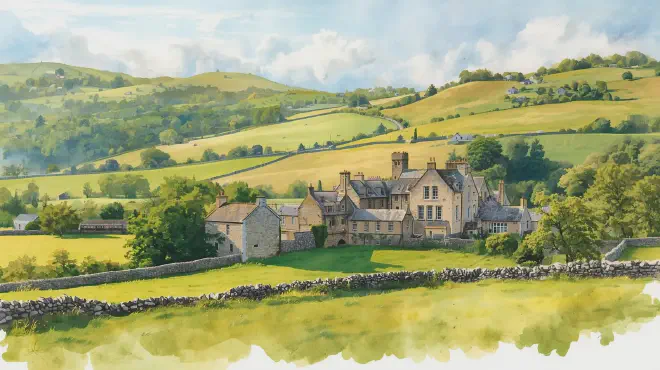
Kildare. When I speak this name, what spreads across my tongue is the taste of green meadows and ancient stone. Located in the eastern part of Ireland, about an hour’s drive southwest from Dublin, this county derives its name from the Irish “Cill Dara,” meaning “Church of the Oak.” This land, where St. Brigid established a monastery in the 5th century, is filled with the serene beauty woven by faith and nature.
This is also the holy land of thoroughbred racing that Ireland proudly presents to the world. On the pastures spreading across the Curragh plains, the world’s finest thoroughbreds race through like the wind. A place where ancient Celtic culture, medieval monastic tradition, and modern equestrian heritage breathe in layers—that is the ineffable charm of Kildare.
On this journey, I wanted to use the quiet county town of Kildare as my base, to touch upon its history, nature, and the lives of its people.
Day 1: Arrival in a Town Where Ancient Church Bells Ring
The journey from Dublin Airport to Kildare by rental car felt like traveling back through time. Leaving the motorway and entering narrow country roads, endless green pastures stretched on either side. White smoke rising from the chimneys of scattered stone farmhouses dissolved into the soft afternoon light.
I arrived in Kildare Town just past 2 PM. The small town center was a storybook landscape of cobblestone streets and old buildings. I parked at The Silken Thomas, a historic pub facing the main street, and decided to have a light lunch. Named after a 16th-century rebellion leader, this pub impressed me with its thick stone walls and heavy wooden beams, as if I had stepped into a medieval tavern.
The Irish stew I ordered with Guinness beer had lamb meat so tender it fell apart at the touch, with root vegetables spreading their sweetness in my mouth. The conversations of local people became a pleasant background music, gently soothing my travel fatigue. Seán, the bartender, was a gentle man in his sixties who enthusiastically shared Kildare’s history. “This has been a sacred land visited by pilgrims for over 1,200 years,” he told me in his Irish-accented English.
In the afternoon, I visited Kildare Cathedral. Built in the 12th century, this cathedral has maintained its majestic presence through numerous renovations. What particularly impressed me was the round tower attached to it. This 32-meter stone tower, built around the 9th century to protect sacred manuscripts and treasures from Viking raids, offered a view of the entire town of Kildare when I climbed its narrow stairs.
The twilight view from the top of the tower was beautiful beyond words. The western sky was beginning to turn pale purple, and beyond the distant racecourse, gentle hills stretched across the horizon. The wind caressed my cheeks. In that moment, I felt from the core of my being that I was truly standing on Irish soil.
For dinner, I ate at Hartes of Kildare, a small restaurant in town. This family-run establishment prided itself on cuisine made with local ingredients. The roasted lamb raised in the Wicklow Mountains was fragrant with rosemary and thyme, and paired perfectly with the accompanying colcannon, a traditional Irish dish of mashed potatoes mixed with cabbage. The Bailey’s cheesecake for dessert melted in my mouth with such smoothness, sweetly wrapping up the day’s fatigue.
The Kildare Lodge Hotel, where I stayed, was located in a quiet area slightly away from the town center—modern yet maintaining a traditional atmosphere. From my room’s window, I could see the garden, where shadows of trees swaying in the night breeze danced in the moonlight. Lying in bed, my heart swelling with anticipation for tomorrow, I felt the quiet passage of my first night in Kildare.
Day 2: Dialogue with the Green Land and Horses
I woke at 7 AM to birdsong. The hotel’s breakfast was a traditional Irish full breakfast: bacon, sausages, fried eggs, grilled tomatoes, black pudding, and freshly baked soda bread. The portion was generous, but considering I’d be walking around all day, eating heartily was the right choice. The soda bread was especially delightful—crispy on the outside with a chewy interior, exceptional when thickly spread with butter and jam.
In the morning, I drove a short distance from town to visit the Irish National Stud. This world-class thoroughbred breeding farm is open to the public. The horses released into the vast green pastures were like works of natural art. Watching their elegant movements, I understood why Ireland is called “the land of horses.”
I joined the stud’s guided tour and learned in detail about thoroughbred bloodlines and breeding methods. Michael, our guide and former jockey, spoke with love for horses overflowing from every word. “Horses are very sensitive animals,” he told me. “They’re good at reading human hearts. So when you approach them, you must always maintain a calm spirit.” When I was allowed to actually touch a horse, feeling its warm body temperature and powerful muscles, I was overwhelmed by the strength of life.
The Japanese Gardens attached to the stud were also wonderful. Created in the early 20th century, these gardens represent a human lifetime. Walking from entrance to exit, one traces the journey from birth through death to rebirth in the next life. The Japanese aesthetic sensibility appearing suddenly within Ireland’s lush natural landscape showed a strange harmony. Especially when I sat beside the small waterfall and listened to the sound of water, nostalgia for distant Japan and the wonder of being here and now intersected.
In the afternoon, I enjoyed shopping at Kildare Village Outlet, browsing for Irish-made knitwear and local crafts that would make good souvenirs. What I particularly liked was a traditional fisherman’s sweater made on the Aran Islands. The complex knitting patterns each held meaning, embodying prayers for fishermen’s safety and abundant catches. Holding it in my hands, I could feel the warmth of the wool and the high level of the craftsman’s skill.
After shopping, I took a break at The Hedge School café while strolling through town. This was a café renovated from a building that was originally a 19th-century school, impressive with its high ceilings and large windows. The Irish coffee I ordered was an exquisite blend of bitter coffee, fragrant whiskey, and sweet cream, richly coloring my afternoon moment.
In the evening, I visited the ruins of Kildare Castle. Now in ruins, this castle was built by Normans in the 12th century and is an important site that tells of Ireland’s complex history. The stone walls illuminated by the setting sun were dyed in warm tones like the sepia of old photographs. Walking around the castle, I imagined the countless stories that must have unfolded here.
For dinner, I ate at The Curragh Inn, popular with locals. The specialty here was fresh seafood from the area. The grilled salmon caught in the Irish Sea, prepared simply to fully bring out the flavor of the ingredients, paired exquisitely with lemon butter sauce. The accompanying champ—mashed potatoes mixed with spring onions—had a gentle flavor that enhanced the salmon.
During the meal, I had a lively conversation with a local couple seated at the next table. Bridget, a former schoolteacher, taught me various things about Kildare’s history and culture. Her husband Patrick, who ran a farm, shared interesting stories about the current state of Irish agriculture. “Kildare is changing, but the fundamental parts remain unchanged. The warmth of the people and their love for the land will continue forever,” he said—words that left a lasting impression.
On my way back to the hotel, the evening church bells rang out across town. Under the starry sky, their sound was like the voice of prayers echoing across time. Opening my room’s window to feel the night breeze, I fell asleep enveloped in the fulfillment of this day.
Day 3: A Morning of Parting and Scenes Etched in the Heart
On the final morning, I woke early and took a walk around the hotel. The town of Kildare, wrapped in morning mist, looked like a dreamscape. Walking along the main street, the aroma of freshly baked bread drifted from a bakery. At a small shop called O’Brien’s Bakery, I purchased Irish brown bread and croissants. The owner, Martin, had been working since 5 AM. “Delivering delicious bread to the townspeople every morning is my mission,” he said proudly.
After returning to the hotel for breakfast, I used the time before checkout to visit Kildare Cathedral once more. This time I toured the interior slowly. Morning light streaming through the stained glass cast colorful shadows on the stone floor. Sitting quietly before the altar, I offered prayers of gratitude for the encounters and experiences of this journey. Though I’m not particularly religious, the time spent in this sacred space brought peace to my heart.
Around 10 AM, I headed to my final destination: the ruins of Monasterboice. Located about 45 minutes by car from Kildare, these ruins are the site of an ancient monastery founded by St. Finbar in the 5th century. Particularly famous is the stone cross over five meters tall, created in the 10th century, with intricate carvings that speak to the high level of craftsmanship of that era.
Around the monastery ruins, numerous old gravestones were scattered. Though it was difficult to read the weathered letters, imagining the life stories carved into each stone, I couldn’t help but feel the weight of passing time. The people sleeping quietly here must have once lived vibrantly on this land, loving, worrying, and rejoicing.
Sitting in front of the round tower, eating the Irish brown bread I’d brought while reflecting on these three days of travel—the warm smiles of the people I’d met, the sight of horses racing across green pastures, the weight of history spoken by old stone buildings, and above all, the unique serene beauty this land possessed. Everything had been carved deep into my heart.
Around 1 PM, I left Kildare with lingering reluctance. On the road to Dublin Airport, each scene passing by the car window felt precious. Cattle grazing in pastures, small fields surrounded by stone walls, the distant spire of an old church—each seemed like a friend I was about to bid farewell.
While checking in at the airport, I realized the journey’s end was approaching. At the duty-free shop, I purchased Irish whiskey and chocolates as final mementos of this trip. While waiting at the boarding gate, I wrote my impressions of the journey in my notebook: “Kildare was a place where time flowed slowly. There existed a true richness, liberated from modern hurry.”
As the plane took off and I looked down at Ireland’s green land growing smaller through the window, I knew that in my heart, those scenes would remain vivid forever. The three days spent in Kildare were not a long time, but they became a time of special meaning in my life.
Epilogue
This journey is a product of imagination—I did not actually set foot on Kildare’s soil. Yet what I felt while writing was that the events experienced in imagination possessed a vividness as if they had truly happened.
Encounters with people, dialogue with landscapes, rendezvous with history—all of these, while imaginary, resonated in my heart with a certain tangibility. Perhaps this is because the genuine charm of a place called Kildare and the true warmth of the people who live there are transmitted across time and space.
A journey that, while imaginary, feels as though it truly existed—that is surely the most beautiful power of imagination. If someday I can walk this imagined journey as reality, it will undoubtedly be a double joy.