
Introduction
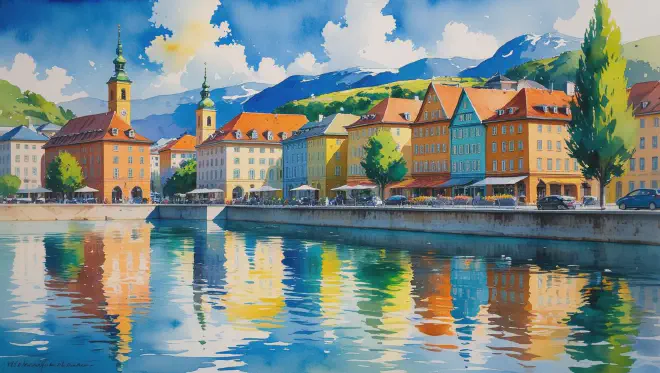
Klagenfurt, the capital of Carinthia in southern Austria, is a tranquil old city nestled on the shores of Lake Wörthersee. Surrounded by the peaks of the Alps, this town is a place where centuries of history and abundant nature exist in harmony—truly deserving of the title “jewel of the lakeside.”
The name “Klagenfurt” means “ford of laments,” yet contrary to its name, this is a place of healing where time flows gently. The old town is lined with Renaissance-style buildings constructed in the sixteenth century, and Lake Wörthersee—one of the largest Alpine lakes in Europe—adds to its allure. In summer, the area transforms into a resort destination bustling with people enjoying lake swimming.
Carinthia lies close to the Slovenian border, and the unique cultural diversity of this region is one of its greatest charms. Austrian, Italian, and Slavic cultures intersect here, and this rich blend can be felt in both the cuisine and the music. The two-night, three-day journey I chose was meant to slowly savor the multifaceted appeal of Klagenfurt.
Day 1: First Encounter with the Lakeside City
As the train heading south from Vienna began to reveal the Alpine mountain ranges through its windows, my heart had already arrived in Klagenfurt. After roughly three hours of travel by rail, I stepped onto the platform at the central station just past ten in the morning. The German announcements echoing through the station added to the sense of being in a foreign land.
The scenery visible from the bus window on the way to the city center was more modern than I had imagined. However, the moment I set foot in the old town, I was enveloped by a sensation of having traveled back in time. Cobblestone streets, building walls painted in pastel colors, and the sound of church bells ringing from street corners. The soft morning light gently illuminated this ancient townscape.
My accommodation was a small family-run inn in the heart of the old town. A gentle-looking middle-aged man greeted me at reception, explaining the room in broken English and gestures. The room was modest but clean, and from the window I could see a small fountain in the courtyard. I set down my luggage and headed out to explore the town.
For lunch, I went to “Gasthaus zum Adler,” recommended by a local. It was a typical Austrian tavern with wooden tables and chairs, and antler decorations adorning the walls. I ordered “Klagenfurter Nudeln,” a regional specialty. It was a simple dish of handmade pasta with bacon and cabbage, topped generously with sour cream, but its rustic deliciousness warmed my heart. Paired with the local beer “Hirter,” the fatigue of travel melted away at once.
In the afternoon, I visited the “Lindwurm” fountain, the symbol of Klagenfurt. This stone dragon is a monster from local legend, and this sculpture created in the sixteenth century is still beloved as the town’s guardian spirit. It was heartwarming to see not only tourists but also local children playing around the dragon.
Afterward, I strolled leisurely through the old town. A Friday market was being held in Hauptplatz, where local farmers were selling vegetables, flowers, and cheese. Though we couldn’t communicate through words, the smiles of the vendors were universal. I bought a small apple and bit into it right there. The sweet-tart taste spread throughout my mouth.
In the evening, I extended my walk to the shores of Lake Wörthersee. The lake, about a twenty-minute walk from the city center, was larger and more beautiful than I had imagined. The surface of the lake shone gold in the setting sun, and the silhouettes of the Alpine mountains on the opposite shore emerged against the sky. I sat on a lakeside bench and gazed at this serene landscape for a while. Occasionally, waterfowl glided across the surface. This peaceful time, far from the clamor of city life, seeped into my heart.
Dinner was at “Seerestaurant Wörthersee” on the lakeside. From my window seat overlooking the lake, I savored the regional specialty of lake fish. I paired a sautéed white fish with local wine. The wines of Carinthia have a distinctive flavor influenced by neighboring Slovenia, which complemented the delicate taste of the fish perfectly.
On my way back to the hotel that night, I walked through the illuminated old town. The stone buildings showing a different face from daytime gave me the illusion of having wandered into a medieval tale. From a corner café, the sound of an accordion drifted out. A local musician must have been playing. That nostalgic melody was a fitting close to the day.
Back in my room, I opened the window to feel the night breeze while reflecting on the people and landscapes I had encountered today. I could feel that the town of Klagenfurt had already begun to quietly take root in my heart.
Day 2: Embraced by Nature and Culture
I woke to birdsong in the morning. The hotel breakfast was simple—bread, ham, and cheese—but everything was fresh and locally sourced. The honey, with its rich sweetness, was particularly impressive. While drinking my coffee, I confirmed the day’s plans. In the morning, Minimundus; in the afternoon, Hochosterwitz Castle.
I took the city bus to Minimundus. Hearing that it was a theme park recreating famous world architecture at one twenty-fifth scale, I honestly didn’t have high expectations. However, upon actually entering, I was amazed by its craftsmanship. The Statue of Liberty, the Taj Mahal, the Eiffel Tower—famous sites from around the world had been meticulously reproduced. The Austrian buildings in particular were masterfully done; the model of Vienna’s Schönbrunn Palace faithfully recreated even the finest decorative details.
Walking through the grounds, I felt the curious sensation of traveling around the world. Many families with children were there, and excited children’s voices filled the park. The languages varied, but I was reminded once again that the joy of seeing beautiful things is universal.
I had a light lunch at a restaurant within Minimundus, then headed to Hochosterwitz Castle in the afternoon. This castle, about thirty minutes by car from Klagenfurt, is a medieval fortress built atop a 160-meter rocky outcrop. I rented a car and wound my way up the serpentine mountain road.
The journey to the castle was an adventure in itself. The path leading to the castle, passing through fourteen gates, made me feel like a medieval knight. Each gate had different defensive features, testifying to the sophisticated fortification techniques of the time.
Upon reaching the castle’s summit, a grand panorama of Carinthia spread before my eyes. Verdant hills, small villages dotting the landscape, and the Alps in the distance. Facing this spectacular view, I was speechless for a while. The medieval lords must have gazed upon this same scenery, wishing for the prosperity of their domain.
The museum inside the castle allowed me to learn about the history and culture of this region. Particularly fascinating was the exhibit explaining the fusion of Austrian, Italian, and Slavic cultures. It helped me understand that Carinthia truly is a cultural crossroads.
On my way back from the castle, I stopped at a church in a small village. It was a humble stone building, but the frescoes inside were magnificent. The religious paintings, likely created by a local artist, were filled with an approachable humanity. I met an elderly woman in front of the church and exchanged a few words in broken English. She was over eighty years old but came to pray at this church every day, she said. In her gentle smile, I felt the richness of heart of the people of this land.
In the evening, I returned to Klagenfurt and visited the shores of Lake Wörthersee once more. This time, I walked along the lakeside promenade. The well-maintained walkway had benches placed here and there, allowing visitors to rest while gazing at the lake. The lake at dusk showed yet another expression, different from morning. Watching the shadows of clouds reflected on the water slowly shifting, I nearly forgot the passage of time.
I spoke briefly with a local fisherman I met by the lake. He said that since retirement, he comes here to fish almost every day. Though we couldn’t communicate well in words, the photos of his catch that he showed me and his expression full of love for the lake conveyed more than words ever could.
Dinner was at “Zur Post,” a hidden gem of a restaurant in the old town. The interior, bustling with local regulars, was filled with a homey atmosphere. I ordered “Kärntner Kasnudeln,” a pasta dish kneaded with cheese. The rich flavor of the cheese and the sweetness of thinly sliced onions matched exquisitely. Enjoyed with local wine, I could truly appreciate the depth of this land’s food culture.
When I stepped outside after the meal, the town had taken on the mantle of night. The light of street lamps reflected on the cobblestones of the old town, creating a fantastical atmosphere. Walking slowly back to the hotel, I reflected on the various scenes I had experienced throughout the day. The grandeur of nature, the weight of history, and the warmth of the people. It was a day when I could definitively feel the multifaceted nature of Klagenfurt.
Back in my room, lying on the bed, I felt regret that tomorrow was already the final day. Yet at the same time, there was also satisfaction in having sufficiently felt this town’s charm even in such a short stay. From outside the window, only the quiet sounds of night could be heard as always.
Day 3: Farewell and a New Beginning
On the final morning, I woke earlier than usual. Perhaps from wanting to breathe this town’s morning air one more time. I decided to walk through the old town alone before the hotel breakfast.
The old town in early morning had only scattered tourists, a time when glimpses of local daily life could be seen. The sound of a bakery preparing to open, shopkeepers cleaning, the footsteps of people commuting to work. It was precious time to encounter the town’s true face, something ordinary tourism doesn’t reveal.
When I reached Hauptplatz, preparations for the morning market had already begun. Farmers were arranging fresh vegetables and fruits, a scene symbolizing this town’s abundance. As I watched a farm woman sorting delicious-looking apples, she called out to me. It was in German, so I couldn’t understand the details, but she must have been saying something like “These apples are delicious.” When I responded with a smile, she smiled warmly back.
While having breakfast back at the hotel, I thought about the day’s plans. In the morning, I would visit the city’s art museum, and in the afternoon, take the train back. Until checkout time, I wanted to savor this town a little more.
The Carinthian State Gallery wasn’t a particularly large building, but it displayed a high-quality collection centered on works by artists connected to the region. What left the greatest impression was a collection of works by landscape painters active in this area from the nineteenth to twentieth centuries. The landscapes they painted of Lake Wörthersee and the surrounding mountains overlapped with the scenery I had actually seen over these past few days, creating a sense of empathy that transcended time.
I had an opportunity to speak briefly with a female curator at the museum. She was fluent in English and taught me much about the artistic culture of this region. The artists of Carinthia drew inspiration from the natural beauty and cultural diversity of this area, she said, which connects to the unique charm of their works. Listening to her, I felt I could understand more deeply the cultural background of this land.
After leaving the museum, I decided to visit Lake Wörthersee one final time. This time, I made time to sit at a lakeside café, slowly drinking coffee while gazing at the lake. The lakeside on a weekday afternoon was quiet, with only local people taking walks or students reading on benches.
Looking at the lake’s surface, I reflected on these three days. At first, there had been anxiety about visiting an unfamiliar place, but I had been completely captivated by the warmth of Klagenfurt’s people and the unique charm this town possesses. What impressed me most was how history, nature, and diverse cultures exist in harmony here. This must be a treasure that this land has cultivated over many long years.
For lunch, I stopped at a small bistro I found on my way to the station. For my final meal, I wanted to confirm the flavors of this land once more. I ordered “Kärntner Schnitzel,” a thinly pounded pork cutlet. Though it’s a dish beloved throughout Austria, here in Carinthia it has a slightly different seasoning, with pronounced herb fragrance. The accompanying sauerkraut also had a different tartness from other regions, allowing me to enjoy this area’s distinctive taste.
At two in the afternoon, I headed to Klagenfurt Central Station. Standing on the platform, emotions completely different from when I had arrived three days ago welled up inside me. Though it had been a short stay, this town had certainly carved out a special place in my heart.
When the train pulled in, I realized the moment of parting had come. Watching the Klagenfurt townscape recede from the train window, I strengthened my resolve to return here someday. The blue surface of Lake Wörthersee burned into my eyes one last time, then gradually disappeared from view.
On the return train, I looked back through the photos I had taken on this trip. The Lindwurm fountain, the view from Hochosterwitz Castle, the evening scene at Lake Wörthersee. Each photo brought back the emotions of that moment. However, what couldn’t be captured in photographs—the encounters and conversations with people, the atmosphere felt at street corners—may be the true treasure of this journey.
When I arrived in Vienna, the three days in Klagenfurt felt like something from a dream. Yet the small wooden carved figurine I held as a souvenir, the hotel receipt, and the warm memories remaining in my heart proved that it had certainly been a real experience.
In Closing
Looking back on this journey, the town of Klagenfurt has become a place holding more meaning for me than just a tourist destination. The tranquility of the lakeside, the grand panorama viewed from the medieval castle, casual exchanges with local people, and the simple deliciousness of regional cuisine. All of these combined to create an unforgettable experience.
What impressed me most was the richness of culture rooted in this region. The diversity unique to Carinthia, where Austrian, Italian, and Slavic cultures intersect, is expressed in the cuisine, the music, and the character of the people. And above all, I could feel the depth of a region that naturally accepts and harmonizes such diversity.
In modern society, due to the waves of globalization, one often encounters similar scenery wherever one goes in the world. However, in places like Klagenfurt, the culture and traditions unique to the land still breathe. This is not being left behind by the times, but rather naturally blending into contemporary life. Perhaps this exquisite balance is this town’s greatest charm.
Though it was a short stay of only two nights and three days, I learned much from this town. The importance of taking time to face a place, the warmth born from honest exchanges with people, and that travel is not merely moving from place to place, but opening one’s heart to encounter a new world.
This journey is indeed a product of imagination, yet within my heart it remains as a memory certainly experienced. The scenery and encounters with people, imagined in detail and drawn with emotion, are etched in my heart with a vividness rivaling any actual trip. This is surely the power of imagination, the pleasure of traveling through writing.
The three days in Klagenfurt have become a journey that, while imaginary, felt as though it truly happened. I would like to close this travel record while wishing that someday I may have the opportunity to actually visit this beautiful lakeside town. And when that time comes, I want to see how the landscapes and encounters depicted in this imaginary journey overlap with reality.