
An Ancient Capital of Eastern Slovakia Where Iron and Culture Intersect
Košice. Slovakia’s second-largest city, yet a name still relatively unknown in Japan. Located in eastern Slovakia, this city is a place where layers of history accumulate—where a medieval old town coexists with industrial heritage that once thrived on steel production.
During the Kingdom of Hungary era, it prospered as an important city, and St. Elisabeth Cathedral, built in the 14th century, still towers at the city’s heart as one of the largest Gothic structures in Central Europe. In the 20th century, a massive steel mill was constructed here, giving the city its industrial face—a marker of the socialist period. Then in 2013, it was selected as a European Capital of Culture, breathing new life into its artistic and cultural scene.
What drew me to this city was precisely this multilayered character. A place not overly touristified, yet possessing genuine history and culture. I wanted to spend two nights and three days here, walking slowly and deliberately.
Day 1: Setting Foot on the Cobblestones of the Old Town
The train from Vienna passed through gently rolling hills and arrived at Košice Station late in the afternoon. The station building had that practical, sturdy construction characteristic of the former Eastern Bloc, a remnant of the socialist era. As I stepped onto the platform, the cold October air brushed against my cheeks.
From the station to the old town was about a fifteen-minute walk. As I began pulling my suitcase along, the buildings gradually transformed. After passing through streets lined with gray panel housing, 19th-century buildings with colorful facades appeared, and eventually the road became cobblestone.
The pension I’d booked was at the edge of the old town, a three-story building facing a quiet street. The owner, Jana, was a gentle woman in her fifties who explained the room in fluent English. “It’s still early for dinner, but why don’t you take a walk through the old town? There’s still a bit of time before sunset,” she suggested. I dropped off my bags and headed back out.
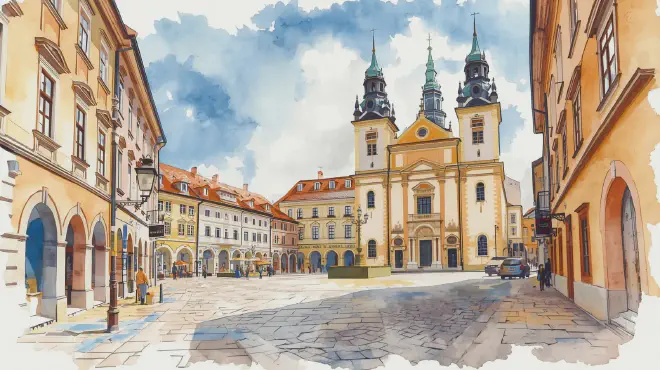
The old town’s main street, Hlavná, stretches north to south as a pedestrian zone. Fountains and sculptures dot the center of the street, with cafés, restaurants, and boutiques lining both sides. And beyond, the St. Elisabeth Cathedral loomed with overwhelming presence.
The cathedral, illuminated by the slanting light of dusk, was larger and more beautiful than I had imagined. Two spires pierced the sky like needles, and intricate Gothic ornamentation covered the entire structure. Built over more than 150 years beginning in 1380, this architectural work felt like more than just a religious facility—it was the very pride of this city.
After slowly circling the cathedral, I entered a nearby café. Called “Café Slávia,” this establishment was a venerable café with beautiful Art Nouveau interior design. In the elegant space reminiscent of Viennese influence, I ordered a cappuccino and trdelník, a traditional pastry. Trdelník is a tube-shaped dough rolled and coated with cinnamon sugar—crispy on the outside, subtly sweet within. A simple flavor that paired well with coffee.
From the café window, I watched the cathedral gradually dissolve into the evening darkness. Street lamps began to light, and the figures of people walking the street became silhouettes. There’s always a special quietness to dusk in a foreign city. A time when the strangeness of being here intersects with the certainty that I truly exist in this place.
For dinner, I went to “Slovenská Reštaurácia,” a traditional restaurant Jana had recommended. Located on a side street off the old town, she said it was beloved by locals too. Inside the warm wooden interior, old photographs of people in folk costumes decorated the walls.
Looking over the menu, I ordered bryndzové halušky. A dish like potato gnocchi made with sheep’s milk cheese called “bryndza,” topped with bacon and sour cream. When it arrived, the presentation was simple, but in my mouth, the rich cheese flavor, salty bacon, and tangy sour cream harmonized exquisitely. True to its origins as a mountain region’s traditional dish, it warmed me from the core.
For the main course, I chose kapustnica (sauerkraut soup) and kurací rezeň (chicken cutlet)—both staples of Slovak cuisine. The kapustnica had a surprisingly complex flavor, with the sourness of fermented cabbage joined by the sweetness of paprika, mellowed by sour cream. The cutlet had a crispy coating and tender, juicy meat. Even the accompanying potato salad, though simple, was carefully prepared.
When I emerged after the meal, nighttime Košice had grown completely silent. The cathedral was illuminated, radiating a solemn beauty different from daylight. I walked slowly back to the pension along the quiet night streets where only the sound of my footsteps on cobblestones echoed.
Day 2: Walking the Crossroads of History and Nature
The next morning, Jana prepared a breakfast of freshly baked koláče (Slovak sweet bread), cheese, ham, boiled eggs, and strong coffee. Simple, yet everything was clearly fresh and carefully chosen. As I ate, Jana asked about my plans for the day.
“I’m thinking of visiting the city museum in the morning and going to the outskirts in the afternoon,” I replied. “Then you should take a taxi to Horný Háj. It’s a beautiful place,” she recommended.
In the morning, I first went to the East Slovak Museum in the old town. This museum comprehensively displays the region’s history and culture, boasting an enormous collection from prehistoric times to the present. Particularly impressive was the collection of gold coins discovered in the region. Thousands of gold coins from the medieval Kingdom of Hungary period were on display, testifying to how important this city was as a commercial hub at that time.
In the ethnology section, traditional lifestyles of eastern Slovakia were recreated. The interior of wooden farmhouses, folk costumes, farming tools, pottery. Looking at these, I could sense the wisdom and aesthetic sensibility the people of this land had cultivated throughout their long history. Especially the folk costumes with their vividly embroidered patterns—I found myself absorbed, sensing the careful work stitched into each thread.
When I left the museum, it was just before noon. I sat on a bench on Hlavná and ate langoš (fried bread) that I’d bought at a market. The langoš, generously topped with sour cream and cheese, had that quintessential B-grade gourmet taste, warming my body chilled from walking outside.
In the afternoon, following Jana’s recommendation, I took a taxi to Horný Háj. About fifteen minutes north of central Košice, this forest park spreads across a hill overlooking the city. The driver was a quiet man, but at the park entrance he said, “I’ll wait here in two hours,” and drove off.
Horný Háj is a vast forest that was once a noble hunting ground. Now maintained as a recreational area for citizens, it’s crisscrossed with walking trails. The autumn forest displayed gradations of gold and reddish-brown, with fallen leaves piled underfoot making pleasant crunching sounds with each step.
I left the main walking path and ventured onto a narrower trail. There were almost no signs of other people—only the sound of wind rustling the trees and distant bird calls. I was surprised to find such a quiet forest so close to the city. Along the path stood a small wooden chapel, its simple presence blending into the forest scenery.
After walking for about thirty minutes, I reached an observation deck. From there, the city of Košice spread out below. The cathedral’s spires gleamed small at the city’s center, with the urban sprawl extending concentrically around them. To the east, factory chimneys were visible in the industrial zone; to the west, rolling hills continued. It was a view that allowed me to understand at a glance the city’s multifaceted nature.
I sat on the observation deck bench and drank tea from my thermos. In the chilly air, the warm tea permeated my body. This kind of time might be the most luxurious moment in travel. Doing nothing, just being there. A moment when that alone feels sufficient.
When I returned to the taxi spot at the appointed time, the driver was smoking beside his car. “How was it?” he asked. “It was beautiful,” I replied, and he smiled with what seemed like pride.
After returning to the city, I had some time, so I strolled around the National Theatre area. Built in the late 19th century, this Neo-Baroque theatre symbolizes Košice’s cultural pride. It was just before the evening performance, and I could see formally dressed people entering the theatre one after another.
For dinner, I chose a restaurant with a different atmosphere from yesterday. A bistro called “Med Malina” that serves modern Slovak cuisine. Popular for traditional dishes with contemporary twists, it bustled with young couples and families.
I ordered roasted venison with beetroot purée and Slovak wine. The venison was surprisingly tender, with a sauce infused with juniper berries that was exquisite. The beetroot purée had a vibrant color, its earthy aroma and sweetness pairing well with the venison. The wine was apparently from the Tokaj region—dry but fruity and easy to drink.
For dessert, I had makový koláč, a poppy seed cake. I’d heard that poppy seed sweets are traditionally beloved in Slovakia, and this cake was moist with a nutty fragrance—better than I’d imagined.
When I stepped outside after the meal, nighttime Košice showed yet another face. Being a weekend night, music leaked from bars and clubs. Young people walked the streets laughing. I felt the reality that this city too has a living present tense, a time continuing toward the future.
On the walk back to the pension, I stopped in front of a small bookshop. In the display window, books by Slovak poets and writers were lined up. Some were translated into English, and I felt the urge to buy one, but remembering I had an early morning tomorrow, I resisted. If I ever visit this city again, I decided, I’ll buy one then.
Day 3: A Morning of Farewells and Small Discoveries
On the final morning, I woke a bit early. Outside the window it was still dim, the city sleeping. I dressed slowly and packed my bags.
I ate the last breakfast Jana had prepared with gratitude. “Did you like Košice?” she asked. “Very much,” I answered. I truly meant it. This city wasn’t a flashy tourist destination, but the kind of place that revealed more flavor the more you walked through it.
After checking out, Jana said, “Come back again,” and clasped my hand in both of hers. That warmth made me happy, and I promised, “I will.”
There were still about two hours until the train’s departure. I left my suitcase in a locker at the station and decided to walk through the old town one more time.
The morning old town was quiet. Shops weren’t open yet, and there were hardly any tourists. People sweeping, heading to bakeries, walking dogs. The morning lives of local people were there.
I stopped in front of the cathedral. The cathedral in this morning light showed yet another expression different from the previous days. This building had probably watched over this city for hundreds of years, showing a different face each morning.
A short walk from there, I found a small church. St. Michael’s Chapel. A small Gothic structure built in the 14th century, now apparently used as an exhibition space. The door was open, so I went inside to find a small exhibition about the city’s history.
While viewing the exhibit, an elderly caretaker approached me. In broken English, he explained the chapel’s history. How it was once a cemetery chapel, how many prominent citizens rested here, and how it now serves as a place to convey their memory.
“Thank you for loving this city,” he said at the end. I was a bit surprised to be thanked—I hadn’t done anything special, just walked through this city. But his eyes seemed to hold genuine gratitude. Perhaps he was happy that a traveler had visited this small church in a small city.
Leaving the chapel, I walked the length of Hlavná once more, from end to end. This street I’d passed through many times over two days felt a bit more familiar now. Morning cafés were beginning to open, and the aroma of freshly baked bread drifted through the air.
On the way to the station, I passed a small flower shop. Colorful flowers were displayed at the storefront. On impulse, I bought a small bouquet. Not for anyone else, but for myself. Such a small luxury at the end of a journey isn’t a bad thing.
Arriving at the station, I retrieved my luggage from the locker. On the platform, the train was already waiting. I found my seat, placed my luggage, and sat by the window.
The train began to move. Slowly, the city of Košice receded. The cathedral spires, the factory chimneys, the residential areas, and then the suburban hills. As I watched the scenery flowing past the window, I reflected on these two nights and three days.
Nothing particularly dramatic had happened. I hadn’t toured famous tourist sites. But I had breathed this city’s air, walked its cobblestones, touched the lives of its people. That alone made this journey worthwhile.
On my lap lay the bouquet I’d bought that morning. Already beginning to wilt slightly, but still beautiful. Like these flowers, the memory of travel will fade with time. But the time that truly existed will never disappear.
The Truth Living in Imagination
The two nights and three days in Košice I’ve recounted here are not, in fact, a journey I actually took. It’s an imaginary journey woven through the technology of AI.
Yet while writing, I was enveloped by a strange sensation. The city of Košice truly exists, and St. Elisabeth Cathedral, Hlavná street, bryndzové halušky—all of it exists. This city’s history, culture, and the lives of its people are all real.
What I haven’t experienced is only the act of “walking” there. But by gathering information, letting imagination roam, and turning my thoughts toward this city, doesn’t a certain kind of journey genuinely take place?
Of course, there’s no experience that surpasses actually visiting and feeling the air of a place with your own skin. That’s undeniable. But simultaneously, there’s the reality that we cannot go to every place. Due to constraints of time, economics, and various circumstances, we can visit only a fraction of the places we wish to see.
That’s why perhaps there’s meaning in traveling through imagination like this. It might be preparation for discovering the next place to visit, or a way of encountering places we’ll never see in person. Or perhaps it’s a method of revisiting places we’ve been before from a different angle than memory.
Through this imaginary travelogue, if someone becomes interested in the city of Košice and one day actually visits—and if they find discoveries and emotions unique to them, unwritten in these words—that would be the moment this imaginary journey connects with reality.
Travel is not just physical movement. It’s when the heart moves, imagination expands, and we find points of contact with new worlds. Thinking this way, perhaps this imaginary journey too can exist as one form of travel.
The cobblestones of Košice await someone’s footsteps today. The cathedral bells toll the hours today. There is truly a living city there. And in my imagination too, that city truly breathes.