
The Scent of History Carried on Sea Winds
Lagos, a small port town in the Algarve region of southern Portugal. Facing the Atlantic Ocean, this town is filled with deep history dating back to the 15th-century Age of Discovery and a distinctive atmosphere carried by warm winds from Africa. Golden beaches surrounded by limestone cliffs, footsteps echoing through narrow cobblestone alleys, and colorful fishing boats swaying in the harbor.
This is not merely a tourist destination. Since the days of Vasco da Gama and Prince Henry the Navigator, countless adventurers have set sail from here with dreams of new worlds. The weight of that history still breathes quietly in every corner of the town. I found myself spending three days alone in this small town.
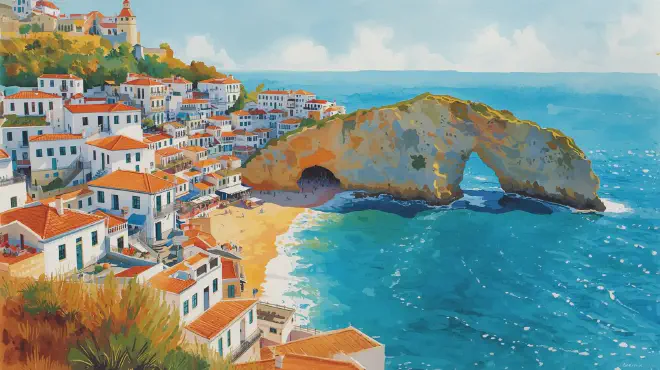
Day 1: An Afternoon Arrival Wrapped in Salt Air
The bus from Lisbon arrived at the terminal just after 2 PM. The sky visible through the window was an endlessly clear blue. As I shouldered my luggage and began walking, the scent of the sea immediately tickled my nose. Salty and somehow nostalgic.
My accommodation, a pousada, was a renovated convent in the heart of the old town. Opening the door to the heavy stone building, centuries of time rushed in along with the cool air. The receptionist greeted me warmly in English, but when I responded with “Boa tarde” in Portuguese, her expression shifted to one of surprise and delight.
After dropping my bags in the room, I immediately headed out to explore the town. The cobblestones absorbed my footsteps softly, and as I wove between white-walled houses, my sense of time grew hazy. Turning a corner, my view suddenly opened. There before me was the deep blue Atlantic.
Descending the walkway to Praia do Camilo, I caught my breath. Red cliffs surrounding a golden beach, small coves carved between them. The seawater was impossibly transparent, with waves dancing quietly between the rocks. There were a fair number of tourists, but the wide beach never felt crowded, maintaining a somehow sacred stillness.
I sat down on the sand and listened to the sound of the waves for a while. Unlike the Japanese sea, this had a gentler, more embracing resonance. Surely the sailors of the 15th century heard these same waves here. In that sensation of stopped time, I suddenly realized the sun was approaching the horizon.
I decided to have dinner at a tasca in the old town. At a small place called “O Camilo,” I sat at the counter among locals. The owner, an older gentleman, explained the dishes in broken English. When I ordered cataplana, the aroma of seafood in the copper pot filled the restaurant.
Mussels, shrimp, white fish, and the fragrance of coriander and garlic. One bite filled my mouth with the taste of the Atlantic. The light bubbles of vinho verde gently wrapped around the saltiness of the dish. A local man who appeared to be a fisherman, sitting next to me, struck up a conversation with a friendly smile. Portuguese and English, occasionally supplemented with gestures. His grandfather, and his father before him, had caught fish in these waters, he said.
Leaving the restaurant, the old town showed a different face as street lamps began to glow. Particles of light reflected on the cobblestones, warm light spilling from windows. The strains of fado, carried on the night breeze, drifted from afar. Before returning to my room, I went to see the ocean once more. Waves illuminated by moonlight quietly approached and receded on the beach. The first night deepened slowly, with the sound of the tide as my lullaby.
Day 2: Stories Woven by Cliffs and History
I took breakfast on the pousada’s terrace. Orange juice, fresh bread, and local cheese and ham. The air was cool and clear, with the distant sea sparkling in the morning sun. Today I planned to venture a bit further to visit Ponta da Piedade.
The walk to the point took about thirty minutes. Along the way, I passed through hills dotted with olive groves and fig trees. In this land blessed by the Mediterranean climate, these crops have long supported people’s livelihoods. Wild lavender blooming along the roadside sent its faint fragrance on the wind.
Arriving at Ponta da Piedade, I was left speechless by the spectacular view. Red sandstone cliffs, seemingly twenty meters high, formed an intricately indented coastline. The blue of the sea and the red of the rocks, with patches of green vegetation here and there. It was truly a work of art painted by nature. Descending the walkway, small caves and hidden coves appeared one after another.
Near the water’s surface, I could see schools of fish swimming in the highly transparent seawater. Several tourist boats were threading between the caves. I decided to join a small boat tour. The boatman, Mário, was a man in his sixties who clearly knew these waters inside out.
“This is a church made by God,” Mário said, pointing to a massive cave. Indeed, the way light streaming through the ceiling illuminated the sea surface resembled stained glass in a cathedral. The boat carefully navigated narrow waterways between rocks, revealing secret worlds that could never normally be seen.
In a cave called “Benagil,” with a hole in its ceiling, light pouring from above made the seawater glow blue. Even the other tourists on board fell quiet at its beauty. Before nature, nationality and language don’t matter. A shared sense of wonder existed there.
Returning to land after the tour, it was already past noon. I decided to have almoço at a nearby restaurant. A place called “Restaurante Ponta da Piedade,” where I could dine on the terrace while viewing the spectacular scenery I’d just experienced.
Browsing the menu, the words “cozido à portuguesa” caught my eye. A Portuguese-style stew. Following the waiter’s recommendation, I ordered it, and a large plate arrived heaped with pork, chorizo, vegetables, and beans. Simple but deeply flavored, surely a recipe passed down through generations.
In the afternoon, I returned to town for historical exploration. I visited the church associated with Prince Henry the Navigator and the Forte de Santo António. From the fort, the harbor was visible, and I could imagine the scene of numerous exploration ships departing from here long ago. Africa, India, and as far as Brazil. This small port town had been the starting point that greatly redrew the world map of its time.
I also visited the slave market site. A place telling a heavy history, making one feel both the light and shadow of the Age of Discovery. Now maintained as a museum, displays quietly conveying the conditions of that era are arranged there. It was time that reminded me again of the importance of facing historical facts.
As evening approached, I walked along the coast again. As sunset drew near, locals and tourists naturally gathered by the sea. Everyone was looking at the same thing, yet each surely harboring different thoughts. I sat on the seawall and watched the sky and sea gradually染まる orange.
The moment the sun sank below the horizon, the sky briefly flashed green. The phenomenon called a “green flash.” An elderly local man beside me smiled, saying “You’re lucky today.” Encountering such small miracles is one of the pleasures of travel.
Dinner was at a place called “Adega da Marina” near the harbor. A restaurant proud of its fresh seafood, where you could choose while viewing the fish caught that day. I ordered grilled dourada. A simple cooking method, but one that highlighted the freshness of the fish. Seasoned only with olive oil, lemon, and coarse salt, it brought out the quality of the ingredients fully.
For dessert, pastel de nata. Portugal’s representative sweet, the sweetness of the custard cream and the crispness of the pastry crust were exquisite. Having it with port wine, the day’s fatigue seemed to melt away.
At night, I strolled the old town again. The cobblestone streets showed a completely different expression from daytime. Bossa nova flowing from cafés, laughter spilling from bars. The warmth of this town’s people felt more vivid in the quiet of night.
Day 3: A Morning of Farewell and Memories That Remain in the Heart
On the final morning, I woke earlier than usual. The sky visible from the room window was just beginning to lighten faintly. I thought I’d go see the morning sea one more time. On the unpopulated beach, only the sound of waves quietly echoed. Though it had been just three days, I’d been able to see various faces of this town.
While having breakfast, I exchanged words with the pousada staff. “Please come again,” she said, and I truly wanted to. This town gave me a feeling there would be new discoveries no matter how many times I visited.
Using the time until checkout, I went for one last walk. At a souvenir shop, I purchased local olive oil and small cork items. Cork is a Portuguese specialty, accounting for about half of domestic production. In a small cork coaster, I entrusted the memories of this journey.
I also peeked into the harbor fish market. From early morning, fishermen were arranging the fish they’d landed. Horse mackerel, mackerel, and fish I’d never seen. While learning the names of fish in Portuguese, I felt the richness of culture beyond language.
For lunch, I wanted to enjoy local flavors one last time. At a small place called “Taberna do Pescador,” I ordered caldeirada. A tomato-based soup with various seafood, a dish typical of a fishing town. The simple flavor of eating it with bread dipped in seemed to represent the very life of this land.
Old photographs decorated the restaurant walls. Images of fishermen from the past, scenes of the harbor, and family photos. In each photograph, the certain livelihood of people living in this land was captured. Perhaps I too, as a traveler, had touched a part of this town’s history.
After 2 PM, I boarded the bus to Lisbon. The scenery visible from the window gradually receded. Blue sea, red cliffs, white houses. When the bus crossed the hill, the town of Lagos disappeared from view. But it remains certain in my heart. The scent of salt air, the feel of cobblestones, the warm smiles of people.
Reflecting on the journey in the bus, I thought again. Travel is not simply about visiting places. It’s about breathing the air of that land, feeling its history, interacting with its people. And perhaps above all, it’s about discovering a new self. These three days in Lagos were precious time that taught me the essence of travel.
The sunset visible from the bus window now illuminates me from a different angle. The same sun, yet the impression changes so much when the viewing place changes. Perhaps life is the same. By changing perspective, the world we see changes. Lagos gave me that realization too.
What Felt Real Though Imaginary
This travel narrative is not something I actually experienced. It is a product of AI imagination. However, what I felt while writing was that even experiences in imagination, the emotions and impressions contained within them are never false.
The history of Portugal as a country, the geographical features of the town of Lagos, the cuisine and culture of that land. In the process of weaving a story from a single traveler’s perspective while combining this information, I had a definite sensation of “experiencing” that place. The scent of salt air, footsteps on cobblestones, conversations with locals. Though all events in imagination, they felt strangely real.
Perhaps the essence of travel lies not necessarily in physical movement, but in curiosity toward new worlds, respect for unknown cultures, and dialogue with oneself. Through this imaginary journey, I certainly “learned” about the town of Lagos, “felt” the country of Portugal. And above all, I “remembered” again the joy of traveling.
The value of actually setting foot in a place goes without saying. However, traveling the world using the wings of imagination is also a special ability that only humans possess. While hoping that this imaginary journey will become the first step toward the day I truly visit Lagos.