
Lake Bunyonyi: A Paradise for Birds
Lake Bunyonyi lies quietly in the highlands of southwestern Uganda. Situated at an elevation of 1,962 meters, this lake is known, as its name suggests, as “the place of little birds.” In the Bakiga language, “Bunyonyi” means “many small birds,” and across the lake’s surface, 29 islands are scattered, each harboring its own story.
While this is Uganda’s second-deepest lake, it is one of the few lakes free of bilharzia parasites, making it a precious water source for local people. The call of the African Fish Eagle echoing across the mist-covered morning waters, the beautiful landscape of terraced hillsides carved into the terrain, and the rich culture of the Bakiga people passed down through centuries—anyone who visits this place cannot help but feel the gentle flow of time and the dignity of a life lived in harmony with nature.
Located near the border with Rwanda, this region has experienced many difficult chapters in its history, but today it stands as a peaceful and beautiful tourist destination, offering tranquility and healing to travelers from around the world. I planned this journey because I wanted to step away from the noise of the city and face myself in the depths of African nature.
Day 1: Arrival at the Misty Lakeshore
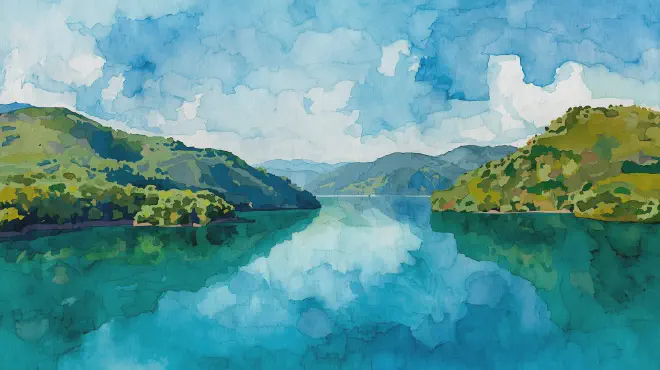
After more than six hours by car from Kampala, winding through mountain roads, I arrived at Lake Bunyonyi around 3 PM. The moment I crested the final pass, the view that spread before me was breathtaking. The lake surface sparkled in the afternoon sunlight, surrounded by deep green, with islands of various sizes floating quietly. It was like a scene of jade scattered across a giant mirror.
My lodge sat on a small hill by the lakeside, and from the terrace, I could see the entire lake. After placing my luggage in the room and catching my breath, I was greeted by John, a lodge staff member, with a warm smile. He was from the Bakiga tribe and had grown up by this lake since childhood. “There are 29 islands in this lake, and each has a name and a story,” he explained in fluent English.
I decided to spend the afternoon walking along the lakeshore. As I approached the water’s edge, I saw local fishermen returning from fishing in their slender wooden canoes. They were using traditional dugout canoes, carved from single tree trunks. One of the fishermen, Museke, beckoned me over, and when I approached, I saw many small silver fish swimming at the bottom of his canoe.
“These are mukene. Very delicious,” Museke said proudly. Mukene is a specialty of Lake Bunyonyi, and the small fish are sun-dried for preservation. His face was weathered from years of life on the lake, and the deep wrinkles told the weight of his life’s journey.
As evening approached, the lake surface gradually began to turn orange. I sat on the lodge terrace drinking the local beer “Nile Special,” watching this beautiful transformation. Countless birds danced in the sky, and among them, the distinctive call of the Hadada Ibis was particularly striking. The sunset reflected on the water’s surface brought the silhouettes of the islands into relief, creating a scene like an ink painting.
Dinner featured dishes made with local ingredients. The main course was “mukene stew,” a simple dish of fish simmered with tomatoes, onions, and local spices, but the concentrated umami of the fish gave it a profound flavor. The accompanying matoke (steamed cooking bananas) and posho (maize flour porridge) had an unfamiliar texture for me as a Japanese person, but it was a valuable experience that let me feel local life.
As night deepened, the lake was wrapped in profound silence. An owl’s call echoed in the distance, and the chorus of insects began. The starry sky was full of stars that could never be seen in urban areas, with the Milky Way clearly visible. In this overwhelming silence, I realized how much the daily noise had been exhausting me. I would sleep well tonight.
Day 2: Island Hopping and Encountering Traditional Culture
At 6 AM, I woke to the chirping of birds. When I opened the window, a thin mist hung over the lake surface, creating a fantastic landscape. Before breakfast, I went for a walk to the lakeshore and found that the fishermen had already begun their day’s work. Their movements were efficient and beautiful, like craftsmanship created by years of experience.
I had breakfast in the garden. Fresh tropical fruits—passion fruit, bananas, papayas—were laid out, and the aroma of locally grown coffee mingled with the mountain’s fresh air, pleasantly stimulating all five senses. While Ugandan coffee is world-famous, the taste of coffee drunk at its source was exceptional. The balance of acidity and bitterness was exquisite, with a faint sweetness lingering in the aftertaste.
In the morning, I decided to tour the lake’s islands with Peter, a local guide. As I boarded his wooden boat, the engine’s sound broke the lake’s silence and echoed across the water. Our first destination was a small island called “Punishment Island.” This island has a sad history. In the past, in Bakiga society, there was a strict custom that if an unmarried woman became pregnant, she would be abandoned on this island.
When we landed on the island, I met an old man living alone there. His name was Elias, and he seemed to be the last living witness who could tell the island’s history. “The old customs were harsh, but times have changed now. This island is now a peaceful place,” he said with a gentle expression. There is a small church on the island, and now many couples hold their wedding ceremonies here. Having overcome past sorrows, it has become a place of hope.
Next, we visited “Akampene Island.” This island is famous as a paradise for water birds such as gulls and pelicans, and as we approached, countless birds took to the sky. Particularly impressive was the majestic flight of the African Fish Eagle. With a wingspan exceeding two meters, its appearance truly had the dignity of the lake’s king. When Peter imitated the bird’s call, the real birds responded, which was fascinating.
We had lunch at a small restaurant by the lake. There I tried “Rwandana,” a local fish dish, for the first time. It was a large fish grilled whole over charcoal, crispy on the outside and fluffy inside—absolutely delicious. The sweet potatoes and green bananas served alongside had a simple yet deep flavor. While eating, I learned much about local culture from Maria, the restaurant owner.
In the afternoon, I experienced the traditional life of the Bakiga people in a nearby village. I observed the basket weaving done by the village women and tried it myself. They use fibers from a water plant called papyrus, skillfully weaving them into beautifully patterned baskets. I tried it too, but the dexterity required made it difficult work, and even making a simple item took over an hour.
The village elder, Mujisi, shared the oral history of the Bakiga people. He spoke in a quiet tone about the story of when their ancestors arrived in this land, the numerous legends surrounding the lake, and the traditional culture passed down to modern times. Particularly impressive was their philosophy of valuing harmony with nature. His words, “We receive many things from the lake, so we must cherish it,” stayed with me.
In the evening, children returned from school and gathered around me. At first shy, they gradually warmed up and I enjoyed simple conversations in English. Their innocent smiles shone more beautifully than any jewels. As we parted, one girl gave me a small handmade bracelet. It seemed to be one she had been wearing, and thinking that she had shared something so precious with me made my heart swell.
That night, back at the lodge, I enjoyed a performance of local music and dance. The young people dancing to the powerful rhythm of drums were full of vitality, and just watching them gave me energy. I joined the circle and danced along, though I could barely keep up with the complex steps. Still, everyone welcomed me warmly, and I felt a connection beyond words.
Day 3: A Lakeside Morning and Time to Say Goodbye
On my final morning, I woke earlier than usual. At 5:30 AM, it was still dim outside, but wanting to see the sunrise from the lakeside, I quietly left my room. When I reached the shore, several local people were already there, quietly gazing at the lake. For them, this morning time by the lake must be part of their daily routine.
Soon the eastern sky gradually began to brighten, and the lake surface turned pale purple. Then at 6:15 AM, the moment the sun appeared from beyond the hills, the entire lake shone golden. The silhouettes of the islands reflected on the water’s surface, and birds began calling all at once. It was impossible to express this overwhelmingly beautiful moment in words. I simply etched the scene quietly into my heart.
After breakfast, I said goodbye to John and Peter, who had taken such good care of me. Though my stay was short, my friendship with them would be a lifelong treasure. John said, “Please come back anytime. This lake will be waiting for you.” From Peter, I received printed photos he had taken during yesterday’s island tour. Among them was a shot of my amazed expression when I first saw the African Fish Eagle.
Before departing, I walked along the lakeshore one more time. The scenery I had become familiar with over two days felt precious now that I didn’t know when I might see it again. The fishermen’s canoes, cattle drinking at the water’s edge, farmers working in the terraced fields, and above all, this beautiful lake itself.
The car to take me to the airport arrived. As I loaded my luggage into the trunk, I reflected on these three days. It felt like I had traveled a greater distance in my heart than in physical space. I had experienced the warmth of Ugandan people, the grandeur of nature, and above all, the richness of a life where time flows slowly.
As the car left the lodge, I looked back at the lake one last time. The lake surface and islands shining in the morning sunlight seemed to be waving at me. I rolled down the window and waved back, tears streaming down my cheeks. These were not tears of sadness but tears of inexpressible emotion at having touched something beautiful.
On the road back to Kampala, watching the scenery flowing past my window, I savored the magnitude of what I had gained from this journey. The truly important things we tend to forget in modern society: heartfelt exchanges between people, respect for nature, and a way of life that values the flow of time. Lake Bunyonyi reminded me of all these things.
What Felt Real Despite Being Imaginary
Though this journey was a product of imagination, it remains in my heart as a memory I truly experienced. John’s warm smile, Peter’s bird call imitations, the innocent eyes of the village children, and Elias’s words that conveyed the weight of his life—all of these, while existing in imagination, dwell within me as real emotions.
The taste of mukene fish, the aroma of morning coffee, the feel of the lakeside breeze, the memory of dancing to drum rhythms at night—these sensory experiences still vividly come back to me. Perhaps true travel is less about physical movement than it is about encountering new worlds in one’s heart.
The beautiful place called Lake Bunyonyi, the rich culture of its people, and the wisdom of a life in harmony with nature—knowing that all these things truly exist and being able to touch a part of them in my imagination has been a precious experience. One day, I may actually visit this place. I look forward to seeing how this imaginary journey will influence the real one.
A journey in imagination, yet one that painted new landscapes in my heart and brought me into contact with new values—Lake Bunyonyi. With gratitude to this quiet lake, I close this travel record.