
Introduction
There is something special in the way the name Leiden sounds when spoken aloud. Located in western Netherlands, barely forty minutes by train from Amsterdam, this city wears a distinctive cloak of quietude and intellectual fragrance.
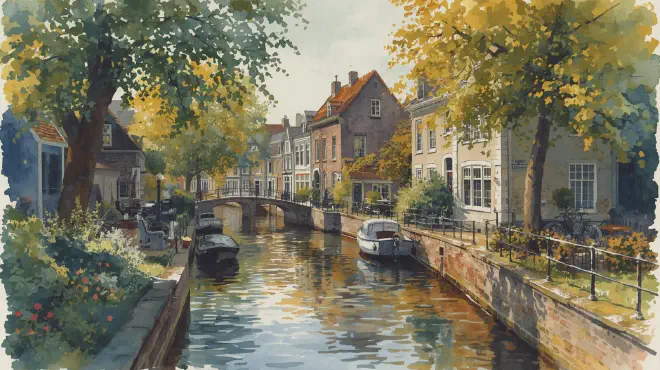
The Oude Rijn, a tributary of the Rhine River, flows quietly through the city center, its banks lined with brick buildings that have stood since the 17th-century Golden Age. Founded in 1575, Leiden University remains the oldest university in the Netherlands, welcoming students to this day and infusing the entire city with youthful energy and scholarly atmosphere.
Here you can trace the footsteps of Rembrandt, the painter born and raised in this city, or satisfy your intellectual curiosity at world-class museums of natural history and ethnology. Flowers blooming along the canals, bicycles weaving through cobblestone alleys, the aroma of coffee drifting from cafés—Leiden is never ostentatious, yet it possesses something that leaves a deep impression on all who visit.
Could I truly touch this city’s genuine charm in a mere two nights and three days? With such anticipation and anxiety in my heart, I set out alone for Leiden.
Day 1: A Quiet Arrival in the City of Learning
The landscape visible from the train window—from Schiphol Airport through Amsterdam Central Station to Leiden Central—was pastorally beautiful, as if escaped from a picture book. Windmills dotting the green pastures, waterways reflecting white clouds, and the distant spire of an old church. The primordial landscape of the Netherlands was there.
When I stepped off at Leiden Central Station around 2 PM, the scene before the station surprised me a bit. It was quieter and more settled than I had imagined. In contrast to Amsterdam’s bustle, a gentle flow of time prevailed here. Walking from the station to my boutique hotel, I strolled along a canal-side promenade and noticed young people who appeared to be university students sitting on benches, reading books. It was a scene emblematic of this city’s intellectual atmosphere.
After checking into the hotel and quickly dropping off my luggage, I headed toward the city center. Walking along the Oude Rijn, the canal’s surface sparkled in the afternoon sunlight. The 17th-century merchant houses standing on both banks, while bearing the weight of time, were carefully preserved and still served as living spaces for people today.
As evening approached, I sought out the place where Rembrandt was born. A small sign on a street called Weddesteeg marks the great painter’s birthplace. Though the building itself no longer exists, standing in that spot allowed me to imagine the era when young Rembrandt gazed upon the light and shadow of this city.
I had dinner at a small canal-side restaurant called “De Burcht.” I ordered erwtensoep, a traditional Dutch pea soup. The rich, creamy soup, filled with smoked sausage and root vegetables, warmed me from the core. Through the restaurant window, the canal reflected the soft light of dusk—a beauty reminiscent of an impressionist painting.
When I stepped outside after dinner, the city had already darkened. Walking the cobblestone streets illuminated by streetlamps, I made my way back to the hotel. Warm lights glowed in the windows of canal-side houses, and I could feel each household’s evening hours beginning. It was a night that offered glimpses into the Dutch people’s way of life.
Back in my hotel room, I gazed out the window and reflected on the day. My first impression of Leiden was of a quiet, refined city brimming with intellectual charm. As I welcomed the night, I looked forward to the explorations ahead.
Day 2: A Day Woven from Knowledge and Nature
Around 8 AM, after a light hotel breakfast, I headed to my first destination of the day: the Leiden University Botanical Garden. Established in 1590, this garden is known as one of Europe’s oldest university botanical gardens. Stepping into the grounds in the fresh morning air, I was greeted by rare plants collected from around the world.
Particularly impressive was a section featuring a Japanese garden. I never expected to encounter a landscape reminiscent of home in distant Netherlands. Maple leaves reflected in a small pond, stone lanterns, and meticulously maintained moss—it was a precious space telling the story of 17th-century exchanges between the Netherlands and Japan. Plants that Siebold brought back from Japan were carefully cultivated here, and I felt the beauty of knowledge transmission across borders.
After spending about two hours in the botanical garden, I walked fifteen minutes to Naturalis, the Leiden University Natural History Museum. This museum boasts one of the world’s finest natural history collections, particularly renowned for its dinosaur fossils and mineral specimens. Standing before the massive Tyrannosaurus skeleton, I felt both the smallness of human existence and the greatness of our quest for knowledge.
I had lunch at the museum café, ordering a Dutch pancake—poffertjes—topped with apple and cinnamon. The thin, large pancake was more filling than I expected, with an elegant flavor that wasn’t overly sweet. Outside the window, I could see the museum’s courtyard where children played, their voices audible. It was a space where learning and joy naturally coexisted.
In the afternoon, I visited the Leiden American Pilgrim Museum in the city center. This small museum tells the story of the Pilgrims who, before sailing to America on the Mayflower in 1620, spent approximately twelve years in Leiden. While the exhibits weren’t flashy, each artifact carried weighty stories. Thinking about the courage and hardships of those who left their homeland seeking religious freedom and started new lives in a foreign land moved me deeply.
Leaving the museum, evening was approaching. I strolled along the canals, observing the city’s daily scenes. University students cycling home, an elderly couple walking their dog, people chatting with friends on café terraces. The peaceful lifestyle of Leiden’s residents became apparent simply by walking.
For dinner, I visited “Café Restaurant De Keyzer,” recommended by a local. I ordered hutspot, a Dutch home-cooked dish—a beef stew slowly simmered until tender, with vegetables releasing their umami into a deep-flavored sauce. The compatibility with the accompanying mashed potatoes was perfect, and I felt I had grasped what Dutch comfort food truly means.
Stepping outside after the meal, the city was wrapped in night’s quietude. Streetlights reflected on the canal’s surface like jewels. Walking slowly back to the hotel, I contemplated the richness of knowledge and nature I’d encountered throughout the day. The passion for learning and reverence for nature that Leiden possesses—I’d felt with my skin how these shape the city’s entire atmosphere.
Day 3: A Morning of Farewell and Lingering Memories
On the final morning, I woke slightly earlier than usual. Outside the window, it was still dim, and the city rested in hushed silence. Perhaps this quietude is the essence of Leiden. Determined to use the time before checkout effectively, I packed my luggage and decided to walk the city once more.
Around 8 AM, walking the promenade along the Oude Rijn, I saw joggers, people walking dogs, and students heading to the university. Watching the city gradually awaken in the crisp morning air was remarkably pleasant.
For my final destination, I decided to visit St. Peter’s Church (Pieterskerk). Built in the 15th century, this Gothic-style church is one of Leiden’s symbols. The high spire rising toward the morning sky speaks to the weight of this city’s history. Inside, light streaming through colorful stained glass beautifully colored the stone pillars and floors.
Sitting quietly in the church, various scenes from these two nights and three days floated through my mind. The international exchange of knowledge felt in the botanical garden, humanity’s spirit of inquiry touched upon in the museum, peaceful daily scenes along the canals. All of these were elements forming Leiden’s charm, I realized anew.
Leaving the church, I found the Saturday morning market had begun in the nearby market square. Stalls selling fresh flowers, vegetables, cheese, and bread lined up, bustling with locals. I sampled some Dutch Gouda cheese—its rich yet mellow flavor was leagues above any cheese I’d tasted before. I purchased a small piece as a memento of my journey.
I bought bread and coffee at the market for a light breakfast substitute and spent my final moments on a canal-side bench. The bread had a crispy exterior and chewy interior, simple yet allowing the wheat’s flavor to shine through. I appreciated the Dutch bakers’ high level of skill. The coffee, Dutch-style with plenty of milk like a café latte, had a gentle taste.
Around 11 AM, I returned to the hotel, checked out, and headed to the station. On the way, I tried one last time to burn Leiden’s cityscape into my memory. Brick houses, cobblestone streets, small bridges over canals, and people coming and going by bicycle. None of these were particularly unusual, yet the atmosphere created by their harmony had definitely settled in my heart.
Waiting for the train on Leiden Central Station’s platform, I tried to organize what I’d felt during this brief journey. Leiden is not a glamorous tourist destination. Yet it holds respect for knowledge, love for nature, and gratitude for peaceful daily life. I understood that this is the city’s true charm.
Boarding the train, I watched Leiden’s cityscape gradually shrink through the window. I might never return, but the time spent in this city had certainly become part of me. With that conviction, I bid farewell to Leiden.
Conclusion
This two-night, three-day journey to Leiden was purely an experience in imagination. Yet now, as I write these words, strangely I feel as if I truly stood in those places, breathed that air, and tasted those dishes.
Riding on the wings of imagination to this city, I saw much, felt deeply, and learned. The cobblestone streets Rembrandt walked, the quiet garden where plants from around the world gathered, the twilight light reflected in canals, and the warmth of Dutch home cooking. All of these are products of imagination, yet they’re etched in my mind as certain memories.
The boundary between reality and fantasy sometimes becomes ambiguous. What matters, perhaps, is knowing that somewhere a beautiful place exists, where gentle time flows, where people love knowledge and cherish nature while living their lives. Maintaining longing and respect for such places enriches our hearts.
This journey, imaginary yet feeling undeniably real, continues in my heart even now. And someday, when the day comes that I truly visit Leiden, surely these imagined memories will deepen the real experience.