
A Hidden Village Wrapped in Mountain Mist
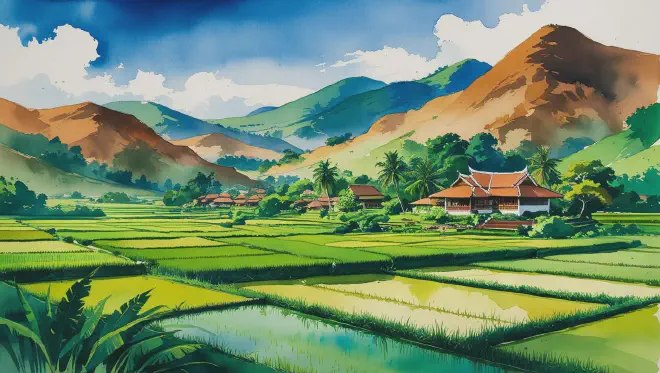
Munduk village sits nestled in the mountains of northern Bali, at an elevation of roughly 800 meters. This small settlement stands in stark contrast to the tourist-filled beaches of Kuta or the artistic bustle of Ubud—a different world altogether, wrapped in silence. Morning mist drifts across lake surfaces while coffee plantations spread like green carpets across the mountainsides, creating a landscape where time itself seems to pause.
Munduk rests between two bodies of water known as the “twin lakes”—Lake Buyan and Lake Tamblingan. The village carries a history of coffee cultivation dating back to the Dutch colonial era of the 17th century. Even today, villagers continue traditional farming practices, living in harmony with nature according to the teachings of Balinese Hinduism. The cool climate—surprising for a place so near the equator—and the mystical scenery veiled in mist make this land truly special.
The coolness that comes with altitude, the mystical mornings wrapped in seas of clouds, and above all, the warm smiles of the people. Munduk quietly reveals what I came to understand as Bali’s truest charm.
Day 1: Into the Mist
The journey from Denpasar Airport to Munduk takes about three hours. Gripping the rental car’s steering wheel, watching the gradually changing scenery, I felt my heart growing lighter with each passing kilometer. The lively coastline gave way to inland rice paddies, and as the road climbed into the mountains, the air grew noticeably cleaner and cooler.
Around 10 a.m., I finally arrived in Munduk village. The accommodation I had booked, Puri Lumbung Cottages, stood quietly on a hillside overlooking the lake. Built in traditional Balinese style using bamboo and wood, the place had an owner named Wayan who greeted me with a warm smile. “Selamat datang,” he said—welcome—while offering a drink made from local coffee blended with coconut milk, its flavor gentle and soothing.
From the terrace of my room, I could see Lake Tamblingan shrouded in mist. Wisps of fog drifted across the water’s surface, revealing and then concealing the mountains on the far shore, like watching a living ink painting unfold. After setting down my bags and taking a breath, I already felt reluctant to ever leave this place.
In the afternoon, I set out to explore the village. A ten-minute walk from the cottage brought me to the small village center, where I found a local eatery called Warung Munduk. The owner, a woman in her forties named Sri, explained the dishes in fluent English. I ordered nasi campur and sayur urap. Nasi campur is a classic Balinese dish featuring small portions of various side dishes arranged beautifully over white rice—tempeh made from fermented soybeans, vegetables dressed in coconut, and spicy sambal sauce. The first bite revealed layers of complex spice, yet the mountain air seemed to keep everything feeling light rather than heavy.
After the meal, Sri shared some of the village’s history. “Since my grandfather’s time, this village has made its living from coffee. But now tourists are coming too, and the village is slowly changing,” she said, her expression a mixture of pride and a touch of uncertainty.
By evening, I returned to the cottage to find the setting sun painting the mountains gold. Sitting on the terrace with a local Bintang beer, I gazed at the lake wrapped in silence. The only sounds were leaves rustling in the wind and the occasional call of birds. Savoring this freedom from urban noise, I watched the day slowly fade away.
Dinner at the cottage was bebek betutu—duck steamed in banana leaves after being marinated in spices. The meat was remarkably tender, the fragrance of the spices awakening my appetite. The accompanying gado-gado, a salad of boiled vegetables with peanut sauce, was equally wonderful.
That night, looking up at the sky, I saw a canopy of stars impossible in any city. Wayan told me, “The night sky in Munduk is special. There’s no light pollution, so the stars are very clear.” Reclining in a terrace chair, gazing at the stars, I drifted off to sleep wrapped in anticipation for tomorrow and contentment with today.
Day 2: Timeless Hours by the Lake
I woke at 5 a.m., while darkness still lingered. Stepping onto the terrace, I found mist rising from the lake, creating an ethereal scene. The lake’s outline emerged gradually through the morning haze, followed by the silhouettes of distant mountains. It had been a long time since I had witnessed such a beautiful dawn.
Around six, Wayan brought morning coffee. “This morning, I made something special—coffee from beans grown on our own farm,” he said proudly. The first sip revealed a perfect balance of acidity and bitterness, and combined with the fresh mountain air, it tasted better than any coffee I could remember.
After breakfast, I decided to walk down to the lakeside. The steep mountain path from the cottage took about thirty minutes. Along the way, I passed through narrow trails bordered by coffee plants and clove trees. Whenever I made eye contact with villagers working in the fields, they would wave and call out, “Selamat pagi”—good morning—their voices echoing through the mountains.
Arriving at Lake Tamblingan’s shore, I found a small wooden pier. A local fisherman named Putu welcomed me in his bamboo boat. “Would you like to go around the lake?” he offered, and I agreed without hesitation. The hand-rowed boat glided slowly across the water toward Pura Ulun Danu Tamblingan temple on the opposite shore.
The view from the water held a different beauty than that from land. Mountain reflections rippled on the surface, water birds appeared in small flocks, and silence surrounded everything. Putu’s English was limited, but through gestures and simple words, he taught me about the lake’s history. “This is a sacred lake. Since long ago, villagers come here to pray,” he said, his words carrying deep reverence for this land.
At the temple, a beautiful structure appeared to float upon the lake. Pura Ulun Danu Tamblingan is dedicated to Dewi Danu, the goddess of water, and its eleven-tiered meru tower reflected in the water created a mystical sight. Local people were offering prayers inside, and the scent of incense drifted through the still air.
In the afternoon, I returned to the cottage and decided to try the Balinese massage at the attached spa. The therapist, Nyoman, was a village woman who had learned traditional oil massage techniques from her mother. Using coconut oil infused with frangipani flower essence, she worked away the fatigue deep in my muscles. Receiving the massage while gazing at the green landscape through the window was pure bliss.
In the early evening, I went out walking again, this time climbing the hill on the opposite side to reach a viewpoint overlooking Lake Buyan. After about twenty minutes of light trekking, I arrived at a lookout offering a stunning panorama of both lakes at once. As the sun began to sink behind the mountains, the lake surfaces turned golden—a breathtaking moment.
There I met Ari, a young local man who had come to take photographs. He was studying tourism at university and spoke of wanting to contribute to his hometown’s development. “Munduk has so much beautiful nature. But I want to preserve this tranquility without overdeveloping it,” he said—words that stayed with me.
Dinner was again on the cottage terrace. That night I savored ikan bakar, grilled fish, and urap sayur, vegetables dressed in coconut. The fish had been marinated in spices before being grilled over charcoal—crispy skin, tender flesh inside. A squeeze of lime added a refreshing brightness. The vegetable dish featured local greens mixed with grated coconut and spices, bringing out the natural sweetness of the ingredients.
After the meal, Wayan played gamelan music. The mystical tones of the bronze instruments drifted out beneath the stars. Listening to the music, I reflected on the day’s events—the silence on the lake, the sacred time at the temple, the encounters with people. All of it was being etched deep into my heart.
Day 3: Thoughts on a Morning of Farewell
On the final morning, I woke earlier than usual. I wanted to see that beautiful morning mist one more time. Stepping onto the terrace, I found fog even thicker than yesterday blanketing the lake. Watching the lake’s outline slowly emerge from the white mist, I realized how quickly these three days had passed.
I asked for an early breakfast and decided to walk through the village one last time before departure. Taking a different path than before, I chose a trail that wound through the coffee plantations. Coffee cherries, ripe and red for the harvest season, glistened with morning dew. An elderly woman working in the plantation picked one red cherry and offered it to me. Eating it raw, I tasted subtle sweetness hiding the bitterness that would become coffee.
“So this fruit becomes that delicious coffee,” I said. The grandmother nodded deeply and offered a long explanation. Though I couldn’t understand her words, I felt her love and pride for coffee cultivation. When I finally said “Terima kasih”—thank you—with my palms pressed together, she returned the gesture with a smile.
Back at the cottage, checkout time was approaching. While packing, I tried once more to commit the view from the terrace to memory. The mist had completely cleared, and the lake now reflected the blue sky. I could feel I was a different person than when I had arrived three days ago.
Wayan came out to see me off. “I’ll definitely come back,” I said. “We’ll be waiting for you anytime. Munduk is now your heart’s hometown,” he replied. His words brought warmth to my chest.
On the drive back down the same mountain road, every passing scene felt precious. The coffee plantations, the villagers’ smiles, the blue of the lakes, the green of the mountains. Though it had been only three days, this land had become part of my heart.
On the way to the airport, I stopped at a small roadside warung for a final lunch. I ordered mie goreng, fried noodles. A simple dish, but the balance of garlic, chili, and kecap manis—sweet soy sauce—was perfect. This taste, too, I knew I would remember for a long time.
Arriving at Denpasar Airport, I felt pulled back into the real world. The person standing there was different from the one who had arrived three days before. Somewhere in my heart, the silence and beauty of Munduk, the warmth of its people, remained with certainty. This would become a treasure to support me in the days ahead.
What Felt Real Though It Was Imagined
This journey was an imaginary travel record—I never actually set foot there. Yet as I wove these words together, the misty mornings of Munduk, the mountain shadows reflected on the lake, the fragrance of coffee, and the warm smiles of the people arose in my mind as vividly as if I had truly experienced them.
Munduk village in Bali is a real and beautiful place, and the landscapes, culture, and daily life described here are based on what actually exists there. If this imaginary journey managed to capture something essential about that land, perhaps it speaks to the mysterious power of words and imagination.
Sometimes an imagined journey allows us to taste a place’s charm more purely than an actual trip. Free from real-world constraints and inconveniences, we can experience a place’s most beautiful moments and most moving encounters.
Yet at the same time, this imaginary journey has planted within me a strong desire to someday truly visit Munduk. I want to actually greet a mist-wrapped morning, gaze at mountains reflected in lake water, and exchange words with the villagers. I look forward to the moment when imagination opens a door to reality.
Travel is not only about walking with one’s feet. It is also about feeling with the heart, painting with imagination, and inscribing into memory. I want to record here that these imaginary three days have surely become part of my life.