
Into the Desert of Enigmatic Lines
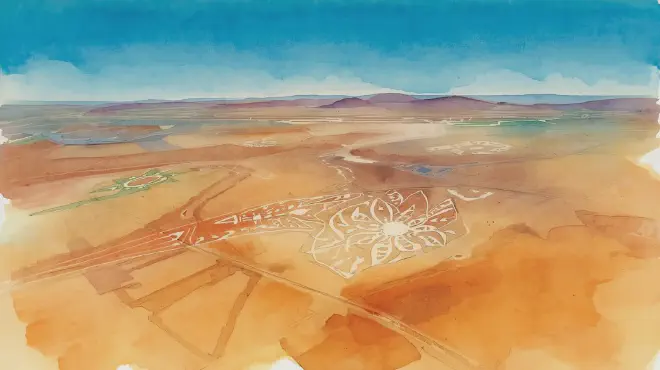
Nazca, in southern Peru, spreads across the coastal desert region along the Pacific. While this is one of the most arid places on Earth, it also harbors one of humanity’s most enigmatic legacies. The geoglyphs left by the Nazca civilization, which flourished from the 2nd century BCE to the 6th century CE, are so massive that their full forms can only be grasped from the air, and they remain shrouded in mystery to this day.
A hummingbird, a monkey, a spider, and geometric lines and figures lie quietly on the parched earth. The extreme aridity—with annual rainfall of mere millimeters—and the nearly windless climate have preserved these line drawings across more than 2,000 years. Meanwhile, the Nazca and Ingenio rivers flow through this region, having supported human life since ancient times. Oases along the rivers still host small settlements where people continue to cultivate cotton and corn.
About 450 kilometers south of the capital Lima—a seven-hour drive along the Pan-American Highway or an hour-and-a-half flight by small aircraft—this land is where the mysteries of ancient Andean civilization and the daily life of modern Peru quietly intersect.
Day 1: Welcomed by Desert Winds
The bus departing Lima at 6 AM headed south along the fog-shrouded coastal road. The Pacific Ocean visible through the window was wrapped in gray mist, like a gateway to another world. As we passed Paracas, the fog began to lift, revealing a vivid contrast between the blue sea and reddish-brown desert. During a rest stop in Ica, I first felt the distinctive dry wind of the desert on my skin. It was completely different from Tokyo’s winter dryness or Okinawa’s sea breeze—a wind that seemed to contain thousands of years of time.
Around 2 PM, we arrived in the town of Nazca. The small town of about 30,000 people stretches thinly along the Pan-American Highway. Walking from the bus terminal to Hotel Nazca Lines, I absorbed the town’s everyday rhythms. Three-wheeled mototaxis kicked up dust as they passed, and women dried corn in the sun outside their storefronts. Most buildings were constructed of sun-dried adobe bricks, their brown walls blending seamlessly with the desert’s color palette.
After checking into the hotel and dropping off my luggage, I decided to explore the town. The Plaza de Armas, like other Peruvian town squares, was built around a church, but it felt enveloped in a particular quietude. Under the strong afternoon sun past 3 PM, the faces of elderly men sitting on benches were deeply tanned, telling stories of lives long lived on this land.
Around 5 PM, I visited the Maria Reiche Museum. Maria Reiche, a German-Peruvian mathematician, was known for dedicating her life to studying the Nazca Lines. The museum, converted from the house where she spent her final years, displays handmade models of the geoglyphs, surveying tools, and her personal belongings. Particularly striking were the detailed maps of the lines she had drawn by hand. The passion invested in each line and her profound love for this mysterious heritage came through vividly.
As the sun began to set, I ordered arroz con pollo at a small nearby eatery. This simple dish of rice cooked with chicken and cilantro, topped with tender stewed chicken, tasted especially delicious to a body finishing its first day in the desert. The elderly woman running the shop spoke to me in broken English: “You must be excited about tomorrow’s flight,” and I felt the warmth of a culture that welcomes travelers to this small town.
Returning to the hotel around 8 PM, I stepped onto the rooftop terrace to find a desert night sky free of light pollution spreading above. The Southern Cross shone clearly, and the Milky Way flowed from horizon to horizon. Had the ancient Nazca people gazed up at this same starry sky? I’d heard that some geoglyphs were thought to represent celestial bodies. Under the starlight, I fell asleep with anticipation for the next day.
Day 2: Ancient Codes Viewed from Above
At 6 AM, the wake-up call roused me. The scenic flight was scheduled for 8 AM, but preparation needed to be early since timing could change depending on weather. The hotel breakfast was simple yet fitting for a desert morning: fresh papaya and mango with fragrant bread. The coffee was surprisingly robust, reminding me anew that Peru is a coffee-producing country.
At 7:30, the pickup car arrived at the hotel lobby. Nazca Airport was about a 10-minute drive. Though just a small airstrip with a control tower and a few parked light aircraft, it bustled with tourists from around the world. The pilot, Carlos, a veteran with over 20 years of experience, explained in fluent English: “The wind is calm today—the lines should be very visible.”
At 8:15 AM, we took off in a six-seater Cessna. Climbing to about 500 meters altitude, the Nazca landscape spread below. The first figure to appear was the hummingbird. This design, approximately 96 meters long, was impossible to fully comprehend except from the air. As the aircraft tilted left, the hummingbird’s graceful form emerged from the right window. Wings spread, long beak pointing toward a flower—the image possessed a lifelike dynamism.
Next came the monkey geoglyph. About 110 meters long with a distinctive spiral tail, this figure spoke to the keen observational skills of the Nazca civilization. Gasps of admiration filled the cabin, and camera shutters clicked incessantly. But rather than taking photos, I focused on imprinting this moment’s scene into my heart.
A spider, a condor, fish, and a gigantic hand-shaped geoglyph. In about 30 minutes of flight, we saw all the major lines. Most impressive was the collection of geometric lines—straight lines, trapezoids, and zigzags intricately combined, like codes from ancient people. What these lines meant remains not fully explained even by modern archaeology.
After landing, I felt slightly queasy. The scenic flight in a small aircraft was more turbulent than I’d imagined, and despite taking motion sickness medication, I experienced mild air sickness. Resting in the airport waiting room for about 30 minutes, I gradually felt better. Carlos laughed and said, “First-timers often get sick. But it was worth seeing, wasn’t it?”
Around 1 PM, I returned to town for lunch. At La Tabla, a restaurant recommended by locals, I ordered ceviche. This coastal Peruvian staple of fresh fish marinated in lime helped refresh my body, tired from the flight. The tangy, invigorating flavor was complemented by side dishes of boiled corn and sweet potato—simple yet deeply satisfying.
Around 3 PM, I visited the Cantalloc ruins. This Nazca civilization residential site offered a rare glimpse into the daily lives of ancient people, in contrast to the attention usually focused on the geoglyphs. Remains of adobe brick dwellings, traces of irrigation channels, and fragments of polychrome pottery were scattered about. Luis, the guide, explained: “The Nazca people had excellent water management technology. To farm in this arid land, they skillfully utilized underground aqueducts.”
Around 5 PM, I wandered the town center. Souvenir shops sold T-shirts, ornaments, and postcards featuring Nazca Line motifs. Particularly eye-catching were textiles woven by local women with hummingbird and monkey designs. Made with natural rather than chemical dyes, these textiles evoked the continuation of traditional techniques from ancient times.
At 7 PM, I savored aji de gallina at a homey restaurant near the hotel. This dish of chicken simmered in yellow chili pepper sauce is among the most approachable Peruvian dishes. With walnuts and cheese as hidden flavoring, it offered deep richness beneath the spiciness. For dessert, I ordered mazamorra morada made from purple corn. This sweet pudding-like texture, fragrant with cinnamon and cloves, had a gentle sweetness befitting a desert night.
Around 9 PM, I returned to the hotel’s rooftop terrace. Gazing at the stars even clearer than the previous night, I reflected on the day. Seeing the geoglyphs from above made me appreciate the imagination and technical skill of the ancient Nazca people. Yet simultaneously, the fundamental question—why did they draw such massive figures?—only deepened. Did they have religious significance, were they related to celestial observation, or was there another purpose we cannot understand? Holding these unanswered questions, I fell asleep enveloped by the starry sky.
Day 3: Carrying Desert Memories
On the final morning, I leisurely woke at 7 AM. Opening the window, the desert’s clear air flowed into the room. The previous days’ excitement had settled, and I quietly began to acknowledge my farewell to this land. After breakfast and before checkout, I decided to walk through town once more.
Around 9 AM, I walked along the road by the Nazca River. Though not very wide, this water creates a green oasis in the desert. Willow-like trees were planted along the riverbank, and local children played in their shade. The sound of water echoing through the desert silence conveyed the vitality of life. The Nazca civilization’s people must have heard this same water sound as they lived.
Walking along the river, I met Don Pedro, a farmer working in his field. Over 70 years old, he was born and raised on this land and had never left his hometown. “Tourists come to see the lines, but for us, this is our daily life,” he told me, mixing Spanish and simple English. His hands bore deep wrinkles carved by years of agricultural work, speaking to both the harshness and dignity of living on this land.
Around 11 AM, I visited the town market. Though small, it was filled with goods integral to local life: fresh vegetables and fruits, meat, and daily necessities. Tomatoes, onions, and potatoes had likely been transported from the Andean highlands. At the fruit stand, mangoes, avocados, and uniquely South American fruits I’d never seen were sold. The vendor recommended I try lucuma, a fruit with custard-like sweetness and slightly powdery texture—a precious experience only Peru could offer.
Around noon, for my final meal, I visited El Sol, a small eatery beloved by locals. The menu was handwritten, centered on local home cooking. I ordered cabrito a la norteña, a stewed kid goat dish. Though simple, seasoned with cilantro and garlic, the meat was surprisingly tender, conveying the vitality of animals raised in the harsh desert environment. The side of yuca (cassava) had a fluffy, potato-like texture but with a more substantial sweetness.
While eating, I reflected on this three-day, two-night journey. Nazca was a mysterious place where ancient civilization’s enigmas and modern Peruvian daily life quietly coexisted. While overwhelmed by the geoglyphs’ grandeur, I was also moved by the warmth of the people living here and the depth of culture built within a harsh natural environment. There were encounters with living culture not written in guidebooks.
At 2 PM, I returned to the hotel to pick up my luggage. The Lima-bound bus departed at 3 PM. On the way to the bus terminal, I burned Nazca’s townscape into my eyes one last time: brown adobe houses, three-wheeled mototaxis, people selling fruit on the street, and desert mountains visible in the distance. Though only a three-day stay, this scenery was surely carved into my heart.
The desert landscape viewed through the bus window looked different from the journey here. No longer just a desolate land, but a special place with long history and rich culture. The mystery of the geoglyphs remained unsolved, but perhaps that very mystery heightened this land’s allure. It was a journey that taught me the greatness of human imagination and creativity, and the beauty of living in harmony with nature.
Around 6 PM, the bus reached the coastal road. The sunset sinking into the Pacific horizon was beautiful enough to quietly conclude these three days in Nazca. Other passengers in the bus also gazed at the same sunset, seemingly immersed in their journey’s afterglow. During the approximately four hours until reaching Lima, I ruminated repeatedly on the time spent in Nazca.
What Felt Real Despite Being Imaginary
This journey, though a product of imagination, lives vividly in my heart. The sensation of Nazca’s dry wind, the wonder of viewing geoglyphs from above, casual conversations with locals, countless stars shining in the desert night sky—these memories are as vivid and warm as if actually experienced.
Perhaps travel does not necessarily require physical movement. When the heart opens and imagination takes flight, we can go anywhere. Just as the Nazca Lines have captivated people’s hearts across more than 2,000 years, landscapes and experiences once carved into the heart continue living within us, transcending time and distance.
Through this imaginary journey, I not only deepened my understanding of Peruvian culture and history but also contemplated the essential meaning of travel. Discoveries and emotions gained from visiting new places, learning brought by encounters with people, and quiet time for self-reflection—these may well be travel’s true value, fully experienceable even in imagination.
Someday, I may actually set foot on Nazca’s earth to confirm these imaginary memories. When that time comes, the emotions and expectations gained from this imagined journey will surely enrich the real experience. In moments when the boundary between imagination and reality blurs, travel gives our lives special meaning.