
A Small Gem in South India
Panaji. The capital of Goa, India’s smallest state, yet a city steeped in nostalgic tranquility. Its history as a former Portuguese colony still breathes through every corner of the town. Positioned at the mouth of the Mandovi River as it flows into the Arabian Sea, this is a place where time moves differently—distinctly Indian yet somehow not quite Indian at all.
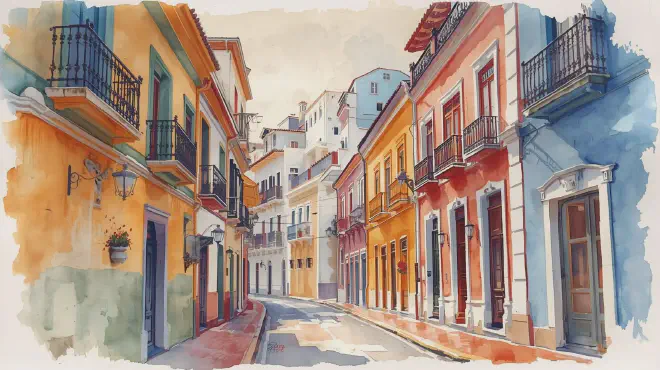
Red-tiled roofs and pastel-colored walls. Footsteps echoing on cobblestone lanes. Cats napping in the shade of palm trees. Though undeniably in India, there’s an atmosphere here reminiscent of a Mediterranean port town. The legacy of 450 years of Portuguese rule, from the 16th century onward, makes this city special—evident in everything from architectural styles to food culture and the demeanor of its people.
The salt-laden breeze from the Arabian Sea. The sweet aroma of feni liquor. The distinctive South Indian fragrance of curry leaves mingling with coconut oil. And occasionally, conversations blending Portuguese, Konkani, and Hindi. During this three-day, two-night journey, I wanted to savor the charms of this small gem of a city slowly and thoroughly.
Day 1: Gateway to Times Past
Morning light illuminated the terminal at Goa International Airport as I climbed into a taxi bound for Panaji. The driver, Ramesh, was an amiable middle-aged man who regaled me with the city’s history in fluent English. “Panaji is a small city, but its heart is big,” he said—words that seemed a fitting beginning to this journey.
During the forty-minute drive, the landscape gradually transformed. Palm trees grew denser, and white church spires appeared and disappeared along red earth roads. Then, the cityscape of Panaji emerged along the river—a sight so beautiful it could have been lifted from a picture book.
In the morning, I checked into my accommodation, a Portuguese-style guesthouse called “Casa Branca.” This building, converted from a structure over a century old, featured a staircase decorated with azulejos (Portuguese tiles) and bougainvillea blooming in the courtyard. From my room’s window, I could see the Mandovi River, with Betul Island floating peacefully in the morning light across the water.
After dropping off my luggage, I immediately set out to explore the city. My first destination was the Fontainhas district in the old town. Walking through the narrow cobblestone alleys felt like stepping back in time. Pastel blue walls, deep crimson tile roofs, laundry hanging from wooden balconies—everything spoke to the everyday beauty of this city.
In the afternoon, I visited the Basilica of Bom Jesus, one of Panaji’s most iconic landmarks. Built in the 16th century, this church is also registered as a UNESCO World Heritage site. Stepping inside, I was greeted by cool stone floors and soft light filtering from above. Local people were quietly offering prayers before the altar. Even as a tourist, I found myself naturally joining my hands in prayer. Such was the sacred atmosphere that filled the space.
I also visited the Chapel of St. Francis Xavier nearby. This place, where the remains of Xavier—who devoted his life to missionary work in the East—are enshrined, was filled with pilgrims tracing his footsteps. The way people of different religions and nationalities held this place in special regard left a deep impression on me.
As evening approached, I strolled along the promenade by the Mandovi River. The river was wider than expected, and the greenery on the opposite bank was as beautiful as a painting. Fishermen cast their lines toward the setting sun while children played on the stone steps. These casual everyday scenes warmed a traveler’s heart.
For dinner, I went to a small restaurant called “Tia Maria” that a local had recommended. Their specialties were Goan curries: “xacuti” and “sorpotel.” Xacuti was chicken simmered in coconut milk and spices—a gentle flavor influenced by Portuguese cuisine. Sorpotel, a traditional dish using pork innards, had an exquisite balance of sourness and spice. I also tried the local feni liquor. Made from cashew nuts, it was initially harsh, but once I got used to it, its unique sweetness became pleasant.
The restaurant’s owner, Carlos, was a gentle man in his sixties. “Goan cuisine is like a child born from the marriage of India and Portugal,” he said with a laugh. True to his words, the food here perfectly merged the best of both cultures.
On my way back to the guesthouse, I enjoyed the city’s nightscape. The cobblestone streets showed a different face than during the day. Church spires illuminated by street lamps. Light spilling from windows of homes. Panaji’s night wasn’t glamorous, but possessed a quietness that somehow resonated with the heart. Lying in my room’s bed, I drifted off to sleep with anticipation for tomorrow.
Day 2: Rhythms of Nature and Culture
The morning began with breakfast in the guesthouse courtyard. Portuguese-style pancakes called “sannas” lavished with rich butter and honey. The coffee, made with local Arabica beans, had a deep flavor that paired perfectly with the South Indian morning air. The courtyard bougainvillea, wet with morning dew, had purple petals gleaming in the morning sun.
In the morning, I took a thirty-minute drive from Panaji to Spice Island. This small island, once used as a retreat by Portuguese governors, is now a quiet nature reserve. During the ferry ride, I enjoyed the beautiful scenery of the Mandovi River’s midstream. Mangrove forests spread along the riverbanks, with white egrets dancing gracefully.
Arriving on the island felt like stepping into another world. Passing through a green tunnel formed by palm trees, a small cove appeared. The water was surprisingly clear—transparent enough to see the bottom. Here I met my local guide, Pradeep. Born and raised in Goa, he spoke passionately about the area’s natural environment.
“This island still has ruins from Portuguese times,” he said, leading me to stone building remains covered in ivy. The foundation of a former villa had now become one with nature. It was a scene that made one contemplate the mysteries of time’s passage.
Deep in the island was a small fishing village where I had lunch. At a homey eatery run by fisherman Antonio and his family, I savored kingfish curry caught fresh that morning. Simple yet profound flavors—onions and tomatoes sautéed in coconut oil, seasoned with coriander and cumin. The fresh fish’s sweetness harmonized beautifully with the spices.
Antonio’s wife, Maria, shared old island stories during the meal. “More people used to live here, but young folks have moved to the city,” she said with a hint of sadness. Yet when she smiled and added, “But this quietness isn’t so bad,” her expression revealed deep affection for this land.
In the afternoon, I returned to Panaji and explored the city’s cultural side. At the Goa State Museum, I learned about the region’s complex history. Indigenous culture, the Muslim rule period, and then Portuguese colonial times—artifacts from each era told of this land’s multilayered identity.
Particularly striking was the collection of religious paintings from Portuguese times. European techniques with subtly blended Indian color sensibilities. Perhaps this is how cultural fusion is born.
After the museum, I wandered through the area called the Latin Quarter. Many residents of Portuguese descent still live here, and you can sometimes overhear Portuguese conversations on street corners. The old Western-style homes are carefully maintained, reflecting residents’ pride.
I spent the afternoon coffee break at a small café called “Café Mombasa.” Their specialty was “bebinca,” a traditional sweet. Made with coconut and jaggery (palm sugar), this confection had a simple yet profound sweetness. The café’s owner, Rosa, proudly shared, “This is a recipe passed down from my grandmother.”
In the evening, I joined a sunset cruise. We slowly descended the Mandovi River toward the Arabian Sea. On board, there was a live performance of traditional Goan music. Songs with Konkani lyrics and Portuguese-style melodies seemed to symbolize this land’s cultural blending.
The sight of the sun sinking into the Arabian Sea was of indescribable beauty. Sky colors shifting from orange to pink to deep purple, reflecting on the water’s surface, enveloping the entire world in fantastical hues. Everyone on board fell quiet, gazing at that moment.
That evening, I attended a festa (festival) that my local friend Carlos had told me about. It happened to be the eve of the Feast of St. John, and in the town square, circles of music and dancing had formed. People of all ages and nationalities joined hands and danced—a scene that seemed to represent this land’s inclusiveness. I joined the circle too, attempting traditional steps with improvised movements. Though I wasn’t very good, those around me welcomed me warmly.
After the festival, I had a light meal at a food stall. “Chorizo pão,” a Portuguese-style sausage sandwich, was spicy yet mild. “Pulao,” a Goan-style rice pilaf, had an exquisite harmony of basmati rice fragrance and spices.
By the time I returned to the guesthouse, along with pleasant fatigue, my affection for this place had deepened. Throughout the day, I realized that Panaji wasn’t just a tourist destination, but a place where people’s lives truly breathe.
Day 3: A Morning of Farewell and New Beginnings
On my final morning, I woke a bit early. Wanting to imprint the view from my window once more in my heart, I lay in bed for a while watching the river flow. The Mandovi River flowed quietly this morning as always. Across the water, fishermen prepared their small boats for departure, the scene wrapped in a stillness as if time had stopped.
I took breakfast on the guesthouse’s rooftop terrace. From here, I had a panoramic view of Panaji’s cityscape. Beyond rows of red tile roofs, white church walls and spires gleamed in the morning sun. In the distance lay the Arabian Sea, beyond which stretched an infinite horizon. While savoring Portuguese-style toast with local mango jam, I reflected on these three days of memories.
In the morning, I headed to the Church of St. Cajetan, which I hadn’t yet visited. This church, reportedly modeled after St. Peter’s Basilica in Rome, certainly resembles a European cathedral in its magnificent exterior. However, stepping inside, there’s unmistakably an Indian atmosphere. The expressions of people offering prayers, the scent of incense, and the strong southern light streaming through windows—within Western architectural style, an Indian soul truly dwells.
The small cemetery next to the church was also an intriguing place. Gravestones mixing Portuguese-style crosses with Indian decorations tell of this land’s complex history. Some date back over 400 years, including graves of mixed Portuguese-Indian families. I realized that cultural fusion isn’t merely superficial—it’s something nurtured over generations within people’s lives and families.
On the way back from the church, I stopped by a small market. Called the “Mercado,” this market is where locals do their daily shopping. Fresh fish, colorful vegetables, spices, and handmade daily goods. Vendors’ calls in Konkani, Hindi, and Portuguese reminded me again of this city’s multilingual environment.
At one spice shop, I chatted with the owner, Manuel. “My family has been in this business for five generations,” he said proudly. “Spices are cultural bridges. What the Portuguese brought and what was already here mixed together to create new flavors.” His words contained both pride as a merchant of this land and deep understanding of cultural fusion.
For lunch, I ate at a riverside restaurant called “Riverside.” Their “fish caldeirada,” a Portuguese immigrant dish adapted Goan-style, was a gentle fish stew with coconut milk and tamarind tartness. Gazing at the river flow through the window, I savored it slowly, taking my time.
In the afternoon, I walked through the old town once more. This time, truly slowly, without hurrying. Footsteps echoing on cobblestones, passing before colorful houses. Eyes meeting with a grandmother leaning from her balcony, waving to each other. Children playing by the roadside calling out “Hello.” Each small interaction is etched in my heart as a travel memory.
I stopped before one old house. Though seemingly uninhabited now, its entrance decorated with beautiful azulejo tiles and elaborate wooden balcony spoke of the love for life held by those who once lived there. Even without residents, the house maintains its beauty. The passage of time doesn’t necessarily mean deterioration—sometimes it creates a unique charm, I felt.
As evening approached, the time to head to the airport drew near. At checkout, the guesthouse proprietress warmly saw me off, saying, “Please come back again.” “Panaji is a city not easily forgotten,” she said. I nodded deeply.
In the taxi to the airport, Ramesh asked, “How was Panaji?” “It was a beautiful city,” I replied, yet feeling there was something that words alone couldn’t express. Not just beauty. This land holds a rare example of different cultures coexisting without conflict. That’s surely not by chance, but the result of wisdom and tolerance built by people over a long time.
While waiting at the airport, I reflected on these three days. The faces of people I met in Panaji came to mind one after another. Carlos’s friendly smile, Maria’s warm gaze, Pradeep’s love for nature, Rosa’s proud expression. They all live rooted in this land, embodying its culture simultaneously.
The sunset visible from the window sank into the Arabian Sea once more. Tomorrow I’ll return to daily life. But the time spent in Panaji has certainly brought me new perspectives. Cultural coexistence isn’t theoretical—it’s realized in daily life. And beauty doesn’t lie in perfection, but emerges when different things naturally blend together.
As the boarding announcement sounded, I bid farewell to Panaji in my heart. “Thank you, Panaji. I’ll definitely return.”
What Was Felt Despite Being Imaginary
This journey is fictitious. I have never actually visited Panaji. Yet the three days and two nights I spent walking this city through words and imagination remain in my heart as strangely vivid memories.
Even in an imaginary journey, by thinking deeply and feeling about a place’s culture, history, and people’s lives, perhaps we can gain something close to actual experience. The cultural diversity and tolerance that Panaji possesses, its natural beauty and people’s warmth—these are real things that make me want to experience them someday in person.
A journey that feels certain despite being imaginary. It opens doors to new worlds nurtured within the heart. Even when unable to take actual journeys, using imagination’s wings, we can feel distant lands’ breezes and touch different cultures’ breath. And this serves as preparation for real journeys that will someday come.
Footsteps on Panaji’s cobblestones, wind crossing the Mandovi River, the aroma of feni liquor, church bells ringing—all these continue living in my heart. As another reality called imagination.