
Introduction
When you mention the name Slovenia, many people tilt their heads in uncertainty. A small country on the Balkan Peninsula, once part of Yugoslavia. Yet within its modest borders lies an astonishing diversity of nature. Alpine peaks, the Adriatic coastline, and countless caves. Postojna, in particular, is known as the gateway to the underground world that this country proudly claims as its own.
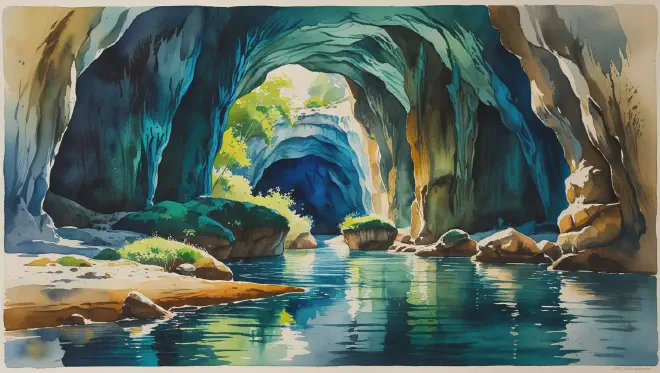
The Postojna Cave system is one of the largest in Europe, stretching over 24 kilometers in total length. Over two million years, the Pivka River has carved through limestone to create this underground cathedral. Famous for its “cave railway”—a small train that runs through the caverns—this place welcomes some 600,000 visitors each year.
But Postojna’s charm extends beyond the caves alone. The distinctive landscape shaped by karst topography, the medieval Predjama Castle, and above all, the warm and gentle Slovenian people. The two nights and three days spent in this small town were destined to become unforgettable memories.
Day 1: The Door to the Underworld Opens
I arrived in the town of Postojna around ten in the morning, after driving about an hour southwest from Ljubljana through verdant hills. The town was smaller than I had imagined—a cozy place with a population of only about 5,000. Yet in front of the tourist information center in the town’s heart, visitors from various countries had already gathered.
My accommodation, Hotel Jama, was a small family-run establishment in a perfect location, just a three-minute walk from the cave entrance. After checking in and leaving my luggage in the room, I headed straight for the Postojna Cave.
At one o’clock, I waited at the cave railway station. Before long, a small train appeared, moving slowly toward us. This railway, which opened in 1884, was the world’s first underground railway built for cave tourism. I settled into the wooden seats and entered the dim tunnel. The passage began as an artificially dug corridor but soon transformed into a natural cavern. Cool air brushed against my cheeks, and the guide explained that the temperature remains constant at around 10 degrees Celsius throughout the year.
When I stepped off the train and began exploring on foot, a sight that stole my words unfolded before me. Stalactites towering dozens of meters high stood like columns of an ancient temple. A pure white stalactite called “Brilliant,” clusters of thin formations nicknamed “Spaghetti Hall.” The illuminated cave was nothing less than a work of art created by nature itself.
What struck me most was the enormous space called the “Concert Hall.” Actual classical concerts are held here, I learned. The ceiling rises 40 meters high, and the acoustics are said to be superb. In the silence, the sound of water droplets echoed like a natural metronome, marking the passage of time.
I returned to the surface past four in the afternoon. The sudden brightness of sunlight made me squint for a while. It was a strange sensation, as if I had truly returned from another world.
For dinner, I walked about five minutes from the hotel to a homey restaurant called Gostilna Markov. I ordered two Slovenian specialties: Kranjska klobasa, the famous sausage from the Kranj region, and Žlikrofi z orehi, walnut-sauced dumplings. The sausage was rich with smoky fragrance, and meat juices burst forth with each bite. The dumplings were clearly handmade, with a pleasantly chewy texture that paired beautifully with the walnut flavoring.
While enjoying a glass of local white wine from the Vipava Valley, I found myself in conversation with an elderly couple seated at the next table. Our exchange was halting, mixing English and German, but they spoke enthusiastically about the history of this land. During World War II, the caves had been used by the German army as a fuel depot. After the war, partisans had destroyed them with explosives, and the restoration had taken many long years.
I returned to the hotel around eight in the evening and spent time in the lobby, reading about Slovenian history on the sofa. For centuries, this region was part of the Austro-Hungarian Empire. The influence of German language remains strong, visible in architectural styles and in the temperament of the people. Through the window, the quiet streets glowed softly under the streetlamps.
Day 2: A Day Among Castles and Forests
I awoke at seven to find mist hanging outside the window. Slovenian mornings are cool; even in June, I needed a light sweater. The hotel breakfast was simple but heartfelt—fresh bread with local honey, cheese, and ham. What impressed me most was the creamy, rich cheese called Tolminski sir, a traditional variety made in the mountainous region of northwestern Slovenia.
At nine, I set out for Predjama Castle. About a ten-minute drive from Postojna, this fortress is built into a 123-meter cliff face. Looking as though it had merged with the rock itself, the castle seemed straight out of a fairy tale.
I purchased my ticket at the entrance and climbed the steep stairs into the castle. The first thing to greet me was a life-sized figure of a knight in full armor. This castle preserves the legend of Erazem Lueger, a knight who truly lived in the 15th century. He had rebelled against the Habsburgs and used this impregnable fortress as his base of operations.
Moving through the rooms one by one, I let my imagination wander to medieval life. The armory, the dining hall, the bedchambers, even the torture chamber. Furniture and furnishings had been restored, making it easy to picture life five hundred years ago. What impressed me most was a room deep in the castle that connected to a natural cave. A cave system extends behind the fortress, which allowed the defenders to secure water and provisions even during a siege.
The view from the top floor was breathtaking. Below, the green plains of the Vipava Valley spread out, and in the distance, the Alps faded into haze. The wind caressed my cheeks, and only birdsong broke the silence. I stood there for a long while, lost in the scenery.
Around one in the afternoon, I finished exploring the castle and had lunch at Gostilna Požar nearby. I ordered gulaž, a Hungarian-style stew, and potica, a traditional nut roll. The goulash featured beef so tender it melted, fragrant with paprika. Potica is a classic Slovenian dessert—thin dough rolled with walnut or poppy seed paste. Its simple sweetness warmed my heart.
In the afternoon, I walked through the Rakov Škocjan Regional Park. About thirty minutes by bus from Postojna, this park offers textbook examples of karst topography. Dolines—sinkholes—dotting the limestone plateau, rivers flowing underground, and cattle grazing in meadows.
Walking along the park’s trails, I reached the entrance to Rakov Škocjan Cave. Unlike Postojna, this cave remains less developed and more wild. I joined a small guided tour with flashlights and ventured deep inside. Stalactites hanging from the ceiling, stalagmites rising from the floor, and a clear stream flowing through the depths. When the lights were turned off, complete darkness enveloped us.
Deep in the cave, I encountered the olm—an amphibian that dwells in these underground waters. This small, nearly transparent white creature is a precious endemic species found only in Europe. Having adapted to cave life over millennia, its eyes have atrophied, but its sense of touch and chemical perception have become remarkably developed. Watching this creature, sometimes called the “human fish,” I could not help but feel the mysteries of evolution.
Around six in the evening, I left the park and returned to the town of Postojna. For dinner, I chose a different restaurant from the night before: Restavracija Hotel Kras. Their specialty is Idrijski žlikrofi, dumplings in the style of Idrija. Idrija is a town famous for its mercury mines, and this dish was supposedly first created by the miners’ wives. Handmade dumplings covered with lamb ragù and walnut sauce—simple yet deeply satisfying.
After dinner, I strolled through the center of town. In Slovenia’s June, daylight lingers past nine in the evening. Townspeople were heading home from work, while others sat on café terraces drinking beer and chatting. Watching these ordinary scenes, I felt the gentle flow of time in this small town.
Day 3: Morning Farewells and Lingering Landscapes
The final morning dawned clear. Through the hotel window, the sky was a piercing blue, and the distant mountains stood out sharply. I decided to use the time before checkout to walk through town once more.
At eight, I left the hotel and headed toward the center. The shops were still closed, but walking in the crisp morning air felt wonderful. From the church bell tower came the sound of bells marking the hour. It was the Church of St. Hermagoras, a small and beautiful Baroque structure built in the eighteenth century.
In the small square in front of the church, local farmers had set up a morning market. Fresh vegetables, fruits, cheese, and bread lined the stalls. Words failed us, but a farmer’s wife with a warm smile sold me some raspberries and blueberries. Freshly picked, the berries were sweet and tart, filling my mouth with the fragrance of early summer.
I returned to the hotel at ten and checked out. The woman at the front desk asked in English how my stay had been. “Čudovito,” I answered in Slovenian—“wonderful.” She smiled with evident pleasure. It was one of the few Slovenian words I had learned during these three days.
Before departing, I took one last walk around the Postojna Cave entrance. Viewing the opening from a different angle than before, I felt anew how vast and mysterious this underground world truly is. The forest spreading above the caves was beautiful too, with beech and spruce trees swaying in the wind.
At the cave gift shop, I bought some souvenirs: a small figurine of an olm and locally produced honey. The honey was linden honey, a specialty of this region, pale in color with an elegant sweetness.
At eleven, I set off for Ljubljana. Watching the karst landscape pass by the car window, I reflected on the three days. The mystery of the underground world, the ancient castle perched on cliffs, the encounters with gentle people, and the simple, warming dishes. Though my stay was short, I had felt Slovenia’s charms fully.
What lingered most in my memory was the olm I had met in the cave. A small creature that has lived in darkness for tens of thousands of years, adapting to its environment and evolving in its own unique way. Its form seemed to symbolize the very history of this land.
As I approached Ljubljana, the scenery from the car window changed. The gentle hills gave way to the flatter outskirts of the city. Yet in my heart, the quiet streets of Postojna, the imposing figure of Predjama Castle, and the fantastical world spreading beneath the earth remained firmly etched.
What Felt Real in an Imaginary Journey
This journey was a story woven in my imagination. I never actually set foot on Postojna’s soil, never felt the cold air of the cave on my skin, never exchanged words with the local people. And yet, these two nights and three days exist vividly within my heart.
The diversity and beauty of Slovenia, the mystery of the Postojna Cave, the historical romance of Predjama Castle, and above all, the warmth of the people I encountered in that small town. All of these, though imagined, have been inscribed in my memory as real experiences.
Perhaps travel is not solely about physically visiting a place. It is about learning its history, understanding its culture, and imagining the lives of its people. And more than anything, it is about savoring, from the heart, the time spent there. With such a spirit, an imaginary journey can become a genuine experience.
The three days I spent in Postojna have become an unforgettable journey for me. If the opportunity ever arises, I would like to truly visit this land. When that time comes, I wonder how these imagined memories will overlap with reality. That, too, may be one of the joys of travel.