
A Jewel of the Adriatic
Rovinj, perched on the western edge of the Istrian Peninsula, is truly a town like a painting floating on the Adriatic Sea. Under the rule of the Roman Empire since the 2nd century BC, it has been influenced by various civilizations including the Byzantine Empire and the Venetian Republic—a history deeply carved into the cobblestone streets and the bearing of its buildings.
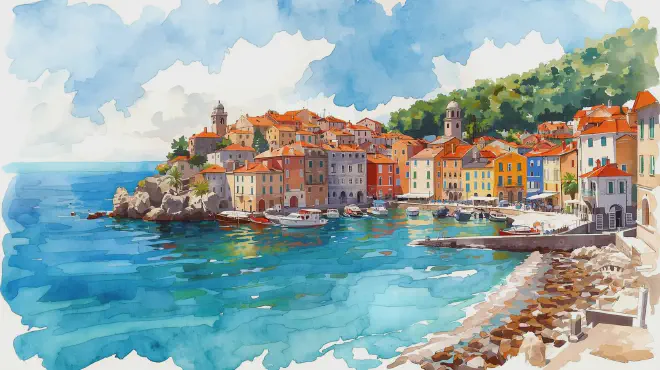
The old town, with its continuous orange roof tiles, spreads across the entire small peninsula, and at its summit, the spire of St. Euphemia’s Church stretches toward the sky. The unique atmosphere where Italian and Croatian cultures blend exquisitely is a charm found only in this land. Though a small town of merely 14,000 inhabitants, the reason it has been beloved by artists becomes immediately clear once you set foot here.
The highly transparent waters of the Adriatic, the warm and gentle winds brought by the Mediterranean climate. And above all, the distinctive stillness of this place where time seems to flow slowly. A 2-night, 3-day journey in such a Rovinj begins now.
Day 1: Footsteps Echoing on Cobblestones and a Harbor Town Dyed in Sunset
I departed Pula on the 8:30 AM bus and arrived at Rovinj’s bus terminal after about 40 minutes. My first impression of Rovinj, seen through the bus window, was exactly like a postcard. Orange roofs layered in tiers, and beyond them, the Adriatic Sea gleaming quietly.
My accommodation, Pensione Villa Lili, was a small family-run guesthouse on a hill about 5 minutes’ walk from the old town. The owner, Maria, greeted me in fluent English, and while checking in, she advised: “Today is wonderful weather. If you want to see the sunset, you must go to the western coast of the old town.”
In the morning, I began with a stroll through the old town. Passing through the Balbi Arch, I was struck by a sensation of time-traveling to the medieval era. Built in the 17th century, this arch bears the coat of arms from the Venetian Republic period, telling the story of this town’s complex history.
The cobblestone streets are narrow, and the walls of the old buildings standing on both sides are made of stone that has become smooth over long years. Walking along Grisia Street, I peered into small ateliers and galleries. The landscape paintings by local artists depicted the very same cobblestones and buildings I was walking among, and I felt a strong sense of temporal continuity.
For lunch, I ate at Konoba Veli Jože in the heart of the old town. Maneštra, a regional dish of the Istrian Peninsula—a soup of vegetables and pasta—was simple yet deeply flavorful. The tomato-based soup contained seasonal vegetables and pasta, with the aroma of olive oil tickling my nostrils. Paired with Malvasia, a local white wine, it was a combination that made me appreciate the richness of this land.
In the afternoon, I headed to the Church of St. Euphemia. Built at the highest point of the old town, this beautiful Baroque building was constructed in the early 18th century. From its 60-meter-high bell tower, I could overlook the entire town of Rovinj and the magnificent view of the Adriatic Sea. The stairs to the bell tower were stone-built, each step conveying the weight of history.
The view from the top was breathtakingly beautiful. Orange roof tiles descended in tiers toward the sea, and beyond them, the blue Adriatic continued to the horizon. In the distance, thirteen small islands dotted the seascape, each floating on the water’s surface in different shapes. Wind brushed my cheeks, and from below, I could faintly hear tourists’ voices and sounds of daily life.
The church interior was also impressive. At the altar lay St. Euphemia’s stone sarcophagus, where I could sense the depth of local devotion. Light streaming through the stained glass created a mystical atmosphere in the silent space.
As evening approached, I headed to the western coast that Maria had recommended. The coastline of Zlatni rt (Golden Cape) Nature Park was covered with pine trees and Mediterranean plants, with well-maintained walking paths. The sunset from here was truly an unforgettable sight.
Around 6 PM, the sky gradually began turning orange, and by 7:30 PM, the sun was approaching the horizon. The gentle waves of the Adriatic reflected the sunset, and the sea surface sparkled brilliantly. The other tourists around me were all gazing quietly at the sunset, as if rendered speechless by its beauty.
For about 15 minutes as the sun slowly sank into the sea, the world was wrapped in gold. The sky changed from orange to deep red, and finally showed a purple gradation as the curtain of night quietly descended.
For dinner, I savored seafood at La Puntulina near the harbor. Buzara, a specialty dish of the Istrian Peninsula featuring mussels steamed in white wine with garlic and parsley, was simple yet allowed the full flavor of the mussels to shine through. Fresh grilled fish was served with local olive oil and lemon, allowing me to appreciate the quality of the ingredients.
From the restaurant’s terrace, I could overlook Rovinj’s harbor at night. Fishing boats and small yachts rocked gently, and streetlights reflected on the water’s surface. The occasional sound of waves and distant music created a quiet evening atmosphere.
The last moment of this day was spent on the cobblestone path on my way back to the pension. The old building walls illuminated by streetlights showed a different expression from daytime. In the silence, only my footsteps echoed on the cobblestones. This sound, too, must be evidence that many people have walked the same way for hundreds of years.
Day 2: Melodies of Sea and Forest, and Encounters with Local People
I woke around 6:30 AM. From the pension window, I could see the old town of Rovinj floating in the morning mist. The early morning air was refreshing, bird songs breaking the silence. The breakfast Maria prepared consisted of local bread and cheese, Istrian prosciutto, and rich Croatian coffee.
The prosciutto had just the right saltiness, with the umami of thinly sliced meat spreading in my mouth. The local cheese, made from sheep’s milk, was creamy yet had a robust flavor. Maria explained proudly: “This prosciutto is made at a farm in the neighboring village, using methods passed down through generations.”
After breakfast, I first reserved a boat tour at the harbor. Many small boats were moored at the harbor, and the skipper, Petar, explained the tour in fluent German and English. “The waves are calm today, so we can go to the distant islands,” he said with a smile.
At 9 AM, we departed on a small boat with a capacity of 12 people. Once we left the harbor, a completely different view of Rovinj from what I’d seen on land unfolded. The old town viewed from the sea looked like a castle floating on water. The bell tower of St. Euphemia’s Church soared high into the sky, surrounded by densely packed orange roofs—a sight of truly picturesque beauty.
The boat took about 30 minutes to circle St. Catherine’s Island (Sv. Katarina) and Red Island (Crveni otok). St. Catherine’s Island was a small uninhabited island covered entirely by forest. The water around the island had extremely high transparency, and rocks and schools of fish on the seabed were clearly visible. Red Island was, as its name suggests, characterized by reddish soil and rocks.
When the boat engine was stopped near the islands, complete silence arrived. Only the sound of waves, wind, and occasionally the cries of seabirds enveloped the surroundings. Petar spoke quietly: “This silence is the true charm of Rovinj.”
Returning to the harbor around 11 AM, I headed for a hike in Golden Cape (Zlatni rt) Nature Park in the afternoon. At the park entrance, a local guide named Ana was waiting. “This forest is home to many plants characteristic of the Mediterranean climate. Walk slowly and listen to the voices of nature,” she spoke gently.
The walking paths in the forest were well-maintained and easy to walk. Pine trees, oak trees, and wild olive trees grew thickly. Ana explained various plants along the way. “This lavender is wild and blooms purple flowers in summer. And this rosemary is an herb often used in local cuisine.”
During the approximately one-hour hiking course, I listened intently to the various sounds in the forest. The sound of wind rustling leaves, bird songs, the sound of the sea from afar. The rich world of natural sounds, so easily forgotten in city life, existed there.
From the observation point along the way, the old town of Rovinj and the surrounding islands could be seen at a glance. The islands we’d circled by boat in the morning were clearly visible from here. Ana explained: “Many painters and photographers visit Rovinj to see this view.”
For lunch, I ate at Kantina Café Bar in the forest. The terrace seating was surrounded by forest, allowing me to enjoy my meal while feeling the cool breeze in the shade. The fish carpaccio, caught by local fishermen that morning, had simple seasoning with olive oil and lemon, highlighting the freshness of the fish. The Istrian truffle pasta, featuring the region’s specialty truffles, had a rich aroma that conveyed the bounty of the earth.
In the late afternoon, I devoted time to free exploration of the old town. The same roads I’d walked yesterday showed completely different expressions depending on the time of day and quality of light. The strong sunlight around 3 PM created deep shadows on the cobblestones and building walls, producing beautifully contrasted scenes.
At a small café, Caffe Bar Valentino, I had an opportunity to interact with local people. An elderly man sitting next to me, Marko, was a retired fisherman who spoke fluent English and told me stories of old Rovinj. “When I was a child, this town was smaller, and everyone knew each other. But tourism developed, and people came from all over the world. That’s a happy thing, but at the same time, a little lonely,” he spoke quietly.
Marko also told me about hidden places known only to locals. “Around 5 PM, walk along the north coast of the old town. Tourists rarely go there, but there’s a place with a beautiful sunset.”
In the evening, I walked the northern coast following his recommendation. Indeed, there were almost no tourists, only local families and people walking their dogs quietly spending time. In a small cove, I could see local children swimming.
The promenade along the coast was paved with stone, with benches placed here and there. I sat on one of them and gazed quietly at the sea. The waves were gentle, and the islands visible in the distance shone golden in the sunset light. In the sensation of time flowing slowly, I could forget the rush of daily life.
For dinner, I ate at Konoba Pirati, bustling with local people. This wasn’t a tourist restaurant but more like a dining hall that locals used regularly. The waiter, Ivan, told me: “Today’s recommendations are the octopus salad caught this morning and Istrian beef grill.”
The octopus salad was a simple dish of softly boiled octopus with tomatoes, onions, and parsley, but the sweetness of the octopus and the aroma of olive oil matched exquisitely. The Istrian beef, raised in this region, had tender meat quality, and I could firmly taste the ingredients.
The locally produced grappa served at the end of the meal had a smooth mouthfeel despite its high alcohol content, a taste befitting the conclusion of the meal. “This grappa was made by my uncle,” Ivan said proudly.
That night, I spent time reading on the pension terrace. In the quiet night, I could hear only the distant sound of waves and the occasional passing car. The starry sky was also beautiful, with many stars shining that couldn’t be seen in urban areas.
Day 3: A Morning of Farewell and Memories That Remain in the Heart
On the final morning, I woke with slightly melancholic feelings. Outside the window, the beautiful scenery of Rovinj spread unchangingly, but the reality that I must leave this town today weighed heavily.
At breakfast time, Maria said, “Since it’s your last day, I’ve prepared something special,” and served local honey and palačinke, a traditional Croatian pancake-like dish. The honey had a rich flower aroma, and natural sweetness spread in my mouth. Palačinke had a thin crepe-like dough with cheese cream inside, warm and gently flavored.
“This honey is collected from wildflowers of the Istrian Peninsula, and the taste changes with the seasons. The current season’s honey has a particularly strong lavender aroma,” Maria explained. While eating breakfast and reflecting on the memories of these two days, it felt as if time had passed in an instant.
Since I had some time before checkout, I decided to walk through the old town one more time. The old town in the morning had a different quietness from daytime or evening. Morning dew remained on the cobblestone streets, and morning sunlight hit the old building walls at an angle.
At a small gallery on Grisia Street, I purchased a landscape painting of Rovinj by a local artist. The creator, Marian, told me: “This painting contains the memories of my 30 years spent in Rovinj.” The painting depicted the same cobblestone path I’d walked yesterday and the Adriatic Sea spreading beyond it, and just looking at it brought back memories of this journey.
Around 10 AM, I decided to have my last coffee at the harbor. From the terrace seats of Caffe Bar Harbour, I could see fishing boats returning from their morning catch. The sight of fishermen unloading fish from boats was part of this town’s daily life, glimpsing the original face of Rovinj different from its tourist side.
While drinking coffee, I exchanged words with an elderly local couple at the next table. The wife, Anna, kindly asked: “Did you like Rovinj?” When I answered, “Yes, it’s a very beautiful town. I definitely want to come back,” she smiled and said, “That makes me happy. This town always leaves something in the hearts of those who visit.”
Those words remained deeply impressed in my heart. Indeed, Rovinj was a place with something more than just a tourist destination. The weight of history, the beauty of nature, and above all, the warmth of people—these would be deeply carved into visitors’ hearts.
At 11:30 AM, I returned to the pension and completed the checkout procedures. Maria saw me off saying, “Please come back again. Next time, stay longer and visit other places in the Istrian Peninsula too.” Though it was a short stay, her kindness in welcoming me as if I were family became one of the most precious memories of this journey.
Since I had some time before the bus departure, I decided to climb St. Euphemia’s bell tower one last time. It was the same view I’d first seen two days ago, but now it appeared to hold meaning beyond just beautiful scenery. The roads I’d walked, the people I’d met, the food I’d tasted—everything connected as one story.
Rovinj, viewed from the bell tower, was quiet and beautiful as if time had stopped. Orange roof tiles, cobblestone streets, the blue Adriatic Sea. I wanted to engrave this scenery deep in my heart so I could recall it anytime.
The time came to leave Rovinj on the noon bus. On the way to the bus terminal, I reflected on the experiences of these two days. What was most valuable was not just sightseeing, but being able to touch, even slightly, this land’s culture and people’s lives.
The last view of Rovinj from the bus window was as beautiful as when I arrived. But now, I could feel a deeper meaning in that beauty. It wasn’t merely superficial beauty, but genuine beauty woven from long history and culture, and people’s lives.
As the bus left town and traveled through the hills of the Istrian Peninsula, I realized the magnitude of what I’d gained from this journey. The joy of visiting new places, the pleasure of touching different cultures, and above all, the warmth of people I met during travel. All of these would become precious assets for my future life.
What Felt Real Though Imaginary
This 2-night, 3-day journey to Rovinj began as an imaginary experience. Yet, while weaving these words, I was enveloped in a sensation as if I had truly walked that place, breathed that air, and conversed with the people of that land.
Though an imaginary journey, the sound of footsteps on Rovinj’s cobblestones, the sea breeze of the Adriatic, the smiles of local people, and above all, the special flow of time felt during travel—all of these, while existing in imagination, have a definite presence in my heart.
Travel is originally not merely movement between places, but also movement of the heart. The surprise of encountering new scenery, the joy of touching unknown cultures, and the new perspectives gained by stepping away from daily life. Perhaps the essential value of travel remains unchanged whether in actual experience or in imagination.
I would like to close this imaginary travel diary with longing for and respect toward the beautiful town of Rovinj. If I ever actually visit this land, surely these imagined memories will overlap and provide even deeper emotion.