
Memories of an Island on a Lake
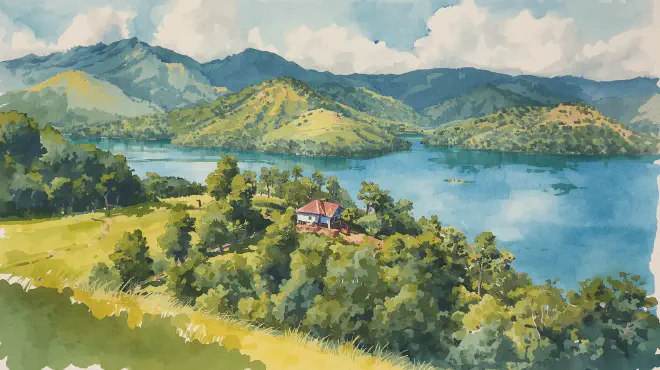
Samosir Island. The mere utterance of that name stirs a quiet nostalgia deep within my chest. This island, floating in the center of Lake Toba in the highlands of North Sumatra at an elevation of 900 meters, was truly a paradise upon the water.
Lake Toba is a caldera lake formed by a massive volcanic eruption approximately 74,000 years ago, spanning 100 kilometers in length and 30 kilometers in width. Samosir Island, standing at the center of this immense volcanic lake—one of the world’s largest—felt like a sacred place harboring the memory of the earth itself. The Batak people have lived on this island since ancient times, preserving their unique culture and traditions. Their traditional dwellings, called “Rumah Bolon,” are characterized by distinctive roofs that curve upward like an upturned boat.
Before the arrival of Christianity, the Batak people practiced animism and cherished ancestor worship. This spirit still breathes throughout the island, with stone ruins and ancient burial grounds emanating a sacred atmosphere. The region is also known for having its own script called “Batak script,” and magical texts called “Pustaha” carved into bamboo are still carefully preserved today.
I visited this island driven by an impulse to touch these ancient memories of the soul. I wanted to escape the clamor of modernity and feel the slow passage of time while enveloped in the lake’s tranquility and the green of the mountains.
Day 1: Gateway to a Sacred Realm Floating on Water
After a three-hour drive from Medan along winding mountain roads, I arrived at the port of Parapat and saw the full expanse of Lake Toba for the first time. The lake surface, catching the morning light, gleamed like an enormous mirror. The ridgeline of Samosir Island in the distance appeared hazy, presenting a dreamlike presence, truly like a floating island.
As I boarded the ferry, the journey across the water began with the low rumble of the engine. During the 30-minute voyage, I remained standing on the deck. The deep blue of the lake and the pale blue of the sky blurred their boundary, creating an illusion of sailing above the clouds. The breeze was cool, making me acutely aware of the high altitude. As the island’s outline gradually came into focus and I could see the verdant hills and small settlements, something deep in my chest trembled quietly.
When we docked at Tuk Tuk port, the first thing that caught my eye was the array of colorful motorcycle taxis. The drivers called out with friendly smiles, “Horas!” This is a greeting in the Batak language meaning “How are you?” When I responded “Horas!” their smiles grew even broader.
I had chosen to stay at a small guesthouse built along the lakeshore. The building was modeled after traditional Batak architecture, with an impressively high, upward-curving roof. The room was simple but clean, and from the balcony, I could view the entire lake. After settling in and catching my breath, it was already lunchtime.
For lunch, I ordered “Ikan Mas Bakar” at the guesthouse restaurant, a representative Batak dish. This is carp caught in Lake Toba, seasoned with spices and grilled over charcoal—the flesh was tender and aromatic. It was served with “Nasi Puti,” a red rice cooked with spices, and “Sayur Ulam,” a vegetable soup. Everything had a gentle flavor that soothed the fatigue of the long journey.
In the afternoon, I visited Ambarita village in the center of the island. Here remain stone judgment seats and execution platforms built over 400 years ago. These ruins tell the story of the ancient Batak judicial system—serious criminals were judged here, and if found guilty, they were executed on the stone platform. From the old man serving as a guide, who explained matter-of-factly, I could sense not just a tourist attraction but the heavy history carved into this land.
Walking through the village, I could see traditional “Rumah Bolon” houses scattered about. The distinctive roof, shaped like an upturned boat hull, is said to represent the Batak people’s memory of sea voyages. The walls are carved with geometric patterns, each said to hold meaning. In front of one house, an elderly woman was weaving at a loom. Noticing me, she paused her work, smiled, and showed me the textile. It was a traditional cloth called “Ulos,” sacred fabric worn at weddings and ceremonies. The complex geometric patterns, she explained, express cosmology and reverence for ancestors.
As evening approached, I went to the lakeshore to watch the sunset. Sunsets viewed from Samosir Island are exceptional—the sun reflecting on the lake surface creates a double beauty. The sky’s color, changing from orange to deep crimson, reflected on the quiet lake surface, as if the entire world were wrapped in flames. Sitting on a bench by the shore, simply gazing at this scene, my sense of time became ambiguous.
For dinner, I had “Gulai Curry” at the guesthouse restaurant, a spicy curry. It was a mild coconut milk-based curry containing freshwater fish caught in the lake. The deeply spiced flavor warmed my body in the cool night air. After the meal, when I stepped out onto the balcony, a sky full of stars spread above. Stars of a density impossible to see in urban areas were also reflected on the lake surface, creating the sensation of floating in a sea of stars.
Day 2: Ancestral Souls and Nature’s Bounty
I woke to the sound of birds in the morning. Morning mist rising from the lake surface enveloped the entire island in a dreamlike atmosphere. The view from the balcony was faintly beautiful, like an ink wash painting. Breakfast was served in the guesthouse garden—“Nasi Gudeg,” a jackfruit curry with rice. The combination of sweet jackfruit and spices was refreshing, making me appreciate Indonesia’s rich food culture.
In the morning, I visited Simanindo village in the northern part of the island. Here stands a royal tomb with over 200 years of history, carefully preserved as a Batak royal mausoleum. Though the stone structure shows weathering, its dignity remains intact. Large frangipani trees are planted around the tomb, their white flowers blooming quietly. According to a local, these flowers are planted to comfort the souls of the dead.
Near the tomb stood an ancient stone monument with Batak script carved into it. The characters, composed of vine-like curves, seemed as if nature itself were spinning words. A village elder appeared and explained the monument’s contents. It recorded the king’s achievements and teachings for future generations. Batak script is characterized by vertical reading—moving my gaze from top to bottom, I listened to the ancient king’s words.
Leaving the village, I headed toward a high point in the island’s central area. From here, I could see the entire panorama of Lake Toba. The lake surface, receiving the morning light, painted a gradation of emerald green and sapphire blue. Beyond the lake, the mainland mountains stretched in a line, their ridges melting into clouds. The breeze was refreshing, carrying a mixture of forest fragrance and lake scent.
For lunch, I tried “Arsik,” a traditional Batak dish, at a small restaurant on the high ground. This is pork simmered in spices and coconut milk, a flavor that has been passed down even after the Batak people converted to Christianity. Rich yet gentle in flavor, it was exceptional eaten in the cool highland air. The accompanying “Sambal Andaliman,” a local spice sauce, was characterized by a numbing heat that added a distinctive accent to the dish.
In the afternoon, I visited a traditional craft workshop. The Batak people have long been known for wood carving and weaving, and in this workshop, artisans continue to create works using age-old techniques. When I arrived, the elderly wood carver paused his work and carefully explained his pieces. He was carving a “Gorga,” a protective talisman figure used as a household guardian spirit. Each line held meaning, faithfully reproducing designs passed down from ancestors.
In the adjacent room, women were weaving “Ulos.” The same textile I had seen yesterday—finishing one piece takes several months, they said. The hands of the women seated at the looms moved without hesitation, conveying the weight of techniques passed down through generations. While working, they occasionally chatted in Batak, their voices creating a warm atmosphere in the workshop.
Leaving the workshop, I walked along the island’s eastern shore. Here, with fewer tourists, I could glimpse the daily life of local people. Fishermen mending nets on the shore, children playing in the water—peaceful island time flowed by. I had the chance to speak with one fisherman. He told me about Lake Toba’s fish in fluent English. The lake is home to over 20 species of freshwater fish, with “Ikan Mas” and “Ikan Mujair” being the primary catches.
As evening came, I again waited for the sunset by the lakeshore. The sunset from a different location was equally spectacular—the island’s outline emerged as a black silhouette against the setting sun. The sun’s path reflected on the lake surface like a golden bridge connecting the island to the opposite shore. At this hour, church bells began to ring from somewhere. Most Batak people are Christians, and the bells announcing evening prayer time added a sacred resonance to the lake’s tranquility.
For dinner, I ordered “Ikan Bakar Sambal Andaliman” at a lakeside restaurant. Lake Toba fish grilled with local spices—the fish’s sweetness and the spices’ heat maintained an exquisite balance. While eating, I had the opportunity to converse with a local family at the next table. Learning that I was enjoying Samosir Island, they showed delighted expressions and recommended I visit the village market the next morning.
Day 3: A Morning of Farewell and Eternal Memory
My final morning began at the village market, recommended by the locals. The early morning market was full of vitality, allowing me to feel the life of the island’s people up close. Women selling vegetables beautifully arranged colorful produce, while men selling fish displayed freshly caught fish from the previous night on ice.
What particularly impressed me at the market was the spice seller’s stall. Local spices, including Andaliman, were piled high, each emanating its distinctive aroma. The shopkeeper showed me various spices to smell and taught me about their uses and benefits. Andaliman, also called “Batak pepper,” is known for its distinctive numbing heat. She gave me a small portion of this spice, saying with a smile, “Remember the taste of Samosir Island when you get home.”
I had breakfast at a small eatery next to the market. “Mie Gomak,” a noodle dish with rice noodles, vegetables, and meat—a simple dish. The warm noodles eaten in the morning air gently warmed my body. When the restaurant owner realized I was a foreigner, he taught me how to say “thank you” in Batak. As I repeatedly practiced “Mauliate Godang,” the other customers smiled and clapped along.
The last place I visited in the morning was a small church at the island’s southern tip. A simple building with white walls and a red roof—inside, beautiful stained glass shone beneath the cross. The church interior was wrapped in silence, a sacred space cut off from the outside world. Sitting quietly before the altar, I reflected on the experiences of these three days.
Leaving the church, it was time to return to the guesthouse and pack. Taking one last look at Lake Toba from the balcony, the lake surface rippled gently in the morning light. I stared for a while, trying to burn this scene into my memory. The mountain ridgeline visible beyond the lake, small fishing boats floating in the foreground, and cloud shadows reflected on the water surface. Everything maintained perfect harmony, beautiful as if time had stopped.
For lunch, I savored my final Batak meal at the guesthouse restaurant. “Naniura,” a raw fish salad—fresh fish mixed with lime and spices. It had a refreshing taste with a lightness appropriate for the journey’s end. While eating, I talked with the guesthouse owner about my three days of memories. He was pleased that I had shown deep interest in Samosir Island’s culture and offered heartfelt words: “Please come back again.”
In the afternoon, as ferry departure time approached, I headed to the port. The motorcycle taxi driver was the same person from my arrival, and he remembered me. “How was Samosir Island?” he asked in English, and when I answered “It was very beautiful,” he showed a proud expression. On the way to the port, he told me about life on the island. Tourism is important, but agriculture and fishing are the island’s main industries, and people live in harmony with nature.
Arriving at the port, the ferry’s whistle echoed. It was time to board. Standing on the deck, gazing at Samosir Island gradually receding, an indescribable emotion welled up deep in my chest. It wasn’t simply the sadness of parting, but a complex feeling mixing the fulfillment of having touched something precious and a strong desire to return someday.
I remained standing on the deck until the island’s outline became hazy and disappeared from view. The deep blue of Lake Toba remained beautiful as ever, and the sky’s color reflected on its surface changed with time. The breeze was cool, and the lake’s characteristic clear air brushed my cheeks.
What Felt Real Though Imaginary
After arriving at Parapat port and heading back to Medan by road, I thought deeply about the three days of experiences during the drive. The warmth of the people I met on Samosir Island, the weight of ancient culture, and nature’s magnificence. I could feel all of it carved deep in my heart.
The Batak people cherish a life philosophy called “Hamoraon, Hagabeon, Hasangapon.” This means “prosperity, wisdom, and health,” the three most important elements in life. During my time on Samosir Island, I felt I understood a little of this philosophy’s deep meaning.
Prosperity is not merely material wealth but the richness of living in harmony with community. Wisdom is the importance of understanding culture and traditions inherited from ancestors and passing them to the next generation. And health is the harmony of body and mind obtained by living with nature. The island’s people naturally practiced these in their daily lives.
The quiet sunset reflected on Lake Toba’s surface, the stimulating aroma of Andaliman, the mysterious forms of Batak script, the distinctive curves of Rumah Bolon roofs. All of these remain vividly in my memory. And it was something deeper than mere tourist experience.
We overlook many things in our daily lives. But in a place like Samosir Island, time flows slowly, and we can find deep meaning in each experience. The morning birds’ songs, people’s smiles at the market, the church’s silence, the sound of wind crossing the lake surface. They all reminded me of the essential joy of living.
This journey was an experience in imagination. However, that imagination was not mere fantasy but something based on the culture, nature, and people’s lives of a place that truly exists. That’s why it remains in my heart with a certain tangibility. There’s a real sense as if I actually walked that land, breathed that air, tasted that food, and exchanged words with those people.
Memories of travel are mysterious things—what was actually experienced and what was filled in by imagination mix together and eventually become a single story. The three days on Samosir Island now live as certain memories in my heart. They are imaginary yet truly were there. And when the day comes that I actually visit that island, I will surely feel, “Ah, this is a place I know.”
A small island floating on Lake Toba, Samosir Island. It was a place where time flows slowly and people live in harmony with nature. An island where the ancient culture of the Batak people breathes and the lake’s tranquility heals the heart. It was a place like a spiritual homeland, reminding us who live in modern times of something precious we’ve nearly forgotten.