
Introduction
Shangri-La. Just speaking this name aloud brings something back from the depths of the heart. Located in the northwestern part of Yunnan Province, on a plateau exceeding 3,000 meters above sea level, this place was once called Zhongdian. In 2001, it was officially renamed Shangri-La City, taking the name of the paradise that appears in James Hilton’s novel “Lost Horizon.”
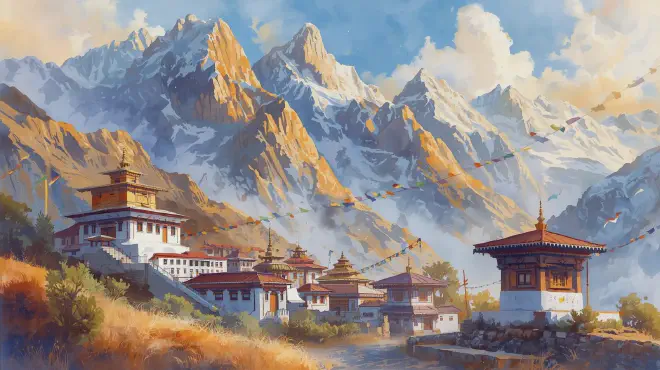
This is also a place where Tibetan culture and Han Chinese culture intersect. The ancient Tea Horse Road, a historic trade route, passes through here, and it holds a history of many ethnic groups crossing paths. Tibetan Buddhist temples maintain their silence, and traditional Naxi architecture stands against the wind. Above all, the peaks of the Meili Snow Mountain surrounding this land tower as if connecting heaven and earth.
Due to the high altitude, the air is thin and clear. The temperature difference between morning and evening is dramatic, and even during the day, stepping into the shade brings a chill. However, this very harshness creates the unique beauty of this land. Blue sky, white clouds, and mountain ranges stretching as far as the eye can see. Here exists a world where time flows differently, far from the clamor of cities.
Day 1: Arrival at the Shangri-La Above the Clouds
The flight from Kunming threaded its way through the mountains. The scenery outside the window gradually became more rugged, transforming from green plains to mountain ranges with exposed rock faces. The moment I stepped off at Shangri-La Airport, I felt the thinness of the air. Even taking a deep breath, my lungs didn’t fill with air as they usually would. I understood with my body that this was the world at 3,200 meters above sea level.
In the morning, during the taxi ride from the airport to the city center, the driver, Luosang, spoke to me in broken Chinese. He was Tibetan, born and raised on this land. “This is a truly beautiful place. But there’s a real beauty that tourists don’t see,” he said with a meaningful smile.
Upon arriving at Dukezong Ancient Town, stone-paved streets and traditional Tibetan architecture welcomed me. In the afternoon, I walked slowly through the ancient town. White walls with red window frames, and colorful prayer flags decorating the roofs. Each time the wind blew, the sound of the flags fluttering broke the silence. I saw a scattering of tourists, but perhaps it wasn’t yet peak season—it was quieter than I had expected.
In front of the large prayer wheel at the center of the ancient town, I saw local people offering prayers. From the elderly to children, all were turning the wheel with earnest expressions. Watching this scene, I felt I had glimpsed not Shangri-La as a tourist destination, but Shangri-La as a place where people live their lives.
In the evening, I checked into my guesthouse. The owner, Yangjin, a Tibetan woman, welcomed me with fluent Chinese. “You must be tired today. Rest first, and from tomorrow I’ll show you the true charm of Shangri-La,” she said with a warm smile.
For dinner, I enjoyed the meal Yangjin had prepared. A stew made with yak meat, momos made from qingke (highland barley), and suyou cha, a butter tea. Everything was a taste I was experiencing for the first time, but each dish was profound, and I felt the depth of the food culture nurtured in the harsh plateau environment. The suyou cha in particular—though I initially felt some resistance, as I continued drinking, my body warmed up, and I understood Yangjin’s explanation that it also helps prevent altitude sickness.
At night, stepping out into the guesthouse courtyard, I was met with a sky full of stars. Countless stars you could never see in urban areas. The Milky Way was clearly visible. The wind was cold, but I lost track of time, entranced by that beauty. Wrapped in anticipation for the journey ahead and the special atmosphere this land holds, the first night quietly drew to a close.
Day 2: Tales of Sacred Mountains and Lakes
Early morning, Yangjin woke me. “I want to show you a special sunrise today,” she said, guiding me out while it was still dim. After about thirty minutes by car, we arrived at the entrance to Pudacuo National Park. This place is said to be a treasure trove of Shangri-La’s nature.
In the morning, we first visited Shudu Lake. The lake surface was mirror-still, perfectly reflecting the surrounding mountains. This lake at 3,700 meters altitude is considered sacred by Tibetans. Standing on the lakeshore, I understood why this is regarded as a holy place. I was left speechless by its overwhelming beauty.
Yangjin told me a legend about the lake. Long ago, a dragon lived in this lake, bringing rain during droughts and draining water during floods. Even now, local people offer prayers of gratitude to this lake. Indeed, colorful prayer flags flutter in the wind along the lakeshore.
For lunch, I had dishes made with highland vegetables at a restaurant inside the park. Stir-fried fresh cabbage, wild mushroom soup, and dressed mountain vegetables harvested on the plateau. Everything was simple, but the natural sweetness and umami of the vegetables were concentrated. “Highland vegetables grow in harsh conditions, so they’re highly nutritious,” the restaurant owner told me.
In the afternoon, we headed to Bita Lake. This is a high-altitude lake near 4,000 meters elevation, exuding an even more mysterious atmosphere than Shudu Lake. The name “Bita” apparently means “chestnut lake” in Tibetan. Indeed, many chestnut trees grow along the lakeshore.
Walking around the lake, I encountered a herd of wild yaks. Perhaps accustomed to humans, they showed no particular wariness and slowly grazed. Their presence accentuated the primitive beauty of this land. According to Yangjin, yaks are precious animals that can survive even above 4,000 meters altitude and are indispensable to Tibetan life.
In the evening, returning to Shangri-La city, I visited Songzanlin Monastery. This is Yunnan Province’s largest Tibetan Buddhist monastery, also called the “Little Potala Palace.” The monastery’s golden roofs, illuminated by the setting sun, shone like something from the celestial realm.
Inside the monastery, monks were performing their evening chanting. The sound of drums, bells, and the monks’ deep bass chanting voices resonated throughout the monastery. Enveloped in that sound, I felt as if something deep within my heart was being cleansed. Even as a tourist, I felt a strange inclusiveness, as if I was permitted to be there.
For dinner, I ate at a restaurant in the ancient town. Yak meat steak, momos—Tibetan-style dumplings—and stir-fried dishes using local vegetables. Everything had a robust flavor, and I felt the resilience of people living in the harsh plateau environment. The momos especially had a chewy skin, and the meat juices spread through my mouth. It was a fresh taste unlike anything I’d eaten before.
At night, I again looked up at the starry sky from the guesthouse courtyard. Perhaps due to even clearer air than the previous night, the stars appeared even more vivid. Yangjin sat beside me and said, “Shangri-La’s night sky is a treasure passed down from our ancestors.” In her words, I felt the deep respect these people have for nature.
Day 3: A Morning of Farewell and Lingering Memories
On the final morning, I woke earlier than usual. I had a strong reluctance to accept the reality that I had to leave. Yangjin prepared breakfast. Honey harvested on the plateau, homemade yogurt, and bread made from qingke. Simple, but a heartfelt breakfast.
“Today, I want to show you a special place,” Yangjin suggested. In the morning, she guided me to a small village not marked on any tourist map. This was also Yangjin’s hometown, she said.
The village was wrapped in a stillness as if time had stopped. Traditional Tibetan architecture houses were scattered about, with thin smoke rising from chimneys. The villagers welcomed us visitors warmly. Though we couldn’t communicate in words, smiles said everything.
I was allowed to visit the home of the village elder. The old man, said to be over ninety years old, held deep wisdom in his wrinkled face. Through Yangjin’s interpretation, he spoke of the village’s history, the transformation of Shangri-La, and the importance of living in harmony with nature. The words “The mountains are our mother, the lake is our soul. Protecting this land is our mission” were deeply etched in my heart.
I shared lunch with the villagers. All handmade dishes, each simple but filled with love. Particularly memorable was the qingke wine the village women made. Though high in alcohol content, it had a mellow, deep flavor. “This is a secret recipe passed down from grandmother to mother, from mother to daughter,” a village woman explained proudly.
In the afternoon, on the way to the airport after leaving the village, we stopped at a viewing platform for Meili Snow Mountain. The main peak, Kawagebo, viewed from here was truly divine in its beauty. The 6,740-meter peak stretched toward the blue sky. For Tibetans, this mountain is considered one of the most sacred.
At the viewing platform, I saw many pilgrims offering prayers. They had come from far away, taking many days to worship this mountain. Watching them, I felt the depth of faith and the spiritual power this land holds. I, too, put my hands together toward this beautiful mountain, with gratitude for this brief journey.
By the time we arrived at the airport, the atmosphere of evening was already drifting in. The time to part with Yangjin had come. “Please come back again. Shangri-La will always be waiting for you,” she said with tears welling up. I, too, was filled with inexpressible gratitude.
Looking down from the airplane window, the mountains of Shangri-La glowed golden, illuminated by the setting sun. Though it was only a three-day stay, what I received from this land is immeasurable. The beauty of nature, the warmth of people, and the depth of ancient inherited culture. Everything is etched deep in my heart.
What Felt Real, Though Imaginary
Even now, some time after returning from Shangri-La, the memories of that land remain vivid. The stillness of Shudu Lake illuminated by morning sun, the resonance of chanting at Songzanlin Monastery, Yangjin’s warm smile, and the village elder’s profound gaze. All of it comes back to me as if it were yesterday.
The clear plateau air, the robust taste of yak meat, the distinctive aroma of butter tea, and the sky full of stars. These memories felt with all five senses don’t fade with time. Especially the warmth I felt through interactions with local people taught me the beauty of human bonds that transcend words.
Shangri-La was indeed a place worthy of being called a “paradise.” However, it wasn’t some otherworldly utopia, but a land with true richness, where people live in harmony with nature within a harsh natural environment. It was a place that reminded me of what’s truly important, which we tend to forget in modern society.
This journey became not merely sightseeing for me, but a life experience. The people I met in Shangri-La, the culture I touched, and the beauty of nature I felt are treasures that will enrich my life going forward.
And now, as I write these words, feelings for that land well up within me again. As Yangjin said, Shangri-La is certainly waiting for me. Someday, I will surely visit that paradise above the clouds once more.