
The Pearl of Lake Garda
Sirmione. The name of a small town nestled on a narrow peninsula extending from the southern shore of Lake Garda in Lombardy, northern Italy. Beloved as a thermal spring resort since ancient Roman times, it’s also known as the place that the poet Catullus celebrated as “the most beautiful of peninsulas and islands.”
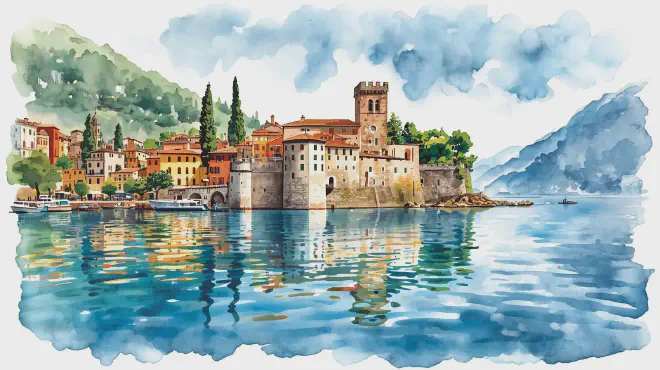
Lake Garda, Italy’s largest lake fed by Alpine waters, benefits from a Mediterranean climate that allows olives and lemons to flourish in its temperate lands. The old town of Sirmione is surrounded by medieval walls, with narrow cobblestone alleys winding like a labyrinth. At the tip of the peninsula jutting into the lake stand the ruins of “Grotte di Catullo,” the villa ruins of the ancient Roman poet Catullus, while the 13th-century Scaligero Castle casts its beautiful reflection upon the water.
The charm of this town lies in its layered history. Ancient Roman ruins, medieval fortifications, Renaissance noble mansions, and modern elegant hotels harmonize together, preserving an eternal beauty while conveying the passage of time. The blessings of thermal springs and the lake’s bounty, woven together with the warmth of its people, truly make it worthy of being called “The Pearl of Lake Garda.”
Day 1: A Castle Reflected on Water and Thermal Blessings
I took the train from Milan to Desenzano del Garda station, about an hour and a half journey. Through the window, I watched the landscape gradually transform from flatlands to rolling hills. As the bus from the station approached Sirmione, the moment Lake Garda first came into view took my breath away. With snow-capped Alpine peaks in the background, the lake surface spread before me in mingled blues and greens. I’m almost embarrassed to admit that until I saw it with my own eyes, I couldn’t have imagined Italy possessed such a magnificent and beautiful lake.
Arriving in Sirmione around 11 AM, the first sight that captured my attention was Scaligero Castle, standing as if floating on the lake. Built in the 13th century by Verona’s Scaliger family, this castle has an unusual structure where the walls descend directly into the lake. Small boats moored around the castle created a scene that seemed to have stepped out of a medieval painting.
My accommodation, Hotel Case Mazzanti, is a small family-run hotel in the heart of the old town. The receptionist, Signora Francesca, welcomed me warmly in fluent English. “First time in Sirmione? Then you absolutely must visit Catullus’ Grotto. But you’re probably tired today, so first take a leisurely walk through town and have something delicious to eat,” she said with a mother’s gentle kindness.
My room was on the third floor, with a small balcony offering a panoramic view of Lake Garda. Afternoon sunlight danced on the water’s surface, and distant mountains appeared hazy. After dropping off my luggage, I immediately set out to explore the town.
There’s only one entrance to the old town, passing by the side of Scaligero Castle through the walls. The narrow cobblestone streets bustled with tourists, yet the medieval atmosphere remained undiminished. Souvenir shops, cafés, and restaurants lined the way, but each establishment respectfully preserved the old buildings, maintaining an air of refinement despite the commercial activity.
For lunch, I chose a small trattoria called “Al Pescatore” on Via Vittorio Emanuele. Known for Lake Garda fish dishes, the restaurant is also beloved by locals. The menu was handwritten, listing fish caught in the lake that very day. Marco, the waiter, recommended lake trout risotto and grilled Lake Garda whitefish. The risotto had broth soaked into every grain of rice, with fish umami and white wine aroma filling my mouth. The grilled fish was remarkably simple—seasoned only with lemon, olive oil, and herbs—yet the fish’s natural sweetness stood out brilliantly. It paired perfectly with the local white wine made from Lugana grapes.
In the afternoon, I headed to Grotte di Catullo at the peninsula’s tip. These ruins, attributed to the poet Catullus’ villa, are actually the remains of a large 1st-century mansion, illustrating the luxurious lifestyle of ancient Roman nobility. While the scale of the ruins was impressive, what struck me even more was the spectacular view of Lake Garda from the site. Ancient people must have gazed at this beautiful lake in the same way, composing poetry and pondering philosophy.
By the time I finished touring the ruins and returned to town, the soft evening light warmly illuminated the stone buildings. At a small gelato shop on Via Colomba, I bought pistachio and stracciatella gelato and sat on a lakeside bench to eat it. The setting sun reflected on the water’s surface as the mountains across the lake emerged as silhouettes. The tourist bustle had quieted somewhat—this was the hour when locals enjoyed their evening strolls.
For dinner, I went to “Ristorante Villa Cortine,” recommended by Francesca, taking a terrace seat. Though a bit of a splurge, dining while overlooking the lake became an unforgettable experience. For the appetizer, I chose “Carpaccio di Coregone,” a dish of lake fish that can only be tasted around Lake Garda. Thinly sliced raw coregone fish dressed simply with local olive oil and lemon—the delicate flavor of the fish was exquisite. The main course was veal cutlet Milanese, a northern Italian staple, but this version had tender meat and a perfectly crispy coating.
For dessert, I ordered “Sorbetto al Limone,” a regional specialty. Made from lemons grown around Lake Garda, the sorbet had a perfect balance of tartness and sweetness, providing a refreshing conclusion to the meal.
At night, I strolled along the lakeside while admiring the illuminated Scaligero Castle. Its mystical beauty, so different from daylight, made me stop involuntarily to gaze. Light reflecting off the castle’s stone walls danced on the lake surface, creating a dreamlike atmosphere.
Returning to the hotel, Francesca suggested, “How about the thermal baths tomorrow?” Sirmione has been a hot spring resort since ancient Roman times, and natural thermal waters can still be enjoyed today. Thinking it would be perfect for soothing travel fatigue, I decided to add it to the next day’s plans.
Back in my room, I stepped onto the balcony to find stars twinkling over the lake. The town lights reflected on the water, showing a beauty different from daytime. I hadn’t expected to be so captivated from the very first day. I was already sensing the depth of charm this small town called Sirmione possessed.
Day 2: Ancient Waters and Medieval Prayer
At 7 AM, looking out from the balcony at the lake, a thin mist hung in the air. In the early morning silence, a fisherman’s small boat slowly crossed the water. Perhaps this scene has remained unchanged since ancient times. Breakfast was served in the first-floor dining room: freshly baked croissants, local honey, fresh fruit, and aromatic espresso. Simple, yet the quality of each ingredient shone through.
In the morning, I headed to the thermal baths Francesca had recommended, “Terme di Sirmione.” About a 10-minute walk from the hotel, it’s a facility with modern amenities. The thermal water here springs from 300 meters underground at about 70 degrees Celsius and has been treasured as “water of beauty and health” since ancient Roman times.
At reception, Maria explained everything carefully in English. “This thermal water is rich in sulfur and minerals, particularly beneficial for the skin. Ancient Roman nobles traveled all the way to Sirmione seeking this water.”
I first entered the indoor thermal pool. In the spacious area, multiple pools of varying temperatures were arranged. As I slowly submerged myself in the approximately 36-degree warm water, I noticed the faint scent of sulfur and a sensation of my skin becoming supple. Through the windows, I could see Lake Garda—a luxurious experience of soaking in thermal waters while gazing at the lake.
Particularly impressive was the outdoor thermal pool. Though the outside air was slightly chilly, the contrast between the warm spring water and cool air felt pleasant. At poolside jacuzzis, I could enjoy massage-effect water jets while overlooking the lake. I exchanged simple English conversation with a German couple next to me. They visit Sirmione every year at this time. “The thermal baths here are truly wonderful. They heal not just the body, but the soul as well,” the wife said with a smile.
After spending about two hours relaxing in the thermal baths, I had lunch at “Osteria al Torcio” in the town center. This establishment bustled with locals, offering authentic regional cuisine rather than tourist fare. The menu was entirely in Italian, and I ordered with Giovanni the waiter explaining things in English.
The appetizer was “Antipasto di Lago,” an assortment of lake delicacies: marinated small fish from Lake Garda, lake shrimp carpaccio, smoked lake trout—each with the delicate flavors unique to the lake. The main course was “Risotto al Persico,” lake perch risotto. The creamy risotto contained flaked perch meat, with the fish’s umami thoroughly absorbed into the rice. I was told this is a representative regional dish of the Lake Garda area.
In the afternoon, I decided to visit a town across the lake. From Sirmione’s port, I took a tour boat across Lake Garda to Malcesine on the opposite shore. The 30-minute boat journey offered a spectacular view of Sirmione from the water. The entire peninsula appeared like a single painting, with Scaligero Castle like a jewel floating on the lake surface.
Malcesine, called “the Pearl of Lake Garda,” is a beautiful port town that Goethe loved during his Italian journey. The old town retains a strong medieval character, with old houses lining cobblestone alleys. Here too stands a castle, also built by the Scaliger family like Scaligero Castle.
In Malcesine, I found the inn where Goethe supposedly stayed. Now operating as a hotel, a plaque commemorating Goethe’s stay hangs at the entrance. The great poet must have been similarly captivated by Lake Garda’s beauty.
On the evening boat back to Sirmione, I watched the sunset over the lake from the vessel. The orange-tinted sky reflected on the water’s surface as surrounding mountains emerged as silhouettes. All the passengers aboard—a German elderly couple, a French family, an Italian young couple—silently gazed at the beauty. People of different nationalities and ages, all moved by the same beauty—I felt something deeply moving in that scene.
For dinner, I went to a small pizzeria near the hotel called “Da Michele.” The owner, Michele, is a veteran from Naples with 30 years of pizza-making experience. “I moved to Sirmione 10 years ago, and I’m proud to make pizza in this beautiful place,” he told me.
I ordered “Pizza Margherita” and “Pizza Frutti di Mare.” The Margherita had a thin, chewy crust with a simple combination of San Marzano tomatoes, mozzarella, and basil. Yet one bite revealed perfect balance that amazed me. The Frutti di Mare used Lake Garda seafood—lake shrimp, mussels, and small fish harmonizing exquisitely with tomato sauce. An unforgettable taste filled with Michele’s skill and passion.
At night, I walked along the lakeside again. Tonight, near full moon, the moonlight illuminated the lake surface in silver. In contrast to the daytime bustle, nighttime Sirmione wrapped itself in silence, with only the sound of footsteps echoing on cobblestones. Scaligero Castle’s illumination, combined with moonlight, created a fantastical beauty.
Before returning to the hotel, I had a final cappuccino at a lakeside café. Reflecting on a day filled with thermal baths, delicious food, and beautiful scenery, I pondered the special charm this small town possesses. History continuing from ancient Rome, medieval architectural beauty, and modern refined hospitality—these harmonize to leave deep impressions on visitors.
Day 3: A Morning of Farewell and Eternal Memories
On the final morning, I woke earlier than usual. Stepping onto the balcony, Lake Garda showed its mystical form through morning mist. Realizing I must leave this beautiful place today filled me with slight sadness.
After breakfast, I used the time before checkout for a final walk through town. Francesca kindly kept my luggage. “Please come back again without fail,” she said, and I answered “Yes” from my heart.
In the morning, I headed to the Church of San Pietro in Mavino, which I hadn’t yet visited. Built in the 8th century, this small church is one of the oldest buildings in Sirmione’s old town. The interior is simple, but the frescoes are beautiful, and the quiet space brings peace to the heart. I offered a brief prayer before the altar—not from any particular religious conviction, but in gratitude for this journey’s wonderful memories and for a safe return home.
Leaving the church, I discovered a small bookshop nearby. A family-run store on the ground floor of an old building, managed single-handedly by the owner, Anna. As I looked for books about Sirmione and Lake Garda, Anna recommended a beautiful photo collection titled “The Four Seasons of Lake Garda,” containing photographs of the lake and surrounding towns taken by a local photographer. Among them was a photo of Sirmione wrapped in morning mist, just like the scene I had witnessed. Without hesitation, I purchased it as a journey memento.
For lunch, I decided to return to Al Pescatore, which had left the strongest impression during my three-day stay. Marco remembered me and said, “Your final lunch—let me prepare something special.” He recommended “Trota in Crosta di Sale,” salt-crusted lake trout caught that very morning.
The fish arrived encased in a large block of salt, which Marco cracked open before me. With the rising steam came the concentrated aroma of fish umami. The flesh was perfectly steamed and fluffy, with salt seasoning just right. Simple yet the finest cooking method imaginable. As my final taste of Lake Garda, it will be deeply etched in memory.
In the afternoon, I visited Grotte di Catullo once more. Viewing the ruins from a different angle than the first day, I reflected on the lives of ancient Roman people. I recalled a line from Catullus’ poetry: “Paene insularum, Sirmio, insularumque ocelle” (Eye of peninsulas and islands, O Sirmione). The beauty that poet felt over 2,000 years ago—I was certainly feeling it too. Here exists a beauty that transcends time and remains unchanged.
From the ruins’ observation deck, I took a final look across Lake Garda. Afternoon sunlight made the lake surface sparkle, and mountains across the shore appeared clearly. Malcesine’s white houses were visible in the distance too. Gazing at the water I’d crossed by boat yesterday, I reflected that though brief, this had been an intensely meaningful time.
Around 3 PM, I returned to the hotel and expressed my thanks to Francesca before checking out. When she asked, “How was Sirmione?” I answered, “It was a magical place,” and she smiled, saying, “I’m glad. Sirmione has magic. That’s why we have so many repeat visitors.” Indeed, during my stay I repeatedly met tourists who said they “come every year.” Once you visit, this town has a mysterious charm that makes you want to return.
From the bus heading to Desenzano del Garda station, I took one last look at Scaligero Castle. Its beautiful form floating on the lake is something I’ll surely never forget. As the bus left town, I pressed against the window trying to burn the scenery into my memory until the lake disappeared from view.
Waiting for the Milan-bound train at the station, I ruminated on these three days. Beautiful nature, rich history, delicious meals, and above all, encounters with warm people. The time spent in Sirmione felt like more than mere sightseeing—it was a profound experience.
The train pulled into the platform. Through the window, I caught one final glimpse of Lake Garda’s blue waters. In that moment, I vowed to return without fail. Sirmione, I realized, is a place that remains eternally in the hearts of those who visit.
What Felt Real Despite Being Imaginary
Reflecting on these three days, I’m enveloped in a strange sensation. Though this journey was a product of imagination, in my heart it remains as vivid as if truly experienced. The texture of Scaligero Castle’s stone walls, the sulfurous scent of thermal springs, the delicate taste of lake trout, Francesca’s warm smile, the beauty of sunset over Lake Garda—all of these feel as if they truly happened.
Perhaps travel isn’t simply about moving between places, but about the movement of the heart. My longing for the beautiful town called Sirmione and my imagination of time spent there have been carved into my heart as an experience indistinguishable from reality. The charm of this place loved by the ancient Roman poet Catullus still exists unchanged across time and space, and by imagining it, we too can taste the same emotion.
The day may or may not come when I actually visit Sirmione. But through this imaginary journey, Sirmione already exists as a special place within my heart. The blue waters of Lake Garda and the beautiful castle floating on the lake will continue to shine within me.
A journey that, despite being imaginary, feels as if it truly happened. Perhaps this is another reality created by imagination—that wonderful ability possessed only by humans.