
Introduction
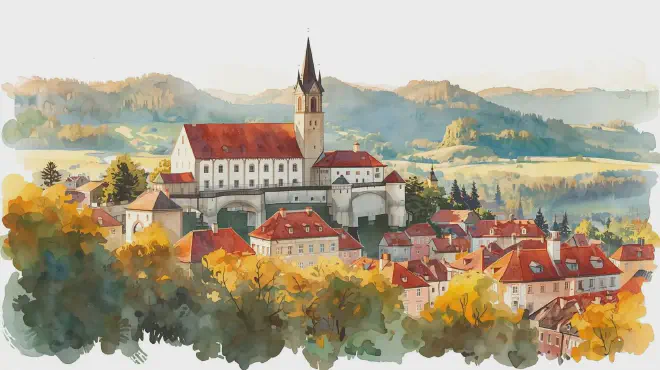
Spišská Nová Ves, located in eastern Slovakia near the Polish border, is a quiet town with a population of approximately 37,000. As the central city of the Spiš region, this town flourished throughout history and is blessed with rich heritage dating back to the Middle Ages and beautiful nature spreading at the foot of the High Tatras mountains. At the town’s center lies one of Europe’s largest central squares, surrounded by buildings in Gothic and Renaissance styles. The tall tower of St. Egidius Church, in particular, catches the eye from afar as the town’s symbol.
The Spiš region prospered during the Middle Ages as an important trading route hub, and the distinctive culture established by German immigrants still lives on today. Nearby stands Spiš Castle, registered as a UNESCO World Heritage site, captivating visitors as one of Europe’s largest castle complexes. This region is also a treasure trove of Slovak cuisine, offering simple, heartwarming dishes such as halušky (potato dumplings) and bryndzové halušky (a regional specialty made with sheep cheese).
At the end of March, during the snowmelt season, I decided to visit this town. Eastern Europe at the time when spring’s footsteps begin to be heard holds a mysterious and serene beauty.
Day 1: Led by the Echo of Cobblestones
I landed at Bratislava Airport on a morning flight and made my way to Spišská Nová Ves by changing buses. The landscape visible through the windows gradually became more mountainous, with coniferous forests stretching out and church spires of small villages occasionally appearing. The approximately four-hour journey was a quiet transition from the ordinary to the extraordinary.
Around 2 PM, I arrived at the town’s bus terminal. The small pension I had reserved was located on a cobblestone street about five minutes’ walk from the central square. The building dated from around the 18th century, with impressive white walls and an orange-tiled roof. From the room’s window, I could see the tower of St. Egidius Church rising above the rooftops of the houses across the way. After dropping my luggage and catching my breath, I set out to explore the town.
The moment I stepped into the central square, I was overwhelmed by its vastness. The rectangular plaza measured approximately 200 by 100 meters, with an 18th-century statue of Mary standing at its center. The buildings surrounding the square displayed different architectural styles from various periods, creating the sensation of walking through a history textbook. What particularly caught my eye was the old Renaissance-style town hall on the north side of the square, with its beautiful arcades and faint traces of old frescoes still visible on the walls.
As evening approached, I decided to have dinner at “Restaurant Spišský Dvor,” recommended by a local. The restaurant, converted from an old stone building, was furnished with wooden tables and chairs throughout, with local folk costumes and farming tools decorating the walls. A waitress named Mária explained the dishes with broken English and smiles.
I ordered the regional specialty “bryndzové halušky.” This dish features sheep cheese (bryndza) mixed with potato dumplings, topped with scattered bacon strips. With the first bite, the rich flavor of the sheep cheese filled my mouth, harmonizing beautifully with the chewy texture of the potatoes. Paired with local white wine, I felt the fatigue from the long journey pleasantly melting away.
As night deepened, the square’s streetlights came on, showing a different expression from the daytime. The church tower was also softly illuminated, making its medieval character stand out even more distinctly. On the cobblestone path back to the pension, I heard the sound of bells ringing in the distance. It was the church bell announcing 9 o’clock.
Back in my room, gazing at the nighttime town from the window, I reflected on the day. The journey had only just begun, but I was already captivated by the quiet charm of this town. Tomorrow I planned to visit Spiš Castle, but tonight I decided to surrender to this peaceful evening and turn in early.
Day 2: Stories Told by Castle and Nature
At 7 AM, I awoke to the church bells. Opening the window, cold, crisp air flowed into the room. In the distance, I could faintly see the peaks of the High Tatras mountains, with the rolling hills spreading before them wrapped in morning mist. Downstairs at the pension, the warm-hearted owner, Anna, had prepared breakfast for me.
The breakfast was typical Slovak style: dark bread with homemade jam, ham and cheese, and fried eggs. Particularly memorable was Anna’s handmade plum jam, whose sweet and tart flavor matched exquisitely with the simple taste of the dark bread. Over coffee, Anna told me local stories in halting but earnest English. Her grandparents were ethnic Germans who lived in this region before World War II and went through difficult times after the war. Feeling the weight of such history, I finished breakfast.
At 9:30 AM, I boarded a local bus bound for Spiš Castle. The approximately 20-minute ride gradually ascended to higher ground. Along the way, I spotted a shepherd with a flock of sheep, glimpsing a part of this region’s pastoral culture.
Upon arriving at Spiš Castle, I was breathless at its overwhelming scale. Built in the 12th century and expanded many times, this castle is one of Europe’s largest castle complexes, covering 40,000 square meters. The castle, built atop a limestone hill, shows a sense of unity with nature as if it had grown from the earth itself.
I joined a guided tour of the castle and learned about its history from János, a Hungarian guide. This castle functioned as an important fortress of the Hungarian Kingdom during the Middle Ages and served as a defensive stronghold against Turkish invasions. Standing in the castle courtyard and surveying the surrounding landscape, I could clearly understand why the castle was built here. From this ideal location with views in all directions, I could see as far as the Slovak plains.
The castle’s exhibition rooms displayed medieval weapons, tableware, and noble costumes, allowing me to imagine life in those times. Particularly impressive was a 15th-century manuscript, whose beautifully illuminated Latin text shone as a work of art transcending time.
In the afternoon, I decided to walk down from the castle. The approximately hour-long mountain path was a luxurious time to walk while feeling spring’s breath. Along the way, I found a place where wild daffodils grew in clusters, their small white flowers swaying in the wind like gifts from nature. The sight of squirrels jumping from tree to tree and the distant songs of birds orchestrated a dialogue with nature impossible to experience in the city.
I returned to town around 3 PM. Feeling a bit tired, I decided to rest at “Café Antique,” facing the central square. The interior was furnished with antique furniture, and old photographs and paintings adorned the walls. I ordered cake made with local honey and coffee. The honey cake had a simple sweetness that gently permeated my tired body.
An elderly local man named Franz, sitting next to me in the café, struck up a conversation. He was a former teacher fluent in German. Through conversation in my broken German, he taught me much about the town’s present and past. The socialist era, the Velvet Revolution of 1989, and his melancholy about young people leaving for urban areas—the town’s transformation seen through one person’s life was recounted.
For dinner, I went to “U Babušky (Grandmother’s House),” a home-cooking restaurant recommended by Franz. The goulash I ate there was exceptional. This stew of beef slow-cooked with paprika featured deep richness and subtle spiciness. Eating it with knedlíky (dumplings) warmed both body and soul.
That evening, I walked through the central square again. In contrast to the daytime bustle, the nighttime square was wrapped in silence, with streetlight gently illuminating the cobblestones. Looking up at the church tower, I reflected on the depth of history and beauty of nature I had felt throughout the day. Tomorrow would be my last day. I headed toward the pension, thinking about how to spend the conclusion of this journey.
Day 3: A Farewell Melody and What Remains in the Heart
On the final morning, I woke naturally early. While it was still dim outside, looking out the window revealed the entire town wrapped in morning mist, creating a fantastical scene. Although I had to begin my journey home that afternoon, I wanted to treasure my limited time.
After breakfast, Anna told me about the town’s small market. A small morning market held every Saturday where local farmers sell vegetables and handmade products. The market, held in a corner of the square, was an excellent opportunity to glimpse local people’s daily lives.
At the market, an elderly woman was selling hand-knitted sweaters and socks. Among them was a beautiful scarf decorated with traditional regional patterns. The scarf, with blue and red geometric patterns woven into white fabric, was truly a work embodying the essence of Slovak handicrafts. The price negotiation with the grandmother proceeded through her German, my English, and gestures, but ultimately the transaction was completed with smiles. This scarf became the perfect souvenir from the trip.
Next to the market, a local man was selling wood-carved crafts. What particularly caught my eye was a small carved wooden figure modeled after Spiš Castle, with craftsmanship carefully detailed down to the finest points. Talking with the maker, Pavol, I learned he was a third-generation wood carver who was teaching the techniques inherited from his father to his son as well. I was deeply moved that traditional crafts were being preserved and passed down through families.
Around 11 AM, I headed to St. Egidius Church as my final destination. This Gothic church, built in the 14th century, has long been cherished as the town’s symbol. The church interior was wrapped in silence, with light streaming through colorful stained glass mysteriously illuminating the area around the altar.
What impressed me most at the church was the 15th-century wooden altar panel. The intricate carvings depicting the life of Christ spoke to the faith and artistic talent of craftsmen of that era. Sitting quietly before the altar, I offered prayers of gratitude for the journey’s safety and thoughts for the people I had met in this town.
Leaving the church, I heard the sound of organ practice. The organist, Marián, was practicing for Sunday’s service the next day. The beautiful melody of Bach’s chorale prelude resonated through the church’s stone space, creating the feeling of listening to heavenly music.
For lunch, I returned to the pension to enjoy Anna’s homemade cooking. What she specially prepared for me was “svíčková,” beef simmered in cream sauce. The beef was so tender it melted in the mouth, with the sweetness of vegetables and rich flavor of the cream sauce harmonizing exquisitely. Eaten in the traditional style with knedlíky and cranberry sauce, I could truly taste the essence of Slovak home cooking.
After the meal, I had a long conversation with Anna. She spoke from a woman’s perspective about the changes in Slovakia since the 1989 revolution. The joy of becoming free, yet the complex feelings about things lost at the same time. Her talk about missing the community cohesion that was stronger before was particularly striking. However, her expression conveying hope that it was wonderful young people could now pursue new possibilities was unforgettable.
At 2 PM, checkout time arrived. Anna saw me off at the entrance, saying “Please come back again” and handing me a small jar of her homemade jam. Her warm thoughtfulness brought tears to my eyes.
On the way to the bus stop, I walked through the central square once more. The emotions there were completely different from when I first set foot two days earlier. Not just a tourist destination, but as a place where people’s lives breathed, this square was etched into my heart.
While waiting for the bus to Bratislava, I sat on the bus stop bench gazing at the town. The leisurely flow of a weekday afternoon, the sound of church bells heard from afar, the footsteps of people walking on cobblestones. All of these remained in my ears as the everyday music of this town.
The bus arrived and I loaded my luggage. Sitting by the window, I burned the scenery visible from the moving bus into my memory. The tower of St. Egidius Church grew smaller and eventually disappeared from view. Yet in my heart, the image of that tower continued to shine forever.
Imaginary Yet Unmistakably Felt
Now, several days after returning home, the two nights and three days in Spišská Nová Ves feel like a dreamlike time. Yet simultaneously, each moment was so vivid that the certainty of having truly been there is deeply engraved in the depths of my heart.
Anna’s warm smile, Mária’s earnest English, Franz’s profound life stories, Pavol’s proud craftsman’s expression. And the rich flavor of bryndzové halušky, the magnificent view from Spiš Castle, the beautiful notes of the organ heard in the church. All of these continue to exist in memory without losing their brilliance.
I felt anew that travel is not simply moving from place to place, but breathing the air of that land, connecting hearts with people, and becoming part of oneself by touching the culture. Slovakia as a country, the Spiš region as a place, and Spišská Nová Ves as a town now live as part of my life.
This journey is a product of imagination. Yet the emotions experienced in that imagination, the people met, the food tasted, the scenery seen are engraved in my heart no less deeply than a real trip. Through this experience, I realized the power of human imagination and the strength of longing for travel.
Someday, surely, the day will come when I truly visit this town. How the emotions felt on this imaginary journey will overlap with the real experience—that too is one of the pleasures. The journey has ended, but the journey in my heart continues still. Spišská Nová Ves has become my eternal travel destination.