
Introduction
Tangier. Simply speaking the name aloud, something stirs within the heart. Perched at Morocco’s northernmost tip, this ancient city faces Europe across the Strait of Gibraltar—a place where Africa and Europe, the Atlantic and Mediterranean, all converge. Throughout its millennia-spanning history, Phoenicians, Romans, Arabs, and Berbers have passed through these streets. In the first half of the twentieth century, as an international zone, the city drew artists and writers from around the world. Paul Bowles, Jack Kerouac, William Burroughs—what captivated them must have been Tangier’s peculiar chaos and beauty, and the way time seems to flow differently here.
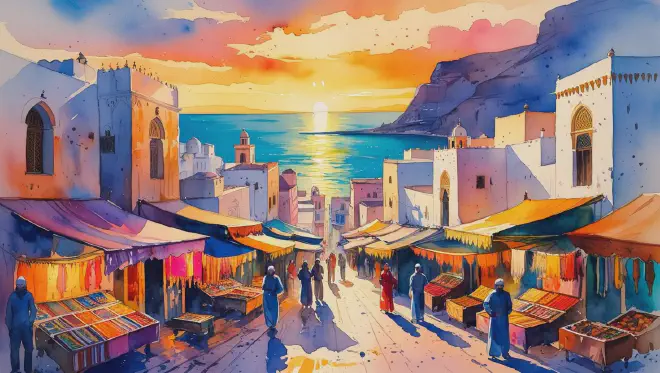
White buildings scatter across the hillside, woven together with the blue of sea and sky. In the maze-like alleys of the medina, the scent of spices mingles with the sweet aroma of mint tea, while the adhan from mosques marks the rhythm of each day. This is unmistakably Africa, yet it possesses a Mediterranean gentleness—a city radiating an enigmatic allure all its own.
Day 1: Wind Arriving from Across the Strait
At six in the morning, the overnight train from Casablanca glided quietly into Tangier-Ville station. Through the window, the white cityscape spread beneath a sky still touched with darkness. The ocean breeze from the Atlantic brushed against my cheek, instantly dispelling the fatigue of the long journey.
I caught a taxi outside the station and headed for a riad near the medina. The driver, Hassan, spoke to me in fluent French. “First time in Tangier? You’ve come at a good time. Fewer tourists now—you’ll feel the real Tangier.” Watching the morning streets flow past the window, I nodded at his words. Indeed, there was something lived-in about the scenery, not yet overtaken by tourism.
When I arrived at Riad Dar Nour, I caught my breath at the beautiful Andalusian-style courtyard. Zellige tilework adorned the walls, the sound of water trickled from a fountain, and soft light filtered down from above. Fatima, the owner, welcomed me with a smile and offered mint tea. The sweet drink, generous with sugar, eased the weariness of travel.
After leaving my bags in the room, I set out to explore. The Grand Socco, gateway to the medina, was alive with morning energy. Vegetable sellers called out, donkeys brayed, and voices mingled in Arabic, Berber, and French. I decided to have breakfast at Café Central. Drizzling olive oil on a croissant and sipping fresh orange juice, I watched people pass by—merchants, children heading to school, women out shopping—each moving to their own rhythm of daily life.
In the afternoon, I ventured deeper into the medina. Walking through the narrow alleys, I quickly lost my sense of direction. But that’s precisely the charm of a medina. Without fearing getting lost, I followed wherever my heart led. Pottery shops, carpet sellers, spice vendors—each store had its own character, and the shopkeepers all greeted me warmly. What struck me most was an old man in a small spice shop. Before his colorful array of saffron, cumin, and paprika, he explained each one carefully: “This calms the heart,” “This warms the body.” Though we didn’t share a common language, his kindness came through clearly.
Toward evening, I made my way to the kasbah. From the heights, Tangier spread below, glowing gold in the sunset. In the distance, the mountains of Spain faded into haze, while beneath my feet the white buildings of the medina clustered together. Ship horns sounded from vessels crossing the strait, and the scent of jasmine drifted on the wind. In that moment, I truly felt I was standing at the boundary between Africa and Europe.
For dinner, I found a small restaurant in the medina. I ordered tajine djaj—chicken tajine. The meat, slow-cooked in the distinctive conical clay pot, harmonized perfectly with the tartness of olives and lemons and the fragrance of spices. The accompanying couscous was perfectly fluffy, its grains infused with the sweetness of vegetables. For dessert, I had pastilla—a sweet almond and cinnamon pie that brought an elegant close to the meal.
Back at the riad, I met other guests in the courtyard: a French elderly couple and a German painter. They too had fallen under Tangier’s spell. Over mint tea, we shared our travel stories. Hans, the painter, said, “The light in this city is extraordinary.” Madame Dupont smiled, “I’ve returned every year since my first visit twenty years ago.” People from different countries, united by love for the same city—perhaps this too is something uniquely Tangier.
Returning to my room, I opened the window to the night breeze and reflected on the day. From the train’s arrival that morning, it had felt like a long dream. The medina’s labyrinth, the scent of spices, the kind smiles of strangers, the wind crossing the strait—all of it was fresh, etched deeply in my heart. What discoveries would tomorrow bring?
Day 2: Embraced by Wind and Sea
I woke to the beautiful sound of the adhan. It was half past five. Against the still-dark sky, the minaret of a mosque traced its silhouette. Opening the window, the sea breeze flowed into the room, announcing the beginning of a new day.
I had breakfast on the riad’s rooftop terrace. Fresh bread, olives, cheese, and Moroccan honey. Below, the medina’s rooftops gleamed in the morning sun, and the distant sea sparkled. From this height, I could see how beautifully Tangier is situated—a white city built on hillsides, cradled between blue sea and sky.
In the morning, I visited the American Legation Museum. Once a United States consulate, it now exhibits Tangier’s history as an international city. Particularly fascinating were the displays about the American writers who lived here in the 1950s and 60s. Photographs and letters of Paul Bowles, an old typewriter used by William Burroughs—glimpses into what they discovered and wrote in this city.
Leaving the museum, I passed through the Petit Socco. More local and intimate than the Grand Socco, this market is woven into the daily lives of residents. At the fish stalls, fresh catches from the Atlantic lay on beds of ice—mackerel, sardines, sea bream—all with clear eyes, smelling of the sea. At the vegetable stands, produce was piled high in vivid colors: deep red tomatoes, glossy eggplants, yellow peppers. When a vendor noticed me, she sliced a tomato thin and offered me a taste. Sweet with perfect acidity, it made me smile.
For lunch, I ate at a small local eatery recommended by a resident. The menu was only in Arabic and French, but I managed by pointing at what someone at the next table was eating. What arrived was harira—a bean soup. Based on lentils and tomatoes, fragrant with cinnamon and ginger. Dipping bread into it, I felt warmth spread through my body. Simple, yet with profound depth of flavor.
In the afternoon, I headed to Tangier Beach, about fifteen minutes’ walk from the medina. The November sea was a bit cold, but perfect for a stroll. Walking along the water’s edge, I gazed at the mountains of Spain visible across the Strait of Gibraltar. From here, Europe seemed just within reach. Yet beneath my feet, Morocco’s earth extended. This strange sensation—standing at the boundary of two continents—stirred something deep within me.
Camels stood on the beach. A tourist attraction, perhaps, but still a quintessentially Tangier scene. I chatted briefly with the camel handler. In French accented with Berber, he joked, “Camels are ships of the desert, but they like watching the sea too.” Indeed, the camels seemed to be gazing out at the water.
Toward evening, I made my way to Café Hafa. One of Tangier’s most famous cafés, it sits on a cliff overlooking the sea. Legend has it that Brian Jones of the Rolling Stones and John Lennon of the Beatles once visited. Sipping mint tea on the terrace, I watched the sun sink into the sea. Orange light reflected off the water, the sky transforming to pink and purple. A mystical moment when time itself seemed to pause.
At the next table, local elders gathered in animated Arabic discussion. Beyond them, a young couple gazed quietly at the sea. Inside the café, the sound of an oud drifted through the air. Everything seemed to harmonize, playing the music that is Tangier itself.
For dinner, I found a family-style restaurant deep in the medina. I ordered pastilla—this time with pigeon—and lamb tajine. The pastilla wrapped delicate pigeon meat in thin pastry, harmonizing beautifully with the sweet fragrance of almonds and cinnamon. Sweet yet savory, strange yet addictive. The lamb tajine featured meat so tender it fell apart, with prunes lending sweetness and spices creating depth.
After dinner, I enjoyed a night walk through the medina. The atmosphere was completely different from daytime—warm lights in the alleys created a fantastical world. Music drifted from cafés, and laughter spilled from family windows. The sounds of daily life gave the night medina its warmth.
Back at the riad, I sat in the courtyard and gazed at the stars. Despite being in a city, the air was clear enough to reveal countless stars. Stars seen where Africa’s earth meets the Mediterranean sky seemed to shine with particular brilliance. All the facets of Tangier I had experienced that day—history and modernity, Africa and Europe, tradition and innovation—merged within me, leaving a profound sense of fulfillment.
Day 3: A Farewell Song and the Harmony That Remains
My final morning. I woke to the adhan as usual, but today a different emotion occupied my heart. Only two days had passed, yet I already felt a longing for this city. Perhaps Tangier’s unique charm had etched itself deeply into my heart in such a short time.
Taking my last breakfast on the rooftop terrace, I reflected on these two days. Getting lost in the medina’s maze, the gentle smile of the old spice seller, the sunset at Café Hafa, the warmth of everyone I met—all remained vivid in my memory.
In the morning, I visited the Kasbah Museum, which I hadn’t yet seen. Housed in a seventeenth-century palace, it displays Moroccan crafts and archaeological discoveries. Most striking were the ancient Roman mosaics. Nearly two thousand years old, their colors remained remarkably vivid, testimony to the skill of craftsmen long past. Walking through this museum, I felt the true depth of Tangier’s history.
From the museum garden, I could take in a beautiful view of the medina and the sea. I wanted to commit this scene to memory one last time. Layer upon layer of white rooftops, and beyond them the blue sea. Cloud shadows moved across the buildings, creating beautiful patterns of light and shadow.
For lunch, I went to an established restaurant near the Grand Socco. Since it was my last meal, I ordered a dish I hadn’t yet tried. Couscous royal—a magnificent plate crowned with lamb, chicken, and plenty of vegetables. The couscous grains were perfectly steamed, infused with vegetable broth. The meat was tender, the vegetables sweet, everything in harmony. The finest couscous I had ever tasted.
After eating, I wandered through the medina one last time to buy souvenirs. I purchased a beautiful tajine pot at a pottery shop, and saffron and ras el hanout at a spice shop. Every shopkeeper was kind, and I thoroughly enjoyed choosing my gifts. The carpet seller waved and said, “Come back someday.” These connections with people are what make a journey special.
In the late afternoon, I returned to Café Hafa one more time. This time I sat inside and slowly savored my mint tea. Old photographs and newspaper clippings on the walls told the café’s history. An elderly regular sat alone reading his newspaper—likely a scene unchanged for decades. I felt like a traveler briefly joining the universal flow of time.
In the evening, I returned to the riad to pack. While gathering my things, I thought about what I had gained during this brief stay. The souvenirs, of course, but far more valuable were the experiences and emotions remaining in my heart. The spirit of adventure I felt lost in the medina’s maze, the warmth gained from interactions with locals, the tranquility while gazing at the sea—none of these were material things, yet they had certainly become part of me.
On my final night, I exchanged farewells with other guests in the riad’s courtyard. The French couple asked, “It was a wonderful trip, wasn’t it?” The German painter said, “Don’t forget the light of this city.” Though our time together was brief, we had become companions united by love for the same city.
Spending my last night in my room, I gazed once more at the view from my window. The medina’s lights glowed warmly, and the distant sound of the sea reached my ears. Tomorrow morning I would leave this city, but the time spent in Tangier would remain in my heart forever. What this city taught me was that where different cultures meet, new beauty is born. Africa and Europe, Islam and Christianity, tradition and modernity—all harmonize to create a city of singular charm.
Tomorrow morning, I will leave Tangier. But the wind I felt here, the scents, the sounds, the warmth of its people—surely they will continue to travel with me.
Closing Thoughts
The next morning, boarding the train, I waved at Tangier’s cityscape through the window. White buildings, the blue sea, and the medina gleaming in morning light—all of it was dreamlike in its beauty.
This journey was imaginary. Yet the allure of the city called Tangier, the warmth of its people, the beautiful scenery, the delicious food—all of these truly exist. The cobblestones of the medina I walked in imagination, the sweetness of the mint tea I drank, the beautiful sound of the adhan I heard, the refreshing sea breeze I felt—though fantasy, they became experiences truly lived within my heart.
Travel is not merely visiting new places. It is also creating new worlds within the heart. Through this imaginary journey, a beautiful place called Tangier came to life within me. And someday, I will surely visit this land in reality. When that day comes, these imagined memories and actual experience will intertwine, giving birth to an even richer travel story.
Thank you, Tangier. The three days spent within imagination have surely become part of my life.