
Introduction: The Jewel of the Caucasus
Tbilisi. Just speaking the name aloud somehow warms the heart. This capital city of Georgia (Sakartvelo) nestles in the embrace of the Caucasus Mountains, where the Mtkvari River flows gently through the city like a dividing thread of silk.
Located at the crossroads of Europe and Asia, this country has long flourished as a vital hub along the ancient Silk Road, where diverse cultures have mingled to create a unique and captivating charm. The echoing bells of Georgian Orthodox churches ring through cobblestone streets, sulfur springs bubble up from rolling hills, and most of all, there’s the warmth of the people. Though once part of the Soviet Union, Georgia has maintained its own distinct culture, decidedly non-Russian in character.
The distinctive Georgian script, Mkhedruli, dances across signs throughout the city. Its flowing curves are as beautiful as ancient poetry carved in stone. Known as the birthplace of wine, Georgia boasts an 8,000-year tradition of winemaking. The ancient method of fermenting wine in qvevri—buried clay vessels—has been recognized as a UNESCO Intangible Cultural Heritage.
The cuisine is equally special. Khachapuri (cheese-filled bread), khinkali (dumpling-like dumplings), and kharcho (beef soup) all taste like they’re made with love, carrying the essence of home cooking. The use of spices is masterful—never too spicy, yet the aromatic complexity spreads beautifully across the palate.
In Tbilisi’s old quarter of Abanotubani, sulfur springs bubble naturally from the earth. The city’s name derives from “tbili,” meaning “warm” in Georgian. This city, which developed around its hot springs, has a leisurely pace reminiscent of Japanese onsen towns.
Day 1: Footsteps on Cobblestones and First Encounters
The journey from Narita to Tbilisi via Istanbul felt long, but stepping off the plane at Shota Rustaveli International Airport around 2 PM, I was immediately captivated by the landscape visible from the airport bus window. Rolling green hills dotted with ancient church spires appeared intermittently, and in the distance, the majestic ridgeline of the Caucasus Mountains stretched across the horizon.
My hotel was located on a quiet street just off Rustaveli Avenue in the heart of the old town. After checking in and dropping my luggage, I immediately set out to explore the city. The afternoon sun struck the stone buildings, bathing them in golden light.
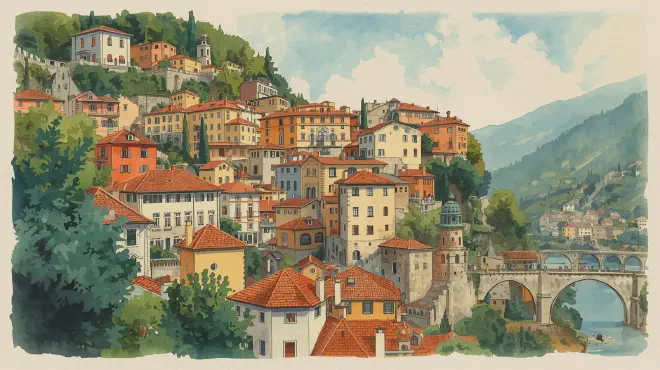
My first destination was Narikala Fortress, which overlooks the entire city. This ancient citadel, built in the 4th century, can be reached by cable car, but I chose to walk up the steep cobblestone path. Though the climb was challenging, each time I turned around, the breathtaking view of Tbilisi spread below took my breath away. Orange tile roofs clustered together, with the Mtkvari River weaving between them like a ribbon. Modern buildings were visible on the opposite bank, but rather than clash, they seemed to emphasize the city’s layered history.
When I reached the top of the fortress, a breeze caressed my cheek. The view of Tbilisi from here was truly like a painting. As evening approached, the slanting light cast the entire city in soft, gentle shadows. An elderly local man standing beside me spoke in broken English: “Beautiful, yes?” His kind smile immediately conveyed the warmth of the Georgian people.
Descending from the fortress, I wandered through the old town’s Abanotubani district. I had heard this was the hot spring area, and indeed, the faint scent of sulfur lingered in the air. The cobblestone alleys twisted like a maze, and every turn revealed new discoveries. Laundry fluttered from balconies, and potted flowers on windowsills added color to the streets.
For dinner, I visited a small restaurant called “Shavi Lomi,” recommended by a local. The interior was dimly lit, warmed by candlelight. I ordered Georgian classics: Khachapuri Adjaruli (Adjarian-style cheese bread) and khinkali (Georgian dumplings).
When the khachapuri arrived, I was amazed by its size. The boat-shaped bread held molten cheese, a raw egg, and butter in its center. The trick is to mix it while hot—the rich cheese and creamy egg create an exquisite harmony. Khinkali resembled xiaolongbao, filled with beef and spiced broth. The waiter kindly taught me the proper technique: first, bite a small hole at the top to sip the broth, then eat the rest.
The Georgian wine I ordered with dinner was a red made using the qvevri method. It had an earthy aroma completely different from wines I’d tasted in Japan. Since the grape skins and seeds ferment together, the tannins were strong, and though I was initially puzzled, it paired surprisingly well with the food.
Leaving the restaurant, the city had donned its nighttime attire. The cobblestones gleamed beautifully under the streetlights, and the occasional church bell dissolved into the evening silence. On my way back to the hotel, I encountered men performing traditional Georgian music in a small square. The beautiful sound of their distinctive polyphonic singing resonated in the night air. As I stopped to listen, one of the performers smiled warmly at me.
Returning to my hotel room, I reflected on the day. Though it was only my first day, I was already enchanted by this city. Opening the window, I could hear the distant murmur of the river and the occasional call of night birds. My first day in Tbilisi ended with quiet wonder.
Day 2: Between Ancient Prayers and New Discoveries
The morning began with a traditional Georgian breakfast at a café near my hotel. “Café Littera” was a charming establishment housed in a converted 19th-century building. Sitting on the courtyard terrace, I ordered a Georgian breakfast: freshly baked shoti (Georgian bread) with nadugu (fresh cheese similar to cottage cheese), honey, and a generous portion of fresh herbs.
The bread was crispy outside and chewy inside, while the gentle acidity of the nadugu paired perfectly with the honey’s sweetness. The herb mix included cilantro, dill, basil, and several others, instantly refreshing my palate. It was clear how much Georgians treasure fresh herbs. The morning coffee was rich and robust, complementing this light breakfast perfectly.
After breakfast, I headed to Sioni Cathedral, considered Tbilisi’s most beautiful church. Built in the 6th century, this cathedral serves as the headquarters of the Georgian Orthodox Church. While its heavy stone exterior appeared imposing, the interior was filled with tranquil, sacred air. It was morning prayer time, and several worshippers knelt quietly in devotion.
Standing before the altar, I was struck by the beauty of the golden iconostasis. Georgian Orthodox icons flickered in the candlelight, while the priest’s low voice chanted prayers that echoed solemnly through the stone cathedral. Beyond religious boundaries, I felt my heart cleansed by the pure devotion of these prayers.
Leaving the cathedral, I visited nearby Anchiskhati Basilica, Tbilisi’s oldest church, built in the 6th century. Though smaller, it felt more intimate and approachable. Inside, a local woman knelt alone in quiet prayer. Her silhouette seemed to embody the countless souls who had offered prayers here throughout the centuries.
The morning’s final stop was Metekhi Church, perched on a rocky hill overlooking the Mtkvari River. Built in the 13th century, the church is preceded by an equestrian statue of King Vakhtang Gorgasali, the legendary founder of Tbilisi.
The church interior was simple but adorned with beautiful frescoes. Most impressive was the view from here: the Mtkvari River meandered through the city, and the modern buildings of the new town harmonized beautifully with the old quarter’s ancient streetscape. The Peace Bridge spanning the river was particularly striking, symbolizing the city’s blend of old and new.
Lunch was at “Funicular Restaurant Complex” overlooking the river. Located above the cable car station, this restaurant offered spectacular views of the entire city. I ordered kharcho (Georgian beef soup) and mtsvadi (Georgian-style kebab).
Kharcho was a hearty soup with tender beef, rice, walnuts, and distinctive spices. Initially, I detected a slight sourness—the tartness of pomegranate. Mtsvadi consisted of charcoal-grilled beef skewers, crispy outside and juicy within. The accompanying red onion salad perfectly balanced the meat’s richness.
The afternoon was spent at the Georgian National Museum, focusing on works by Georgian painter Niko Pirosmani. His naive yet powerful paintings honestly depicted Georgian life and emotions, deepening my understanding of this country’s culture with each piece I viewed.
After the museum, I browsed the weekend book market at Dry Bridge. This market, open only on weekends, sells old books, postcards, and Soviet-era items. Though I couldn’t read the Georgian books, I was captivated by the beauty of the Mkhedruli script and purchased a poetry collection. The elderly seller enthusiastically explained the poet’s significance, though I understood little. Still, his love for literature came through clearly.
In the evening, I soaked in the sulfur springs at “Abanotubani Sulfur Spa” in the old town. Tbilisi’s hot springs are rich in sulfur and supposedly beneficial for the skin. The private stone-built bath had a wonderful atmosphere, and though the water was quite hot, it instantly relieved my fatigue. Different from Japanese onsen, these springs nonetheless provided complete relaxation for body and mind.
Refreshed from the springs, I wandered the old town again. The old quarter was especially beautiful at sunset, with stone buildings glowing golden in the evening light and grape vines on balconies swaying in the breeze. Walking through narrow alleys, the aromas of dinner drifting from windows stirred something nostalgic within me.
Dinner was at “Barbarestan,” a restaurant specializing in 19th-century Georgian cuisine. They recreate classical Georgian dishes based on historical recipe books. The appetizer, pkhali (vegetable and walnut paste), came in various colors—spinach, beet, and green bean—each incorporating walnut paste. The walnuts’ richness combined exquisitely with the vegetables’ natural sweetness.
The main course, chakhokhbili (chicken in tomato sauce), featured incredibly tender chicken in a tomato sauce abundant with herbs. The accompanying ghomi (cornbread) had a slight sweetness that paired wonderfully with the tomato sauce.
The meal concluded with churchkhela (walnut candy), made by threading walnuts through concentrated grape juice. Shaped like candles, they initially surprised me, but the gentle natural sweetness was delightful.
Leaving the restaurant, the city revealed a different face under nighttime illumination. Narikala Fortress was lit up, and the entire city glowed with warm light. On my way back to the hotel, I paused before a small church. Even at night, the doors remained open, with candlelight spilling out. Several people prayed quietly inside. I felt the profound depth of a culture where religion naturally permeates daily life.
Day 3: Farewell Melodies and Memories Etched in the Heart
My final morning was spent on the hotel terrace, watching Tbilisi slowly awaken in the morning light while reflecting on these past two days. Though my stay was brief, I had truly experienced this city’s charm.
After breakfast, I set out for one last exploration, heading to the Tbilisi Botanical Garden I hadn’t yet visited. Located below Narikala Fortress, this garden was established in 1845. Following the path from the entrance, plants from around the world welcomed me.
Most impressive were the plants native to the Caucasus region. The alpine section displayed rare flowers found nowhere else. A garden staff member explained various species in English. Having studied botany, he spoke passionately about the unique characteristics of Georgia’s natural environment. The natural barrier of the Caucasus Mountains had fostered a distinctive ecosystem.
Deep in the garden, a small waterfall broke the silence with its gentle sound. Sitting on a bench, I listened to this peaceful melody. Despite being in the city center, this place felt like another world—quiet and serene. Occasionally, bird songs would pierce the air, and wind would rustle through the trees.
Leaving the garden, I took one final walk through the old town, this time without any particular destination, letting my feet guide me. Narrow alleys revealed glimpses of local daily life: mothers hanging laundry, children playing in the streets, elderly women chatting over tea by their gates.
A young girl waved at me from across the street. Her innocent smile naturally drew one from me in return. Though we shared no common language, smiles are universal. Such casual interactions become a journey’s greatest treasures.
For lunch, I splurged on a final meal at “Culinarium Khasheria,” a high-end restaurant famous for modern interpretations of traditional Georgian cuisine. I ordered the tasting menu to experience the essence of Georgian cooking.
The appetizer, badrijani nigvzit (eggplant rolls with walnut paste), was both beautiful and delicately flavored. Thin eggplant slices filled with walnut paste and spices created perfect harmony between the eggplant’s sweetness, walnut richness, and aromatic spices.
The main course, chicken satsivi, was a cold chicken dish with walnut and garlic sauce. Traditionally eaten at New Year, it had complex, intriguing flavors. The dessert, pelamushi (grape juice pudding), provided a naturally sweet conclusion to the meal.
The Georgian wine paired with lunch was a white Rkatsiteli—fruity and approachable, perfectly complementing the fish course. The sommelier detailed Georgian wine history, and I felt renewed appreciation for this country’s 8,000-year winemaking tradition.
The afternoon was spent shopping for souvenirs at the Dry Market. Georgian specialties crowded the space: spices, nuts, dried fruits, honey, and wine. Most impressive was a spice shop with colorful seasonings piled high.
The aromatic spices tickled my nose as the shopkeeper let me sample various blends. I purchased khmeli suneli (mixed spices), essential for Georgian cooking. With this, perhaps I could recreate Georgian flavors at home.
At the honey shop, I tasted varieties from different flowers. Chestnut honey had a slight bitterness, while lime blossom honey carried a refreshing fragrance. I settled on acacia honey—unavailable in Japan and therefore precious.
Walking through the market, I discovered a shop making churchkhela. The craftsman carefully dipped walnut-threaded strings repeatedly into boiled grape juice. Having enjoyed them yesterday, I bought some for myself and as gifts for family.
Finally, at a wine shop, I purchased a bottle of qvevri-method red wine. The shop owner carefully explained the wine’s characteristics and proper serving method. This fermentation technique using buried clay vessels is truly unique worldwide.
Returning to the hotel in the evening, I packed my luggage. Each souvenir tucked into my suitcase held memories from these two days. Tomorrow morning, I would need to leave for the airport early.
For my final dinner, I returned to “Shavi Lomi,” which I had visited on my first night. I had grown fond of this restaurant’s warm atmosphere. This time, I ordered traditional Georgian soups: chikortma and kindzmarauli (coriander soup).
Chikortma was a rich soup with beef and vegetables, perfect for cold weather. Kindzmarauli, fragrant with coriander, was lighter and well-suited to Japanese tastes.
During dinner, I chatted with a young waiter studying English at university who hoped to become a tour guide. His passionate descriptions of Georgia were impressive. It was clear that young Georgians take great pride in their culture.
Leaving the restaurant, night had deepened. I took one final walk through the illuminated old town, trying to burn this city’s beauty into my memory in the nighttime stillness.
Narikala Fortress’s lights watched over the city while the Mtkvari River flowed quietly below. Thinking that I would leave this city tomorrow filled me with slight sadness. Though my stay was brief, Tbilisi had become part of my heart.
On my way back to the hotel, I passed a small church. The doors were open, with candlelight spilling out. I stepped inside. In the silence, I quietly joined my hands in gratitude for this journey. Though our religions differed, prayers for peace must be universal.
In my hotel room, I spent my final night gazing at Tbilisi’s nighttime cityscape from the window while reflecting on these two days. Beautiful architecture, warm people, delicious cuisine, profound culture—all had been deeply etched into my heart.
What Was Felt in This Imagined Yet Real Journey
This journey was an imaginary one, crafted by AI. Yet strangely, the sensation of having truly been there lingers. The sound of footsteps on Tbilisi’s cobblestones, the scent of sulfur springs, the hot cheese of khachapuri, voices of prayer in churches, the waterfall’s sound in the botanical garden, the aroma of spices in the market—all feel as real as if actually experienced.
Perhaps travel is not merely about moving from place to place, but about moving the heart. Even without physically visiting, through imagination we can touch distant cultures, feel the pulse of people’s lives, and breathe the air of distant lands. This demonstrates both the wonder of human imagination and the authentic appeal of these places.
Tbilisi, Georgia, truly exists. Nestled in the Caucasus Mountains with the Mtkvari River flowing through it, hot springs bubbling up, and 8,000 years of winemaking history. Georgian Orthodox churches stand there, unique scripts adorn the walls, and khachapuri and khinkali are served daily. All of this is real.
And there, warm-hearted people live their lives. They welcome visitors, take pride in their culture, and eagerly share it. This too is undoubtedly real.
Though this imaginary journey has ended, my longing for Tbilisi remains. Someday I want to truly visit that city, actually taste khachapuri, drink qvevri wine, soak in the hot springs, and hear the church bells ring. When that day comes, the memories of this imagined journey will interweave with real experience, creating an even richer travel experience.
A journey that feels real despite being imaginary—perhaps this is a bridge called imagination that connects people to people, culture to culture.