
Introduction
When I first heard the name Te Anau, I rolled it slowly on my tongue. “Te Anau.” This place name, meaning “caves of swirling water” in Māori, carries a certain mystical resonance.
Located in the southwestern part of the South Island, this small town at the gateway to Fiordland National Park has a population of merely 2,000 people. Yet beneath its quiet demeanor breathes the workings of nature that have continued since ancient times, and the culture that the Māori people have carefully preserved.
Lake Te Anau is the second-largest lake on the South Island, holding clear waters in deep valleys carved by glaciers. Beyond the lake wait the World Heritage fiords of Milford Sound and Doubtful Sound. This town is also a doorway to such primeval nature.
Long before European settlers set foot here in the late 19th century, the Māori people called this land “Te Roto-au” and hunted and gathered according to the changing seasons. For them, this lake was not merely a body of water, but a sacred place where ancestral spirits dwelled.
Modern Te Anau, as a place where such history and nature harmonize, quietly welcomes visitors from around the world. Concrete buildings are few, and wooden houses dot the lakeside, standing as if part of nature itself. Here time flows slowly, and one can forget the clamor of cities and face one’s true self.
Day 1: Memories of Light Reflected on Water
From Christchurch, I flew on a small propeller plane to Queenstown, then drove southwest for two hours by car. The landscape outside the window gradually grew wilder, until the town of Te Anau came into view.
Around 10 a.m., I arrived at my accommodation, Real Journeys Te Anau. This lakeside lodge is a warm building generously using local timber, and from the lobby one can overlook the entire vista of Lake Te Anau. After checking in and leaving my luggage in the room, I decided to explore the town center on foot.
The center of Te Anau is so small that one can walk around it in fifteen minutes. Along Lakefront Drive stand small cafes, gift shops, and outdoor equipment stores. Every building rises no higher than two stories, clearly designed not to obstruct the natural scenery.
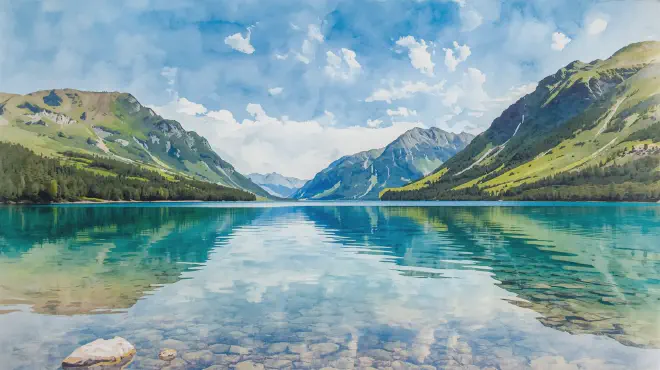
I had lunch at a lakeside cafe called “The Miles Better Pie Store.” Their specialty is salmon fish and chips using locally caught salmon. The white fish, crispy outside and fluffy inside, came with lightly salted chips. Sitting by the window, I savored it slowly while gazing at the lake. The lake surface was calm, with the Murchison Mountains across the way reflected like a mirror.
In the afternoon, I walked along the lakeshore. The Lake Te Anau Lakeside Track is flat and easy to walk, completing a circuit in about an hour. Along the way, I encountered what seemed to be a local elderly man fishing. When I called out, “How are the fish feeling today?” he replied with a smile, “Fair enough. But even without fish, this scenery is more than sufficient.”
In the evening, I visited the Te Anau Bird Sanctuary on the outskirts of town. This facility protects the takahē, an endangered flightless bird. The takahē has a beautiful blue body with a red beak, and was once thought extinct until rediscovered in this region in 1948. Emma, a Māori woman who guided me through the facility, spoke passionately about the takahē. “This bird is special to us Māori. That they live is proof that this land is still healthy.”
I had dinner at the lodge’s restaurant. The menu featured abundant local ingredients, particularly rich in dishes using lamb from the Southland region. I ordered lamb cooked in the traditional Māori “hāngi” method. This is a cooking technique using heated stones in an underground pit to steam-roast the food, and the meat was astonishingly tender, with a distinctive smoky flavor spreading through my mouth.
As night deepened, silence enveloped the lakeshore. I stepped out onto the room’s balcony and looked up at the starry sky. With minimal light pollution in Te Anau, the Milky Way was clearly visible. The Southern Cross also shone beautifully. In this stillness, the clamor of city life felt like a distant memory. Tomorrow, I would finally explore the underground world of the Te Anau Caves.
Day 2: Light’s Mystery Dwelling Underground
I had breakfast in the lodge’s dining room. Morning sun streaming through the windows gilded the lake surface, announcing the beginning of a new day. The menu featured typical New Zealand breakfast fare: bacon, sausages, scrambled eggs, and thick-sliced toast from the local bakery generously spread with mānuka honey. The coffee was dark-roasted and aromatic, heightening my anticipation for the adventure ahead.
At 9 a.m., I headed to the Real Journeys wharf to join the Te Anau Caves tour. From here, we would first take a 30-minute cruise across Lake Te Anau to the cave entrance on the western shore. The boat glided quietly across the water’s surface, and we could see up close how native forest pressed right to the water’s edge on both banks. Captain John, a local-born man in his 60s, explained about the lake and surrounding nature throughout the journey. “This lake has a maximum depth of 417 meters. It was formed when valleys carved by glaciers during the ice age filled with water.”
The cave entrance, behind a small building on the lakeshore, looked at first glance like an ordinary limestone fissure. But stepping inside, I entered another world. The cave’s temperature remains around 8 degrees Celsius year-round, coolly contrasting with the warmth outside. With only the small light carried by our guide Michael to rely on, our footsteps echoed through the cave.
As we proceeded deeper, glowing dots appeared on the walls. These were the stars of the Te Anau Caves: glowworms. This creature, with the scientific name “Arachnocampa luminosa,” is endemic to New Zealand and emits blue-green light through bioluminescence during its larval stage. When Michael extinguished all artificial lighting, the cave was enveloped in a fantastical scene of countless twinkling stars.
“They use their light to lure and catch small insects,” Michael explained quietly. “It’s like an underground Milky Way, isn’t it? The Māori people believed this light was a sign of ancestral spirits guiding the way.” Riding in a small boat through the cave, observing this luminous artistry in complete silence, I lost all sense of time. Here was a beauty of genuine darkness and genuine light that city lights could never provide.
Emerging from the cave tour into the outside world, the bright morning sunshine felt dazzling. I had lunch at a lakeside cafe called “The Ranch Bar & Grill.” This place also functions as a wine bar, stocking several excellent Pinot Noirs from the Central Otago region. I ordered green-lipped mussels steamed in wine. The large mussels had plump flesh, with white wine and herb sauce matching exquisitely.
In the afternoon, I drove along Milford Road, about an hour from Te Anau, the gateway to Milford Sound. This road is considered one of the world’s most beautiful driving routes, with attractions like Mirror Lakes and Monkey Creek along the way. At Mirror Lakes, the water surface reflected the surrounding mountains like a mirror, offering scenery that truly lived up to its name.
During the drive, I encountered kea—large parrots feeding on grass by the roadside. This bird is the world’s only alpine parrot, known for its high intelligence and curious nature. When I stopped the car, several kea approached and played with the car’s wipers and mirrors with their beaks. Their adorable behavior brought an involuntary smile to my face.
Returning to Te Anau in the evening, the lake surface was dyed orange by the sunset. I had dinner at a local pub called “The Ranch Bar & Grill.” This restaurant is a converted farmhouse built in the late 19th century, with farm tools and photographs from that era decorating the interior. I ordered their specialty venison steak, which was exquisite. This meat from wild red deer is leaner than beef, with a distinctive gamey flavor. The accompanying roasted kūmara (sweet potato) and sautéed local spinach were also wonderful.
That night I walked along the lakeshore again. Tonight clouds obscured most stars, but the town lights reflecting on the lake were beautiful instead. Sitting on a bench, listening to the gentle lapping of waves, the day’s experiences quietly organized themselves in my mind. The mysterious underground light, the grand natural landscapes, and the warmth of local people—all of it slowly seeped into my heart within this land’s unique flow of time.
Day 3: Eternity Felt at the Farewell Lake
My final morning also dawned by Lake Te Anau. Rising early, I went for a morning walk. The lake at 6 a.m. was wrapped in mist, creating a fantastical atmosphere. Walking along the path, I occasionally heard the sound of water birds taking flight from beyond the fog. I sat on a lakeside bench and savored this quiet time. It was a luxurious time of surrendering to nature’s rhythm, something impossible to experience in cities.
As the mist gradually cleared, the mountains across the lake revealed themselves. Morning sun gilded the mountain peaks, and that light sparkled as it reflected off the lake surface. I couldn’t move for a while, wanting to etch this moment’s beauty into my memory.
After breakfast, for a final memory, I visited a small market by Lake Te Anau. This small market, held on weekends by local farmers and artisans, displayed fresh vegetables and fruits, homemade jams and honey, and traditional Māori crafts. I purchased a pounamu (greenstone) pendant made by an elderly Māori woman. Pounamu is a sacred stone to Māori people, believed to protect the wearer and bring prosperity. “This stone will forever connect you to New Zealand,” she said with a smile.
I spent the last hours of morning visiting a small museum by Lake Te Anau. At the Fiordland Cinema & Museum, one can learn about the region’s natural and cultural history. Particularly impressive were records of people involved in exploring and developing this area from the late 19th to early 20th centuries. Looking at their diaries and photographs, I could sense the reverence and difficulties these people faced when confronting this primeval nature.
For lunch, I decided to return to the memorable Miles Better Pie Store. Today I wanted to try a different menu item, so I ordered Bluff oysters, a local specialty. These oysters are farmed in Bluff, a port town at the southernmost tip of the South Island, with their season running from March to August. Eaten raw, the oysters had concentrated ocean umami, delicious with just a squeeze of lemon.
While eating, I chatted with Sarah, the waitress. She was a local woman in her twenties who, after studying environmental science at university, returned to her hometown of Te Anau. “I experienced city life, but this place feels most comfortable after all. I’ve come to realize anew how luxurious it is to live seeing this lake every day,” she said. The depth of affection local people hold for this land came through in her words.
In the afternoon, I finished packing and spent my final hours by the lake. I spent the few hours until checkout reading in the lodge lounge. Through the window, beautiful Lake Te Anau still spread before me. Occasionally lifting my eyes to gaze at the lake, I reflected on these three days’ experiences in my mind.
The mysterious light of the glowworms in the underground caves, the wildlife encountered on Milford Road, and above all, the deep reverence these people hold for nature—all of it crystallized as special memories within me.
At 3 p.m., the bus to Queenstown arrived. Through the bus window, I burned the final scenery of Te Anau into my eyes. The afternoon clouds reflected on the lake surface, the small townscape nestled by the shore, and the gentle flow of time embracing it all.
As the bus left the town, I turned back for one more look at Lake Te Anau. In that moment, a strange sensation struck me. As if I had left part of myself by this lakeshore, and as if I was carrying part of this land home in my heart. It was a different feeling from the simple sadness of leaving a tourist destination—a deeper emotion of parting.
In Closing
The two nights and three days in Te Anau were brief in terms of time, but hold an eternal weight in my heart. This journey was certainly an imaginary one. I never actually set foot on that land, nor exchanged words with the people who live there.
Yet travel memories are mysterious things. Photographs and videos, books and others’ experiences, combined with one’s own imagination, sometimes create memories more vivid than reality, more memorable than reality itself.
The radiance of morning sun reflected on Lake Te Anau’s surface, the fantastical light of glowworms in the underground caves, the warm smiles of local people, and the sense of unity with nature felt in silence—these memories, though imaginary, are certainly engraved in my heart.
Travel may not necessarily mean only moving one’s body. Opening one’s mind, exercising imagination, and letting thoughts wander to unknown worlds—this too is a form of travel. And such journeys of the heart also enrich our lives and deepen our understanding of the world.
I don’t know if a day will come when I truly visit Te Anau. But the emotions and insights gained from this imaginary journey have certainly become part of me, and will surely manifest in some form throughout my life ahead.
A journey that, though imaginary, feels as if it truly happened. What it brought me was a doorway to a new world, a fresh understanding of myself, and a renewed perspective on daily life.