
A Longing for the Mountain That Pierces Heaven
Tianmen Mountain rises in Zhangjiajie City, Hunan Province, standing at 1,518 meters above sea level—a natural sanctuary of commanding presence. On its slopes opens a massive natural stone arch called Tianmen Cave, appearing like a door leading to heaven itself, which is how the mountain earned its name. This is no ordinary tourist destination. Since ancient times, it has been revered as a sacred site of Taoism, remaining a spiritual presence for the local people.
The mountain’s history runs deep. Its name was already known during the Three Kingdoms period, and in the Tang Dynasty, countless poets and scholars visited to compose verses about its beauty. Even today, its mystical bearing remains unchanged, leaving lasting impressions on all who visit.
The glass walkway known as Guigu Plank Road clings to sheer cliffs, the world’s longest cable car spans the valley, and Tianmen Mountain Road winds through 99 hairpin turns. These modern additions interwoven with ancient nature create a curious space where past and present intersect.
What drew me to this mountain was not simply its grandeur. There was something in its symbolism of connecting heaven and earth, in the spiritual depth that has gathered people’s faith for centuries, that seemed to quench some thirst within myself.
Day 1: Arrival Wrapped in a Sea of Clouds
I landed at Zhangjiajie Hehua International Airport around ten in the morning under overcast skies. The humid air characteristic of Hunan Province clung to my skin, and distant mountains appeared hazy through the mist. From the airport to Tianmen Mountain was about thirty minutes by car. The taxi driver, a middle-aged local man, spoke to me about Tianmen Mountain in warm Chinese that wasn’t quite fluent.
“The clouds are heavy today, so you might get a good view of Tianmen Cave.”
True to his words, as we left the city and entered the mountain region, the silhouette of Tianmen Mountain emerged through breaks in the clouds. I caught my breath. The mountain’s presence was far more overwhelming than any photograph had conveyed. Tianmen Cave, that gaping hole in the mountainside, looked mystical—as if a giant had punched through the rock—with clouds dancing around it in an almost fantastical display.
After checking into my hotel and having lunch, I headed to the Tianmen Mountain Cableway station. This ropeway, boasting a world-record length of 7,455 meters, would carry me from the city directly to near the summit.
As the gondola began its ascent, the Zhangjiajie cityscape below gradually shrank, and soon we entered the clouds. The world outside the window turned completely white. Occasionally the clouds would part to reveal deep valleys and jagged rock peaks that appeared and vanished like dreams. The sensation of floating made me feel as though I were truly ascending to heaven.
After about thirty minutes of this aerial journey, I arrived at the mountaintop station. At over 1,000 meters elevation, the air was distinctly different from below—cool and clear. A deep breath filled my lungs with freshness.
That afternoon, I set out for Tianmen Cave. The walk from the summit takes about forty minutes along stone steps that wind through the mountain. The path isn’t easy, but the views along the way made me forget my fatigue. The glass skywalk was particularly breathtaking. Through the glass beneath my feet, the valley floor hundreds of meters below was visible, making even those without a fear of heights freeze in place. Yet that transparency and sensation of floating offered an extraordinary experience of walking through the sky itself.
I reached Tianmen Cave around three in the afternoon. The massive natural stone arch—131 meters high and 57 meters wide—was so powerful up close that words failed me. Blue sky showed through the cave’s opening, as if a door to heaven had been left ajar. Many tourists were taking commemorative photos, but I stood apart, lingering for a while.
The wind passing through the cave resonated like a low moan. I could understand why ancient peoples revered this as sacred ground. The formation, too perfect to seem natural, made me feel the presence of something transcendent.
In the evening, I had Hunan cuisine for dinner at a restaurant on the summit. This region is famous for its spicy dishes, and eating “stinky tofu” and “chopped chili fish head” on the mountain was exceptional. The stinky tofu, despite its distinctive fermented smell, revealed deep richness and umami when eaten—a flavor that could easily become addictive. I shared a table with an elderly local couple and listened to old stories about Tianmen Mountain in halting Chinese.
“Long ago, there was no cable car. Only monks and immortals could climb this mountain.”
The old man’s gentle smile left an impression. When I stepped outside after dinner, the sun was already setting, and the mountain ridges were dyed in the colors of evening.
That night, I stayed at a hotel on the summit. From my room window, the starry sky spread across the entire view—a canopy of stars impossible to see from any city. Perhaps this place called Tianmen Mountain truly is the closest point to heaven. With such thoughts, I fell into deep sleep.
Day 2: Harmony of Taoist Culture and Nature
I woke at six in the morning to watch the sunrise from the summit. As the eastern sky began to brighten, the sun slowly emerged from beyond the sea of clouds. Golden light dyed the clouds and illuminated the mountain ridgelines—a scene that truly resembled a realm of immortals. The early rising was well worth it.
After breakfast, I decided to visit Tianmen Mountain Temple. Built during the Ming Dynasty, this ancient temple serves as the spiritual heart of Tianmen Mountain. A thirty-minute walk along the mountain path led me to a tranquil space surrounded by deep green, where a temple with beautiful vermillion roof tiles appeared.
Stepping into the grounds, the scent of incense drifted through the air, and the sound of sutras being chanted reached my ears. In the main hall, local believers were offering earnest prayers, and their devotion moved me deeply. This temple, where Taoism and Buddhism intertwine, speaks to the complexity and depth of Chinese religious culture.
I had the chance to speak with a young monk who served as the temple’s caretaker. He spoke fluent English and explained the history of Tianmen Mountain and Taoist teachings in detail.
“Tianmen Mountain itself is divine. We simply live as part of it.”
His words resonated deeply with a heart weary from city life. In a small garden behind the temple, he performed a tea ceremony for me. Oolong tea brewed with spring water from the mountain tasted pure and sweet, as if cleansing my soul.
In the afternoon, I walked the Guigu Plank Road. Stretching 1,600 meters along the cliff face, this glass walkway offers a thrilling experience. Through the glass, the valley floor hundreds of meters below made my head spin.
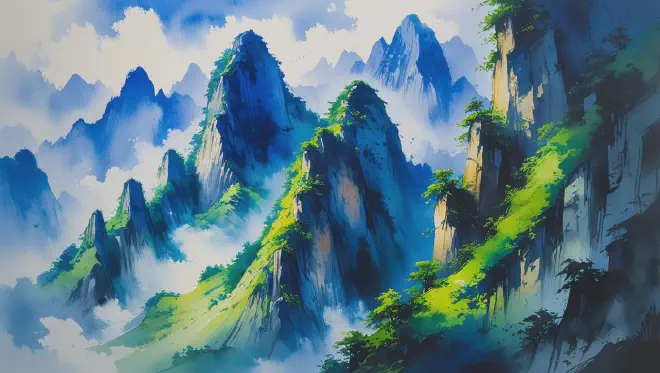
But once I overcame my fear, a breathtaking panorama awaited. The stone pillar formations unique to Zhangjiajie—the “Stone Forest”—jutted from the mist like a Chinese ink painting come to life. Clouds swayed in the wind, threading between the rock peaks, and light and shadow shifted moment by moment.
Along the walkway, I met a local woman who worked as a guide. In her early thirties, she had studied English at university before returning to her hometown to work in tourism.
“I was born and raised here. Even seeing this scenery every day, I never tire of it. The mountain shows completely different expressions depending on the season and weather.”
Her love for Tianmen Mountain came through in every word. For the local people, this mountain isn’t merely a tourist attraction—it’s part of their identity.
In the evening, I experienced farm cuisine in a village at the mountain’s base. Simple dishes made with corn and chili peppers, yet the fresh vegetables and local seasonings were exceptional. The “sour and spicy shredded potatoes” was particularly memorable—crisp texture combined with complex flavors that could accompany countless bowls of rice.
The farmwife who prepared the meal belonged to a family that had lived at the foot of Tianmen Mountain for generations. Eating her home cooking, I felt a warmth impossible to find in the city. After the meal, she shared pears freshly picked from her garden. Sweet and juicy, they made me appreciate the deliciousness of fruit grown with pure mountain water.
That night, I returned to the mountaintop hotel and watched the evening view from the terrace. The lights of Zhangjiajie city spread below like earthbound constellations. The contrast between the mountain’s silence and the city’s bustle made me reflect on the coexistence of modern civilization and nature.
Day 3: A Morning of Farewell and Landscapes That Linger in the Heart
On the final morning, I woke with a sense of melancholy. Clear skies revealed Tianmen Mountain’s majestic form with sharp clarity. The approaching farewell to this mountain where I had spent two days filled me with reluctance.
After breakfast, I decided to visit Tianmen Cave one last time. Unlike the previous day, the weather was perfect, and through the stone arch stretched an endless blue sky. In the crisp morning air, Tianmen Cave appeared even more mystical and solemn.
I sat before the cave for about thirty minutes, reflecting on the past two days. Reverence for nature that city life had nearly made me forget, the warmth of local people, quiet time to face my own inner self—all of these had become precious treasures from this mountain.
At eleven, I began my descent by cable car. I committed the sight of Tianmen Mountain from the gondola to memory. Clouds would gather then clear, and the mountain’s constantly changing expression made it seem almost alive.
Once at the base, I purchased souvenirs at a local specialty shop in downtown Zhangjiajie—a photo book of Tianmen Mountain, local tea leaves, and a small handmade ornament of Tianmen Cave. Each one could recall memories of this journey.
For lunch, I savored “Zhangjiajie Three-Pot Stew” at a long-established restaurant in the city. A simple dish of pork, tofu, and vegetables simmered together, the soup seasoned with Sichuan pepper and chili warmed me to my core and soothed my travel fatigue. The restaurant owner, a man in his sixties, had worked as a guide on Tianmen Mountain in his youth.
“Tianmen Mountain is the pride of us Zhangjiajie people. I hope it continues to be loved by many.”
His words carried deep affection for his hometown.
At two in the afternoon, from the taxi heading to the airport, I gazed at Tianmen Mountain one last time through the window. The mountain appeared and disappeared behind clouds, as if reluctant to say goodbye. The driver was the same middle-aged man from my arrival, and he offered warm words: “Please come again.”
During my wait at the airport, I looked toward Tianmen Mountain from the departure gate. Despite the distance, I could still feel the mountain’s presence. Though just two nights and three days, the impressions and lessons from this mountain would surely remain in my heart for a long time.
As the plane took off and the cityscape of Zhangjiajie shrank below, Tianmen Mountain viewed from above the clouds still radiated a special presence. True to its name—“the mountain that pierces heaven”—these three days spent closer to the sky had been extraordinary time away from everyday life.
What Felt Real Despite Being Imaginary
These two nights and three days at Tianmen Mountain were indeed an imaginary journey. Yet this experience has remained in my heart with a vividness that transcends mere imagination, as if I had actually visited.
The sound of wind rushing through Tianmen Cave, the sensation of freezing on the glass walkway, the warm smiles of local people, the spice and deliciousness of Hunan cuisine, the star-filled sky from the summit—all of these still speak to my senses.
Travel is not simply moving from place to place. It is touching new cultures, feeling nature’s grandeur, and through encounters with people, reflecting on oneself. In that sense, this imaginary journey was truly a “journey.”
What this sacred mountain called Tianmen taught me was reverence for nature and the importance of stepping away from daily life for introspection. I recovered something often lost in city life—the sensation of time flowing slowly and a sense of inner peace.
While acknowledging this journey as imaginary, my longing for Tianmen Mountain and my wish to someday truly visit have taken root in my heart. The wonder experienced through imagination becomes motivation for real travel, and may someday be realized as an actual journey.
A journey that felt real despite being imaginary. Perhaps it is another kind of reality, born from the longing for travel and the power of imagination.