
In the Capital of a Country Where Time Stands Still
Tiraspol, in Transnistria. When I first heard the name of this city, I couldn’t even locate it on a map. But as I researched further, I learned that it is the capital of “the world’s most unknown country.” The Pridnestrovian Moldavian Republic, which declared independence in 1990 but remains largely unrecognized internationally. This land, which retains the deep imprint of the Soviet Union, has a unique atmosphere as if time stopped in 1991.
Stretching along the Dniester River, this city has a population of about 130,000. It’s a multilingual society where Russian, Ukrainian, and Moldovan intermingle. In the city center, a statue of Lenin still stands proudly, and buildings adorned with the hammer and sickle emblem line the streets. A place where socialist-era architectural styles harmonize with Eastern European cobblestone streets—somewhere nostalgic yet mysterious.
A journey to Tiraspol felt like an adventure back through time. In a quietness disconnected from the modern world, I was drawn here by the desire to touch the unique charm this city holds.
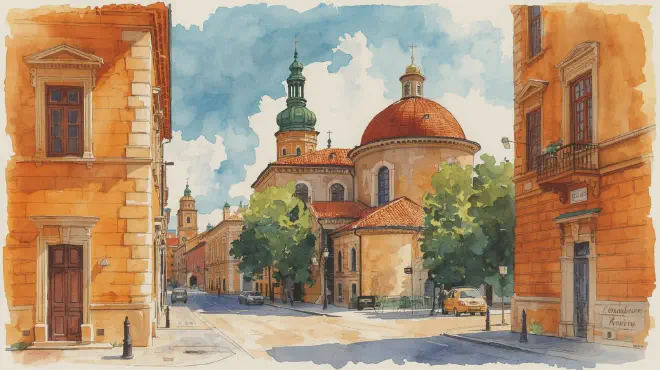
Day 1: Crossing the Border into Another World
The marshrutka (shared minibus) from Chișinău to Tiraspol took about an hour and a half. Through the window, the Moldovan countryside stretched out like an endless green carpet. As we passed small villages, I felt a strange sensation, as if the flow of time was slowly reversing.
Eventually, a checkpoint came into view—the “border” of the Pridnestrovian Moldavian Republic. Officials with stern expressions boarded to check passports. Beyond this point lay a completely different world. Though the scenery visible through the window remained unchanged, the air felt subtly different.
We arrived at Tiraspol Central Station just after 10 a.m. The station building was small and modest, but the signs written in Cyrillic script confirmed that this was indeed a foreign land. Standing in front of the station, the first thing that caught my eye was a massive statue of Lenin. At nine meters tall, this bronze statue is known as one of the largest surviving Lenin monuments in Europe. Red flowers were laid at the pedestal, indicating that he remains beloved by many people even today.
Hotel Russia, where I was staying, was a solid building that strongly retained Soviet-era architectural style. The woman at the front desk responded in fluent English, though she gave a somewhat reserved and refined impression. The room was simple but clean, with a window overlooking the city center.
In the afternoon, I went out to explore the city. Walking down 25 October Street, I felt as if I were inside a time capsule. Most of the buildings were constructed between the 1960s and 1980s, with socialist realism architectural styles visible everywhere. Murals of workers painted on faded walls, geometric building designs—yet there was no sense of ruin or decay, but rather the breath of people’s lives.
I had my first lunch at Café “La Place.” The menu was written in Russian and Moldovan, with English translations included. I ordered borscht and cotleta moldovenească (Moldovan-style cutlet). The borscht was a deep red soup filled with beef and vegetables, topped with sour cream. With the first sip, the sweetness of beetroot and the umami of beef spread through my mouth. The cotleta was a simple dish of pork cutlet served with mashed potatoes, but it had a homely warmth.
Late in the afternoon, I visited the building of the Supreme Council (parliament) of the republic. The state emblem was displayed on the facade, with the symbols of hammer, sickle, and star shining. As I passed in front of the building, a uniformed soldier saluted me. Their expressions were utterly serious, conveying a sense of pride and responsibility toward this “country.”
In the evening, I took a walk along the Dniester River. The river was wide and calm, with the Moldovan mainland on the opposite bank visible through the haze. Local people were fishing along the riverbank, and peaceful time flowed by. An elderly man called out to me. He asked in broken English where I was from, and when I answered Japan, he smiled warmly and said, “You came from such a far place.”
For dinner, I went to Restaurant “Cumtra” in the old town. Here, I could taste traditional Moldovan cuisine. I ordered sarmale (cabbage rolls with meat) and mămăligă (a porridge-like staple made from cornmeal). The sarmale was pork and rice wrapped in cabbage leaves and stewed, with the acidity of tomato sauce working well. The mămăligă looked simple, but seasoned with butter and salt, it had a rustic yet profound flavor.
The restaurant interior was dimly lit, with candlelight flickering. The walls were decorated with photos of people in traditional dress and traditional embroidery. At the next table, a local family was enjoying their meal, with children’s laughter echoing. Watching this scene, I realized that beyond political complexity, there is indeed a life being lived here.
On my way back to the hotel, walking on cobblestones illuminated by street lamps, I heard the sound of an accordion in the distance. Following the sound, I found a small square where an old man sat alone, playing the accordion. There were only a few listeners, but the sound resonated beautifully in the night silence. The tune seemed to be a Russian folk song, with a melancholy melody that touched my heart.
Back in my room, I looked out at the night view and reflected on the day. I was the only tourist-like person in front of the Lenin statue, but all the locals were kind, with a warmth that transcended language barriers. This city truly has something special. Perhaps it’s not political uniqueness, but rather the gentle flow of time and the simple kindness of the people.
Day 2: Where Historical Memory and Present Life Intersect
Morning sunlight streamed in as I headed to the hotel’s breakfast room. The menu was simple—bread, cheese, ham, and boiled eggs—but the tea was authentic Russian-style, with a sweet taste of jam to lick while drinking, which was impressive. Through the window, I could see people commuting to work, reminding me again that this city has its own daily routine.
In the morning, I visited the Transnistrian History Museum to learn about the city’s history. The building was a typical Soviet-era cultural facility, with a dignified stone exterior. Inside, the history of the region from ancient times through the Soviet period to the present was displayed.
Particularly striking was the exhibition about the 1992 conflict. Through photographs and materials, the history of this region’s fight for independence was quietly told. The exhibits included newspapers and personal belongings from that time, allowing a glimpse into the human drama behind political events. The female curator who guided me explained the complex history matter-of-factly yet with deep affection.
Leaving the museum, I visited the nearby Nativity Cathedral. Built in the 1950s, this Russian Orthodox church had beautiful green onion domes that stood out against the blue sky. The interior was decorated with icons and enveloped in the warm light of candles. A weekday service was taking place, with several believers quietly offering prayers. I sat in the back and immersed myself in that solemn atmosphere. Though I couldn’t understand the prayers in Russian, the depth of faith transcended language.
For lunch, I went to a small eatery near the central market. Crowded with locals, this shop served plăcintă (pancakes) and tvorog (cottage cheese). The plăcintă was like a thin crêpe, eaten with sour cream and jam. The simple taste somehow felt nostalgic. At the next table, men who appeared to be factory workers were enjoying their lunch break, their unaffected smiles leaving an impression.
In the afternoon, I ventured out to the suburbs to visit the ruins of Bender Fortress. Built in the 15th century by the Principality of Moldavia, this fortress has been controlled by various powers throughout its long history—the Ottoman Empire, the Russian Empire, and others. What remains today is only part of the stone walls, but standing on a hill overlooking the Dniester River, it seemed to tell the story of the region’s complex history.
The view from the fortress was spectacular, with a panoramic view of the Dniester River meandering in large curves. On both banks of the river, lush farmland spread out, with small villages scattered in the distance. The breeze was cool, and amid the chirping of birds, I lost track of time gazing at the beautiful scenery.
On the way back, I took a local bus back to the city. Most of the passengers were people returning from work, with tired but peaceful expressions. When a young man gave up his seat for an elderly woman carrying heavy bags, I once again felt the kindness of the people in this city.
In the evening, I strolled through Pushkin Park in the city center. Named after the Russian poet, this park is a place of rest for local people. An elderly couple sitting on a bench, children playing on playground equipment, people jogging—scenes of everyday life that could be anywhere, yet it was precisely this ordinariness that made the city feel natural.
In one corner of the park, there was a group of old men enjoying chess. When I approached, one old man spoke to me in broken English. He had been a teacher since Soviet times and still taught mathematics at a local school. “This city is small, but everyone is like family,” he told me. His words suggested that even in this special political situation, people support each other and live their lives.
For dinner, I returned to a restaurant in the old town. This time I chose “Casa Națională,” a more traditional Moldovan cuisine restaurant. I ordered mici (grilled meat dish) and plăcintă (thin bread with cheese filling). The mici was beef and pork seasoned with spices and grilled, juicy and aromatic. The plăcintă was crispy on the outside and melted cheese inside, with the saltiness of the cheese perfectly balanced.
The restaurant featured live folk music, with beautiful harmonies of violin and accordion resonating. The performers wore traditional costumes and also performed traditional Moldovan dances. The audience joined with clapping, and there was a moment of unity through music, even without shared language.
Before returning to the hotel, I passed by the Lenin statue at night. Unlike its dignified daytime appearance, the bronze statue illuminated by street lamps looked gentle and peaceful. Fresh flowers had been placed at the foot of the statue today as well, suggesting that for the people of this city, Lenin is not merely a political symbol but a more familiar presence.
Back in my room, I thought about the people I had met today. The museum curator, the churchgoers, the regular customers at the eatery, the old man in the park, the performers at the restaurant—each walking their own path in life while living in this small “country.” Regardless of political complexity, there is indeed daily life here, culture, and history. That was what I felt most strongly during the day.
Day 3: A Morning of Farewell, With Warm Memories in My Heart
On the last morning, I woke earlier than usual. Outside the window, the city was quietly awakening, with the soft morning light gently illuminating the cobblestones. Thinking about parting from this mysterious city made me feel a little lonely.
Before checking out, I wanted to walk through the city once more, so I went out for an early morning stroll. The streets were sparsely populated, and Tiraspol, wrapped in silence, showed a different face. The shops were still closed, but the aroma of freshly baked bread wafted from the bakery, announcing the beginning of a new day.
Walking down 25 October Street, I passed a female sanitation worker. She smiled and greeted me. We didn’t exchange words, but her natural kindness resonated warmly in my heart. Like many of the people I met in this city, there was a human warmth and approachability unrelated to political tensions.
I stopped in front of the Lenin statue and felt its presence once more. I know there are various debates surrounding this statue, but at least for the people of this city, it seems to hold meaning beyond being merely a political symbol. A monument characteristic of this city, where the weight of history and the thoughts of people living in the present are intricately intertwined.
On my way back to the hotel, I happened to meet the old man from the park again. He was apparently on his morning walk, slowly walking with a cane. When he saw me, he waved happily and asked in simple English if I was leaving today. When I said yes, he told me, “You must come back again,” and shook my hand. The warmth of that handshake is something I will never forget.
After breakfast, I packed my bags and checked out of the hotel. The front desk staff were also kind, asking if I had any problems during my stay. I felt that the hospitality of the people in this city was not superficial but came from genuine kindness.
The last place I visited before departure was the central market. The morning market was full of energy, with fresh vegetables, fruits, cheese, and meats displayed everywhere. Most of the sellers were people from rural areas, proudly selling the produce they had grown themselves. The old woman from whom I bought tomatoes, upon learning I was a foreigner, selected the sweetest one for me. Then, in broken Russian, she explained, “This is from my field. It’s safe and delicious.”
Walking through the market, I could feel the region’s rich agriculture and the diligence of the people who support it. While there is political complexity, daily life is grounded and honest. Both urban residents and rural people all live rooted in this land.
On the way to the bus terminal, I passed by the Nativity Cathedral once more. Morning worship seemed to have begun, as the church doors were open and the beautiful sound of hymns could be heard outside. Listening to that sacred melody, I realized anew how precious the two nights and three days I spent in this city had been.
Before boarding the marshrutka to Chișinău, I talked briefly with the driver. He travels this route every day and knows both Tiraspol and Chișinău well. “Both cities have good people. Politics is politics, people are people,” he told me. Those words were exactly what I had been feeling throughout this journey.
The bus started moving, and the cityscape receded from the window. The Lenin statue, the Supreme Council building, the restaurant where I heard music last night—all became smaller and smaller. But the faces of the people I met there, the words we exchanged, the memories of the food I tasted were firmly etched in my heart.
Passing through the checkpoint, we returned to mainland Moldova. The scenery visible from the window was the same as on the way there, but this time it looked different. Perhaps because I could now understand the complexity and beauty of this land more deeply than before.
Tiraspol is indeed in a special political situation. But the people living there had the same warmth and dignity as people anywhere. For them, this city is not merely a place for political experimentation, but a beloved hometown. That fact was the most important discovery I made on this journey.
As the bus approached the cityscape of Chișinău, a deep affection for Tiraspol had sprouted in my heart. I want to return there again. And next time, I want to spend more time getting to know this city and its people. This small “country” had become such a special place for me.
An Imaginary Journey That Felt Undeniably Real
This journey is a product of imagination. I have never actually visited Tiraspol, and the experiences described here—the people I met, the food I tasted—were all events within my imagination. Yet strangely, these memories have a certain reality in my mind.
Perhaps this is because travel is not merely a physical movement, but also an act of the heart journeying to another place through imagination. There is a freedom that cannot be experienced in actual travel, allowing one to touch the essential charm of a place without being bound by constraints of time or budget.
In the process of researching Tiraspol, learning about its history and culture, and imagining the lives of the people who live there, I came to feel as if I had truly visited the city. The majesty of the Lenin statue, the calm flow of the Dniester River, the vitality of the market, the tranquility of the church, and above all, the warmth of the people—all of these remain vividly in my heart, even though they exist only in imagination.
Real travel comes with unexpected troubles and disappointments. But in this imaginary journey, I could focus on the most beautiful aspects of the place. This is not escapism from reality, but rather an act that deepened my understanding and affection for the place.
If I ever have the chance, I would like to truly visit Tiraspol. At that time, I want to see how close the warmth and beauty I felt in this imaginary journey were to reality. And will I be able to find kindness similar to the people I met in my imagination in the actual city?
Imaginary journeys offer a different kind of richness from real travel. They remain as perfect memories in the heart that never fade.