
A City Nurtured by the Mosel River, Germany’s Ancient Heart
In western Germany, near the border with Luxembourg, lies Trier—a city of roughly 110,000 souls that is sometimes called “the Rome of the North.” Founded in 16 BCE by Emperor Augustus as “Augusta Treverorum,” this is Germany’s oldest city, a place that has been counting time for more than two millennia.
Along the gentle curves of the Mosel River, ancient Roman monuments still breathe, foremost among them the massive black gate called Porta Nigra. Medieval churches, Baroque palaces, and beautifully timbered houses layer different epochs of memory across the urban landscape. The surrounding Mosel Valley is renowned worldwide for its wine, with vineyards climbing steep slopes in a distinctive patchwork that defines the region.
This is also the birthplace of philosopher Karl Marx—a curious place where the weight of profound history coexists with the quiet rhythms of provincial life. Walking the cobblestone lanes, you realize that Romans trod these same paths two thousand years ago. It was to this city of layered time that I came for three days and two nights.
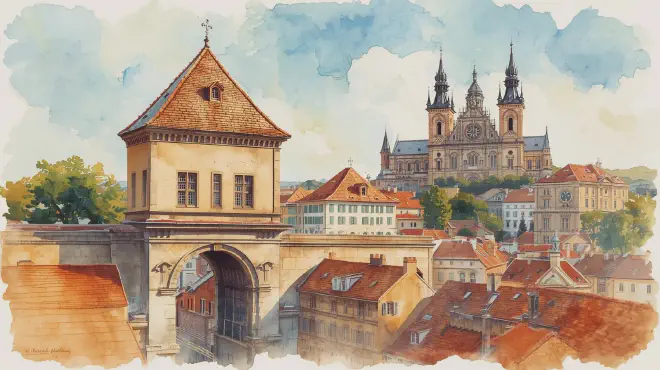
Day 1: The Black Gate Welcomes Me to the Threshold of Time
After an hour-long bus ride from Luxembourg Airport, I arrived at Trier’s central station just past eleven in the morning. Stepping out of the station building, I found the cityscape quieter than expected. The late October air was crisp and cool, with fallen leaves dancing in the wind. Already, as I rolled my suitcase toward the old town, ancient buildings began to appear along the way.
I had chosen a small guesthouse near the Market Square in the heart of the old town—a traditional three-story building with cream-colored walls and deep green window frames. The owner, Elke, a gentle woman in her sixties, showed me to my room in fluent English. The space was simple but spotlessly clean, with a window overlooking a cobblestone street. After dropping my bags and catching my breath, I headed out to explore.
My first destination was Porta Nigra, just a five-minute walk away. Rounding the corner, the enormous black gate burst into view, and I stopped in my tracks. Nearly thirty meters tall, the sandstone structure has darkened to black after more than eighteen centuries of wind and rain. Drawing closer and looking up, I could see that each precisely stacked stone bore the weight of ages. Built without a single iron nail, the stones held together with iron clamps—I stood in awe of Roman engineering.
The gate’s interior is open to visitors, and climbing the narrow stairs, I reached the upper levels where soldiers once kept watch. From there, the view of the old town’s red-tiled roofs was beautiful, with church spires reaching toward the sky in the distance. Few tourists were about; I exchanged a few words with an elderly Austrian couple. “This gate never fails to move me,” the wife said with a smile.
For lunch, I stopped at a small restaurant near the gate called Zum Domstein. The interior was warm and filled with locals, walls decorated with old photographs and wine bottles. After studying the menu, I ordered Zwiebelkuchen, an onion tart typical of the Mosel region, along with a local Riesling. The flaky pastry crust, sweet caramelized onions, bacon, and sour cream harmonized beautifully, enhanced by the white wine’s crisp acidity. I ate slowly, watching people pass by the window.
In the afternoon, I wandered the old town centered around the Market Square. At its heart stands St. Peter’s Fountain, surrounded by buildings with colorful facades. At café terraces, locals chatted over coffee. One corner of the square hosted greengrocer and flower stalls—the scent of daily life. Despite being a tourist destination, I felt the pulse of people’s actual living here.
A five-minute walk brought me to Trier Cathedral, Germany’s oldest Catholic church. Built on Roman foundations, it mingles Romanesque and Gothic styles. The massive stone exterior radiated dignity, and stepping inside, cool air and silence enveloped me. Light streamed from high windows, illuminating stone pillars. In a rear chapel, they preserve what is said to be the “Holy Robe” Christ wore at his crucifixion. Whatever the truth of that claim, clearly this place has long anchored people’s faith.
Leaving the cathedral, I visited the adjacent Liebfrauenkirche. This one displayed elegant Gothic architecture, with light from rose windows painting the interior in rich colors. Almost no one else was there; standing quietly in that space, I felt my travel fatigue begin to dissolve.
Toward evening, I sought out Karl Marx’s birthplace on Brückenstrasse. The pale pink building now serves as a museum. Born here in 1818, Marx’s life and thought are chronicled in fascinating exhibits. Setting aside questions about his ideology, I felt history’s strangeness—that from this quiet town came ideas that changed the world.
As the sun began to sink, I walked along the Mosel River. The water glowed orange in the evening light, with vineyards spreading across the hills beyond. People fishing, walking dogs, jogging—time flowed at an unhurried pace.
For dinner, I found a pub-style restaurant near my guesthouse called Kartoffel Kiste—“Potato Shack.” True to its name, the place was famous for potato dishes. I took a seat at the counter and ordered sauerkraut with sausage and baked potatoes with cream. The simple food, enjoyed with local beer, perfectly closed my first day. A local man sitting beside me asked, “First time in Trier?” and recommended several places. His words stayed with me: “It’s not just the Roman ruins. The real charm of this city lives in ordinary daily life.”
Back at the guesthouse, I opened my window to the sound of church bells ringing through the night’s stillness.
Day 2: Roman Echoes and the Mosel’s Bounty
In the morning, I enjoyed the breakfast Elke had prepared in the dining room. Fresh Brötchen (small rolls), cheese, ham, boiled eggs, and strong coffee. German breakfast is simple, but everything tastes robust and satisfying. A young French couple shared my table, telling me about their winery tour the previous day.
I left the guesthouse after nine, planning to spend the day exploring Trier’s Roman monuments. First stop: the Imperial Baths (Kaiserthermen) south of the cathedral. Once the largest public bathhouse in the northern Roman Empire, now only portions of red brick walls and underground passages remain. Descending into the basement, I found a labyrinth of intricately connected corridors. Traces of heating systems and waterways revealed the technological sophistication of that era. Walking through the dim underground spaces, I could almost see naked Romans chatting while washing themselves seventeen hundred years ago.
A fifteen-minute walk brought me to the Aula Palatina (Constantine’s Basilica). This enormous brick structure, originally built in the fourth century as an imperial audience hall, now serves as a Protestant church. The exterior is strikingly simple—unadorned red brick walls radiating overwhelming presence. Inside, the vast space took my breath away. Sixty-seven meters long, twenty-seven wide, thirty-three meters to the ceiling—one of the world’s largest single-room pillarless spaces. Sunlight poured through large windows, filling everything with light.
I sat on a bench, surrendering to that space for a while. Only a handful of tourists were present; in the silence, I could hear my own breathing. Knowing that emperors once sat enthroned here, making decisions that shaped an empire’s fate, I couldn’t help feeling the strangeness of time’s passage.
Before noon, I strolled through the adjacent Palastgarten. This palace garden, behind the Electoral Palace, combines Baroque geometric beauty with autumn’s natural grace. I walked through fallen leaves and rested on a bench. An elderly gardener carefully deadheaded wilted flowers.
For lunch, I returned to the old town and tried Weinstube Kesselstatt, a traditional wine tavern. From the special lunch menu, I ordered Saumagen, a Rhineland regional dish—pork stomach stuffed with potatoes, pork, and spices, then braised. It looked wild but tasted surprisingly mild. The accompanying sauerkraut’s acidity balanced the rich meat. And of course, I didn’t forget the local Riesling—its delicate fruit notes and mineral character seemed to tell the story of the Mosel’s terroir.
In the afternoon, I ventured farther afield, taking a bus along the Mosel to visit a nearby wine village. About fifteen minutes from Trier, I got off in Zeltingen, a tiny village. Vineyards clinging to slopes, white-walled houses lining the river—a picture-postcard scene.
I visited a small family winery in the village center: Weingut Josef Milz. Despite arriving without a reservation, the young proprietor Thomas welcomed me warmly. “We’re actually bottling from barrels right now,” he said, showing me around the winery. Stainless steel tanks and traditional wooden barrels filled the space with the sweet aroma of fermenting wine.
Afterward, in the tasting room, I sampled three Rieslings—dry, off-dry, and sweet. Each had distinct character, but the off-dry 2023 vintage particularly impressed me, with white peach and apricot aromas balanced by sharp acidity. “Those grapes grew on that slope there,” Thomas said, pointing out the window. The steep vineyard, he explained, requires all work to be done by hand. “No machines can get in. But the flavor this land gives us is irreplaceable.”
I ended up buying two bottles of that off-dry Riesling. Thomas smiled: “All the way from Japan—thank you for coming.” Waiting for the return bus, I sat on a riverside bench, gazing across the water. Afternoon autumn light sparkled on the surface, and occasionally a tourist boat glided quietly past.
Back in Trier that evening, I visited one more important monument: the Roman Bridge spanning the Mosel. Built in the second century CE and still in use today, its black basalt piers have withstood the river’s flow for nearly two thousand years. Standing on the bridge, watching the water, I seemed to see overlapping footprints of every era—Roman legions crossing, trading caravans passing, pilgrims walking in prayer.
For dinner, I went to Zum Christophel, a homey restaurant recommended by a local. The converted stone cellar felt cozy, lit by candlelight. I ordered Dibbelabbes (a bread soup) traditional to the Mosel region, and trout meunière. The river-caught trout was fresh, its buttery aroma appetizing. For dessert: stewed apples with vanilla ice cream. Simple dishes, but the quality of ingredients shone through.
Walking back to the guesthouse, I passed the illuminated Porta Nigra. Different from daylight, almost otherworldly. Few tourists remained; only the black gate stood quietly, keeping watch over time.
Day 3: The Eternal Within the Everyday
On my final morning, I slept in a bit. Outside my window: the sound of footsteps on cobblestones, distant church bells. Already, these morning sounds of the city felt familiar.
After breakfast and before checkout, I explored a nearby morning market. The Market Square hosts markets several times a week. Vegetables, fruits, cheese, bread, flowers—local farmers and artisans displaying their finest wares. I chatted briefly with an old woman selling apples. “Apples from around here are special—they grow with Mosel water and sunshine,” she said, offering me a taste. Juicy and sweet-tart—the flavor of autumn.
After checking out just past ten, I stashed my luggage in a station locker and set out for one final walk. I headed to the Stadtmuseum, which I hadn’t yet visited. Though small, this municipal museum displays art related to Trier and the Mosel region from medieval to modern times. What particularly struck me were nineteenth-century paintings of the Mosel Valley. The landscape looked almost unchanged from today. A hundred years ago, two hundred years ago—people cherished this same view. The thought filled me with a strange feeling.
Leaving the museum, I walked slowly through the old town one last time. The antique bookshop on Sternstrasse, the small chocolate shop on Simeonstrasse. Passing the bakery, the scent of fresh bread drifted out. On café terraces, elderly ladies ate cake and chatted. Children raced across the square; a dog basked in the sun.
Here was the city’s true face, invisible when merely touring famous sites. A city with two thousand years of history still functioning as a living space for people. Past and present blending without jarring dissonance. Perhaps that’s Trier’s greatest charm.
Before heading to the station, I grabbed a light lunch at Café Mohrenkopf, an old-fashioned café. Apple strudel and cappuccino. Steam rising from warm pastry, the scent of cinnamon. This flavor, too, would become part of my journey’s memory.
Walking toward the station, I looked up at Porta Nigra one last time. Standing in the same spot as when I arrived, yet somehow the gate looked different now. Not just a tourist attraction, but a presence that had watched over this city for two millennia.
I boarded a train just after two in the afternoon. Outside the window: Trier’s cityscape, the Mosel River, vineyards sliding past. Though I’d stayed only two nights and three days, this city had definitely left something in me. Not photographs or souvenirs, but something more abstract yet certain. The layering of time, people’s lives, the land’s memory—all these things quietly seeping into my heart. That kind of journey.
What the Imaginary Journey Left Behind
As the train crossed the border and the landscape shifted, I reflected on my days in Trier.
This journey never actually happened. I’ve never walked Trier’s cobblestones or looked up at Porta Nigra. I’ve never tasted Mosel wine or wandered underground Roman passages. Everything was woven from research, photographs, and imagination—a purely imaginary creation.
Yet strangely, this journey carries real substance within me. Thomas’s smile, Elke’s warm breakfast, the autumn breeze by the river—all vividly imprinted in my mind. Perhaps the essence of travel isn’t only about physically visiting places. Imagining a place, exercising your imagination about its history, culture, and people’s lives—maybe that, too, is a form of travel.
If someday I really do visit Trier, I wonder how this imaginary journey’s memories will overlap with reality, and where they’ll diverge. I want to find out. And if someone reading this essay someday walks Trier’s streets thinking, “Ah, so this is what it’s really like”—nothing would make me happier.
A journey that’s imaginary yet feels unmistakably real—perhaps that’s a small magic that human imagination possesses.