
Introduction
Verona, situated in the Veneto region of northern Italy, is an ancient city where Roman history and Renaissance beauty merge seamlessly. Nestled at the southern foothills of the Alps, this city is cradled by the graceful curves of the Adige River and has accumulated two thousand years of history.
While Verona is known worldwide as the setting of Shakespeare’s “Romeo and Juliet,” its charm extends far beyond that romantic tale. The Arena di Verona, built in the 1st century BC, still resonates with opera melodies on summer nights, while the medieval castles and bridges of the Scaligeri family speak of their former glory. The architectural ensemble mixing Romanesque and Gothic styles, the aroma of espresso drifting through cobblestone alleys, and the warm smiles of the people—all these elements leave deep impressions on visitors’ hearts.
Surrounded by rich hillsides that produce renowned wines like Amarone and Valpolicella, and serving as a gateway to Lake Garda, Verona is a place where nature and culture harmonize magnificently.
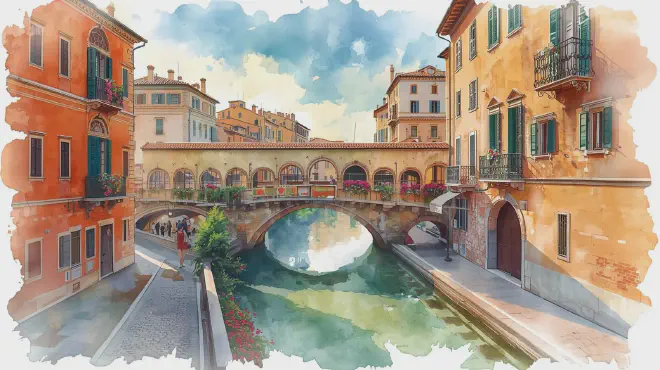
Day 1: First Encounter with a City of Stone
I arrived at Verona Porta Nuova station around 11 AM after a roughly ninety-minute ride on Trenitalia’s high-speed train from Milan. Stepping outside the station building, the crisp northern Italian air brushed against my cheeks. Late October in Verona still offered warmth in the midday sun, though morning and evening already hinted at deepening autumn.
The old town was about a fifteen-minute walk from the station. As I pulled my suitcase over the cobblestones, I noticed the gradual change in the buildings’ character—from modern concrete structures to warm, pinkish stone buildings. This was Verona’s distinctive pietra di Peschiera, stone that has been used since Roman times, giving the entire city a unified, beautiful appearance.
My accommodation, Hotel Accademia, was a boutique hotel converted from a 13th-century building near Piazza delle Erbe. Pushing open the heavy wooden door, I was greeted by the front desk clerk in fluent English. Her “Buongiorno! Welcome to Verona” heightened my anticipation for the journey ahead.
After dropping my luggage in the room, I headed toward the city center. Walking down Via Mazzini, I was captivated by the Italian fashion displayed in shop windows. But what impressed me most was the demeanor of passersby. Neither hurried nor dawdling, they seemed to enjoy the very act of walking through the city.
For lunch, I went to Osteria Sotto le Volte, recommended by a local. In the beautiful arched stone cellar space, I started with an aperitivo. Ordering a Spritz Veneziano, a beautifully glowing orange cocktail arrived. The perfect balance of Aperol, prosecco, and soda water soothed my travel fatigue.
For the main dish, I chose risotto all’Amarone, a Veneto regional specialty. This risotto made with the local red wine Amarone featured deep richness and elegant acidity. Each grain of rice was infused with the wine’s flavor, while the saltiness of Parmigiano-Reggiano pulled everything together. Even through this single dish, I couldn’t help but feel the depth of this region’s history and culture.
In the afternoon, I finally visited Verona’s symbol—the Arena di Verona. This ancient Roman amphitheater, standing majestically in Piazza Bra, is the third-largest surviving structure of its kind in the world. Though parts of the outer wall had collapsed in earthquakes, the interior remained remarkably well preserved.
Sitting on the stone steps, I imagined the gladiatorial battles that unfolded here two thousand years ago. In the center of the arena, viewed from the spectator seats, preparations were underway for the summer opera season. The strangeness of this space where ancient and modern coexist made my sense of time blur.
After leaving the Arena, I took a break at a café in Piazza Bra. Sipping espresso, I watched people crossing the square—an elderly couple walking their dog, a young couple holding hands, students chatting with friends. There was a scene where the everyday and extraordinary naturally blended together.
Toward evening, I headed to Piazza delle Erbe, arguably Verona’s most beautiful square. This market square, continuing since medieval times, still bustles with stalls selling vegetables, fruits, and souvenirs. The Madonna Verona fountain in the center, using a statue from ancient Roman times, continues to be loved as a symbol of the city.
Among the buildings surrounding the square, Palazzo Maffei stood out particularly. Its baroque-decorated façade lined with statues of ancient gods presented a dignified appearance. The warm color of the stone walls illuminated by the setting sun painted the entire square in gold.
That night, I visited Casa di Giulietta (Juliet’s House). Though a famous tourist site, the courtyard wrapped in twilight emanated a mystical atmosphere different from daytime. Looking up at the balcony, I reflected on Shakespeare’s creation of an eternal love story. Whether or not the characters were real remains uncertain, but it was undeniable that this place continues to move many hearts.
For dinner, I went to Ristorante Il Desco along the Adige River. This Michelin-starred restaurant is known for menus that modernize traditional Veneto cuisine. For antipasto, I had a salad with Monte Veronese cheese and Vicenza asparagus. The primo piatto was bigoli, hand-rolled pasta with anchovy and onion sauce—a traditional dish. For the secondo, I chose beef from Valpolicella braised in Amarone wine.
Every dish showcased refined cooking techniques while bringing out the ingredients’ flavors, truly deserving to be called “culinary art.” The tiramisu served at the end was exceptional, with the smooth texture of mascarpone and the bitterness of espresso creating an exquisite harmony.
After dinner, strolling along the river, I saw the buildings on the opposite bank beautifully lit up, creating ribbons of light on the water’s surface. From atop Castel San Pietro hill, a panorama of the entire city should unfold, but I decided to save that pleasure for tomorrow.
Walking back to the hotel, listening to my footsteps echo on the cobblestones, I thought about this city’s special charm. Though Verona is a tourist city, local life breathes naturally within it. Perhaps that delicate balance provides visitors with a comfortable sense of belonging.
Day 2: Ancient Stones and New Discoveries
I woke to morning light streaming through the hotel window. The clock showed 7 AM. Partly due to jet lag, but travel naturally makes one an early riser. After showering and getting ready, I headed to the hotel’s breakfast room.
Italian breakfast is simple, but that simplicity highlights the quality of ingredients. The basic menu consisted of freshly baked cornetti (Italian croissants) with cappuccino, and bread generously drizzled with local honey. The cornetto was crispy outside and fluffy inside, with butter’s aroma filling my mouth. The cappuccino’s foam was fine and creamy, each sip bringing happiness.
After breakfast, I set out for Castel San Pietro, which I’d been looking forward to since the previous day. I crossed Ponte Pietra over the Adige River and climbed the stone steps leading up the hill. This bridge itself is worth seeing—originally built in Roman times and rebuilt during the Middle Ages. While crossing the bridge and gazing at the river’s flow, there’s a perfect photo spot with a view of the old town on the opposite bank.
Climbing the stone steps, I passed an elderly man who seemed local. After exchanging “Buongiorno” greetings, he stopped and asked in broken English, “First time in Verona?” Touched by the typical Italian friendliness, we enjoyed a brief conversation before he told me, “The view from the castle is the best.”
After about fifteen minutes of climbing, I reached Castel San Pietro. The view of Verona from here was truly postcard-perfect. The old town with its terracotta roof tiles, church bell towers scattered throughout, and the great curve drawn by the Adige River—everything harmonized to form a beautiful painting.
Particularly impressive was the Arena illuminated by morning light. It gave a completely different impression from seeing it up close yesterday, nestled naturally within the city. While conveying two thousand years of weight, it existed naturally as part of the present city—I was moved anew by this realization.
Descending the hill, I spent the rest of the morning visiting the Basilica of Santa Anastasia. This Gothic-style church, built from the 13th to 14th centuries, is known as Verona’s largest church. Though the façade remains unfinished, that somehow creates a rustic beauty.
Entering inside, I was overwhelmed by the ceiling’s height. Colorful stained glass light filtering into the dim sanctuary created a mystical atmosphere. The fresco “Saint George and the Princess” by Pisanello above the altar was a must-see, with its delicate brushwork depicting facial expressions and clothing textures impressively.
Leaving the church, it was already past noon. For lunch, I chose a small trattoria popular with locals, Al Borsatti. The menu was handwritten, in Italian only. The proprietor, a portly gentleman, explained the dishes with gestures.
I ordered pasta e fagioli, a bean soup pasta, and cotoletta alla milanese. Pasta e fagioli is a simple home-cooked dish based on white beans, with the pasta’s texture and beans’ fluffy taste matching exquisitely. The cotoletta was thinly pounded veal breaded and fried, crispy outside and juicy inside. I enjoyed it refreshingly with a squeeze of lemon.
During the meal, conversation naturally began with a family at the next table. They were tourists from Vicenza who had visited Verona many times. “There’s always something new to discover,” the father said, and the mother agreed, “Verona in autumn is especially beautiful.” It was a moment when I felt anew the warm atmosphere of this city where locals and tourists naturally interact.
In the afternoon, I visited the Scaligeri Tombs (Arche Scaligere). This burial ground for the rulers of the Scaligeri family who governed Verona from the 13th to 14th centuries features magnificent Gothic-style decorations. The equestrian statue of Cangrande I was particularly impressive—his mounted figure carved in stone with such power it seemed to preserve his living authority.
I also visited the adjacent church of Santa Maria Antica. Though a small church, it holds important history as the Scaligeri family temple. In contrast to its modest exterior, beautiful frescoes remain inside, allowing one to feel the essence of medieval religious art.
Afterward, I strolled through the old streets around Via Cappello. This area has relatively few tourists, offering glimpses of local daily life. Small cobblestone lanes are lined with craftsmen’s workshops bearing old signs and small food shops, preserving a medieval atmosphere.
At an old bookshop, I had the opportunity to speak with the elderly gentleman owner. He had run the shop since his youth and “witnessed the city’s changes.” “Tourists have increased, but the city’s soul hasn’t changed,” he said. In his words, I felt the essential charm of Verona.
In the evening, while strolling along the Adige River, I headed toward Castelvecchio on the opposite bank. This castle, built by the Scaligeri family in the 14th century, now serves as the city art museum. Inside the castle, Venetian school paintings and sculptures are displayed, with Andrea Mantegna’s works particularly worth seeing.
From the castle’s top floor, I could view Verona from the opposite side of Castel San Pietro, which I’d climbed that morning. The cityscape dyed by the setting sun showed a completely different expression from the morning. The red of the roof tiles deepened, and stone buildings glowed in warm golden hues.
Ponte Scaligero, connecting Castelvecchio and the old town, was also a highlight. This bridge, built as part of the castle, is considered a masterpiece of medieval military architecture. Its history of being faithfully reconstructed after World War II destruction using original stones was also intriguing.
That night, I enjoyed an aperitivo at a local wine bar. Ordering a Valpolicella Classico, the owner proudly explained, “This is made at a nearby vineyard.” Tilting the glass, aromas reminiscent of cherries and plums rose up. The light yet profound taste was truly an embodiment of this land’s bounty.
For dinner, I chose Pizzeria da Salvatore, prioritizing local atmosphere. The pizza Margherita, slowly baked in a wood-fired oven, had chewy dough, and the simple deliciousness of tomato sauce and mozzarella cheese stood out. The basil’s aroma spread through my mouth, making me feel the blessing of Italy’s sun.
After dinner, walking through Verona at night, I noticed the city’s expression changing again. In contrast to daytime bustle, the night city wrapped in silence, only my footsteps on the cobblestones marking time’s passage. The beautiful shadows of old buildings illuminated by streetlights created an illusion of time-traveling to the Middle Ages.
Before returning to the hotel, I visited Piazza delle Erbe once more. The square, bustling with tourists and locals during the day, shows another face at night. The Madonna Verona fountain, lit up and together with surrounding buildings, created a fantastical atmosphere.
Returning to my room and lying in bed reflecting on the day, I felt that Verona is certainly a city filled with tourist charm, but more than that, it’s a place where people’s lives and history breathe naturally. Tomorrow would already be the final day. The thought of parting with this city made me a little sad.
Day 3: A Farewell Melody
On the final morning, I woke earlier than usual at 6:30 AM. Though still dim outside the window, I could sense the city quietly greeting the dawn. Wanting to experience Verona at this hour, I quietly left my room.
Passing through the hotel lobby and stepping outside, a thin layer of dew had settled on the cobblestones. With hardly any foot traffic yet, I felt as if the city belonged to me alone. A special time different from the previous days was about to begin.
On my way to Piazza delle Erbe, I encountered a bar (café) owner preparing to open his shop. “Buongiorno, presto! (Good morning, you’re early!)” he called out, and when I replied in broken Italian, “Verona è bellissima,” he smiled happily. Accepting his invitation for coffee, I enjoyed the morning’s first espresso.
At Piazza delle Erbe with no one else present, I stood before the Madonna Verona fountain. The statue illuminated by morning light showed a completely different expression from daytime or nighttime. The gentle, compassionate expression seemed to bless the day about to begin. I stood there for a while, trying to burn this moment into my heart.
After breakfast, I put my final day’s plan into action. First, I visited Verona Cathedral (Duomo). This cathedral, mixing Romanesque and Gothic styles, began construction in the 12th century and was completed over many years.
Standing before the cathedral, I was overwhelmed by its imposing presence. The façade features intricate sculptures, particularly the bas-reliefs depicting biblical scenes around the central door. Inside, my eyes were drawn to the beautiful pillars supporting the high ceiling. Here too, colorful stained glass colored the incoming light, creating a sacred atmosphere.
Titian’s “Assumption of the Virgin” in the apse is one of this church’s treasures. This work by the Venetian master dramatically depicts the moment the Virgin Mary ascends to heaven. The vivid colors and dynamic composition powerfully stir the viewer’s heart.
Leaving the cathedral, I also visited the adjacent baptistery. Dating from the 12th century, beautiful frescoes remain inside. The “Last Judgment” painted on the ceiling is particularly known as a masterpiece of medieval religious painting.
For the final part of the morning, I visited the Basilica of San Zeno Maggiore. Located slightly away from the city center, this church is considered one of the finest examples of Romanesque architecture. Built in the 12th century, this basilica possesses simple yet powerful beauty.
The bronze panels on the main door are engraved with scenes from the Old and New Testaments, testifying to the height of medieval craftsmanship. Inside, Andrea Mantegna’s altarpiece “Madonna and Child with Saints” was magnificent. The innovative composition using perspective and realistic portrayal of figures demonstrate the pinnacle of Renaissance art.
For lunch, I chose a special place befitting the journey’s end. Ristorante Greppia along the Adige River is known for cuisine using local ingredients. While gazing at the river’s flow from the window, I enjoyed my final meal in Verona.
For the antipasto, I ordered a traditional Veneto appetizer platter. Monte Veronese cheese, sopressa vicentina (salami), marinated vegetables—all beautifully arranged. Each ingredient’s flavor was alive, making me realize anew this land’s richness.
For the primo piatto, I had the Amarone risotto I’d enjoyed several times during this trip. Today’s version had a subtly different flavor from yesterday’s, reminding me that even the same dish develops personality depending on the chef. For the secondo, I chose salt-grilled river fish caught in the Adige. The mild yet refined taste paired well with wine.
The Valpolicella Amarone ordered with the meal was a masterpiece representative of this region. Made from dried grapes, this wine possesses a rich, complex flavor, truly deserving to be called the “king of wines.” Savoring every last drop carefully, I reflected on my memories of Verona.
In the afternoon, I wandered the city while shopping for souvenirs. At an old food shop on Via Mazzini, I purchased Verona-produced honey and olive oil. Recommended by the shop owner, I also selected a bottle of Amarone wine. These would evoke memories of this journey even after returning home.
Toward evening, I climbed Castel San Pietro again. Unlike the first morning, I wanted to imprint the sunset-dyed Verona cityscape in my eyes. The Adige River glowed orange, and the red-tiled houses reflected the setting sun. Before this beautiful scene, I was speechless.
Descending the hill, I recalled the people I’d met during these three days. The hotel front desk clerk, the bar owner, the elderly gentleman who gave advice, the trattoria family, the bookshop owner—everyone had welcomed me warmly. Beyond the distinction between tourist and local, treating me as a person—that kindness made this journey special.
For dinner, I kept it light at a small enoteca near Piazza delle Erbe. Local cheese and salami, and one final Valpolicella Classico. Simple, yet a perfect combination highlighting the quality of ingredients.
After dinner, I walked through nighttime Verona one last time. Footsteps echoing on cobblestones, old building walls illuminated by streetlights, the sound of church bells from afar—everything felt precious.
Passing before the Arena, I suddenly stopped. The lit-up amphitheater stood quietly in the darkness. Thinking of the human dramas unfolding at this place for two thousand years, I felt both the smallness of my own existence and simultaneously the miracle of being in this place at this moment.
Returning to the hotel and packing my suitcase, I gazed out the window. In the courtyard surrounded by stone buildings, a small fountain’s water sound echoed in the quiet night. Tomorrow morning, I would have to leave this city. Thinking this, something welled up in my chest.
Lying in bed, staring at the ceiling, I ruminated on these three days. Verona was a city where history and present harmonized magnificently. Ancient Roman ruins, medieval castles and churches, Renaissance artworks—all still alive. And above all, I realized the warmth of the people living here was this city’s true charm.
In Closing
The next morning, checking out of the hotel and walking toward the station, I thought about the essence of this city called Verona. What makes this city special isn’t simply the beautiful architecture or historical heritage. Past and present naturally coexist, tourists and locals share the same spaces, the everyday and extraordinary blend together—it’s in that exquisite balance.
Waiting for the train on the station platform, I looked up at Verona’s sky one more time. Northern Italy’s clear blue sky stretched endlessly. The three days spent under this sky were certainly engraved within me.
Stone-built streets, the Adige River’s flow, Amarone wine’s deep flavor, the smiles of people I met—all remain vividly in my heart. And strangely, though this journey was woven in imagination, it feels as if it truly happened.
Even without physically traveling there, my heart walked Verona’s cobblestones, sat on the Arena’s stone steps, stood before the fountain in Piazza delle Erbe. Imagination sometimes carries us to distant places beyond physical distance. And those journeys, too, remain as certain memories.
Someday, I might truly visit Verona. At that time, how what I felt in this imaginary journey will overlap with and differ from the real experience—verifying that will be another pleasure.
Verona, arrivederci. I’ll dream of the day when I can walk your streets again.