
Longing for the Thousand-Year Capital
Xi’an, situated on the southern edge of the Loess Plateau, is the heart of ancient Chinese civilization, once known as Chang’an. As the starting point of the Silk Road, it became a nexus of East-West cultural exchange, and during the Tang Dynasty, it flourished as the world’s largest city. Made globally renowned by the discovery of the Terracotta Warriors, this ancient capital still exists today as a unique blend of the old city encircled by walls and a modern metropolis, radiating a distinctive charm woven from eternal history and contemporary vitality.
Built on the fertile plains between the Ba and Chan rivers, tributaries of the Wei River, Xi’an belongs to a temperate continental climate with four distinct seasons. In spring, pagoda trees bloom profusely; in autumn, persimmon fruits color the street corners. The abundant agricultural products of the Guanzhong Plain and the noodle dishes nurtured by Shaanxi Province’s unique food culture satisfy both the heart and stomach of every visitor.
With this longing for the ancient capital in my chest, I decided to embark on a solo journey of three days and two nights. I wanted to touch the layers of history and walk a path transcending time through encounters with the people of modern Xi’an.
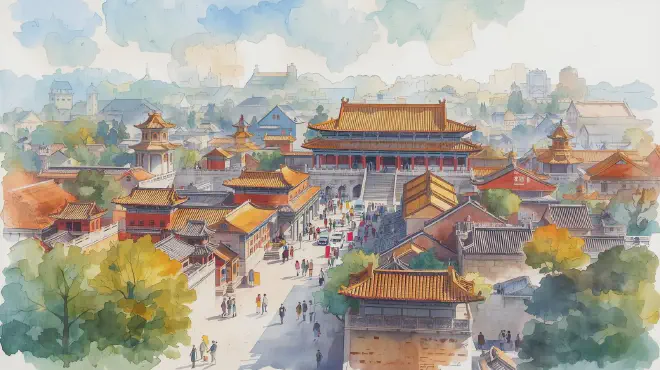
Day 1: First Encounter with the Walled City
When I stepped off at Xianyang Airport, dry air brushed against my cheeks. The scenery from the airport shuttle bus window differed from the ancient streetscapes I had imagined—high-rise buildings lined up in a modern cityscape. But as we approached the city center, the Ming Dynasty city walls gradually revealed their imposing presence in the distance, and I finally felt the reality of arriving in ancient Xi’an.
My accommodation was a guesthouse near the Bell Tower, renovated from an old siheyuan courtyard house. Passing through a narrow hutong alley and opening the heavy wooden door, I was greeted by the traditional layout of guest rooms arranged around a central courtyard. The landlady, Mrs. Wang, welcomed me warmly in standard Mandarin with a strong Shaanxi accent. “First time in Xi’an? The charm of this city isn’t just the Terracotta Warriors,” she laughed, marking delicious xiaochi street food stalls on a handmade map for me.
After dropping off my luggage, I first headed to the Bell Tower, within walking distance. This pavilion, built in the 14th century, sits at the center of Xi’an’s old city, serving as the origin point for the main streets extending in four directions. The afternoon’s slanting sunlight beautifully illuminated the green glazed tile roof. Climbing to the upper level, I could overlook the old city encircled by walls, the contrast with the modern high-rises quite striking. In the distance, the Qinling Mountains stretched in pale blue ridges, making me acutely aware of this basin city’s geographical characteristics.
Walking south from the Bell Tower, I caught sight of the Giant Wild Goose Pagoda, a symbol of Xi’an. This pagoda, built to house Buddhist scriptures that Xuanzang brought back from India, is a precious relic testifying to the heights of Tang Dynasty culture. Though the surrounding area has been developed as Giant Wild Goose Pagoda Square, famous for its fountain shows, visiting during the quiet evening hours allowed the pagoda’s solemnity to be felt even more deeply.
As night approached, I headed to the Muslim Quarter that Mrs. Wang had recommended. This area extending northwest from the Bell Tower is known as the residential district of the Islamic Hui people and symbolizes the diversity of Xi’an’s food culture. Along both sides of the narrow stone-paved alleys, shops selling yangrou paomo, roujiamo, and liangpi lined up side by side, the aroma of spices mingling with the night breeze.
At the first restaurant I entered, I ordered Xi’an’s famous yangrou paomo. I tore the hard flatbread into small pieces and placed them in a bowl, then took it to the kitchen where they simmered it in mutton soup before returning it. The bowl brought to my table had the mutton’s umami thoroughly absorbed into the bread, creating an exquisite flavor. Slurping the yangrou paomo silently among the locals, its taste was deeply nourishing, healing the fatigue of travel.
After the meal, while strolling through the Muslim Quarter, I noticed elderly people practicing tai chi deep in the alleys. Their slow, repeated movements dissolved beautifully into Xi’an’s night silence. Even to me, an unknown traveler, they kindly called out, “Want to try it with us?” In their warmth, I felt the gentleness of this city’s people.
When I returned to the guesthouse late at night, other guests were gathered around the landlady in the courtyard, drinking tea. A university student from Xi’an, a couple from Shanghai, a backpacker from Germany—people from various backgrounds shared their thoughts about this ancient capital. On my first day of travel, blessed with encounters and experiences richer than expected, my anticipation for tomorrow grew.
Day 2: Imperial Dreams in the Terracotta Army
As morning sunlight streamed into the courtyard, I enjoyed the breakfast Mrs. Wang had prepared. The simple combination of xiaolongbao, doujiang, and pickled vegetables had a refreshing quality befitting a morning on the road. Following Mrs. Wang’s advice that “You’re going to the Terracotta Warriors today? The huoche (train) has more charm than the bus,” I decided to take the local train to Lintong from Xi’an Station.
Xi’an Station, though an old building, bustled with crowds from early morning. I pushed through the throng of migrant workers, tourists, and locals toward the platform. The Lintong-bound train consisted of old green-painted passenger cars with hard bench seats, but the pastoral scenery of the Guanzhong Plain visible from the window had a charm impossible to experience on modern high-speed rail.
After about an hour’s train journey, I arrived at Lintong Station where a bus to the Terracotta Warriors Museum awaited. The bus drove past persimmon orchards and farmhouses before the World Heritage site signs came into view. At the entrance, I rented a Japanese audio guide and headed first to Pit No. 1.
Upon entering the enormous hangar-like building, a sight spread before me that left me speechless. Thousands of terracotta warriors, created about 2,000 years ago, stood in orderly formation. Each warrior’s expression and attire differed subtly, testifying to the high skill of the artisans of that time and the immense power of the First Emperor. The terracotta warriors standing in silence radiated a dignity as if they continued even now to guard the emperor’s mausoleum.
As I continued viewing Pits No. 2 and 3, I felt the grandeur of this underground army more profoundly. The exquisite craftsmanship of the cavalry figures, infantry figures, and chariots proves the scale of the Qin unification enterprise and the heights of ancient Chinese civilization. Seeing excavation work still ongoing, I imagined that many secrets still sleep beneath this earth.
In the afternoon, I visited the adjacent Museum of Qin Shi Huang’s Mausoleum Site. I was fortunate to meet Yang Zhifa, the farmer whose discovery triggered the Terracotta Warriors’ excavation, still explaining to visitors at the museum. His account of accidentally discovering the terracotta warriors while digging a well in 1974 brought the moment of historical discovery intimately close.
On the return train, I had an interesting conversation with a Xi’an history teacher sitting beside me. “The Terracotta Warriors are certainly magnificent, but Xi’an’s charm isn’t limited to that. Tomorrow, try walking on the city walls. The view of Xi’an from there is exceptional,” he advised. Gazing at the pastoral scenery of dusk flowing past the window, I contemplated the profundity of this land where ancient and modern coexist.
By the time I returned to Xi’an Station, twilight had fallen. Walking along Jiefang Road extending from the station plaza toward the city center, I happened upon a small shuyuan tea house. In the quiet space renovated from an old siheyuan, I savored biluochun tea while reflecting on the day, the sound of a qin flowing in the background. The tea house owner, also a calligrapher, wrote the characters for “Xi’an” in beautiful cursive script for me. Time spent in a space where the fragrance of ink and tea mingled taught me a different pleasure of travel from busy sightseeing.
That night, I returned to the Muslim Quarter, this time trying roujiamo. The stewed pork sandwiched in bread offered a different Xi’an flavor from last night’s yangrou paomo. As I ate at a food stall, a local elderly man sitting beside me casually asked, “How’s the Xi’an food?” His Guanzhong dialect-mixed Chinese was hard to understand, but his pride in his hometown’s flavors came through clearly.
By the time I returned to the guesthouse, the Bell Tower, illuminated by streetlights, appeared to float in the night sky. At the end of day two, I felt satisfied having touched both the traces of an ancient emperor’s dreams and the warmth of people living in the present.
Day 3: Walking the Walls, Contemplating Eras
On the final morning, I woke earlier than usual. Breathing the morning air in the courtyard, I mentally organized my Xi’an experiences thus far. Mrs. Wang said, “Since it’s your last day, I prepared a special breakfast,” bringing out hulutang and shaobing. Hulutang, a traditional Shaanxi breakfast soup, is a common people’s flavor—a peppery, sour-spicy soup containing tofu, vegetables, and eggs. I felt warmth spreading from inside, as if healing the travel fatigue.
After breakfast, following the history teacher’s advice, I decided to walk the city walls. Climbing the walls from the South Gate (Yongning Gate), I could overlook the magnificent vista of the approximately 14-kilometer Ming Dynasty walls encircling the urban area. The walls’ upper section is 12-14 meters wide, making it possible to rent a bicycle and circle completely, but I chose to walk slowly on foot.
Walking atop the walls and viewing the contrast between the old city spreading inside and the new districts outside, I could well understand Xi’an’s layered nature. The old city mixed traditional buildings with modern shops; the new districts were lined with high-rise buildings. The walls themselves, separating these two worlds, seemed like a bridge connecting past and present.
From the walls, I could also see the Bell Tower and Giant Wild Goose Pagoda I’d visited yesterday. I could understand the historical significance of those buildings from a more bird’s-eye perspective. Looking particularly toward the Giant Wild Goose Pagoda’s direction, I imagined how enormous the scale of Tang Dynasty Chang’an must have been, and let my thoughts wander to the prosperity of that time when it flourished as the Silk Road’s starting point.
A Xi’an university student I met during my wall walk spoke to me in fluent Japanese. Majoring in Japanese, she told me, “Xi’an seen from the walls is special, isn’t it? For us, these walls aren’t just a tourist site—they’re part of daily life.” Learning what the walls meant to local people, I gained a perspective different from that of a tourist.
In the afternoon, I visited the Xi’an Beilin Museum. This museum, called a treasure house of Chinese calligraphic art, displays famous steles from throughout history. Gazing at characters carved in stone, I felt as if the deep traditions of Chinese culture and the thoughts of ancestors embedded in these characters were being transmitted. I was particularly moved by the stele of Tang Dynasty calligrapher Yan Zhenqing—characters written with powerful brushstrokes still maintaining their vitality.
In the museum’s garden, I encountered local calligraphy enthusiasts practicing shuishu (writing characters on the ground with water). The sight of them dipping brushes in water and writing characters on stone pavement was a beautiful scene showing Chinese culture’s permeation into daily life. As I watched, someone called out, “Would you like to try?” and though brief, I had a precious experience.
As evening approached, for my final meal of the trip, I visited an old-established dumpling restaurant Mrs. Wang had recommended. Tasting various types of dumplings—steamed jiaozi, pan-fried jiaozi, boiled jiaozi—I reflected on my three days in Xi’an. In each dumpling’s embodied artisan skill and the restaurant’s history of preserving it, I sensed this city’s cultural depth.
On the way back from the dumpling restaurant to the guesthouse, I walked through the Muslim Quarter one last time at dusk. The familiarity I felt, different from my arrival three days ago, must have been because the distance between me and this city had narrowed even in such a short time. The traces of time carved into every corner of the alleys and the lives of people living there felt warm even to me, a traveler.
While packing at the guesthouse, I had a final conversation with Mrs. Wang. To her question, “How was Xi’an?” I answered, “I was able to touch both the weight of history and the warmth of people,” and she smiled, “That’s our city’s greatest charm.” In her smile, I felt the pride and kindness of Xi’an’s people concentrated.
What Was Felt Though Imagined
As I left Xi’an, the ridgeline of the Qinling Mountains visible from the car window on the way to Xianyang Airport seemed to etch the memories of this journey into my heart. Though a short stay of just three days and two nights, the grandeur of the Terracotta Warriors, the view from the city walls, the vitality of the Muslim Quarter, and above all, the warm exchanges with people I met taught me the multifaceted charm of the ancient capital of Xi’an.
The deeply nourishing taste of yangrou paomo, the sensation of wind blowing across the city walls, the Bell Tower dyed in sunset colors, the fragrance of ink in the tea house—these sensory memories will remain in my heart without fading, even as time passes.
What impressed me most was the way Xi’an exists as a city where ancient and modern naturally coexist. The Terracotta Warriors, a 2,000-year-old heritage, and modern people conducting their daily lives share breath on the same land. This temporal layering may be Xi’an’s greatest charm.
The smile of Mrs. Wang, the guesthouse landlady; Yang Zhifa’s account of discovering the Terracotta Warriors; the words of the university student met on the walls; the dialect of the elderly man in the Muslim Quarter—these human connections made me feel Xi’an not just as a tourist destination but as a living city.
This journey is certainly a product of imagination. However, the charm of the ancient capital Xi’an and the warmth of people living there were things genuinely experienced through imagination. Xi’an, which had been merely a point on a map, is now engraved in my heart as a special place filled with memories and emotions.
Someday, I want to actually trace this imagined journey. At that time, I want to see what colors this imaginary trip will add to the real experience. And if I can once again be enveloped by the quiet dignity of the Terracotta Warriors and the unchanging warmth of Xi’an’s people, there could be no greater happiness.